

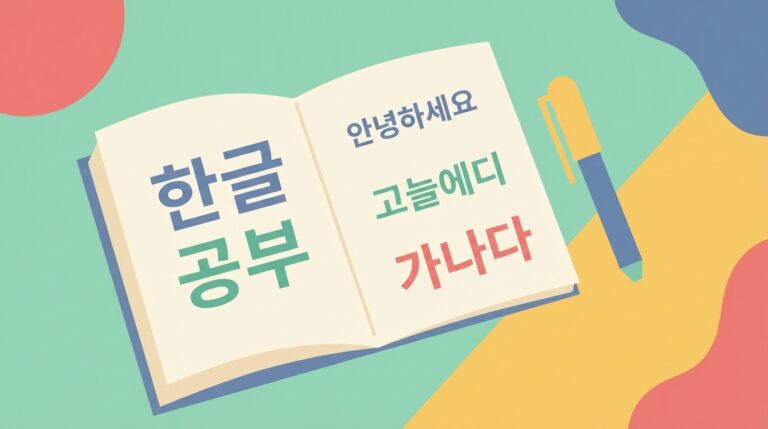
The Art of the “Soft No”: Decoding Chungcheong-do’s Hidden Meanings
Phase 1: The Immersive Hook
안녕하세요! This is your Daily Hangul Editor. 👋
Have you seen the hit K-Drama “Boyhood” (소년시대)? The characters speak with a unique drawl, ending sentences with a soft “~yu” (~유). It sounds gentle, slow, and even funny. But here is the plot twist: inside those soft words, there is a razor-sharp meaning.
Imagine you are in a meeting. A colleague from Seoul says, “I disagree.” Clear, right? But a colleague from Chungcheong-do might look at your proposal and say, “Well, it’s nice… for lighting a fire in the fireplace.”
Ouch. 🔥
Chungcheong-do dialect isn’t just about accent; it’s the masterclass of high-context communication. If you take their words literally, you will miss the point entirely. Today, we are going to learn how to read the air (Nunchi) like a true local.
Phase 2: Deep Dive into Core Expressions
Here are 3 expressions that sound polite but carry a punch.
1. 됐슈 (Dwaet-syu)
- Pronunciation: [Dwaet-syu] (Sounds like “Det-shoe” but with a soft ‘yu’ at the end)
- Meaning:
- Literal: “It is done.”
- Real Nuance: “No thanks,” “I’m good,” “Forget it,” or sometimes “I am extremely angry, stop talking.”
- K-Culture Moment: In a drama, when a father is angry at his son, he doesn’t yell. He just waves his hand and says, “됐슈, go in.” That silence is scarier than screaming.
- Editor’s Insight: The length matters. A short “됐슈.” means “No.” A long, drawn-out “됐~~~슈~” might mean “Oh, you shouldn’t have (but I like it).” It is the ultimate context-dependent word.
- Situation Spectrum:
[🚫 Formal Biz] ———— [⚠️ Semi-formal] ———— [✅ Casual/Local]- 🤔 Think About It: Why does a culture prefer saying “It is done” instead of “No”? How does this save the listener’s “face” (Chemyon)?
2. 개 혀서 뭐 햐? (Gae hyeo-seo mwo hya?)
- Pronunciation: [Gae hyeo-seo mwo hya]
- Meaning:
- Literal: “What is the point of doing that?”
- Real Nuance: “That is useless,” “Don’t do it,” or “I strongly disagree with your plan.”
- K-Culture Moment: You tell your friend you want to buy an expensive car to impress a girl. Your Chungcheong friend won’t say “That’s a waste of money.” They’ll say, “Buying that… gae hyeo-seo mwo hya?“
- Editor’s Insight: This is a rhetorical question. They are not asking for a reason; they are telling you to stop.
- Situation Spectrum:
[🚫 Formal Biz] ———— [⚠️ Elders] ———— [✅ Friends]3. 소는 누가 키워? (So-neun nu-ga ki-wo?)
- Pronunciation: [So-neun nu-ga ki-wo]
- Meaning:
- Literal: “Who is going to raise the cow?”
- Real Nuance: “Stop dreaming/messing around and do your job,” or “Be realistic.”
- K-Culture Moment: This became a famous catchphrase among comedians mimicking Chungcheong locals. If a farmer says he wants to go to Seoul to become a singer, his dad would say, “Sure, go. But who raises the cow?“
- Editor’s Insight: In an agricultural society, the cow was the most important asset. Neglecting the cow meant neglecting reality.
- Situation Spectrum:
[🚫 Stranger] ———— [⚠️ Colleague] ———— [✅ Close Friend/Family]
Phase 3: Textbook vs. Real Life
| Situation | 📖 Textbook Korean (Standard) | 🗣️ Chungcheong Style | 💡 Why the difference? |
|---|---|---|---|
| Refusing an offer | 아니요, 괜찮습니다. (No, it’s okay.) | 됐슈. (It’s done.) | Efficiency wrapped in softness. |
| Hurry up! | 빨리빨리 하세요! (Do it quickly!) | 내일 하쥬, 뭐. (Let’s just do it tomorrow, whatever.) | ironic understatement. Saying “tomorrow” often means “hurry up now or we’re doomed.” |
| Surprise/Disbelief | 정말요? (Really?) | 그류? (Is that so?) | Acknowledging without committing to emotion. |
Bottom Note: Chungcheong dialect often changes standard endings
~요(~yo) to~유(~yu). It sounds rounder and less aggressive.
Phase 4: Cultural Deep Dive
4-1. The Art of “Round Talk” (Chungcheong Nunchi)
If Seoul speech is a straight arrow 🏹, Chungcheong speech is a boomerang 🪃. It circles around the topic. When speaking this dialect, do not make intense eye contact. Look slightly away, relaxed, as if you have all the time in the world.
4-2. K-Drama Connection: Boyhood (소년시대)
The drama Boyhood is the Bible of this dialect. Pay attention to how the characters use humor to threaten each other. They don’t say “I will hit you.” They say, “You want to taste the flavor of the earth?” (Do you want to fall on the ground?). This metaphorical aggression is key to the Chungcheong charm.
Phase 5: Immersive Roleplay Scenario
Setting: A slow afternoon at a traditional market in Gongju (Chungcheong province). You are trying to buy apples from a local grandma.
Characters:
* YOU: A tourist who is in a rush.
* Grandma: A local vendor, moving very slowly, peeling a persimmon.
Dialogue:
YOU: 할머니, 사과 1kg 주세요. 빨리 가야 해요.
(Halmeoni, sagwa 1kg juseyo. Ppalli gaya haeyo.)
(Grandma, 1kg of apples please. I have to go quickly.)
Grandma: (Slowly looking up) 급할 거 없슈. 해 안 떨어졌어.
(Geuphal geo eop-syu. Hae an tteoreojyeosseo.)
[Translation: No rush. The sun hasn’t set yet.]
YOU: 버스 시간이 다 돼서요…
(Beoseu sigani da dwaeseoyo…)
(My bus time is almost up…)
Grandma: (Pauses hand) 그라믄, 그냥 가유. 사과가 도망가는 것도 아닌디.
(Geurameun, geunyang gayu. Sagwaga domangganeun geotdo anindi.)
[Translation: Then just go. It’s not like the apples are running away.]
🔀 Decision Point! How do you respond?
- A) “아, 빨리 좀 주세요!” (Ah, just give it to me quickly!)
- B) “아니에요, 천천히 주세요. 버스 놓치면 다음 거 타죠 뭐.” (No, take your time. If I miss the bus, I’ll take the next one.)
- C) Just leave without buying.
✅ Best Choice: B.
Reason: In Chungcheong culture, rushing someone is rude. If you match their slow pace (Choice B), she will likely suddenly move fast and give you an extra apple for being nice! Choice A might make her say “됐슈” and refuse to sell.
Phase 6: 10-Second Shadowing Drill
Try to mimic the lazy, dragging intonation. Do not speak sharply!
- 😊 Relaxed/Dismissive:
급할 거 / 없슈~ / 천천히 / 해유~
(Geuphal geo / eop-syu~ / cheoncheonhi / haeyu~)
(No need to rush / let’s do it / slowly) -
😏 Sarcastic/Scolding:
개 혀서 / 뭐 햐? / 소는 / 누가 키워?
(Gae hyeo-seo / mwo hya? / so-neun / nu-ga ki-wo?)
(What’s the point of that? / Who’s gonna raise the cow?)
Phase 7: K-Culture Mini Glossary
| Korean | Romanization | English | Context |
|---|---|---|---|
| 충청도 | Chungcheong-do | Chungcheong Province | Located in central Korea. Known for gentle people and slow speech. |
| 사투리 | Saturi | Dialect | Regional variations of Korean. |
| 능청 | Neungcheong | Sly/Cunning innocence | Acting innocent or unconcerned while knowing everything. Essential for Chungcheong humor. |
| 답답해 | Dap-dap-hae | Frustrating/Stifling | What Seoul people often feel when talking to Chungcheong people! |
Phase 8: Traveler’s Survival Kit
Traveling to Daejeon, Cheongju, or Buyeo? Here is how to survive the “Slow City” vibe.
🆘 Survival Expression #1: “괜찮아유” (Gwaenchanhayu)
* Meaning: It’s okay / No thanks / You’re welcome.
* Usage: Use this for EVERYTHING. If you bump into someone? Gwaenchanhayu. If they offer a receipt? Gwaenchanhayu.
* Pro Tip: Elongate the end: “Gwaenchanha~~~yu.” It sounds friendlier.📌 Editor’s Travel Note
* Speed: Service in rural Chungcheong restaurants might be slower than Seoul. Don’t yell “Yeogiyo!” (Over here!) every 10 seconds. Raise your hand and wait for eye contact.
* Taxi: Taxi drivers here love to chat. If they ask personal questions, they are just being friendly, not rude.
Phase 9: Think Deeper — Language & Personality
Does geography shape language?
Chungcheong-do is traditionally an agricultural region with wide plains. Life followed the slow cycles of nature, unlike the busy trading ports of Busan (fast dialect) or the political center of Seoul (standard). The indirectness of Chungcheong dialect reflects a community where maintaining harmony was more important than immediate efficiency.
🧠 Think Deeper:
In your culture, are people from rural areas considered “slower” or “more polite” than city people? Does your language have a specific accent associated with “being laid back”?
Phase 10: FAQ & Troubleshooting
- Q: Can I use “~yu” (~유) to my boss in Seoul?
- NO. 🚫 Unless you are actually from that region and close to your boss, using a dialect in a formal Seoul setting can sound like you are joking around. Stick to standard Korean (~yo/nida).
- Q: A Chungcheong person said “Come for dinner sometime.” Should I go?
- Maybe. This is often just a greeting (like “How are you?”). Unless they give a specific date and time, treat it as a polite pleasantry.
❌ Common Mistake: taking “됐슈” (Dwaet-syu) as a positive “Okay.”
✅ Correction: 90% of the time, it means “No.” Look at the face. If they are smiling, it might be “Okay.” If neutral/frowning, it is “No.”
Phase 11: Wrap-up & Mission
One-Liner Summary: Chungcheong dialect is the art of saying “No” without saying “No,” using humor, metaphors, and a slow tempo.
🚀 Action Mission:
* 🥉 Bronze: Look in the mirror and practice the “Dwaet~~~syu” hand wave.
* 🥈 Silver: Watch a clip of the drama Boyhood (search ‘소년시대 사투리’ on YouTube) and try to catch one “~yu” ending.
* 🥇 Gold: Next time a friend asks you to do something annoying, jokingly say, “Gae hyeo-seo mwo hya?” (What’s the point?)
💬 Your Turn: Does your language have a phrase like “Who will raise the cow?” (a metaphor for “be realistic”)? Tell me in the comments!
Phase 12: Interactive Quiz
- Situation Judgment: You offer to help a Chungcheong colleague, and they say “Oh, leave it. The sun will rise tomorrow anyway.” What does this mean?
- a) They are excited about the sunrise.
- b) They are lazily refusing your help because it’s not urgent.
- c) They want you to work overnight.
- True or False: If a Chungcheong person says “A stone is rolling down~” to warn you, the stone has likely already hit you.
- (True / False)
Answers:
1. (b) It’s a roundabout way of saying “Relax, we can do it later.”
2. True. This is a famous joke about how slow the speech is. By the time they finish the sentence, the event has already happened! (Though in reality, they can be fast when needed!)
Frequently Asked Questions (FAQ)
Q: What does "됐슈 (Dwaet-syu)" mean in Korean and how do you pronounce it?
A: In Korean, "됐슈 (Dwaet-syu)" is pronounced [Dwaet-syu] and means: Literal: "It is done."
Q: What does "개 혀서 뭐 햐? (Gae hyeo-seo mwo hya?)" mean in Korean and how do you pronounce it?
A: In Korean, "개 혀서 뭐 햐? (Gae hyeo-seo mwo hya?)" is pronounced [Gae hyeo-seo mwo hya] and means: Literal: "What is the point of doing that?"
Q: What does "소는 누가 키워? (So-neun nu-ga ki-wo?)" mean in Korean and how do you pronounce it?
A: In Korean, "소는 누가 키워? (So-neun nu-ga ki-wo?)" is pronounced [So-neun nu-ga ki-wo] and means: Literal: "Who is going to raise the cow?"







