

Phase 1: The Immersive Hook
Greeting: 안녕하세요! This is your Daily Hangul Editor, reporting not from a classroom, but from the dynamic intersection of diplomacy and history.
The K-Culture Cold Open: Imagine a scene from a high-stakes political K-Drama like Designated Survivor: 60 Days or Chief of Staff. The protagonist stands at a podium in an international conference hall. The room is silent. They aren’t talking about K-Pop or Kimchi; they are talking about a miracle.
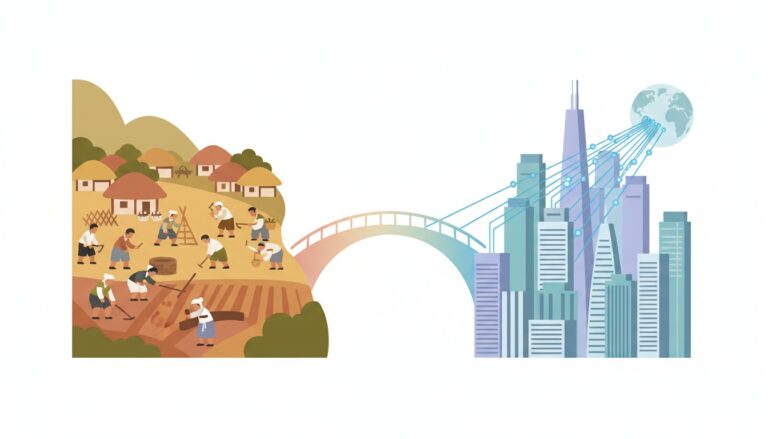
Korea is the only country in modern history to transform from a major recipient of ODA (Official Development Assistance) to a major donor. We call this the “Han River Miracle.” But here is the twist: In recent episodes of Real Life Korea, the script has changed. It’s no longer just about giving money. It’s about “effectiveness” (효과성).
The ‘Why’: Why does this matter to you? Because at a C2 level, you aren’t just learning to order coffee. You are learning to discuss global issues, business strategies, and the soul of modern Korea. Understanding how Korea views “aid” reveals how Koreans view growth, reciprocity, and responsibility.
Transparency: Today’s lesson is built on actual debates happening within KOICA (Korea International Cooperation Agency) and Korean NGOs. We are going deep.
Phase 2: Deep Dive into Core Expressions
Here are the three pillars of discussing aid effectiveness in high-level Korean.
1. 역량 강화 (Yeongnyang Ganghwa)
- Pronunciation: [Yeong-nyang Gang-hwa] (Imagine saying “Young” + “Nyang” (like a cat) / “Gang” + “Hwa”)
- Meaning: Capacity Building (Literal: Strengthening of Capability)
- K-Culture Moment: You hear this in corporate dramas like Misaeng constantly. A mentor doesn’t just do the work for the intern; they focus on the intern’s yeongnyang ganghwa so they can survive on their own.
- Editor’s Insight: This is the heart of modern Korean ODA. We have a proverb: “Don’t give them fish; teach them how to catch fish.” In Korean professional contexts, using this word implies you are looking at the long term, not just a quick fix.
- Situation Spectrum:
[🚫 Casual Friends] ———— [⚠️ Colleagues] ———— [✅ Formal/Academic]- 🤔 Think About It: Why does Korea emphasize “capability” so much? Perhaps because Korea’s own lack of natural resources forced it to rely entirely on human capital.
2. 현지화 (Hyeonjihwa)
- Pronunciation: [Hyeon-ji-hwa]
- Meaning: Localization
- K-Culture Moment: Think of K-Food going global. Bibimbap in New York isn’t exactly the same as in Jeonju. It underwent hyeonjihwa to suit local tastes. In ODA, this means adapting aid strategies to the recipient country’s culture and systems.
- Editor’s Insight: If you criticize a project for failing, you often say, “현지화에 실패했습니다” (It failed in localization). It’s a polite but devastating critique of arrogance—assuming the Korean way is the only way.
- Situation Spectrum:
[🚫 Casual Friends] ———— [✅ Business/News] ———— [✅ Formal]- 🤔 Think About It: Is hyeonjihwa always good? Or does it sometimes dilute the original intent or quality of the aid/product?
3. 사후 관리 (Sahu Gwalli)
- Pronunciation: [Sa-hu Gwal-li]
- Meaning: Follow-up Management / Post-project Management
- K-Culture Moment: In Korea, we are obsessed with “A/S” (After Service). Whether you buy a Samsung fridge or get plastic surgery, the Sahu Gwalli is what determines the brand’s reputation. The same logic applies to building a school in a developing nation.
- Editor’s Insight: Use this to sound incredibly professional. “Project completion is not the end; sahu gwalli is key.” It shows you understand the Korean obsession with maintenance and responsibility.
- Situation Spectrum:
[🚫 Casual Friends] ———— [⚠️ Service Industry] ———— [✅ Professional]
Phase 3: Textbook vs. Real Life (The Professional Edition)
| Situation | 📖 Textbook Korean | 🗣️ Real Professional Korean | 💡 Why the difference? |
|---|---|---|---|
| Discussing Aid | 원조를 줍니다. (We give aid.) |
개발 협력을 추진합니다. (We promote development cooperation.) |
“Giving aid” sounds hierarchical. “Cooperation” implies partnership (C2 nuance). |
| Problem Solving | 문제가 생기면 고칩니다. (If a problem occurs, we fix it.) |
모니터링과 피드백 시스템을 강화합니다. (We strengthen monitoring and feedback systems.) |
Systemic thinking is preferred over reactive fixing in formal contexts. |
| Goal | 나라를 발전시킵니다. (We develop the country.) |
자립 기반을 마련합니다. (We establish a foundation for self-reliance.) |
The ultimate goal of Korean ODA is “self-reliance” (descended from the Saemaul Undong spirit). |
Phase 4: Cultural Deep Dive — The “Ppalli-Ppalli” Paradox
4-1. Non-verbal: The posture of “Partnership”
In the past, donors stood tall, and recipients bowed. Today, in Korean ODA discourse, we emphasize eye-level contact (눈높이). When discussing these topics, use gestures that imply equality—open hands, sitting forward—rather than leaning back which implies dominance.
4-2. K-Culture Connection: The “Saemaul” Spirit vs. Global Standards
Korea’s history of ODA is deeply tied to the Saemaul Undong (New Village Movement) of the 1970s.
– The Connection: Many older generations believe exporting this movement is the key to aiding developing nations.
– The Conflict: Younger generations and international experts argue for Global Standards (UN SDGs).
– Critical View: Korea is famous for “Ppalli-Ppalli” (Hurry, Hurry). While this drove Korea’s rapid growth, it can be fatal in ODA. Building a dam quickly is useless if the local community doesn’t know how to maintain it. Real effectiveness requires slowing down—a concept modern Koreans are still struggling to learn.
Phase 5: Immersive Roleplay — The Strategy Meeting
Setting: A conference room at a Korean NGO headquarters in Seoul. Maps of Southeast Asia are on the screen. The atmosphere is tense because a recent project is underperforming.
Characters:
– YOU (Project Manager): An expat specialist in development cooperation.
– Director Park (50s): A veteran who remembers Korea’s rapid development era. Impatient but passionate.
(Dialogue Start)
Director Park: (Sighs and taps the table) 이번 프로젝트, 성과가 왜 이렇게 저조합니까? 예산은 충분히 투입했잖아요.
(Ibeon peurojekteu, seong-gwaga wae ireoke jeojohamnikka? Yesaneun chungbunhi tuiphaetjanayo.)
(Why is the performance of this project so poor? We invested sufficient budget.)
YOU: 단순한 물자 지원만으로는 한계가 있는 것 같습니다.
(Dan-sunhan mulja jiwon-man-euroneun han-gyega inneun geot gatseumnida.)
(It seems there are limitations with simple material support alone.)
Director Park: 그럼 뭐가 문제라는 거예요? 우리 방식이 틀렸다는 겁니까?
(Geureom mwoga munje-raneun geoyeyo? Uri bangsigi teullyeot-daneun geomnikka?)
(Then what is the problem? Are you saying our method was wrong?)
🔀 Decision Point: How do you persuade him politely but logically?
- A) “네, 한국 방식은 현지에 맞지 않습니다.” (Too blunt. Might offend his pride.)
- B) “현지 주민들의 주인의식(ownership)을 높이는 과정이 부족했습니다.” (Uses a key C2 keyword. Professional and constructive.)
- C) “다시 처음부터 해야 합니다.” (Too radical. Ignores sunk costs.)
✅ Best Choice: B
YOU: (Calmly) 그런 뜻이 아닙니다. 다만, 현지 주민들의 주인의식(ownership)을 높이는 과정이 부족했습니다. 그들의 역량 강화가 선행되어야 합니다.
(Geureon tteusi animnida. Daman, hyeonji jumin-deurui juin-uisig-eul nopineun gwajeongi bujokhaetseumnida. Geudeurui yeongnyang ganghwaga seonhaeng-doeeoya hamnida.)
(That’s not what I mean. However, the process of raising the locals’ ownership was lacking. Their capacity building must come first.)
Director Park: (Nods slowly) 주인의식이라… 하긴, 우리가 언제까지나 도와줄 순 없으니까요.
(Juin-uisigira… Hagin, uriga eonjekkajina dowajul sun eopseunikkayo.)
(Ownership, huh… True, we can’t help them forever.)
Phase 6: 10-Second Shadowing Drill
Practice this sentence to sound like a true expert. Use a serious, persuasive tone.
“Meaningful change / does not come from speed, / but from sustainability.”
🇰🇷 의미 있는 변화는 / 속도가 아니라 / 지속 가능성에서 나옵니다.
[Uimi inneun byeonhwaneun / sokdoga anira / jisok ganeungseong-eseo naomnida.]🎭 Emotion: 😤 Firm & Professional (단호하고 전문적으로)
Phase 7: K-Culture Mini Dictionary (ODA Edition)
| Korean | Romanization | English Meaning | Contextual Note |
|---|---|---|---|
| 수원국 | Su-won-guk | Recipient Country | The polite/formal term for countries receiving aid. |
| 공여국 | Gong-yeo-guk | Donor Country | Korea transformed from a Suwonguk to a Gongyeoguk. |
| 한강의 기적 | Han-gang-ui Gijeok | Miracle on the Han River | Refers to Korea’s rapid economic growth; the “model” often cited in ODA. |
| 시행착오 | Si-haeng-chag-o | Trial and Error | Koreans often admit they learned through sihaengchago, and want to help others avoid it. |
Phase 8: Traveler’s Survival Kit (The “Business Trip” Edition)
Even if you aren’t an aid worker, you might visit a developing country with Korean colleagues, or discuss business expansion.
🆘 Survival Expression #1
– 🇰🇷 “현지 사정은 어떤가요?” (Hyeonji sajeong-eun eotteon-gayo?)
– Meaning: “What are the local circumstances like?”
– Context: Before pushing a plan, always ask this. It shows respect for reality over theory.
– 💡 Pro Tip: Koreans appreciate when you ask about the “Field Situation” (현장) before making decisions.📌 Editor’s Note: The “K-Dinner” Diplomacy
If you are on a business trip with Koreans in a developing country, the “Hoesik” (Team Dinner) will likely happen at a local Korean restaurant. It is seen as a way to recharge “Korean energy” (eating Kimchi/Stew) to work harder the next day. Participating enthusiastically is crucial for team bonding.
Phase 9: Think Deeper — “Model” or “Reference”?
Topic: The Export of the “Korean Model”
Korea often tries to export its specific development models (like Saemaul Undong or E-Government systems) to other countries.
🧠 Think Deeper:
Can a system that worked in a homogeneous, Confucian-influenced society like Korea in the 70s really work in a diverse cultural context in Africa or Southeast Asia today? In Korean ODA, there is a shift from saying “Follow us” to “Let’s find your way together.”💬 Your Turn: Does your country have a history of receiving or giving aid? How is the effectiveness measured there? Compare it with the Korean concept of “Jeong” (affection/bond) in aid.
Phase 10: FAQ & Troubleshooting
Q: Can I use words like ‘역량 강화’ in daily life?
A: Yes, but be careful. If you tell your friend “You need yeongnyang ganghwa in cooking,” it sounds very stiff and jokingly critical. It’s best reserved for work, academic discussions, or serious self-improvement talks.
Q: Is it rude to mention Korea used to be poor?
A: Generally, no. Most Koreans are proud of overcoming poverty. However, don’t pity the past. Frame it as admiration for their resilience.
❌ Common Mistake #1: Assuming “Money solves everything.”
✅ Correction: In Korean culture, “Sincerity” (진정성) matters more. Even in aid, if the jinjeongseong is missing, Koreans will criticize it as “Show-window administration” (전시 행정).
Phase 11: Wrap-up & Action Items
One-Liner Summary: Effective aid in the Korean view isn’t just about speed; it’s about capacity building (역량 강화), localization (현지화), and ensuring sustainability (지속 가능성).
Action Missions:
– 🥉 Bronze: Read a news headline about KOICA or Korean ODA and identify the word “협력” (Cooperation).
– 🥈 Silver: Write a 3-sentence comment on a YouTube video about Korean economic history using the word “시행착오” (trial and error).
– 🥇 Gold: If you have Korean colleagues, ask them: “What do you think was the core factor in the Han River Miracle?” Listen for keywords like education or sacrifice.
Phase 12: Interactive Quiz
Situation: You are evaluating a completed ODA project that built a library, but no one is using it because there are no books or librarians.
Question: Which Korean idiom/expression best describes this failure?
- 밑 빠진 독에 물 붓기 (Pouring water into a bottomless jar)
- 빛 좋은 개살구 (An apricot that looks good but tastes bad)
- 누워서 떡 먹기 (Eating rice cake while lying down – A piece of cake)
Answer & Explanation:
– 1. 밑 빠진 독에 물 붓기: This implies wasting resources without fixing the root cause. (Plausible, but focuses on waste).
– 2. 빛 좋은 개살구 (Correct): This means “Appearance is flashy, but substance is poor.” The library building (hardware) is fine, but the function (software) is missing. This criticizes the ineffectiveness perfectly.
– 3. 누워서 떡 먹기: This means something is very easy. Incorrect.
Frequently Asked Questions (FAQ)
Q: What does "역량 강화 (Yeongnyang Ganghwa)" mean in Korean and how do you pronounce it?
A: In Korean, "역량 강화 (Yeongnyang Ganghwa)" is pronounced [Yeong-nyang Gang-hwa] and means: Capacity Building (Literal: Strengthening of Capability)
Q: What does "현지화 (Hyeonjihwa)" mean in Korean and how do you pronounce it?
A: In Korean, "현지화 (Hyeonjihwa)" is pronounced [Hyeon-ji-hwa] and means: Localization
Q: What does "사후 관리 (Sahu Gwalli)" mean in Korean and how do you pronounce it?
A: In Korean, "사후 관리 (Sahu Gwalli)" is pronounced [Sa-hu Gwal-li] and means: Follow-up Management / Post-project Management






