

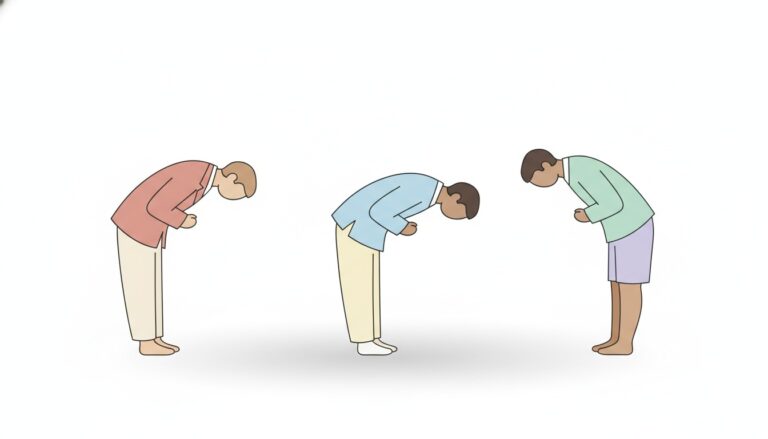
Phase 1: The Immersive Hook
Greeting: 안녕하세요 (Annyeonghaseyo)! Welcome to Daily Hangul. I’m your Senior Editor and Cultural Navigator.
Picture this: You are watching your favorite K-Drama. The male lead, a chaebol heir, walks into the office. Everyone stops working, stands up, and bends their waists at a perfect 45-degree angle. He barely nods back.
Then, cut to a scene in a K-Pop reality show. Your favorite idol meets a senior artist (Sunbaenim) in the hallway. They bow so deep their head almost touches their knees!
But wait… when you walk into a convenience store in Seoul, the part-timer just gives a slight nod.
Confused? You should be! In Western culture, a wave or a handshake works for 90% of situations. In Korea, the bow (인사 – Insa) is a physical language of its own. Get it wrong, and you might look like the rude villain in a drama. Get it right? You instantly become the “Concept Fairy” (a person who fits the vibe perfectly)!
This guide isn’t just about saying “Hello.” It’s about reading the air (Nunchi) and moving your body like a local.
Phase 2: Deep Dive into Core Expressions
Here are the 3 essential levels of greeting bows you need to survive.
1. 안녕하세요 (Annyeonghaseyo)
- Pronunciation: [An-nyeong-ha-se-yo] (Sounds like: “An-young-ha-say-yo” but smoother)
- Meaning: “Hello” (Literal: “Are you at peace?”)
- The Bow: Bend your waist about 15-30 degrees. Head down, eyes looking at the floor for a split second.
- K-Culture Moment: This is the bread and butter. Think of when a K-Pop group introduces themselves on stage: “2, 3! 안녕하세요! We are [Group Name]!”
- Editor’s Insight: This is the safest bet. If you don’t know someone’s age or status, use this. It works for the convenience store clerk, the hotel receptionist, and your tour guide.
- Situation Spectrum:
[🚫 Friends] ———— [✅ Strangers/Elders] ———— [✅ Boss]- 🤔 Think About It: Why does a greeting ask about “peace”? Korea has a history of many wars and invasions. Asking if someone was “peaceful” (safe) overnight was a genuine concern in the past!
2. 안녕 (Annyeong)
- Pronunciation: [An-nyeong] (Short and crisp, like “On-young”)
- Meaning: “Hi” or “Bye”
- The Bow: A tiny nod, a wave, or just a smile. No waist bending required.
- K-Culture Moment: The female lead runs into her childhood friend at a pojangmacha (street food stall). She hits his arm and says, “Ya! Annyeong!”
- Editor’s Insight: Warning! This is the “Banmal” (casual speech) trap. Do NOT say this to a taxi driver or a shop owner, even if you are smiling. You will get that look.
- Situation Spectrum:
[✅ Friends/Kids] ———— [🚫 Strangers] ———— [🚫 Elders]3. 감사합니다 (Kamsahamnida)
- Pronunciation: [Kam-sa-ham-ni-da] (Sounds like: “Calm-sa-ham-knee-da”)
- Meaning: “Thank you”
- The Bow: Always accompanied by a bow. The deeper the bow, the more thankful you are.
- K-Culture Moment: An actor receives an award. They hold the trophy and bow deeply to the audience while saying this.
- Editor’s Insight: In Korea, “Hello” and “Thank you” are inseparable from the bow. You can’t just say the words with a stiff neck!
Phase 3: Textbook vs. Real Life
| Situation | 📖 Textbook Korean | 🗣️ Real Life Korean | 💡 Why the difference? |
|---|---|---|---|
| Entering a Store | Stops walking, bows 45°, says “안녕하세요” clearly. | Walks in, gives a slight nod (Mok-rye), mumbles “an-nyong-ase-yo…” | Efficiency! Seoul moves fast. A full stop blocks the doorway. |
| Meeting a Friend | “안녕, 철수야?” (Hello, Cheolsu?) | “어! 왔어?” (Oh! You came?) + High five or head nod. | Real friends skip the formal greeting and jump to the point. |
| Leaving a Taxi | “안녕히 계세요” (Stay in peace.) | “감사합니다~” (Thank you~) + slight nod while sitting. | You can’t bow while sitting in a car! “Thank you” covers the goodbye. |
Phase 4: Cultural Context — The Art of the Bow
4-1. Non-verbal: The “Eye Contact” Rule
In the West, strong eye contact shows confidence. In Korea, staring into an elder’s eyes while bowing can be seen as challenging them.
* The Pro Move: Lower your eyes as you bow. Make eye contact after you come back up.
4-2. K-Culture Connection: The “Idol” Bow (Baekkop-insa)
Have you seen K-Pop idols place their hands over their belly button and bow? This is called Baekkop-insa (Belly Button Bow).
* K-Pop Context: It’s extremely polite and often used by children or idols to show innocence and high respect to fans/seniors.
* Traveler Tip: You don’t need to do this unless you are 5 years old or debuting in a new girl group. A hands-at-side bow is fine for adults!
Phase 5: Immersive Roleplay
Scenario: It’s 11 PM. You are at a GS25 Convenience Store in Hongdae to buy banana milk and ramyeon. The store is quiet.
Characters:
* YOU: A hungry traveler.
* Part-timer: A university student looking at his phone, tired.
Dialogue:
(Door chime rings: Ddiriri-ring~ 🎵)
Part-timer: (Briefly looks up, mumbles) 어서오세요. (Eoseo-oseyo – Welcome.)
YOU: (Approaching the counter with items)
🔀 Decision Point: How do you greet him?
* A) Wave your hand and say “Hi!”
* B) Bow slightly (head nod) and say “안녕하세요 (Annyeonghaseyo).”
* C) Bow 90 degrees and shout “안녕하십니까! (Annyeonghasimnikka!)”✅ Best Choice: B
* Why: A is too casual (rude). C is too military/formal (weird). B is the perfect “customer-staff” balance.
Part-timer: (Scans items) 3,500 won-imnida. (3,500 won.)
YOU: (Handing over card) Here.
Part-timer: (Hands card back) …Receipt?
YOU: No, thanks.
YOU: (Leaving the store)
🔀 Decision Point: How do you say goodbye?
* A) Say nothing and walk out.
* B) “수고하세요!” (Sugohaseyo!)
* C) “Bye bye!”✅ Best Choice: B
* Why: “Sugohaseyo” means “Keep up the hard work.” It’s the magic phrase Koreans use to show appreciation to workers. It makes you sound like a true local!
Phase 6: 10-Second Shadowing Drill
Let’s practice the “Magic Phrase” for leaving a shop.
- Guideline: Say it with a cheerful, slightly rising tone at the end.
- Emotion: 😊 Friendly & Encouraging
수고하세요!
(Su-go / ha-se-yo!)
Keep up the good work! / Thank you for your trouble!
Phase 7: K-Culture Mini Glossary
| Korean | Romanization | Meaning | Context |
|---|---|---|---|
| 인사 | Insa | Greeting/Bowing | Not just “hello”, but the act of showing respect. “Insa-seong” (greeting habit) is a huge judge of character. |
| 눈치 | Nunchi | Social Awareness | The art of sensing if you should bow deep or just nod. |
| 꼰대 | Kkondae | Old condescending person | An older person who demands extreme bowing/respect just because of their age. |
| 폴더 인사 | Folder Insa | Folder Bow | Bowing 90 degrees like a folding phone. Used by rookie idols or when apologizing sincerely. |
Phase 8: Traveler’s Survival Kit
Since you are likely to visit shops and restaurants, keep these handy.
🆘 Survival Expression #1: The “Excuse Me” Bow
* 🇰🇷 “저기요…” (Jeogiyo…)
* 🗣️ Pronunciation: [Juh-gi-yo]
* 📍 Where: Restaurant (calling server), Street (asking directions)
* 💡 Pro Tip: Don’t just shout it. Raise your hand slightly and give a small head bow when they look at you.📌 Editor’s Travel Note
* Handshakes? In Korea, we rarely shake hands upon first meeting unless it’s a business setting. If an elder offers a hand, take it with two hands (or support your right elbow with your left hand). Never shake with one hand in your pocket!
Phase 9: Think Deeper — “One Step Further”
Topic: Language & Power (The Hierarchy of the Bow)
Have you noticed? The person with the lower status always bows lower and holds it longer. In Western culture, equality is the default. In Korea, Confucianism sets a “default hierarchy” based on age and experience.
When you bow, you are physically acknowledging, “I respect your position/age.” It might feel stiff to you, but for Koreans, this structure creates harmony and social order. By bowing, you aren’t submitting; you are playing your part in the social harmony.
💬 Your Turn: Does your culture have a physical way to show respect to elders? (e.g., standing up, removing hats). Think about it!
Phase 10: FAQ & Troubleshooting
- Q: Do I have to bow to people younger than me?
- A: If they are strangers (like a young clerk), yes! A slight head nod (Mok-rye) is polite. Respect is mutual, even if the “angle” is different.
- Q: I’m a foreigner. Do they expect me to bow perfectly?
- A: No! Koreans love it when foreigners try. Even a clumsy bow is seen as “cute” and respectful. Don’t stress about the exact degree.
- Q: K-Pop Specific: Should I bow to my bias if I see them?
- A: If it’s a fan meeting, yes! If you see them on the street (private time), a slight nod is better than a screaming scene. Respect their privacy—that’s the ultimate etiquette.
❌ Common Mistake: putting palms together like in Thailand or India (🙏).
✅ Correction: In Korea, arms go by your side or hands clasped in front of your belly. Prayer hands are for Buddhist temples only!
Phase 11: Wrap-up & Mission
One-Liner Summary: A bow is not just a movement; it’s the “Wi-Fi signal” that connects you to Korean society—keep it turned on!
🚀 Action Missions:
* 🥉 Bronze: Look in the mirror. Say “Annyeonghaseyo” while bending your waist 30 degrees. Do not look at your own eyes in the mirror (look down!).
* 🥈 Silver: Watch a K-Drama episode today. Count how many times people bow. Is it a “Folder Insa” or a “Mok-rye”?
* 🥇 Gold: Go to a Korean restaurant (or Asian mart) in your city. Bow slightly when you pay and say “Kamsahamnida!”
Phase 12: Interactive Quiz
- True or False: You should stare intensely into the other person’s eyes while bowing to show sincerity.
- (Answer: False. Lower your gaze to show respect.)
- Situation: You are leaving a taxi. What is the best action?
- A) Open the door, stand out, bow 90 degrees.
- B) Say “Kamsahamnida” and nod slightly while sitting, then exit.
- C) Wave your hand and say “Annyeong!”
- (Answer: B. It’s dangerous and awkward to bow outside a taxi. A nod inside is enough.)
- K-Culture Check: Which bow is known as the “Belly Button Bow” (Baekkop-insa)?
- A) The nod to a friend.
- B) The casual wave.
- C) The polite bow with hands on the navel (often used by idols/kids).
- (Answer: C)
Frequently Asked Questions (FAQ)
Q: What does "안녕하세요 (Annyeonghaseyo)" mean in Korean and how do you pronounce it?
A: In Korean, "안녕하세요 (Annyeonghaseyo)" is pronounced [An-nyeong-ha-se-yo] and means: "Hello" (Literal: "Are you at peace?")
Q: What does "안녕 (Annyeong)" mean in Korean and how do you pronounce it?
A: In Korean, "안녕 (Annyeong)" is pronounced [An-nyeong] and means: "Hi" or "Bye"
Q: What does "감사합니다 (Kamsahamnida)" mean in Korean and how do you pronounce it?
A: In Korean, "감사합니다 (Kamsahamnida)" is pronounced [Kam-sa-ham-ni-da] and means: "Thank you"







