

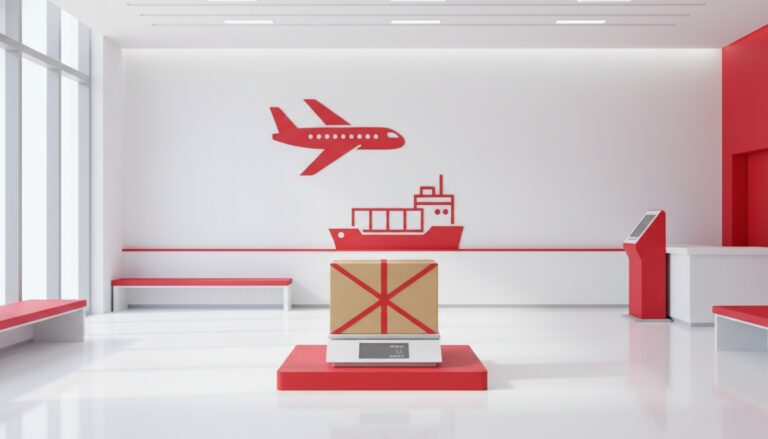
Too Much K-Pop Merch? How to Send a Box Home from Korea Without Panicking
Phase 1: The “Luggage Overweight” Crisis
Hello! It’s your editor from Daily Hangul.
Let’s be honest. You came to Korea with one empty suitcase, promising yourself you wouldn’t buy much. Fast forward two weeks, and you’re standing in your Airbnb in Hongdae, staring at a mountain of skincare masks, bulky winter coats, and—let’s not forget—that 5kg box of K-Pop albums you bought for the photocards.
Your flight is tomorrow. Your luggage won’t close.
This is the classic “I need to go to the Post Office (Ucheguk)” moment.
But walking into a Korean post office can feel like stepping onto a rigorous game show. People are moving fast, tape is flying everywhere, and the forms are all in Korean. In K-Dramas, sending a package is usually a sentimental scene with slow piano music. In reality? It’s a speed sport.
Don’t worry. Today, I’m going to help you navigate the chaos so you can send your treasures home safely.
Phase 2: The Core Expressions (Deep Dive)
Here are the three phrases that will save your life at the counter.
1. 해외로 소포를 보내려고 하는데요.
- Pronunciation: [Hae-oe-ro sopo-reul bonaeryeogo handeyo]
- Sound-alike: “Hey-way-ro so-po-reul bo-nay-ryeo-go han-day-yo”
- Meaning: (Literal) I am intending to send a parcel overseas. / (Real) I need to ship this abroad.
- K-Culture Moment: Imagine a scene where a protagonist is sending a scarf to their lover studying abroad. It’s the opening line that starts the sad music.
- Editor’s Insight: The ending
~려고 하는데요is magic. It’s softer than saying “I want to send” (보내고 싶어요). It implies, “I want to do this, so please guide me on what to do next.” - Situation Spectrum:
[🚫 Boss] ———— [⚠️ Colleague] ———— [✅ Clerk/Stranger]
🤔 Think About It: Why do Koreans often end sentences with “…undeyo” (는데요)? It leaves the sentence open-ended, inviting the listener to step in and help. It’s a linguistic way of creating cooperation.
2. EMS로 보내면 얼마나 걸려요?
- Pronunciation: [EMS-ro bonaemyeon eolmana geollyeoyo?]
- Sound-alike: “EMS-ro bo-nay-myun ol-ma-na gul-yuh-yo?”
- Meaning: How long does it take if I send it by EMS?
- Editor’s Insight: EMS (Express Mail Service) is the king of shipping in Korea. It’s fast (usually 3-5 days) but pricey. If you are broke, ask for 선편 (Seon-pyeon)—surface/ship mail. It takes months, but it’s cheap.
- Situation Spectrum:
[🚫 Formal Speech] ———— [⚠️ Polite] ———— [✅ Casual/Standard]
3. 내용물이 뭐예요?
- Pronunciation: [Naeyongmuri mwoyeyo?]
- Sound-alike: “Nay-yong-mul-ee mwo-yay-yo?”
- Meaning: What’s inside? / What are the contents?
- Editor’s Insight: You will hear this from the clerk. Be prepared. They aren’t being nosy; they need to know for customs. If you stutter here, the line behind you gets restless.
Phase 3: Textbook vs. Real Life
Let’s see how a textbook teaches this versus what happens in a busy Seoul post office.
| Situation | 📖 Textbook Korean | 🗣️ Real Korean | 💡 Why the difference? |
|---|---|---|---|
| Starting | 소포를 부치고 싶습니다. (I wish to post a parcel.) | 이거 미국으로 보낼 건데요. (Sending this to the US.) | Real life is about efficiency. Pointing at the box + Destination is faster. |
| Asking Time | 도착까지 며칠이 소요됩니까? (How many days required?) | 언제쯤 도착해요? (When does it arrive roughly?) | “Soyo” is too formal for a counter chat. “Eonje-jjeum” is softer. |
| Checking Price | 요금이 얼마입니까? (What is the fee?) | 제일 싼 거로 해주세요. (Please do the cheapest one.) | We don’t just ask the price; we immediately state our preference (speed vs. cost). |
Bottom Note: If you use the Textbook version, you sound like a polite news anchor. If you use the Real version, you sound like a local getting things done.
Phase 4: Cultural Deep Dive — The Art of “Palli-Palli” Packing
4-1. The Self-Packing Station
Unlike many Western post offices where you hand over the item and they box it, in Korea, you are the packer.
Walk into any Ucheguk and you’ll see a table with:
– Scissors ✂️
– Tape (lots of it) 🎞️
– Glue 🧴
– Bubble wrap (sometimes)
Non-verbal Tip: Do not approach the counter until your box is taped shut and the address is written. If you walk up with an open box, the clerk will silently point to the packing table. It’s not rude; it’s the flow.
4-2. The “Service” (Seo-bi-su) Culture
If you buy a box (ranges from Size 1 to 6), sometimes the “helper adjusshi” (older gentleman) in the lobby will help you tape it up perfectly. This isn’t their official job, but part of the communal Jeong (affection/bond). If they help you, a warm “Kamsahamnida” with a slight bow is essential.
Phase 5: Immersive Roleplay
Setting: It’s 4 PM on a Friday. The Gwanghwamun Post Office is buzzing. You have a box of snacks and a hoodie to send to your friend in Canada.
Characters:
– YOU: A tourist/student trying to offload luggage weight.
– Clerk: Efficient, fast, typing loudly on the keyboard.
Dialogue:
Clerk: (Without looking up) 어서 오세요. 박스 저울에 올려주세요.
(Eoseo oseyo. Bakseu jeoure ollyeojuseyo.)
(Welcome. Please put the box on the scale.)
YOU: (Heaving the box onto the scale)
네. 캐나다로 보내려고 하는데요.
(Ne. Canada-ro bonaeryeogo handeyo.)
(Okay. I’m intending to send this to Canada.)
Clerk: (Looking at the screen) EMS로 하실 건가요?
(EMS-ro hasil geongayo?)
(Will you do EMS?)
🔀 Decision Point! How do you reply?
- A) “네, 빨리 가는 걸로 해주세요.” (Yes, please do the one that goes fast.)
- B) “아니요, 너무 비싸요. 배로 보내주세요.” (No, too expensive. Send it by ship.)
- C) “안에 김치 있어요.” (There is Kimchi inside.)
✅ Best Choice: A. If it’s food/snacks, EMS is safer. Surface mail takes too long and food might spoil.
⚠️ Warning on C: Mentioning Kimchi might trigger a specific “leak-proof” check!
Clerk: 내용물이 뭐예요? 음식물 있나요?
(Naeyongmuri mwoyeyo? Eumsingmul innayo?)
(What’s inside? Any food?)
YOU: 과자랑 옷이에요. 배터리는 없어요!
(Gwajarang osieyo. Baeterineun eopseoyo!)
(Snacks and clothes. No batteries!)
(Stage Direction: The clerk nods approvingly at your proactive mention of batteries. You passed the test.)
Phase 6: 10-Second Shadowing Drill
Let’s practice the intonation. Korean questions often curve up gently at the end.
- Thinking & Hesitating (Softly):
😥 이거 / 해외로 / 보내려고 / 하는데요…
(igeo / hae-oe-ro / bonaeryeogo / handeyo…) -
Asking for Speed (Curiously):
🚀 제일 / 빠른 거로 / 해주세요!
(jeil / ppareun georo / haejuseyo!) -
The “No Battery” Declaration (Confidently):
🔋 안에 / 배터리 / 없어요.
(ane / baeteri / eopseoyo.)
Phase 7: K-Culture Mini Glossary
| Korean | Romanization | Meaning | Context |
|---|---|---|---|
| 택배 | Taekbae | Delivery Service | The lifeblood of modern Korea. Ordering today, arriving tomorrow (Rocket Delivery). |
| 금지 품목 | Geumji Pummok | Prohibited Items | Batteries, spray cans, perfume. Memorize these! |
| 통관 | Tong-gwan | Customs Clearance | The scary word you see when tracking your package. |
| 착불 | Chakbul | Cash on Delivery | Receiver pays shipping fee. Rare for international, common domestic. |
Phase 8: Traveler’s Survival Kit
If you are sending things home, you need these phrases.
🆘 Survival Phrases
– 🇰🇷 “이 박스 얼마예요?” (I box eolmayeyo?) – How much is this box?
– 🇰🇷 “테이프 좀 써도 될까요?” (Tape jom sseudo doelkkayo?) – Can I use the tape?
– 🇰🇷 “배터리 뺐어요.” (Battery ppaesseoyo.) – I took out the batteries.📌 Editor’s Note:
Use the Post Office App or website to “Pre-register” your EMS label in English before you go. You get a discount, and you don’t have to hand-write the address at the counter!
Phase 9: Think Deeper — The Culture of Trust
Why do Koreans leave packages at the door?
If you live in Korea, you’ll notice taekbae boxes piled up in front of apartment doors, completely unguarded. In many other countries, this is an invitation for theft. In Korea, it’s normal.
This reflects a high-trust society and the ubiquity of CCTV (and perhaps the fact that everyone is too busy to steal your shampoo). But when sending packages out of Korea, the system changes. You suddenly have to declare everything. It’s an interesting clash between the seamless, trust-based domestic system and the rigid, bureaucratic international system.
💬 Your Turn: Would you feel safe leaving a laptop delivered to your front door in your hometown? Why or why not?
Phase 10: FAQ & Troubleshooting
Q: Can I send K-Pop albums with the batteries inside the lightstick?
A: NO. Lithium batteries are the #1 enemy of air mail. You must remove them. If the scanner finds them, your package will be returned (and you don’t get a full refund).
Q: I don’t know the address in Korean.
A: That’s fine! For international shipping, you must write the receiving address in English anyway. Just make sure the country name is clear.
❌ Common Mistake: sealing the box before the clerk checks it.
✅ Fix: Sometimes they ask to see inside. Tape the bottom, but leave the top open until you are at the scale (unless you are 100% sure you have no prohibited items).
Phase 11: Wrap-up & Mission
Summary: Sending a package is a DIY sport in Korea. Pack it yourself, check for batteries, and use “~ryeogo handeyo” to start the conversation gently.
🎯 Action Mission:
– 🥉 Bronze: Go to a post office and just buy a box (Size 1 is cute and cheap).
– 🥈 Silver: Pack a small souvenir and verify the weight on the lobby scale.
– 🥇 Gold: Actually send a postcard or package to your family using the phrases above!
Phase 12: Quiz — The Post Office Challenge
1. The clerk asks: “안에 배터리 있어요?” (Are there batteries inside?) You have a lightstick in the box. What do you say?
– A) 네, 있어요. (Yes, there are.)
– B) 아니요, 뺐어요. (No, I took them out.)
– C) 몰라요. (I don’t know.)
2. Which phrase is best to ask for the cheapest shipping method?
– A) 제일 빠른 거로 주세요. (Give me the fastest one.)
– B) 제일 싼 거로, 선편으로 해주세요. (The cheapest one, by ship please.)
– C) EMS로 보내주세요. (Send by EMS please.)
Answers:
1. B (You must remove them!)
2. B (Seon-pyeon is the cheapest.)
Frequently Asked Questions (FAQ)
Q: What does "해외로 소포를 보내려고 하는데요." mean in Korean and how do you pronounce it?
A: In Korean, "해외로 소포를 보내려고 하는데요." is pronounced [Hae-oe-ro sopo-reul bonaeryeogo handeyo] and means: (Literal) I am intending to send a parcel overseas. / (Real) I need to ship this abroad.
Q: What does "EMS로 보내면 얼마나 걸려요?" mean in Korean and how do you pronounce it?
A: In Korean, "EMS로 보내면 얼마나 걸려요?" is pronounced [EMS-ro bonaemyeon eolmana geollyeoyo?] and means: How long does it take if I send it by EMS?
Q: What does "내용물이 뭐예요?" mean in Korean and how do you pronounce it?
A: In Korean, "내용물이 뭐예요?" is pronounced [Naeyongmuri mwoyeyo?] and means: What’s inside? / What are the contents?







