

Phase 1: The Scent That Saves Marriages? 🐟
Hello! It’s your Daily Hangul editor.
Imagine this scene from a K-Drama: A character is furious, packing their bags to leave the house forever. Suddenly, a smell wafts in from the kitchen. They stop. They sniff. They drop the bags and run to the table.
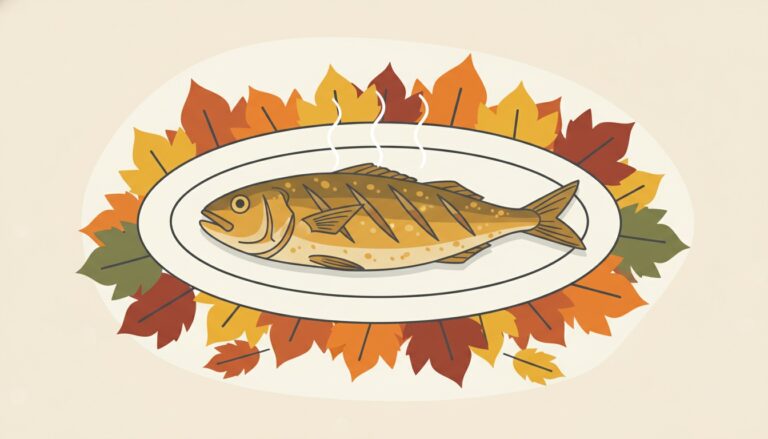
Is this magic? No, it’s “Autumn Jeoneo” (가을 전어).
In Korea, we have a funny (and slightly old-fashioned) saying: “The smell of roasting autumn gizzard shad brings a runaway daughter-in-law back home.” (집 나간 며느리도 돌아오게 한다).
Why? Because in autumn, this fish stores up fat for winter, making it incredibly savory. If you visit Korea in September or October, you cannot miss this. Today, let’s learn how to order and enjoy this legendary fish like a local foodie, not just a tourist looking at a menu in confusion.
Phase 2: Core Expressions Deep Dive
Here are the three phrases you need to survive a Korean seafood restaurant in autumn.
1. 전어 철이에요? (Jeoneo cheol-ieyo?)
- Pronunciation: [Jeoneo] sounds like ‘John-uh’ / [cheol] sounds like ‘chull’ / [ieyo] sounds like ‘e-yeah-yo’.
- Meaning: Is it Jeoneo (gizzard shad) season?
- K-Culture Moment: You know how K-Pop idols have “comebacks”? Korean food has comebacks too. We call it “Jecheol” (제철 – in season). Asking this question shows you know that food tastes best at specific times.
- Editor’s Insight: Even if you know it is autumn, asking this makes you look like a connoisseur. The owner will excitedly say, “Yes, it’s the best time now!”
- Situation Spectrum:
[🚫 Formal] ———— [✅ Casual/Polite] ———— [✅ Friendly]- 🤔 Think About It: Why do you think Koreans are so obsessed with eating food only in its specific season, even with modern farming? Is it just taste, or something else?
2. 뼈째 먹는 거예요? (Ppyeojjae meongneun geoyeyo?)
- Pronunciation: [Ppyeo-jjae] (Double ‘P’ is tense! Like holding your breath) + [meong-neun] + [geo-ye-yo].
- Meaning: Do I eat it with the bones?
- Real Nuance: “Wait, am I supposed to chew through these bones?”
- Editor’s Insight: Warning: Jeoneo is famous for having many tiny bones. Locals slice it raw and eat bones and all (sekkosi). If you are not used to this texture, it can be shocking. Asking this prepares your mind (and your teeth).
- Situation Spectrum:
[🚫 Formal] ———— [✅ Casual/Polite] ———— [✅ Friendly]3. 고소해요! (Goso-haeyo!)
- Pronunciation: [Go-so-hae-yo]
- Meaning: It’s nutty/savory!
- K-Culture Moment: Watch any Korean food show (Mukbang). When they eat sesame oil, nuts, or grilled fish, they scream “Goso-hae!” It’s a flavor profile distinct from salty or sweet.
- Editor’s Insight: This is the highest compliment for Jeoneo. It’s not just “delicious” (mashisseoyo); it’s specifically rich and nutty.
[✅ Casual/Polite]
Phase 3: Textbook vs. Real Life
| Situation | 📖 Textbook Korean | 🗣️ Real Korean | 💡 Why the difference? |
|---|---|---|---|
| Asking if it tastes good | 맛이 어때요? (How is the taste?) | 기름이 꽉 찼어요? (Is it full of oil/fat?) | For Jeoneo, fat = flavor. Asking about oiliness proves you know the fish. |
| Ordering | 전어 주세요. (Give me Jeoneo.) | 전어 구이 반, 회 반 돼요? (Can I get half grilled, half raw?) | Koreans love variety (“Half/Half” culture like fried chicken). |
| Reacting to the taste | 맛있습니다. (It is delicious.) | 집 나간 며느리도 돌아오겠네! (Even the runaway daughter-in-law would return!) | Using the proverb as a joke makes you an instant insider. |
Phase 4: Cultural Deep Dive
4-1. The Art of “Ssam” (Wrap)
When eating Jeoneo raw (sashimi), don’t just dip it in soy sauce. That’s for white fish. For Jeoneo:
1. Take a sesame leaf (kkaennip).
2. Put a slice of fish dipped in Chojang (vinegar red pepper paste) or Doenjang (soybean paste).
3. Add a slice of raw garlic.
4. Wrap it and eat it in one bite.
Non-verbal tip: Do not bite the wrap in half. It’s considered messy. Stuff it all in!
4-2. K-Drama Connection: The “Pojangmacha” Scene
You’ve seen it a hundred times. The main character sits in an orange tent (Pojangmacha), drinking Soju. In autumn, the side dish on that plastic table is almost guaranteed to be Jeoneo Gui (Grilled Gizzard Shad).
Think Deeper: Why is this fish associated with the working class and “sorrow” in dramas? It used to be a cheap, abundant fish that common people could enjoy. Now, it’s a trendy delicacy, but it still carries that nostalgic, “comfort food” vibe.
Phase 5: Immersive Roleplay
Setting: A bustling fish market in Busan. Friday night, 7 PM. The smell of grilled fish is everywhere.
Characters:
– YOU: A hungry traveler wanting to try seasonal food.
– Ajumma: The energetic stall owner, flipping fish on a grill.
Ajumma: (Waving tongs) 아이고! 어서 오이소! 전어 싱싱합니데이!
(Aigo! Eoseo oiso! Jeoneo singsing-hamnidei!)
[Hey! Come here! The Jeoneo is fresh!]
YOU: (Smelling the air) 와, 냄새가 진짜 좋네요.
(Wa, naemsaega jinjja jonneyo.)
[Wow, the smell is really good.]
Ajumma: 그치예? 가을 전어는 깨가 서 말이라 안 카나. 어떻게 해 드릴까?
(Geuchiye? … Eotteoke hae deurilkka?)
[Right? They say autumn Jeoneo is worth three sacks of sesame seeds. How would you like it prepared?]
🔀 Your Turn! Decision Point
Option A: “Just give me the grilled one.” (Safe, delicious)
Option B: “Can I try it raw (Sashimi)?” (Brave, texture challenge)
Option C: “Half grilled, half raw, please!” (The Pro Move)
✅ Best Choice: Option C
Translation: “구이 반, 회 반 주세요!” (Gui ban, Hoe ban juseyo!)
Reason: This lets you experience the savory grilled taste AND the fresh, crunchy texture of the raw fish. The Ajumma will respect your appetite.
Phase 6: 10-Second Shadowing Drill
Let’s practice the reaction when you take that first bite.
Emotion: Pure bliss and surprise. 😊
Sentence:
와… / 진짜 / 고소해요! / 입에서 / 살살 / 녹아요!
(Wa… / jinjja / goso-haeyo! / ib-eseo / salsal / nogayo!)
Meaning: Wow… it’s really nutty! It melts softly in my mouth!
Phase 7: K-Culture Glossary
| Korean | Romanization | Meaning | Context |
|---|---|---|---|
| 제철 | Jecheol | In season | Food tastes 10x better during its “Jecheol.” |
| 뼈째 | Ppyeojjae | Bone-in | Eating fish without removing bones (common for Jeoneo). |
| 며느리 | Myeoneuri | Daughter-in-law | The protagonist of the famous Jeoneo proverb. |
| 고소하다 | Gosohada | Nutty/Savory | The specific taste of sesame oil, nuts, or fatty grilled fish. |
Phase 8: Traveler’s Survival Kit (Fish Market Edition)
If you go to Noryangjin Market (Seoul) or Jagalchi Market (Busan), you need these.
🆘 Survival Phrases
– 🇰🇷 “얼마치 주면 돼요?” (Eolmachi jumyeon dwaeyo?)
– Meaning: How much should I buy (for this many people)?
– Tip: Instead of saying “1kg,” point to your group. The seller knows best.
– 🇰🇷 “초장 좀 넉넉히 주세요.” (Chojang jom neongneoki juseyo.)
– Meaning: Please give me plenty of dipping sauce.📌 Editor’s Travel Note:
– Pricing: In autumn, Jeoneo is popular, so prices go up. Expect to pay about 30,000~40,000 KRW for a plate.
– The Bones: If you absolutely cannot eat bones, ask for “Po-tteo juseyo” (Fillet it, please). But for Jeoneo, this is hard work, and some places might refuse or charge extra!
Phase 9: Think Deeper — “The Runaway Daughter-in-law”
Let’s talk about that proverb again: “The smell of roasting autumn Jeoneo brings a runaway daughter-in-law back home.”
While it sounds funny, it hints at the historical hardships of Korean women. In the past, the life of a myeoneuri (daughter-in-law) living with her husband’s family was incredibly stressful—so much so that she might want to run away. The proverb implies that the fish is delicious enough to make her forget that pain, even for a moment.
🧠 Question: In your culture, is there a food that is so delicious it makes you forgive someone or forget your anger? Share it in the comments!
Phase 10: FAQ & Troubleshooting
Q: Can I eat Jeoneo in Spring?
A: You can, but Koreans will look at you strangely. Spring Jeoneo has less fat and tastes bland. It’s like eating a watermelon in winter. Just wait for autumn!
Q: Is it safe to eat raw fish from a street tent?
A: Generally, yes. Korea has a very high turnover rate for seafood, meaning it’s usually fresh. But if you have a sensitive stomach, stick to “Jeoneo Gui” (Grilled) just to be safe.
❌ Common Mistake: Trying to pick out the bones with your fingers.
✅ Fix: The bones are soft. Chew them thoroughly! It adds calcium and a savory flavor. If you pick them out, you’ll look like a baby bird.
Phase 11: Wrap-up & Action Mission
Summary: Autumn in Korea means Jeoneo. Remember to ask if it’s Jecheol, try eating it Ppyeojjae (bones and all), and enjoy the Goso taste!
🏆 Your Action Mission:
– 🥉 Bronze: Practice saying “Goso-haeyo” while eating some nuts or peanut butter today.
– 🥈 Silver: Search #가을전어 on Instagram. Look at the difference between grilled (brown/crispy) and raw (silver/shiny).
– 🥇 Gold: Go to a Korean restaurant and ask, “Do you have any seasonal menu items?” (Jecheol menu isseoyo?)
Phase 12: Mini Quiz
- True or False: You should carefully remove every single bone from Autumn Jeoneo before eating.
- Situation: The owner asks how you like the fish. You want to say it’s “nutty and savory.” You say:
A) Mae-wo-yo! (It’s spicy!)
B) Go-so-hae-yo! (It’s nutty!)
C) Jja-yo! (It’s salty!)
(Answers: 1. False! Chew them well. 2. B)
Frequently Asked Questions (FAQ)
Q: What does "전어 철이에요? (Jeoneo cheol-ieyo?)" mean in Korean and how do you pronounce it?
A: In Korean, "전어 철이에요? (Jeoneo cheol-ieyo?)" is pronounced [Jeoneo] and means: Is it Jeoneo (gizzard shad) season?
Q: What does "뼈째 먹는 거예요? (Ppyeojjae meongneun geoyeyo?)" mean in Korean and how do you pronounce it?
A: In Korean, "뼈째 먹는 거예요? (Ppyeojjae meongneun geoyeyo?)" is pronounced [Ppyeo-jjae] and means: Do I eat it with the bones?
Q: What does "고소해요! (Goso-haeyo!)" mean in Korean and how do you pronounce it?
A: In Korean, "고소해요! (Goso-haeyo!)" is pronounced [Go-so-hae-yo] and means: It’s nutty/savory!






