

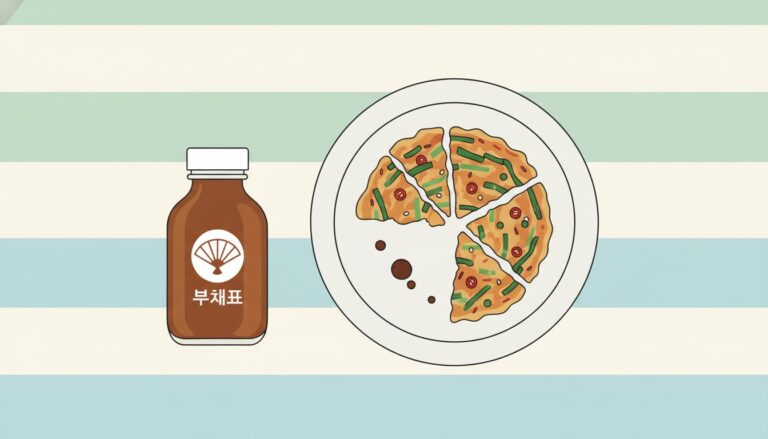
Phase 1: The ‘Ugh’ After the Feast (Immersive Hook)
Hello! This is your Daily Hangul Editor.
Let’s be real for a second. You’ve seen those K-Dramas where the family gathers for Chuseok (Korean Thanksgiving). The table is groaning under the weight of Jeon (fried pancakes), Japchae (glass noodles), and Galbi (ribs). It looks beautiful.
But here is the scene the cameras usually cut away from: The next morning.
You wake up. You don’t just feel full; you feel heavy. Your stomach feels like it’s coated in oil. In Korea, we don’t just say “I have a stomachache.” We have a specific vocabulary for the aftermath of a greasy feast.
If you are in Korea during the holidays, or just went too hard at a K-BBQ buffet, you need these words to survive (and to get the right medicine at the pharmacy!).
Phase 2: Deep Dive (The Words You Need)
1. 속이 느글거려요 (Sogi neugeul-georyeoyo)
- Pronunciation: [So-gi neu-geul-geo-ryeo-yo]
- Sound Analogy: ‘Neu’ sounds a bit like the ‘nu’ in ‘nut’, but imagine you are making a disgusted face while saying it.
- Meaning: My stomach feels greasy / I feel queasy from oily food.
- Real Nuance: This isn’t just a stomachache. This is specifically when you’ve eaten too much fried food (like tempura or pork belly) and you feel the oil sitting in your chest. It creates a desperate need for something spicy or carbonated.
- Situation Spectrum:
[🚫 Boss (Formal)] ———— [⚠️ Colleagues] ———— [✅ Friends]
(Note: This is a descriptive state, so it’s okay to use with colleagues if you add ‘yo’ at the end, but it sounds a bit whining.)- 🤔 Think About It: English doesn’t really have a single word for “feeling sick specifically because of grease.” Why do you think Korean does? (Hint: Look at our cuisine!)
2. 체한 것 같아요 (Che-han geo gat-a-yo)
- Pronunciation: [Che-han geo ga-ta-yo]
- Meaning: I think I have indigestion.
- K-Culture Moment: You know that scene in every family drama where the mom brings out a needle and grabs the dad’s thumb? That is to treat Che (indigestion).
- Editor’s Insight: ‘Che-ha-da’ implies your food is “stuck.” It’s not moving down. You feel a blockage in your upper stomach. It’s the most common ailment after fast eating.
- Situation Spectrum:
[🚫 ] ———— [⚠️ ] ———— [✅ All OK]
(This is a medical condition, so it’s safe to use with anyone.)3. 배탈 났어요 (Baetal nasseoyo)
- Pronunciation: [Bae-tal na-sseo-yo]
- Meaning: I have an upset stomach / I have diarrhea.
- Editor’s Insight: Use this with caution. ‘Baetal’ often implies you are running to the bathroom. If you tell this to your crush, you might kill the romance. If you tell this to your boss, they will let you go home early.
Phase 3: Textbook vs. Real Life
| Situation | 📖 Textbook Korean | 🗣️ Real Korean (The Vibe) | 💡 Why? |
|---|---|---|---|
| Feeling greasy | 기름진 음식을 많이 먹어서 속이 안 좋아요. (I ate greasy food so my stomach is bad.) | 아, 속 니글거려. 김치 없어? (Ah, so greasy. Got any Kimchi?) | Koreans believe Kimchi or spicy ramen “washes down” the grease. |
| Indigestion | 소화가 잘 안 됩니다. (Digestion is not working well.) | 나 체했나 봐. 손 따야 되나? (I think I’m backed up. Should I prick my hand?) | Referring to the folk remedy shows you know the culture deep down. |
| Too full | 배가 너무 부릅니다. (My stomach is too full.) | 배 터질 것 같아. (My stomach is going to explode.) | Hyperbole is the heart of Korean casual speech. |
Bottom Note: B1 learners, stick to “속이 안 좋아요” (My stomach isn’t good) if you are unsure. It covers everything safely!
Phase 4: Cultural Deep Dive — The “Antidote” Culture
K-Food Connection: The Post-Grease Ritual
In Korea, eating greasy food (like Chuseok pancakes) isn’t the end of the meal. It creates a problem that must be solved. This is why you will see Koreans rushing to eat Ramyeon (Spicy noodles) or drinking an Iced Americano immediately after a heavy meal.
We call this “Naeryeo-ganda” (It’s going down / washing it down).
If you say “I need something spicy to wash down the grease,” your Korean friends will look at you with tears of pride in their eyes. You have understood the essence of the Korean palate.
Phase 5: Roleplay — The Day After Chuseok
Setting: Tuesday, 1:00 PM. A cafe near the office. Everyone looks tired and bloated from the holiday food.
Characters:
* YOU: Feeling heavy after eating too much Grandma’s cooking.
* Min-ji: Your Korean colleague who loves spicy food.
Dialogue:
Min-ji: 연휴 때 맛있는 거 많이 먹었어요? 얼굴이 좋아 보이네요!
(Yeonhyu ttae masinneun geo mani meogeosseoyo? Eolguri joa boineyo!)
Did you eat lots of good stuff over the break? Your face looks… healthy (round)!
YOU (Select your response):
🔀 Option A: 네, 많이 먹었어요. (Yes, I ate a lot.)
🔀 Option B: 아, 말도 마세요. 전만 100개 먹은 것 같아요. (Don’t even ask. I think I ate 100 pancakes.)
✅ Best Choice: B (Complaining about overeating builds rapport!)
Min-ji: ㅋㅋㅋ 진짜요? 저도요. 지금 속이 너무 느글거려요.
(Kkk jinjja-yo? Jeodo-yo. Jigeum sogi neomu neugeul-georyeoyo.)
Lol really? Me too. My stomach feels so greasy/queasy right now.
YOU:
맞아요. [ 1. Fill in the blank ].
(Majayo. _______________.)
Right. I feel like I have indigestion.
Min-ji: 그럼 우리 점심에 매운 짬뽕 먹으러 갈까요?
(Geureom uri jeomsime maeun jjamppong meogeureo galkkayo?)
Then shall we go eat spicy seafood noodles for lunch?
YOU:
콜! 그거 먹으면 [ 2. Fill in the blank ] 것 같아요.
(Call! Geugeo meogeumyeon ___________ geo gat-a-yo.)
Deal! If I eat that, I think it will wash it all down (go down).
(Answers: 1. 체한 것 같아요 / 2. 내려갈)
Phase 6: 10-Second Shadowing Drill
Imagine you are rubbing your stomach and frowning slightly. Do not smile!
😢 I think I ate something wrong…
아… / 뭘 잘못 먹었나 봐요. / 속이 안 좋아요.
(Ah… / mwol jal-mot meo-geont-na bwa-yo. / Sogi an jo-a-yo.)
Phase 7: K-Culture Glossary (Pharmacy Edition)
| Korean | Rom | Meaning | Context |
|---|---|---|---|
| 소화제 | So-hwa-je | Digestive medicine | Ask for this at the pharmacy if you feel “stuck.” |
| 까스활명수 | Gas Hwal-myeong-su | “Gas Life Saving Water” | The legendary brown drink found in every convenience store. Tastes like minty herbal medicine. The distinct cure for Chuseok overeating. |
| 매실차 | Maesil-cha | Plum Tea | A traditional home remedy for stomachaches. Often served cold. |
Phase 8: Traveler’s Survival Kit
Getting Sick on a Trip? Don’t Panic.
If the greasy street food didn’t agree with you, here is your survival card.
🆘 Pharmacy (Yakguk) Card
– 🇰🇷 “소화제 주세요. 체한 것 같아요.”
(So-hwa-je ju-se-yo. Che-han geo ga-ta-yo.)
– 🗣️ Meaning: “Please give me digestive medicine. I think I have indigestion.”
– 📍 Where: Any place with a “약” (Yak) sign.
– 💡 Pro Tip: Korean pharmacies are incredibly efficient. You don’t need a prescription for basic indigestion pills or drinks. Just point to your stomach and frown.
Phase 9: Think Deeper — Food & Community
Why do Koreans constantly ask “Have you eaten?”
During holidays like Chuseok, the concept of Jeong (정 – deep affection/bond) is physically manifested through food. Refusing food can sometimes be seen as rejecting Jeong.
When a Korean grandmother keeps putting Galbi on your plate despite you saying “I’m full,” she isn’t ignoring your words; she is expressing care. Overeating and getting a stomachache is almost a shared cultural experience—a sign that you participated fully in the communal affection.
🧠 Think Deeper: In your culture, is overeating at holidays seen as a compliment to the cook, or a lack of self-control? How do you say “no” to food without being rude?
Phase 10: FAQ & Troubleshooting
Q: Can I just burp loudly to show I enjoyed the meal?
A: NO! 🛑 Unlike some cultures where burping is a compliment, in Korea, it is considered rude at the table. Cover your mouth and turn your head away if it happens.
Q: Is the “hand pricking” (Sondaagi) thing real?
A: Yes! Many older Koreans swear by pricking the thumb with a needle to let out “bad blood” (black blood) when you have indigestion. As a foreigner, you aren’t expected to do it, but if you let a Korean friend do it for you, you will be legendary.
❌ Common Mistake:
Don’t say “I am sick” (아파요 – Apayo) if you just have indigestion. “Apayo” sounds like you need a hospital or have a fever. Be specific: “Sogi an jo-a-yo” (My insides are not good).
Phase 11: Wrap-up & Mission
Summary: Korean holidays = Greasy food. Result = Neugeul-georyeoyo (Greasy feeling) or Che-haess-eo-yo (Indigestion). The cure = Spicy food or Hwal-myeong-su.
🎯 Action Mission:
* 🥉 Bronze: Go to a Korean convenience store (or Asian market) and find a bottle of “Gas Hwal-myeong-su” (look for the fan logo).
* 🥈 Silver: Next time you eat pizza or burgers, try saying “Ah, neugeul-georyeo!” to yourself.
* 🥇 Gold: Post a photo of your greasy meal on social media with the caption: “Need Kimchi! 속이 느글거려요!”
Phase 12: Interactive Quiz
1. Which food would a Korean most likely seek after eating too much greasy pancake?
a) Cream Pasta
b) Spicy Ramyeon
c) Cheese Cake
2. True or False?
You should tell your boss “Baetal nasseoyo” (I have diarrhea) to explain why you are 5 minutes late.
(Hint: TMI!)
3. Fill in the blank:
“I ate too fast. I feel stuck.” -> “저 [ ____ ] 것 같아요.”
(Scroll down for answers)
.
.
.
Answers:
1. b) Spicy Ramyeon (To “wash down” the grease)
2. False. Just say “Mom-i an jo-a-yo” (I don’t feel well). Keep the bathroom details private in professional settings!
3. 체한 (Che-han)
Frequently Asked Questions (FAQ)
Q: What does "속이 느글거려요 (Sogi neugeul-georyeoyo)" mean in Korean and how do you pronounce it?
A: In Korean, "속이 느글거려요 (Sogi neugeul-georyeoyo)" is pronounced [So-gi neu-geul-geo-ryeo-yo] and means: My stomach feels greasy / I feel queasy from oily food.
Q: What does "체한 것 같아요 (Che-han geo gat-a-yo)" mean in Korean and how do you pronounce it?
A: In Korean, "체한 것 같아요 (Che-han geo gat-a-yo)" is pronounced [Che-han geo ga-ta-yo] and means: I think I have indigestion.
Q: What does "배탈 났어요 (Baetal nasseoyo)" mean in Korean and how do you pronounce it?
A: In Korean, "배탈 났어요 (Baetal nasseoyo)" is pronounced [Bae-tal na-sseo-yo] and means: I have an upset stomach / I have diarrhea.







