

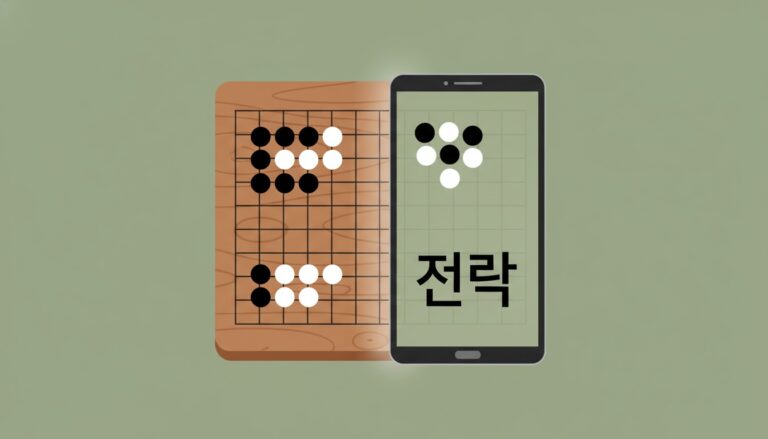
Sun Tzu in Seoul: Surviving Modern Korea with Ancient Strategy
Phase 1: The Battlefield of Daily Life
Hello, Daily Hangul readers.
Picture this: You are watching a tense scene in the K-Drama Misaeng (Incomplete Life). A junior intern stands before a terrifying executive. The air is heavy. The intern isn’t fighting with a sword, but with words, silence, and timing. The executive smirks and says, “So, you think you can handle the weight?”
That tension? That’s the modern battlefield.
In Korea, The Art of War (손자병법, Sonja-byeongbeop) isn’t just a dusty book for history buffs. It is a survival manual for the boardroom, the university entrance exam, and even the psychological warfare of a blind date.
Learning Korean at a C1 level means understanding these underlying strategies. It’s not just about knowing vocabulary; it’s about knowing when to strike and when to retreat. Today, we look at how ancient wisdom shapes the way Koreans speak, negotiate, and survive.
Phase 2: The Strategist’s Vocabulary (Deep Dive)
1. 지피지기 (Ji-pi-ji-gi)
- Pronunciation: [ji-pi-ji-gi] (Sounds like: “Gee-P-Gee-Ghee” said quickly)
- Meaning: Lit. “Know other, know self.” (Short for: If you know your enemy and know yourself, you need not fear the result of a hundred battles.)
- Real Nuance: “Read the room before you act.” It’s the ultimate justification for Nunchi.
- K-Culture Moment: In survival shows like The Genius or Physical: 100, contestants often whisper this before choosing an opponent. They aren’t just picking a fight; they are analyzing data.
- Editor’s Insight: You will hear this in business meetings when analyzing competitors. But my friends also use it jokingly when stalking an ex’s new partner on Instagram. “Data collection,” they call it.
- Situation Spectrum:
[🚫 Formal Only] ———— [⚠️ Semi-Formal] ———— [✅ Universal]
(This is a idiom rooted in Hanja, so it’s safe everywhere, but sounds intellectual.)
🤔 Think About It: Why does a culture value “knowing the other” (Ji-pi) before “knowing oneself” (Ji-gi)? Does this reflect the collectivist focus on the group dynamic over the individual ego?
2. 기선 제압 (Gi-seon je-ap)
- Pronunciation: [gi-seon je-ap]
- Meaning: Preemptive suppression; Dominate the atmosphere/initiative.
- Real Nuance: “Establish dominance immediately.” Breaking the opponent’s spirit before the fight starts.
- K-Culture Moment: Think of that K-Pop opening stage where the idol stares into the camera for 5 seconds without blinking. That is Gi-seon je-ap. Or when a lawyer in a drama slams a document on the table first.
- Editor’s Insight: It’s not always aggressive. Walking into an interview with a bright, loud greeting is also a form of Gi-seon je-ap—showing you are confident.
- Situation Spectrum:
[🚫 Casual Friends] ———— [⚠️ Competitive] ———— [✅ Sports/Business]
3. 성동격서 (Seong-dong-gyeok-seo)
- Pronunciation: [seong-dong-gyeok-seo]
- Meaning: Make a noise in the east, strike in the west.
- Real Nuance: A diversion tactic. Feinting.
- K-Culture Moment: Used metaphorically in variety shows like Running Man when betraying a teammate. Also used in marketing: “They launched a cheap product to distract us, but the premium line is the real target.”
- Editor’s Insight: This is advanced. If you use this in a conversation, people will assume you read a lot of newspapers or history books.
Phase 3: Textbook vs. Real Life
| Situation | 📖 Textbook Korean | 🗣️ Real Korean (Street/Biz) | 💡 Why the difference? |
|---|---|---|---|
| Sensing the vibe | 분위기를 파악해야 해요. (You must understand the atmosphere.) | 눈치 챙겨. (Pack your nunchi/Get a clue.) | “Atmosphere” is too passive. In reality, it’s an active survival skill you must “carry” with you. |
| Winning quietly | 싸우지 않고 이기는 것이 최선입니다. (Winning without fighting is best.) | 무혈입성. (Bloodless entry/victory.) | News headlines and office workers love 4-character idioms (Sajeo-seong-eo) for efficiency and impact. |
| A chaotic situation | 전쟁터 같아요. (It is like a battlefield.) | 완전 아수라장이야. (It’s a total Asura-field/hell.) | “War” is too generic. “Asura” (from Buddhism/mythology) implies chaos where demons fight. |
Phase 4: Cultural Deep Dive — The War of Nunchi
In the West, strategy is often about action: moving pieces, speaking up, debating. In Korea, thanks to the influence of Sun Tzu and Confucian hierarchy, strategy is often about silence.
The Art of “Ganjin” (Gap-reading)
There is a concept called Gan-bo-gi (liver tasting/testing the waters). Before committing to a deal or a relationship, a Korean might be vague. They aren’t being indecisive; they are applying Ji-pi-ji-gi. They are gathering data on you.
- K-Drama Trope: The protagonist doesn’t answer the villain’s question immediately. They sip tea. Silence makes the villain nervous. That silence is a weapon.
- Traveler Tip: If a shopkeeper doesn’t give you a price immediately, don’t rush. They are reading you. If you look desperate, the price goes up. Keep your poker face.
Phase 5: Immersive Roleplay — The Salary Negotiation
Setting: A glass-walled meeting room in Gangnam. End-of-year review. You are sitting across from Team Leader Park, a veteran of corporate politics.
Park: (Looking at your report without making eye contact) 이번 프로젝트, 수고는 했는데… 결과가 조금 아쉽네.
(Ibeon peurojekteu, sugoneun haenneunde… gyeolgaga jogeum aswipne.)
[You worked hard on this project, but… the results are a bit lacking.]
YOU (The Strategist):
🔀 Decision Point:
* A) “아니요, 제가 목표 초과 달성했는데요?” (Defend with facts immediately)
* B) “어떤 부분이 구체적으로 아쉬우셨습니까?” (Ask for clarification)
* C) (Pause, nod slightly) “네, 팀장님 입장에서는 그렇게 보이실 수 있겠습니다. 하지만…” (Acknowledge, then pivot)
Analyst’s Verdict:
* Choice A: Too defensive. You failed Gi-seon je-ap and look emotional.
* Choice B: Okay, but passive.
* ✅ Choice C: This is Sun Tzu style. You acknowledge his perspective (Know the enemy), disarming his attack, then present your counter-argument (Strike). It shows composure.
YOU (Continuing with C): 하지만, 장기적인 데이터 수집 측면에서는 저희가 선점(seon-jeom/preoccupy)했다고 봅니다.
[However, in terms of long-term data collection, I believe we have secured the advantage.]
Phase 6: 10-Second Shadowing Drill
Let’s practice the “Commanding Tone.” Don’t raise your voice at the end. Drop it low for authority.
- 😤 Assertive: 일단 / 기선 제압을 / 확실히 해야 해.
(Ildan / gi-seon je-a-beul / hwak-sil-hi hae-ya hae.)
[First, we need to clearly dominate the atmosphere.] -
🤔 Calculated: 지피지기면 / 백전불태라고 했어.
(Ji-pi-ji-gi-myeon / baek-jeon-bul-tae-ra-go hae-sseo.)
[They said if you know the enemy and yourself, you won’t be in danger.]
Phase 7: K-Culture Mini Glossary
| Korean | Romanization | Meaning | Context |
|---|---|---|---|
| 수싸움 | Su-ssa-um | Mind game / Battle of wits | Literally “Number fight.” Used in Go (Baduk), baseball, and business negotiations. |
| 존버 | Jon-beo | HODL / Enduring intensely | Slang for “Holding on for dear life.” A modern adaptation of endurance strategy. |
| 태세 전환 | Tae-se jeon-hwan | Stance switching | Changing one’s attitude quickly to fit the situation. Can be a compliment (adaptable) or insult (two-faced). |
Phase 8: Traveler’s Survival Kit — Strategic Bargaining
Even buying socks at Dongdaemun Market is a tactical engagement.
🆘 Strategy #1: The “Retreat” (Feigned Withdrawal)
* Action: Ask the price. Look slightly disappointed. Slowly walk away.
* Korean: “아… 생각보다 비싸네요. 좀 더 둘러보고 올게요.”
(Ah… saeng-gak-boda bissa-neyo. Jom deo dul-leo-bo-go ol-ge-yo.)
[Ah… it’s more expensive than I thought. I’ll look around and come back.]
* Effect: 80% of the time, the owner will call you back with a lower price. This is Psychological Warfare 101.📌 Editor’s Note: Do NOT use this in department stores or franchise shops. You will just look weird walking away from a fixed-price tag.
Phase 9: Think Deeper — Language as a Weapon
Language and Militarization:
Have you noticed how militaristic Korean society can sound? Students prepare for “Entrance Exam Wars” (입시 전쟁). Office workers fight on the “Industrial Front” (산업 전선). Even getting concert tickets is “Ticketing War” (티켓팅 전쟁).
Korea’s modern history of rapid development and actual military conflict has embedded this urgency into the language. When you learn these idioms, you aren’t just learning cool phrases; you are tapping into the intense, competitive spirit that drove the “Miracle on the Han River.”
💬 Your Turn: Does your language use war metaphors for daily tasks? Or is it more agricultural or sports-based? Tell me in the comments!
Phase 10: FAQ & Troubleshooting
Q: Can I use these idioms with my Korean friends?
A: Yes! Using Ji-pi-ji-gi when playing video games or sports with friends will make you sound incredibly witty and fluent. It shows you understand the context, not just the words.
Q: Is it rude to use “Gi-seon je-ap” talking about a boss?
A: Be careful. Saying “I need to dominate (gi-seon je-ap) my boss” sounds rebellious. Instead, say “I need to prepare thoroughly so I don’t get dominated.”
❌ Common Mistake: Confusing Man-yong (Recklessness) with Yong-gi (Courage).
✅ Fix: Sun Tzu teaches calculated risk. Don’t just be brave; be prepared.
Phase 11: Wrap-up & Mission
Summary: Korean communication often involves strategic silence, reading the room (Ji-pi-ji-gi), and seizing the initiative (Gi-seon je-ap).
Action Missions:
* 🥉 Bronze: Whisper “Ji-pi-ji-gi” to yourself before a difficult task.
* 🥈 Silver: Watch a K-Drama scene involving a meeting or confrontation. Try to identify who currently has the “Gi-seon” (initiative).
* 🥇 Gold: Use the “Retreat Strategy” (Phase 8) in a real market situation (or a flea market in your country)!
K-Culture Mission: Watch the classic movie “The War of Flower” (Tazza). It is essentially Sun Tzu applied to gambling. It’s a masterclass in Su-ssa-um (Mind games).
See you on the next battlefield,
Your Strategy Coach, Daily Hangul.
Frequently Asked Questions (FAQ)
Q: What does "지피지기 (Ji-pi-ji-gi)" mean in Korean and how do you pronounce it?
A: In Korean, "지피지기 (Ji-pi-ji-gi)" is pronounced [ji-pi-ji-gi] and means: Lit. "Know other, know self." (Short for: If you know your enemy and know yourself, you need not fear the result of a hundred battles.)
Q: What does "기선 제압 (Gi-seon je-ap)" mean in Korean and how do you pronounce it?
A: In Korean, "기선 제압 (Gi-seon je-ap)" is pronounced [gi-seon je-ap] and means: Preemptive suppression; Dominate the atmosphere/initiative.
Q: What does "성동격서 (Seong-dong-gyeok-seo)" mean in Korean and how do you pronounce it?
A: In Korean, "성동격서 (Seong-dong-gyeok-seo)" is pronounced [seong-dong-gyeok-seo] and means: Make a noise in the east, strike in the west.






