

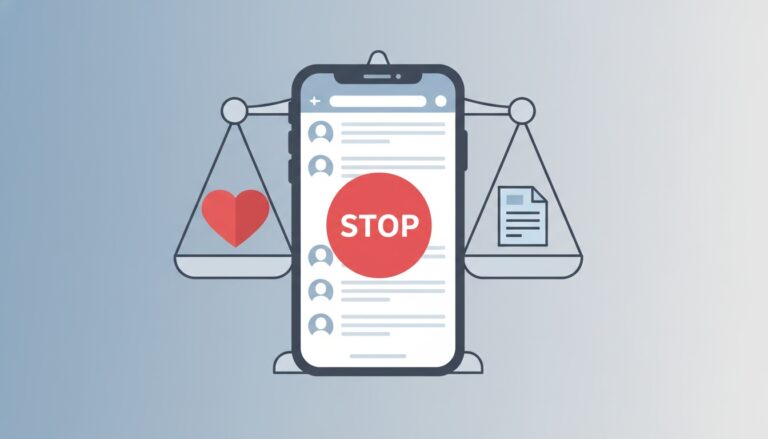
Phase 1: The ‘Face’ of the Law — Immersive Hook
Greeting: Hello, Daily Hangul readers. It’s your editor here.
Picture this: You are scrolling through Twitter (X) or Weverse. Your favorite idol just posted an apology letter. The comments are a war zone. Suddenly, the agency drops a terrifying official notice: ‘We are collecting evidence for legal action regarding malicious comments.’
In many Western countries, calling a public figure an ‘incompetent idiot’ is just… Tuesday. It’s freedom of speech. But in Korea? That might be a police summons waiting to happen.
Today, we are tackling a topic that confuses even long-term expats: the razor-thin, dangerous line between Insult (Mo-yok) and Defamation (Myeong-ye-hwe-son).
Why does this matter? Because in Korea, truth is not always a defense. You can state a cold, hard fact and still end up with a criminal record if you ruin someone’s social reputation. Let’s decode the logic behind the law so you never have to visit a Korean police station.
Phase 2: Deep Dive into Legal Concepts
1. [ 모욕제 (Mo-yok-jwe) ]
- Pronunciation: Mo-yok-jwe [Sounds like: Moh-yok-jweh]
- Meaning: Insult (Criminal charge). Abstract ridicule without factual statements.
- K-Culture Moment: Think of that K-Drama scene where a chaebol heiress screams “Ya! Are you stupid?” (Ya! Neo babo-ya?) in a crowded lobby. If she just calls you names that lower your social standing without stating a ‘fact,’ that’s Mo-yok.
- Editor’s Insight: The key here is abstraction. Calling someone a “dog” or “trash” is an insult because “trash” is not a verifiable fact (unless they are literally a garbage bag, which is unlikely). It attacks feelings.
- Situation Spectrum:
[🚫 Police Involvement] ——— [⚠️ Civil Lawsuit] ——— [✅ Private Venting]- Public Comments: 🚫 (Dangerous)
- Private 1:1 Chat: ✅ (Usually safe, lacks ‘publicity’)
- 🤔 Think About It: Why does Korean law police ‘feelings’? It views social dignity (Chemyon) as a public good protected by the state, not just a private matter.
2. [ 명예훼손제 (Myeong-ye-hwe-son-jwe) ]
- Pronunciation: Myeong-ye-hwe-son-jwe
- Meaning: Defamation. Damaging reputation by alleging concrete facts (whether true or false).
- K-Culture Moment: The idol scandal breaks. A netizen writes, “Idol X visited a hostess bar on Friday night.” Even if Idol X actually did go there, this is defamation because it exposes a specific fact intended to hurt their reputation publicly.
- Editor’s Insight: This is the “Korean Trap.” There are two types:
- False Fact Defamation: You lied. (Heavier punishment).
- Fact-based Defamation: You told the truth, but it wasn’t for the “public interest” (Gong-ik). It was just to embarrass them.
- 🤔 Think About It: Is protecting someone’s privacy more important than the public’s right to know? Korea leans heavily toward privacy/reputation unless it’s about major public figures or safety.
3. [ 공연성 (Gong-yeon-seong) ]
- Pronunciation: Gong-yeon-seong
- Meaning: Publicity / Performance. The requirement that the insult/defamation happened where others could see or hear.
- Editor’s Insight: This is the “magic switch” for the crime. If you whisper “You’re a thief” into someone’s ear in an empty room -> No crime. If you shout it in a restaurant -> Crime. If you post it in a group chat -> Crime (because screenshots spread).
Phase 3: Textbook vs. Real Life
| Situation | 📖 Textbook Legal Korean | 🗣️ Real Street Korean | 💡 Why the difference? |
|---|---|---|---|
| Warning someone | 법적 조치를 취하겠습니다. (I will take legal measures.) |
너 겁나지 않냐? / 너 검찰청 가고 싶어? (Aren’t you scared? / Wanna visit the prosecutor?) |
Textbook is for lawyers. Real life appeals to fear of the hassle. |
| Apologizing | 명예를 훼손하여 좠송합니다. (Sorry for defaming you.) |
선 넘어서 미안. (Sorry I crossed the line.) |
“Crossing the line” (선 넘다) is the social equivalent of breaking the law. |
Phase 4: Cultural Context — The “PDF” Culture
4-1. The Weaponization of Screenshots (PDF-ttada)
In K-Pop fandoms and Korean internet culture, you will often hear the phrase “PDF 따다” (PDF-ttada). This literally means “to capture/save as PDF.”
When a fan sees a malicious comment about their idol, they don’t just downvote. They take screenshots (often saving as PDFs to preserve timestamps and URLs as legal evidence) and email them to the agency’s legal team.
- K-Pop Connection: Agencies actively ask fans to do this. It creates a surveillance culture where every comment is potentially evidence.
- Critical View: This creates a “self-censorship” atmosphere. While it stops bullying, it also stops legitimate criticism because people are terrified of being sued.
Phase 5: Roleplay — The Gossip Trap
Setting: A ‘Hof’ (Korean beer pub) in Hongdae. Friday night. You are with Jun-ho (Korean friend) and Sarah (another expat).
Jun-ho: (🍺 Taking a sip of beer) Did you hear about Min-su from the marketing team? Apparently, he got caught stealing company funds.
Sarah: No way! Is that true?
Jun-ho: Yeah, everyone is talking about it. He’s totally corrupt.
❓ Decision Point: It’s your turn. How do you respond?
Option A: “Wow, let me post this on our company Blind app! Everyone needs to know!” (Blind is an anonymous employee app).
Option B: “Really? But Jun-ho, be careful saying that here. We don’t know who is listening.”
Option C: “He is such a thief! I never liked his face anyway.”
Analysis:
– ❌ Option A (Dangerous): Even if it’s true, posting it on a public forum can be Fact-based Defamation. You are exposing him publicly.
– ✅ Option B (Smart): You recognized the risk of Publicity (Gong-yeon-seong). Even in a bar, if a stranger hears and spreads it, Jun-ho could be liable.
– ⚠️ Option C (Risky): Calling him a “thief” is defamation (fact), commenting on his “face” is insult (abstraction). You are hitting a legal double-whammy.
Phase 6: 10-Second Shadowing Drill
Let’s practice a phrase to de-escalate a heated online or offline argument before it gets legal.
Sentence: “Let’s be careful. Writing emotional comments might cause problems later.”
⚠️ Korean: 우리 / 조심해요. / 감정적인 댓글은 / 나중에 / 문제가 될 수 있어요.
Pronunciation: Uri / josimhaeyo. / Gamjeong-jeogin dat-geul-eun / najung-e / munje-ga doel su isseo-yo.
Phase 7: K-Culture Mini Glossary
| Korean | Romanization | English | Context |
|---|---|---|---|
| 악플 | Ak-ple | Malicious Comment | Combination of ‘Ak’ (Evil) + ‘Re’ply. The source of most lawsuits. |
| 고소 | Go-so | Sue/Complaint | Filing a criminal complaint to the police. |
| 합의 | Hab-ui | Settlement | Paying money to the victim to drop the charges. Very common in defamation cases to avoid a criminal record. |
| 사실적시 | Sasil-jeoksi | Stating Facts | The legal condition of revealing concrete facts (true or false). |
Phase 8: Traveler’s Survival Kit
Even as a traveler, you are subject to Korean law. Here is how to stay safe.
🆘 Survival Tip #1: Restaurant Reviews
– Context: You hated the food. You want to write a Google/Naver review.
– ❌ Don’t say: “The owner is a scammer and the food is garbage trash.”
– ✅ Do say: “The service did not meet my expectations compared to the price.”
– Why? Writing “Scammer” (fact/defamation) or “Trash” (insult) can technically get you reported by the owner. Focus on your subjective experience, not attacking their character.💡 Pro Tip: Never fight with taxi drivers or staff using curse words, even in English. Many Koreans understand the ‘F-word.’ If there are witnesses (passengers, passersby), the requirement for Publicity is met, and you could be fined for Insult.
Phase 9: Think Deeper — ‘Truth’ vs. ‘Harmony’
Why is the Truth Punished?
Western law often prioritizes “The Truth” above all. If it’s true, you can say it. Korean law prioritizes Social Harmony and Human Dignity.
The logic is: Even if someone made a mistake, do they deserve to have their entire life ruined by a public shaming campaign? The law tries to prevent “private sanctions” (vigilante justice). It suggests that punishing bad behavior is the state’s job, not the internet’s job.
💬 Your Turn: In your country, if you expose someone’s secret affair publicly, is it a crime? Or just “spilling the tea”? Tell us in the comments!
Phase 10: Troubleshooting & FAQ
Q: Can I really go to jail for a bad comment?
A: Jail? Unlikely for a first offense. But a fine (Bul-geum) of $500~$2,000 is very common. The real pain is the criminal record and the travel bans during investigation.
Q: I’m a foreigner. Does this apply to me?
A: Yes. If you are in Korea, you follow Korean law. If you post from abroad targeting a Korean, it’s harder to enforce, but you could face issues if you enter Korea later.
❌ Common Mistake: Thinking “It’s a private group chat, so it’s safe.”
✅ Correction: If one person in that chat takes a screenshot and shares it, the Publicity requirement is met retroactively. Assume nothing digital is private.
Phase 11: Wrap-up & Mission
Summary:
Korean law distinguishes between attacking feelings (Insult) and attacking reputation with facts/lies (Defamation). Both can get you fined. Be kind, or at least be vague.
🎯 Action Mission:
– 🥉 Bronze: Practice the shadowing sentence about being careful with comments.
– 🥈 Silver: Go to a K-Pop music video on YouTube. Read the comments and identify one that could technically be considered ‘Insult’ under Korean law.
– 🥇 Gold: Check a K-Pop agency’s Twitter account for a “Legal Action Notice” (Look for keywords: 법적 대응 – Legal Response).
Phase 12: Situational Quiz
Scenario: You are angry at a coworker, Min-ji. You post on Instagram Stories (visible to all followers): “Min-ji is a liar who cheated on her resume.”
1. Is this Insult or Defamation?
* A) Insult (Mo-yok)
* B) Defamation (Myeong-ye-hwe-son)
2. If Min-ji actually DID cheat on her resume, are you safe?
* A) Yes, truth protects me.
* B) No, it is still Fact-based Defamation.
🔑 Answers:
1. B. You stated a concrete fact (cheating on resume).
2. B. Unless exposing her resume fraud serves a clear “public interest” (which is hard to prove for a regular office worker), you can still be punished.
Frequently Asked Questions (FAQ)
Q: What does "[ 모욕제 (Mo-yok-jwe) ]" mean in Korean and how do you pronounce it?
A: In Korean, "[ 모욕제 (Mo-yok-jwe) ]" is pronounced [Mo-yok-jwe [Sounds like: Moh-yok-jweh] and means: Insult (Criminal charge). Abstract ridicule without factual statements.
Q: What does "[ 명예훼손제 (Myeong-ye-hwe-son-jwe) ]" mean in Korean and how do you pronounce it?
A: In Korean, "[ 명예훼손제 (Myeong-ye-hwe-son-jwe) ]" is pronounced [Myeong-ye-hwe-son-jwe] and means: Defamation. Damaging reputation by alleging concrete facts (whether true or false).
Q: What does "[ 공연성 (Gong-yeon-seong) ]" mean in Korean and how do you pronounce it?
A: In Korean, "[ 공연성 (Gong-yeon-seong) ]" is pronounced [Gong-yeon-seong] and means: Publicity / Performance. The requirement that the insult/defamation happened where others could see or hear.







