

Hello from the Daily Hangul Editor!
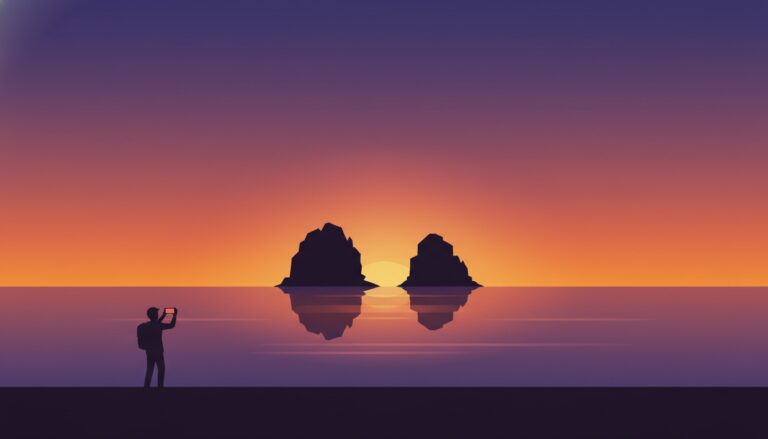
You know that specific scene in almost every romance K-Drama? The one where the couple stands on a beach, the sky is turning a bruised purple and fiery orange, and they’re just… staring? They aren’t saying “I love you.” They’re usually silent.
That’s the vibe of Anmyeondo (안면도), specifically Ggotji Beach (꽃지 해수욕장).
If you go there and just say “Wow, beautiful” (와, 예쁘다), you’re missing the point. The West Coast of Korea isn’t just about “pretty.” It’s about timing, atmosphere, and a little bit of beautiful sadness.
As a tutor, I see advanced learners get stuck here. You have the vocabulary to order food, but do you have the vocabulary to describe a moment that feels like a movie? Today, we’re going to upgrade your expressions from “Tourist” to “Poet.”
Phase 2: Deep Dive into the Sunset
Here are three expressions that will make Koreans stop and ask, “How long have you lived here?”
1. 물때를 맞추다 (Mul-ttae-reul mat-chu-da)
- Pronunciation: [mul-ttae-reul mat-chu-da] (Think: Mul like ‘moon’ without ‘n’, ttae sounds sharp like ‘tech’.)
- Meaning: To time the tides perfectly.
- Editor’s Insight: The West Coast (Yellow Sea) has huge tides. If you don’t check the time, you arrive at the beach and… the water is 2km away. It’s just mud.
- K-Culture Moment: In variety shows like 1 Night 2 Days, losing a game often means going out into the mudflats (getbol) at low tide to dig for clams.
- Situation Spectrum:
[🚫 Formal Report] ———— [✅ Daily Conversation] ———— [✅ Travel Planning]- 🤔 Think About It: Why does Korean have a specific noun (mul-ttae) just for the “time of the water”? It shows how historically dependent coastal life was on the rhythm of the sea, not the clock.
2. 가슴이 먹먹하다 (Ga-seum-i meong-meok-ha-da)
- Pronunciation: [ga-seum-i meong-meok-ha-da]
- Meaning: To feel a lump in one’s throat; to feel overwhelmed/stifled with emotion.
- Context: Literally, meok-meok describes a blocked feeling (like ears popping on a plane). Figuratively, it’s when beauty or sadness makes your chest feel tight.
- K-Drama Scene: The protagonist looks at the sunset after a breakup. They aren’t crying yet, but they can’t speak. That feeling is meok-meok.
- Situation Spectrum:
[🚫 Ordering Food] ———— [⚠️ Casual Chat] ———— [✅ Deep Conversation/Diary]3. 낙조가 장관이다 (Nak-jo-ga jang-gwan-i-da)
- Pronunciation: [nak-jo-ga jang-gwan-i-da]
- Meaning: The setting sun is a spectacular sight.
- Nuance: Nak-jo (낙조) is the Sino-Korean word for setting sun (more formal than haeneom-i). Jang-gwan (장관) means a grand, majestic spectacle. Use this for nature that is huge and impressive.
- Situation Spectrum:
[⚠️ To a child] ———— [✅ Social Media Caption] ———— [✅ Speaking to Elders]
Phase 3: Textbook vs. Real Life
| Situation | 📖 Textbook Korean | 🗣️ Real Korean (Insider) | 💡 Why the difference? |
|---|---|---|---|
| Arriving at the beach | 바다가 예뻐요. (The sea is pretty.) | 와, 분위기 미쳤다. (Wow, the vibe is crazy.) | “Pretty” is generic. “Atmosphere” (Bunwigi) captures the mood, lighting, and feeling. |
| Checking the tide | 썰물 시간이에요. (It is ebb tide time.) | 지금 물 빠질 때야. (It’s time for the water to pull out.) | Scientific terms vs. visual descriptions of what the water is actually doing. |
| Taking a photo | 사진 찍어 주세요. (Please take a picture.) | 여기서 인생샷 하나 건져야지. (Gotta harvest a ‘life shot’ here.) | Koreans are obsessed with the “Life Shot” (best photo of your life). We don’t just take it, we harvest/rescue (geonjida) it. |
Phase 4: Cultural Deep Dive — The “Han” in the Rocks
4-1. The Silence of the Sunset
In Western cultures, silence can feel awkward. In Korea, especially at a scenic spot like Ggotji Beach, silence is shared. When the sun slips between the two famous rocks (The Grandma and Grandpa Rocks), people stop talking. It’s a collective moment of appreciation. Don’t feel the need to fill the air with chatter. Just watch.
4-2. The Legend of the Rocks (K-Drama Tropes before K-Drama)
The two rocks at Ggotji Beach are called Halmi-Halabi Bawi. Legend has it a wife waited for her husband who went to war, waiting until she turned into stone. This fits perfectly with the Korean concept of Han (한)—a deep, sorrowful resentment or longing. This is why the sunset here feels “sadly beautiful” (aet-teut-hada) rather than just “sunny.”
4-3. K-Food Connection: The Rice Thief
You’re in Anmyeondo. You must eat Ganjang Gejang (Soy Sauce Marinated Crab).
* Expression: “이거 완전 밥도둑이네!” (This is a total rice thief!)
* Meaning: It’s so salty and savory that you steal/eat bowls of rice instantly.
* Critical Tip: Don’t bite the hard shell with your front teeth unless you want a visit to a Korean dentist.
Phase 5: Immersive Roleplay
Setting: It’s 6:40 PM. The sky is turning violet. You are with Min-ji, a photography enthusiast friend, setting up her tripod on the sand.
Min-ji: (Checking her watch) 아, 구름이 좀 많네. 오늘 낙조 제대로 보긴 글렀나? ☁️
(Ah, gureumi jom manne. Oneul nakjo jedaero bogin geulleonna?)
(Translation: Ah, there are too many clouds. Is seeing the sunset properly wrong/ruined for today?)
YOU (Select your response):
🔀 Option A: “괜찮아. 내일 보면 되지.” (It’s okay. We can see it tomorrow.)
🔀 Option B: “구름 사이로 비치는 빛도 운치 있고 좋은데?” (The light shining through the clouds is also atmospheric and nice, isn’t it?)
🔀 Option C: “물때를 잘못 맞췄나 봐.” (Maybe we timed the tide wrong.)
Analysis:
* Option A: Too logical. You’re traveling now.
* Option C: Incorrect. Clouds have nothing to do with the tide (mul-ttae).
* ✅ Option B: Perfect. You used “Unchi” (운치)—a high-level word for “mood/flavor of the atmosphere.” You are comforting her and showing artistic appreciation.
(Dialogue Continues with Option B)
Min-ji: 오~ 너 ‘운치’라는 말도 알아? (웃음) 맞아, 오히려 더 드라마틱하다.
(Oh~ You know the word ‘unchi’? Right, it’s actually more dramatic.)
YOU: 그치? 저 바위 실루엣 좀 봐. 진짜… (Fill in the blank)
(Right? Look at the rock silhouette. It’s really…)
Min-ji: 가슴이 먹먹해진다, 그치?
(It makes your heart feel heavy/overwhelmed, right?)
Phase 6: 10-Second Shadowing Drill
Let’s practice that emotional delivery. Don’t say it like a robot. Say it like you’re looking at the most beautiful thing you’ve ever seen.
Emotion: Awe & Melancholy (🥺)
“해 지는 거 보니까 / 가슴이 / 왠지 먹먹해요.”
(Hae ji-neun geo bo-ni-kka / ga-seum-i / waen-ji meong-meok-hae-yo.)
“Watching the sun set… my heart feels… somehow overwhelmed.”
Phase 7: K-Culture Mini Glossary
| Korean | Romanization | Meaning | Context |
|---|---|---|---|
| 인생샷 | In-saeng-shot | Life Shot | The best photo of your life. The main goal of travel for many young Koreans. |
| 밥도둑 | Bap-do-duk | Rice Thief | Savory side dishes (like crab) that make you eat lots of rice. |
| 운치 | Un-chi | Mood/Flavor | The aesthetic elegance of a quiet or natural scene. |
| 갯벌 | Get-bol | Mudflat | Revealed at low tide. Famous on the West Coast. |
Phase 8: Traveler’s Survival Kit (West Coast Edition)
🆘 Survival Expression #1
– 🇰🇷 “지금 물 들어오는 시간인가요?” (Jigeum mul deureo-oneun sigan-ingayo?)
– English: “Is the tide coming in now?”
– Why it matters: On the West Coast, the tide comes in faster than you can run in mud. It’s a safety issue. If an old man yells at you from the shore, get out!📌 Editor’s Travel Note
– Shoes: Do not wear white sneakers to Anmyeondo. The fine mud (mud) will destroy them. Wear Crocs or boots.
– Food: If you are allergic to shellfish, learn the phrase: “갑각류 알레르기가 있어요” (I have a crustacean allergy). This region is 90% crab and shrimp.
Phase 9: Think Deeper — “Why do we like sad stories?”
Aesthetic of Sorrow (Ae-su):
When you visit the Halmi-Halabi Rocks, the signage explains the tragedy of the wife dying while waiting. Western tourism often focuses on “victory” or “fun.” Korean tourism frequently highlights tragic legends. This reflects the concept of Han—unresolved sadness is seen as a defining part of the human experience, and nature is where we go to process it.
💬 Your Turn: Does your country have tourist spots famous for a tragic story? Or is everything usually “happy”?
Phase 10: FAQ & Troubleshooting
Q: Can I use “Unchi” (운치) to describe a club in Gangnam?
A: No! 🙅♂️ Unchi is for quiet, elegant, slightly old-fashioned, or natural vibes. A temple in the rain has unchi. A noisy club has heung (excitement/energy).
❌ Common Mistake:
Saying “Sea is deep” (바다가 깊어요) regarding the West Coast.
✅ Correction: The West Coast is shallow and muddy. We say “물이 탁해요” (The water is murky/turbid) but in a good, nutrient-rich way. Use “deep” for the East Coast.
Phase 11: Wrap-up & Missions
Summary: Today we learned that Korean sunsets aren’t just “pretty”; they are jang-gwan (spectacular), have unchi (mood), and make us feel meok-meok (overwhelmed).
🚀 Action Missions:
– 🥉 Bronze: Look at a sunset photo and say “Nak-jo-ga jang-gwan-i-ne” aloud.
– 🥈 Silver: Go to a Korean seafood restaurant and ask, “Is this menu a bap-do-duk?”
– 🥇 Gold: Post a sunset photo on Instagram with the caption: “가슴이 먹먹해지는 풍경 (A landscape that makes my heart heavy with emotion).”
See you at the next sunset!
Frequently Asked Questions (FAQ)
Q: What does "물때를 맞추다 (Mul-ttae-reul mat-chu-da)" mean in Korean and how do you pronounce it?
A: In Korean, "물때를 맞추다 (Mul-ttae-reul mat-chu-da)" is pronounced [mul-ttae-reul mat-chu-da] and means: To time the tides perfectly.
Q: What does "가슴이 먹먹하다 (Ga-seum-i meong-meok-ha-da)" mean in Korean and how do you pronounce it?
A: In Korean, "가슴이 먹먹하다 (Ga-seum-i meong-meok-ha-da)" is pronounced [ga-seum-i meong-meok-ha-da] and means: To feel a lump in one’s throat; to feel overwhelmed/stifled with emotion.
Q: What does "낙조가 장관이다 (Nak-jo-ga jang-gwan-i-da)" mean in Korean and how do you pronounce it?
A: In Korean, "낙조가 장관이다 (Nak-jo-ga jang-gwan-i-da)" is pronounced [nak-jo-ga jang-gwan-i-da] and means: The setting sun is a spectacular sight.







