

Phase 1: The ‘Intellectual’ Trap
Hello! I’m your editor at Daily Hangul. 👋
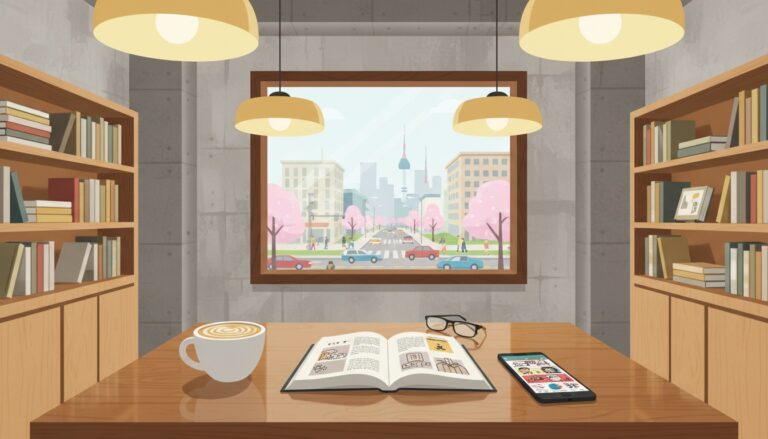
You know that scene in a K-Drama? The main character sits by a sunny window in a beautiful library, turning the pages of a thick book while sipping coffee. It looks so peaceful, so intellectual. You think, “I want to sound like that when I speak Korean.”
So, when someone asks about your hobby, you proudly say: “제 취미는 독서입니다” (My hobby is ‘reading’).
Technically, this is perfect. Grammatically, it’s flawless. But socially? You might sound like you are in a job interview or reading a sentence from a 1990s textbook.
In modern Seoul, saying “독서” (Dok-seo) can feel a bit stiff. It’s like saying “My hobby is the perusal of literature” in English. Today, we are going to learn how to talk about books—whether it’s a deep novel, a self-help book, or the latest Webtoon on your phone—just like a real local.
Phase 2: Deep Dive into Real Expressions
Here are the three ways to talk about reading, ranked by how “real” they sound.
1. 책 읽는 거 좋아해요 (Chaek ing-neun geo jo-a-hae-yo)
- Pronunciation: [Chaek ing-neun geo] -> sounds like “Check” + “ing” (like running) + “neun” + “geo” (like going).
- Meaning: “I like reading books.”
- The Vibe: This is the sweet spot. It uses the verb 읽다 (to read) turned into a noun phrase. It sounds active and casual.
- K-Culture Moment: Think of a variety show interview. An idol is asked what they do in the waiting room. They wouldn’t say “독서.” They’d say, “저 그냥 책 읽는 거 좋아해요” (I just like reading books).
- Situation Spectrum:
[🚫 Boss/Formal Speech] ———— [⚠️ Colleagues] ———— [✅ Friends/Dates]
(Actually, this is safe for almost everyone except the President!)- 🤔 Think About It: Korean often prefers changing verbs into nouns (using ~는 것) rather than using the formal Sino-Korean noun (독서). Why do you think native speakers find the verb form softer?
2. 요즘 웹툰 봐요 (Yo-jeum web-toon bwa-yo)
- Pronunciation: [Web-toon] is easy! [Bwa-yo] sounds like “Bwa” (rhymes with spa).
- Meaning: “I read webtoons these days.”
- Editor’s Insight: Note the verb change! We don’t usually say we read (읽다) webtoons; we say we see/watch (보다) them, just like TV.
- K-Culture Moment: You are on the Seoul Metro. Look around. 80% of people are scrolling vertically on their phones. They are “watching” webtoons. If you mention a popular webtoon (like True Beauty or Solo Leveling), you instantly have something to talk about.
- Situation Spectrum:
[🚫 Formal Interview] ———— [⚠️ First Meeting] ———— [✅ Casual Chat]3. 어떤 장르 좋아하세요? (Eo-tteon jang-neu jo-a-ha-se-yo?)
- Pronunciation: [Jang-neu] sounds like the French word “Genre” but with a Korean accent.
- Meaning: “What genre do you like?”
- Usage: This is your best follow-up question. Don’t just answer; ask back!
Phase 3: Textbook vs. Real Life
Let’s compare the classroom to the streets of Hongdae.
| Situation | 📖 Textbook Korean | 🗣️ Real Korean | 💡 Why different? |
|---|---|---|---|
| Asking about hobbies | 취미가 무엇입니까? (Chwimi-ga mueot-im-nikka?) | 보통 주말에 뭐 해요? (What do you usually do on weekends?) | “Hobby” feels like a formal category. Asking about time is more natural. |
| Saying you read | 저는 독서를 합니다. (I do reading.) | 책 좀 읽어요. (I read a bit of books.) | “좀” (a little/some) adds humility, a key Korean virtue. |
| Asking for a recommendation | 추천 도서가 있습니까? | 재밌게 본 거 있어요? (Is there anything fun you saw/read?) | We focus on the experience (fun), not the object (book). |
Phase 4: Cultural Context — The “Book Cafe” Vibe
In Korea, reading is often a social activity—or at least, a public one.
1. The Book Cafe (북카페):
These aren’t libraries. They are aesthetic cafes filled with books. You go there to drink an expensive latte, take a photo of your book for Instagram, and maybe read a few pages. It’s about the atmosphere.
2. The Starfield Library (Coex Mall):
You’ve definitely seen this on Instagram. Huge towering bookshelves. Ironically, it’s too noisy to actually read there. It represents reading as a visual culture.
🤔 Think Deeper: In Korea, “studying” or “reading” in a cafe is so common that there’s a word for people who study in cafes: 카공족 (Ka-gong-jok). Why do Koreans prefer noisy cafes over quiet homes? (Hint: It relates to limited personal space at home and the desire to be “seen” being productive.)
Phase 5: Roleplay Scenario — The Blind Date (Sogaeting)
Setting: A cozy cafe in Yeonnam-dong on a Saturday afternoon. Soft indie music is playing. You are on a blind date with Min-jun.
Characters:
* YOU: An expat who loves Korean novels.
* Min-jun (28): A friendly Korean office worker, a bit shy.
Start Dialogue:
Min-jun: 주말에는 보통 뭐 하세요? 😊
(Jumal-eneun botong mwo haseyo?)
(What do you usually do on weekends?)
🔀 YOUR TURN! Choose your response:
- Option A: “제 취미는 독서입니다. 고전 문학을 읽습니다.” (My hobby is reading. I read classical literature.)
- Option B: “저 그냥 카페 가서 책 읽는 거 좋아해요. 민준 씨는요?” (I just like going to cafes and reading books. How about you, Min-jun?)
- Option C: “집에서 웹툰만 봐요. ㅎㅎ” (I only watch webtoons at home. haha)
✅ Best Choice: B.
Why? Option A is too stiff—Min-jun might think he’s interviewing you. Option C is a bit too honest for a first date (makes you sound like a homebody). Option B is casual, “aesthetic,” and invites him into the conversation.
Continue with Option B:
YOU: 저 그냥 카페 가서 책 읽는 거 좋아해요. 민준 씨는요?
Min-jun: 오, 저도요! 요즘 읽는 책 있으세요? 📚
(Oh, me too! Is there a book you are reading these days?)
YOU: ‘아몬드’라는 소설 읽고 있어요. 한국어 공부에도 좋더라고요.
(I’m reading a novel called ‘Almond’. It’s good for studying Korean too.)
Min-jun: 아! 그 책 영화처럼 재밌죠. 저도 봤어요!
(Ah! That book is fun like a movie. I read [saw] it too!)
Phase 6: 10-Second Shadowing Drill
Practice these until your mouth moves automatically!
- Simply stating your hobby:
😊 시간 날 때 / 책 읽는 거 / 좋아해요.
(Sigan nal ttae / chaek ing-neun geo / jo-a-hae-yo.)
“When I have time, I like reading books.” -
Asking casually:
🤔 요즘 / 재밌는 책 / 있어요?
(Yo-jeum / jae-min-neun chaek / i-sseo-yo?)
“Are there any interesting books these days?”
Phase 7: K-Culture Mini Glossary
| Word | Romanization | Meaning | Context |
|---|---|---|---|
| 만화방 | Manhwabang | Comic Book Room | Old-school places to read comics and eat ramen. Recently became trendy “comic cafes.” |
| 베스트셀러 | Beseuteu-selleo | Bestseller | Koreans care a lot about rankings. The “Bestseller” shelf is where everyone goes first. |
| 교보문고 | Kyobo Mungo | Kyobo Bookstore | The biggest bookstore chain. The Gwanghwamun branch is a massive landmark. |
| 필독서 | Pildokseo | Must-read book | Usually refers to books required for school or general knowledge. |
Phase 8: Traveler’s Survival Kit (Bookstore Edition)
If you visit a large bookstore like Kyobo or Youngpoong to buy a Korean textbook or a souvenir:
🆘 Survival Phrases
– 🇰🇷 “외국어 서적은 어디에 있어요?” (Oegugeo seo-jeog-eun eodi-e isseoyo?)
– “Where are the foreign language books?”
– 🇰🇷 “이거 베스트셀러예요?” (Igeo beseuteu-selleo-yeyo?)
– “Is this a bestseller?”
– 🇰🇷 “봉투 주세요.” (Bongtu juseyo.)
– “Please give me a bag.”📌 Editor’s Travel Note:
Most large Korean bookstores have a “HOTTRACKS” section. This is where they sell K-Pop albums, cute stationery, and pens. Honestly, I spend more time there than in the book section!
Phase 9: Think Deeper — Webtoons vs. Literature
Media vs. Reality:
In K-Dramas, intelligent characters are often seen reading paper books by Hermann Hesse or Murakami. But in reality, Korea is the birthplace of the Webtoon. Millions of Koreans consume stories via scrolling on their phones every Friday night.
Is scrolling through a webtoon “reading”? Older generations might say no, but for the younger generation, it is the primary way of consuming narrative. When you learn Korean, don’t ignore webtoons. They contain the real spoken language (slang, fighting sounds, love confessions) that you won’t find in a dusty novel.
💬 Your Turn: Does scrolling on a phone count as “reading” in your country? Let me know in the comments!
Phase 10: FAQ & Troubleshooting
Q: Can I say I read Fanfiction?
A: Technically yes, but… maybe keep that for close friends! If you say “팬픽 읽어요” (I read fanfic) to a stranger, they might be surprised by your honesty. It’s a very specific subculture!
Q: I only read comic books. Is that childish?
A: Not in Korea! Just say “만화책 좋아해요” (I like comic books) or “웹툰 봐요” (I watch webtoons). Adults love them too. It’s mainstream culture here.
❌ Common Mistake:
Don’t say “책을 봅니다” (I watch books).
* Books (Text) = 읽다 (Read)
* Webtoons/Comics (Images) = 보다 (Watch/See)
Phase 11: Wrap-up & Mission
Summary:
Don’t just say “Dok-seo.” Say “Chaek ing-neun geo jo-a-hae-yo.” And remember, Webtoons are reading too!
🚀 Action Mission:
* 🥉 Bronze: Practice saying “요즘 웹툰 봐요” in the mirror.
* 🥈 Silver: Go to a Korean webtoon site (like Naver Webtoon) and try to read just the titles of the top 3 comics.
* 🥇 Gold: Visit a “Book Cafe” or library in your city (or online) and post a photo with the caption: “책 읽는 거 좋아해요!”
See you next time! Happy reading! 📖
Frequently Asked Questions (FAQ)
Q: What does "책 읽는 거 좋아해요 (Chaek ing-neun geo jo-a-hae-yo)" mean in Korean and how do you pronounce it?
A: In Korean, "책 읽는 거 좋아해요 (Chaek ing-neun geo jo-a-hae-yo)" is pronounced [Chaek ing-neun geo] and means: "I like reading books."
Q: What does "요즘 웹툰 봐요 (Yo-jeum web-toon bwa-yo)" mean in Korean and how do you pronounce it?
A: In Korean, "요즘 웹툰 봐요 (Yo-jeum web-toon bwa-yo)" is pronounced [Web-toon] and means: "I read webtoons these days."
Q: What does "어떤 장르 좋아하세요? (Eo-tteon jang-neu jo-a-ha-se-yo?)" mean in Korean and how do you pronounce it?
A: In Korean, "어떤 장르 좋아하세요? (Eo-tteon jang-neu jo-a-ha-se-yo?)" is pronounced [Jang-neu] and means: "What genre do you like?"







