

Phase 1: Introduction
Hello! Daily Hangul editor here.
Let’s be honest. Parking in Korea—especially in Seoul—is a competitive sport. You circle the block for 20 minutes, your stress levels spike, and then, like a miracle, you see it. An empty spot. Right near the entrance.
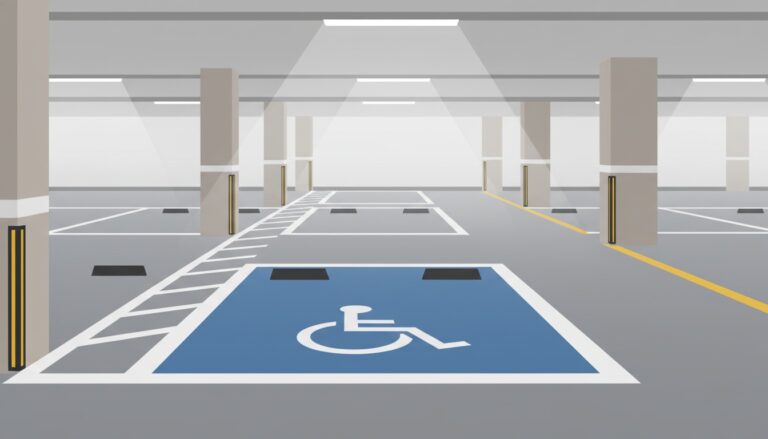
But wait. The lines on the floor are blue. There’s a wheelchair symbol. You think, “I’ll just be 5 minutes to grab a coffee. No one is using it.”
Don’t do it. Seriously.
I’ve seen too many of my students get slapped with a hefty fine (we call it 과태료) because they thought “just a moment” was acceptable. In Korea today, it’s not just about the police checking; everyday citizens are reporting illegal parking via smartphone apps. If you don’t know the signs or the words to apologize, things get awkward fast. Let’s make sure you know exactly what to look for and what to say.
Phase 2: Deep Dive into Key Expressions
Here are the three expressions that will save your wallet and your reputation.
1. 장애인 전용 (Jang-ae-in Jeon-yong)
- Pronunciation: [Jang-ae-in] sounds like “Jang” + the “a” in apple + “in”. [Jeon-yong] sounds like “John” + “Yong”.
- Meaning: Disabled Only / Reserved for the Disabled.
- Editor’s Insight: You will see this painted on the floor or on yellow signs. Jeon-yong means “exclusive use.” If you see this word attached to anything (bus, elevator, parking), it means “not for you” unless you fit the category.
- Situation Check: This is a written label, but you can say it too. “여기 장애인 전용이에요?” (Is this disabled-only?)
2. 과태료 (Gwa-tae-ryo)
- Pronunciation: [Gwa-tae-ryo]
- Meaning: Fine / Penalty fee.
- Editor’s Insight: This isn’t just a small fee. For parking in a disabled spot illegally, it’s typically 100,000 KRW (about $75-80). If you block the spot so a disabled car can’t get in? That’s 500,000 KRW. That is a very expensive coffee.
- Situation Check: You’ll hear grumpy security guards say this to warn you. “거기 대면 과태료 나와요!” (If you park there, you get a fine!)
3. 차 빼 주세요 (Cha Ppae Ju-se-yo)
- Pronunciation: [Cha] as in “Cha-cha” + [Ppae] sounds like “Pay” with a strong P + [Ju-se-yo].
- Meaning: Please move/remove your car.
- Editor’s Insight: This is the most common phrase in any Korean parking lot. Whether you are blocking someone or someone is blocking you, this is the magic phrase. It literally means “Please pull the car out.”
- Situation Check: Can be used with anyone, but keep your tone polite.
Phase 3: Textbook vs. Real Life
Textbooks make you sound like a robot. Here is how people actually talk in the parking lot of an Emart or apartment complex.
| Textbook Korean 📚 | Real Korean (Street) 🧢 |
|---|---|
| 여기에 주차하지 마십시오. (Do not park here.) | 여기 대시면 안 돼요. (You shouldn’t park here.) |
| 차가 견인될 수 있습니다. (The car may be towed.) | 차 바로 찍혀요. (Your car will get reported/photographed immediately.) |
| 잠시만 주차하겠습니다. (I will park for a moment.) | 딱 5분만 댈게요. (Just 5 minutes, please.) |
Note: “차 찍혀요” refers to people taking photos to report you to the government app. It’s the modern way of saying “You’re in trouble.”
Phase 4: Cultural Context & Manners
The “Citizen Reporter” Era
Years ago, you might have gotten away with parking in a disabled spot if no police were around. Not anymore. Korea has an app called ‘Safety e-Report’ (안전신문고).
Pedestrians who see your car parked illegally can snap a photo and upload it in 30 seconds. You won’t even know it happened until the fine arrives in the mail weeks later.
- The Nunchi (Eye-measure): If you see a spot that looks too good to be true, check the floor paint color.
- Blue: Disabled Only.
- Pink: Pregnant Women (Courtesy spot, not fined by law usually, but you will get dirty looks).
- White: Safe to park.
If a security guard runs toward you waving their hands in an ‘X’ shape, don’t argue. Just roll down the window, bow your head slightly, and say “죄송합니다, 몰랐어요” (Sorry, I didn’t know).
Phase 5: Roleplay Scenario
Setting: An underground parking lot at a busy department store.
Characters: Alex (Foreigner, B1 level) and Guard (Korean security).
(Alex tries to reverse into a spot with blue lines. The guard blows a whistle.)
Guard: (Running over) 선생님! 거기 대시면 안 됩니다!
(Sir! You cannot park there!)
Alex: (Stopping the car) 아, 죄송합니다. 장애인 전용인가요?
(Ah, sorry. Is it disabled only?)
Guard: 네, 바닥에 파란 선 안 보이세요? 여기 대면 과태료 10만 원이에요.
(Yes, don’t you see the blue lines? If you park here, the fine is 100,000 won.)
Alex: 헉, 10만 원이요? 바로 차 뺄게요.
(Whoa, 100k won? I’ll move the car right away.)
Guard: (Pointing left) 저기 기둥 뒤에 빈 자리 있어요.
(There is an empty spot behind that pillar over there.)
Phase 6: 10-Second Shadowing
Let’s practice the sentence you will use to avoid a fight. Read this aloud.
“Ah, I didn’t see the line. I’ll move the car immediately.”
아, 선을 못 봤어요. / 바로 / 차 뺄게요.
[Ah, seon-eul mot bwas-seo-yo. / Ba-ro / cha ppael-kke-yo.]
- Focus: Pause after “bwas-seo-yo.” Stress the word Ba-ro (immediately) to show you are complying quickly.
Phase 7: FAQ & Troubleshooting
- Q: Can I park in a disabled spot if I stay in the car with the engine running?
- A: No. Even if you are in the driver’s seat, stopping there is illegal for non-permit holders. You can be fined just for “blocking” the view or access.
- Q: What if I have a handicap placard from my home country?
- A: Unfortunately, it is usually not recognized automatically. You need a specific Korean permit issued by the local district office. Don’t risk it with a foreign placard.
Phase 8: Wrap-up
One-Liner Summary:
Blue lines mean “Don’t park” unless you have the yellow Korean permit sticker—no exceptions, not even for 1 minute.
Action Mission:
Next time you walk through a parking lot or down a street in Korea, look at the floor. Identify the Blue lines (Disabled) and Yellow lines (No Parking). Spotting them before you drive makes you a better driver.
Tell me in the comments: Have you ever received a parking ticket in a foreign country because you couldn’t read the sign?
Phase 9: Quiz
1. What does “장애인 전용” mean?
a) Employees Only
b) Disabled Only
c) Compact Cars Only
2. How much is the typical fine (Gwa-tae-ryo) for illegal parking in these spots?
a) 10,000 KRW
b) 50,000 KRW
c) 100,000 KRW
3. If a guard tells you to move, what is the best reply?
a) 싫어요 (No, I hate it)
b) 금방 갈게요 (I’ll be gone soon)
c) 바로 차 뺄게요 (I’ll move the car immediately)
Click to see answers
1. b, 2. c, 3. c
Frequently Asked Questions (FAQ)
Q: What does "장애인 전용 (Jang-ae-in Jeon-yong)" mean in Korean and how do you pronounce it?
A: In Korean, "장애인 전용 (Jang-ae-in Jeon-yong)" is pronounced [Jang-ae-in] and means: Disabled Only / Reserved for the Disabled.
Q: What does "과태료 (Gwa-tae-ryo)" mean in Korean and how do you pronounce it?
A: In Korean, "과태료 (Gwa-tae-ryo)" is pronounced [Gwa-tae-ryo] and means: Fine / Penalty fee.
Q: What does "차 빼 주세요 (Cha Ppae Ju-se-yo)" mean in Korean and how do you pronounce it?
A: In Korean, "차 빼 주세요 (Cha Ppae Ju-se-yo)" is pronounced [Cha] and means: Please move/remove your car.







