

Surviving the “Curveball”: How to Handle Unexpected Questions in Korean Interviews
Phase 1: Introduction
Hello, Daily Hangul family! This is your Senior Editor.
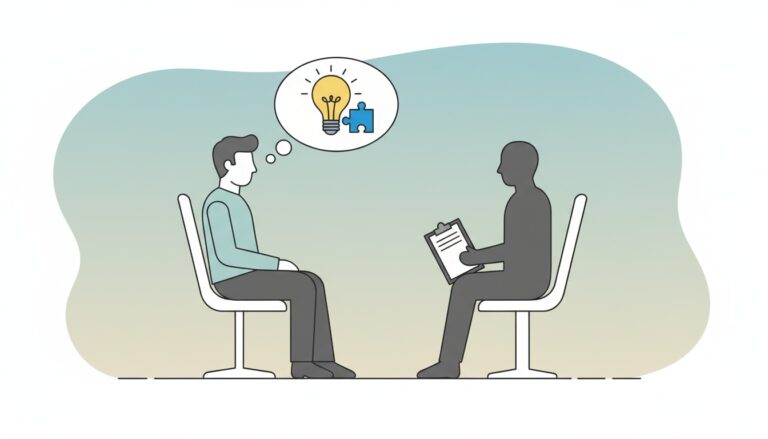
So, you’ve memorized your self-introduction (자기소개) perfectly. You have your strengths and weaknesses listed out. You walk into the interview room, confident… and then the interviewer suddenly asks:
“If you were an animal, which one would you be?”
Or worse: “What if your boss asked you to do something unethical?”
Panic sets in. Your brain goes blank. 🤯
In Korea, this is often part of 압박 면접 (Abbak Myeonjeop – Pressure Interview). They aren’t just testing your Korean skills; they are testing your “Sunbalryeok” (순발력 – quick-wittedness/adaptability).
Today, we are going to look at the specific phrases interviewers use to throw you off balance, and how to understand the real intent behind them so you can stay cool. Let’s decode the B2-level logic of Korean interviews!
Phase 2: Deep Dive into Core Phrases
Here are the three most common structures interviewers use to test your adaptability.
1. 만약에 ~다면 어떻게 하시겠어요? (What would you do if…?)
- Pronunciation: [Man-yage … eo-tteo-ke ha-si-ge-sseo-yo?]
- Sound analogy: Man (like ‘Man’) + Ya (like German ‘Ja’) + Ge (like ‘Get’)
- Meaning: “Hypothetically, if [situation] happened, how would you handle it?”
- Editor’s Insight: This is the classic setup for a scenario question. The key word is 만약에 (Man-yage – If/Hypothetically). When you hear this, don’t focus on the grammar of the middle part too much. Focus on the scenario. They want to see your problem-solving process, not a perfect answer.
- Situation Check: Formal. Used in interviews or serious business discussions.
2. 다소 곤란한 질문일 수 있습니다만… (This might be a slightly difficult question, but…)
- Pronunciation: [Da-so gon-ran-han jil-mun-il su it-seum-ni-da-man…]
- Meaning: “I know this is awkward/tough to answer, but…”
- Editor’s Insight: This is a warning signal. The interviewer is being polite by acknowledging the question is rude or personal. This is often followed by questions about your resume gaps, personal values, or why you left your previous job. Brace yourself!
- Situation Check: Highly Formal. You will hear this from senior interviewers.
3. 본인 생각은 어떠세요? (What are your thoughts on this?)
- Pronunciation: [Bo-nin saeng-ga-geun eo-tteo-se-yo?]
- Meaning: “What is your personal opinion?”
- Editor’s Insight: After a vague or complex scenario, they drop this simple question. Unlike “What is the answer?”, this asks for your perspective. In a Korean context, this is a test of Nunchi. They want to see if your opinion aligns with the company culture (organization-first vs. individual-first).
- Situation Check: Formal/Business.
Phase 3: Textbook vs. Real Life
Let’s see how a standard textbook asks questions versus how a real Korean hiring manager speaks.
| Textbook Korean (Standard) | Real Interviewer (Natural & Sharp) |
|---|---|
| 갈등이 생기면 어떻게 해결합니까? (How do you resolve conflict?) |
상사와 의견이 안 맞을 땐, 솔직히 어떻게 하실 거예요? (When you don’t agree with your boss, honestly, what would you do?) |
| 야근을 할 수 있습니까? (Can you work overtime?) |
우리 팀이 워낙 바빠서 주말 출근도 잦은데, 괜찮으시겠어요? (Our team is super busy so weekend work is frequent, would you be okay with that?) |
Editor’s Note: The “Real” column uses softeners like “솔직히” (honestly) or “워낙” (so/very) to sound conversational, but the pressure is actually higher!
Phase 4: Cultural Context & Manners
The Art of “Cheo-se-sul” (처세술)
In Korea, answering a curveball question isn’t just about logic; it’s about 처세술 (the art of living/social conduct).
- Don’t Answer Immediately: If the question is unexpected (e.g., “What fruit describes you?”), pausing for 2-3 seconds shows thoughtfulness. Bling it out immediately makes you look rehearsed or fake.
- Eye Contact: When answering a difficult question, maintain eye contact but don’t stare them down aggressively. A polite smile (even if you are panicking inside) is crucial.
- The “Organizational Mindset”: If asked about a conflict with a boss, the “correct” cultural answer usually involves communication and aligning with the team, rather than “proving I am right.”
Phase 5: Real-Life Scenario (Roleplay)
Setting: A final interview at a Korean marketing firm. The atmosphere is tense.
Characters:
* Interviewer (Kim Team Leader): Sharp, testing the candidate.
* Candidate (Mark): B2 level Korean learner, nervous but prepared.
(The interview is going well, then Kim suddenly shifts tone)
Interviewer: 마크 씨, 한국어 실력이 대단하시네요. 그런데… 만약에 동료가 업무 중에 실수를 해서 팀 전체가 피해를 본다면, 어떻게 하시겠어요?
(Mark, your Korean is great. But… if a colleague made a mistake during work and the whole team suffered damage, what would you do?)
Mark: (Takes a breath, nodding calmly) 음, 다소 곤란한 상황이겠지만… 저는 먼저 그 동료를 비난하기보다는, 함께 수습하는 데 집중하겠습니다.
(Hmm, it would be a somewhat difficult situation but… rather than criticizing that colleague first, I would focus on fixing it together.)
Interviewer: (Raising an eyebrow) 본인 잘못도 아닌데요?
(Even though it’s not your fault?)
Mark: 네. 팀의 성과가 우선이니까요. 그 후에, 재발 방지를 위해 조용히 대화를 나누겠습니다.
(Yes. Because the team’s results come first. After that, I would quietly have a conversation to prevent recurrence.)
Interviewer: (Smiling) 답변 감사합니다. 좋은 자세네요.
(Thanks for the answer. That’s a good attitude.)
Phase 6: 10-Second Shadowing
Let’s practice a sentence that buys you time and shows composure. Read it aloud!
“당황스럽지만, / 침착하게 / 해결 방법을 / 찾아보겠습니다.”
(I am flustered, but I will calmly look for a solution.)
- Pronunciation: [Dang-hwang-seu-reop-ji-man / chim-cha-ka-ge / hae-gyeol bang-beo-beul / cha-ja-bo-get-seum-ni-da]
- Key Point: Pause after “-man” to show you are thinking.
Phase 7: FAQ & Troubleshooting
- Q: Can I ask for time to think?
- A: YES! It is better to ask than to stutter. Use this magic phrase: “잠시 생각할 시간을 주시겠습니까?” (Could you give me a moment to think?). It shows prudence, not weakness.
- Q: What if I really don’t understand the question?
- A: Never guess. Say: “죄송하지만, 질문의 요지를 다시 한번 말씀해 주실 수 있나요?” (I’m sorry, could you tell me the main point of the question once more?).
Phase 8: Wrap-up
One-Liner Summary:
When faced with unexpected questions starting with “Man-yage” (If…), prioritize team harmony and calmness over simply being “right.”
Action Mission:
Next time you watch a Korean drama and a character gets into trouble, pause and say out loud: “만약에 내가 저 상황이라면…” (If I were in that situation…) and finish the sentence in Korean!
Tell me in the comments: What is the weirdest interview question you’ve ever heard? Let’s translate it into Korean together!
Phase 9: Pop Quiz
1. Which phrase indicates a hypothetical scenario?
a) 그래서 (Therefore)
b) 만약에 (If/Hypothetically)
c) 솔직히 (Honestly)
2. If an interviewer says “다소 곤란한 질문입니다만…”, what should you expect?
a) A compliment.
b) The interview is over.
c) A sensitive or difficult question.
3. True or False: It is rude to ask for a moment to think during a Korean interview.
(Answer: False! It shows careful thought.)
(Answers: 1-b, 2-c, 3-False)
Frequently Asked Questions (FAQ)
Q: What does "만약에 ~다면 어떻게 하시겠어요? (What would you do if...?)" mean in Korean and how do you pronounce it?
A: In Korean, "만약에 ~다면 어떻게 하시겠어요? (What would you do if...?)" is pronounced [Man-yage ... eo-tteo-ke ha-si-ge-sseo-yo?] and means: a key conversational Korean expression covered in this lesson.
Q: What does "다소 곤란한 질문일 수 있습니다만... (This might be a slightly difficult question, but...)" mean in Korean and how do you pronounce it?
A: In Korean, "다소 곤란한 질문일 수 있습니다만... (This might be a slightly difficult question, but...)" is pronounced [Da-so gon-ran-han jil-mun-il su it-seum-ni-da-man...] and means: "I know this is awkward/tough to answer, but..."
Q: What does "본인 생각은 어떠세요? (What are your thoughts on this?)" mean in Korean and how do you pronounce it?
A: In Korean, "본인 생각은 어떠세요? (What are your thoughts on this?)" is pronounced [Bo-nin saeng-ga-geun eo-tteo-se-yo?] and means: "What is your personal opinion?"







