

Phase 1: The Immersive Hook
Hello! This is your Senior Editor at Daily Hangul.
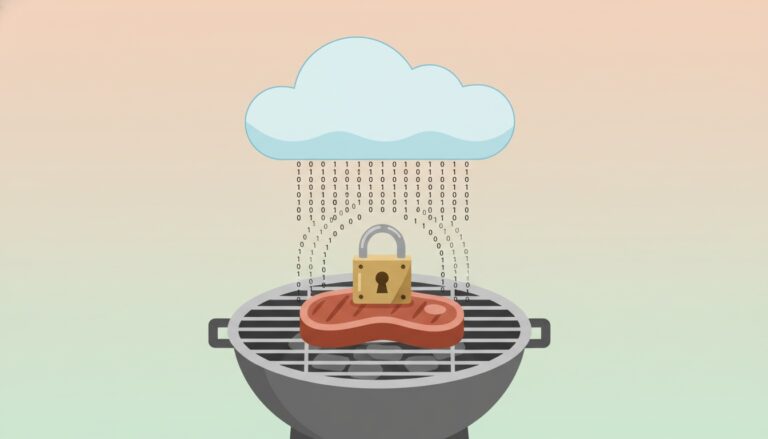
Picture this: You are at a bustling Korean BBQ (Samgyeopsal) restaurant in Hongdae. The waiter brings the glowing charcoal, sets up the grill, and places a slab of premium raw pork on the table. Then, he walks away.
Does the waiter cook the meat? Usually, no. You do.
If you get distracted talking to your friends and the meat burns to a crisp, whose fault is it? The restaurant provided the infrastructure (fire, grill, meat), but the management of that meat was entirely up to you.
This, my friends, is exactly how we understand the Shared Responsibility Model (책임 공유 모델) in cloud security. In Korea, understanding who is responsible for what is not just a technicality—it’s a survival skill, whether you’re grilling pork belly or managing a cloud server in Pangyo’s Techno Valley.
Today, we aren’t just learning C2 vocabulary; we are learning how to draw the line between “Your fault” and “My fault” in high-stakes Korean business culture.
Phase 2: Deep Dive into Core Expressions
1. 책임 소재 (Chaegim sojae)
- Pronunciation: [Chae-gim so-jae] (Sounds like: Check-im + So-jay)
- Meaning: Locus of responsibility / Where the responsibility lies
- K-Culture Moment: In every intense office K-Drama scene where a project fails, a terrifying executive will slam the table and ask, “So, where is the chaegim sojae?” (Who am I going to fire?)
- Editor’s Insight: This is a heavy word. It’s not just about “who did it.” It’s about pinpointing liability. In the cloud model, defining the chaegim sojae between the CSP (Cloud Service Provider) and the customer is the first step to not getting fired.
- Situation Spectrum:
[🚫 Casual] ———— [⚠️ Semi-formal] ———— [✅ Formal/Legal] - 🤔 Think About It: Why does Korean corporate culture obsess over sojae (location/placement) of responsibility rather than just fixing the problem? Is it about solution, or is it about shame?
2. 보안 불감증 (Boan bulgamjeung)
- Pronunciation: [Bo-an bul-gam-jeung]
- Meaning: Security insensitivity / Security numbness / Lack of security awareness
- K-Culture Moment: You’ll hear this on the 9 PM News whenever there is a massive personal data leak. Anchors will sigh and say, “Our society’s boan bulgamjeung is serious.”
- Editor’s Insight: Bulgamjeung originally refers to medical insensitivity (numbness). Metaphorically, it means you are exposed to danger so often that you no longer feel the fear. Using simple passwords because “who would hack me?” is a classic symptom of boan bulgamjeung.
- Situation Spectrum:
[✅ Casual] ———— [✅ Semi-formal] ———— [✅ Formal]
3. 귀책사유 (Gwichaek sayu)
- Pronunciation: [Gwi-chaek sa-yu]
- Meaning: Imputable cause / Reasons attributable to someone
- K-Culture Moment: This is strictly Contract Korean. You will see this in the Terms of Service (Yakgwan) of any Korean app or cloud contract. “If the data loss occurs due to the user’s gwichaek sayu…”
- Editor’s Insight: If you use this word in daily conversation, people will think you are a lawyer or a very uptight bureaucrat. Use it only when reading the fine print of your SLA (Service Level Agreement).
- Situation Spectrum:
[🚫 Casual] ———— [⚠️ Semi-formal] ———— [✅ Formal/Contracts]
Phase 3: Textbook vs. Real Life
| Situation | 📖 Textbook Korean | 🗣️ Real Korean (Biz/Slang) | 💡 Why different? |
|---|---|---|---|
| Discussing a breach | 책임 공유 모델을 준수해야 합니다. (We must adhere to the shared responsibility model.) | 니 탓 내 탓 따지기 전에 로그부터 까봐. (Before arguing whose fault it is, open the logs.) | Koreans value speed (Palli-palli). In a crisis, politeness is dropped for efficiency. |
| User caused the error | 사용자의 관리 소홀입니다. (It is the user’s negligence.) | 이건 100% 사용자 과실이죠. (This is 100% user error.) | Gwasil (error/fault) is the precise legal term used to assign percentage of blame (like in car accidents). |
| Server is down (Provider fault) | 공급자 측의 문제입니다. (It is the provider’s issue.) | 서버 터졌네. (The server exploded/popped.) | Visual, visceral language is preferred in IT slang over dry descriptions. |
Note: “로그를 까보다” (Peel/Open the logs) is very common developer slang. Kka-da (peel) implies revealing something hidden.
Phase 4: Cultural Context — The “Nunchi” of Security
Non-verbal Communication:
In a Korean business meeting regarding security breaches, silence is loud. If a superior asks, “Is the cloud environment secure?” and you hesitate for 3 seconds, that hesitation is interpreted as “No.” In high-context cultures, confidence is part of the security protocol.
K-Culture Connection (K-Food):
Let’s go back to the Korean BBQ (Gogi-jip) metaphor.
– The Grill Owner (AWS/Azure): Responsible for the building safety, the gas lines, and providing fresh meat. If the building collapses, it’s their fault.
– The Customer (You): Responsible for cooking the meat (Data) and not letting it burn. If you burn the meat, you cannot demand a refund from the owner.
– The Context: Many disputes in Korea arise because the boundaries of this “grilling” are vague. “You gave me a bad grill!” vs. “You don’t know how to cook!” This is exactly the dynamic of the Shared Responsibility Model debates in Korean IT firms.
Phase 5: Immersive Roleplay
Setting: A tense meeting room in Pangyo (Korea’s Silicon Valley). Monday morning. A minor data leak occurred over the weekend.
Characters:
– YOU: Security Team Lead (Foreigner, fluent expert).
– Manager Choi: Conventional manager, looking for someone to blame.
Manager Choi: (Sighs deeply) 하… 이번 유출 사고, 클라우드 업체 쪽 문제 아닙니까? 그쪽에서 보안을 다 해준다면서요.
(Ha… ibeon yuchul sago, cloud eopche jjok munje animnikka? Geujjoge-seo boan-eul da haejundamyeonseoyo.)
(Sigh… This leak accident, isn’t it the cloud provider’s problem? They said they handle all the security.)
🔀 Your Turn! How do you correct him without offending him?
Option A: “아니요, 그건 우리 책임입니다. 공부 좀 하세요.” (No, that’s our responsibility. Study a bit.)
Option B: “클라우드 업체는 ‘인프라’만 보호합니다. ‘데이터’ 접근 권한 관리는 저희 몫이죠. 이건 우리가 놓친 겁니다.” (The cloud provider only protects the ‘infrastructure.’ Managing ‘data’ access is our share. This is what we missed.)
Option C: “계약서 다시 읽어보시죠.” (Read the contract again.)
✅ Best Choice: Option B.
It explains the logic of the Shared Responsibility Model professionally using terms like ‘몫’ (share/role) without directly attacking the manager’s intelligence. Option A is suicidal in a Korean company.
Manager Choi: (Nodding slowly) 아, 그러니까… 식당 주인은 불판만 주고, 고기 태운 건 우리란 말이네요?
(Ah, geureonikka… sikdang juin-eun bulpan-man jugo, gogi tae-un geon uriran marineyo?)
(Ah, so… the restaurant owner gave us the grill, but we are the ones who burned the meat?)
YOU:
(Stage Direction: Smiling confidently)
“정확합니다. 그래서 이번엔 우리가 집게를 더 꽉 잡아야 합니다.”
(Jeonghwak-hamnida. Geuraeseo ibeon-en uriga jipge-reul deo kkwak jabaya hamnida.)
(“Exactly. That’s why this time, we need to grip the tongs tighter.”)
Phase 6: 10-Second Shadowing Drill
Practice saying this with a firm, professional tone, as if you are presenting to the Board.
😤 보안은 / 기술의 문제가 아니라 / 책임의 문제입니다.
(Boan-eun / gisur-ui munjega anira / chaegim-ui munje-imnida.)
“Security is not a matter of technology, but a matter of responsibility.”
Phase 7: K-Culture Mini Dictionary
| Korean | Romanization | Meaning | Context in Security |
|---|---|---|---|
| 총대를 메다 | Chongdae-reul meda | To bear the gun (Take the fall/lead) | Who will take full responsibility for this migration? The person who “carries the gun.” |
| 소 잃고 외양간 고치기 | So ilko oeyanggan gochigi | Fixing the stable after losing the cow | The Korean equivalent of “Locking the barn door after the horse has bolted.” Used for reactive security updates. |
| 뚫리다 | Ttul-li-da | To be pierced/punctured | Slang for being hacked. “Our firewall got pierced.” (banghwabyeok ttul-lyeosseo). |
Phase 8: Traveler’s Survival Kit (Digital Nomad Edition)
Even if you aren’t managing servers, you use the cloud when you travel to Korea.
🆘 Survival Expression
– 🇰🇷 “이 와이파이, 보안 걸려 있는 거예요?” (I wipi, boan geollyeo inneun geoyeyo?)
– 🗣️ Meaning: Is this Wi-Fi secured (encrypted)?
– 📍 Where: Cafes, Hotels, Co-working spaces.
– 💡 Pro Tip: Korean cafes are safe physically (no one steals laptops), but digitally? Boan bulgamjeung exists. Public Wi-Fi is often open. Use a VPN.
Phase 9: Think Deeper — Responsibility in Collectivism
In Western security models, individual accountability (Access Keys, User ID) is paramount. In Korean corporate culture, however, there is often a blur due to Collectivism. If a team member makes a mistake, the Team Leader often “Carries the Gun” (Chongdae-reul meda).
Think Deeper: How does this cultural trait affect the “Shared Responsibility Model”? If everyone is responsible, is no one responsible? When a cloud configuration error happens, does the junior engineer get blamed, or does the executive bow in apology? In Korea, the “moral responsibility” (Do-ui-jeok chaegim) often outweighs the technical root cause.
Phase 10: FAQ & Troubleshooting
Q: Can I use “Dangsin” (You) when arguing about responsibility?
A: ABSOLUTELY NOT. 🚫 Even if you are angry about a security breach. Using “Dangsin” to a coworker or boss turns a technical dispute into a fistfight. Use their job title (Gwajang-nim, Teamjang-nim) instead.
❌ Common Mistake: Saying “It’s not my fault” (Je jalmot anieyo) too quickly.
✅ Better Way: “Let’s verify the logs to check the responsibility scope.” (Log-reul hwaginhaeseo chaegim beomwi-reul bopsida). It sounds objective, not defensive.
Phase 11: Wrap-up & Action Mission
One-Liner: The Cloud Provider gives you the grill, but you must cook the meat—don’t let your data burn!
🎯 Action Missions:
– 🥉 Bronze: Say “Boan bulgamjeung” 3 times while looking at your weak passwords.
– 🥈 Silver: Explain the “Korean BBQ Security Analogy” to a friend in English, using the word Chaegim sojae.
– 🥇 Gold: Go to a Korean cafe, connect to Wi-Fi, and jokingly think to yourself, “Is this gwichaek sayu mine or the cafe owner’s if I get hacked?” (Then turn on your VPN).
See you next time, and keep your tongs tight!
Phase 12: Interactive Quiz
- Situation: Your boss blames Azure for a weak password leak. What is the most appropriate C2 level response?
- A) Azure ga jalmothaetne. (Azure messed up.)
- B) Igeon uriga gwanli-haeya hal gwonhan wiim yeong-yeok-imnida. (This is the delegated authority area we must manage.)
- C) Molla. (IDK.)
- Culture: What does “So ilko oeyanggan gochigi” mean in a security context?
- A) Patching a vulnerability after the data is stolen.
- B) Eating beef after a meeting.
- C) Hiring a security guard.
(Answers: 1-B, 2-A)
Frequently Asked Questions (FAQ)
Q: What does "책임 소재 (Chaegim sojae)" mean in Korean and how do you pronounce it?
A: In Korean, "책임 소재 (Chaegim sojae)" is pronounced [Chae-gim so-jae] and means: Locus of responsibility / Where the responsibility lies
Q: What does "보안 불감증 (Boan bulgamjeung)" mean in Korean and how do you pronounce it?
A: In Korean, "보안 불감증 (Boan bulgamjeung)" is pronounced [Bo-an bul-gam-jeung] and means: Security insensitivity / Security numbness / Lack of security awareness
Q: What does "귀책사유 (Gwichaek sayu)" mean in Korean and how do you pronounce it?
A: In Korean, "귀책사유 (Gwichaek sayu)" is pronounced [Gwi-chaek sa-yu] and means: Imputable cause / Reasons attributable to someone







