

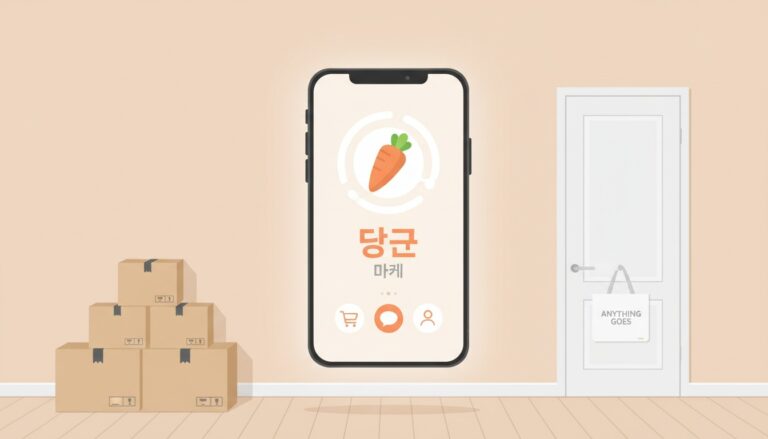
Introduction: The Art of ‘Letting Go’ in Seoul
Hello! This is your Senior Editor at Daily Hangul. 👋
If you’ve lived in Korea long enough to reach a C2 level, you know that space in a Seoul officetel is a luxury. We accumulate things, and eventually, the urge to clean strikes. But in Korea, simply throwing usable items in the trash is not just wasteful—it requires buying expensive stickers (waste disposal fees)!
Today, we aren’t just talking about cleaning (청소). We are diving into the high-level cultural phenomenon of Danggeun Market (Karrot Market) Na-num (Free Giveaway).
At an advanced level, you don’t just say “I want to give this away.” You need to explain the condition, manage the logistics tactfully, and filter out bad-mannered users, all while sounding like a sophisticated local. Ready to declutter like a pro? Let’s dive in.
Phase 2: Deep Dive into Core Expressions
To sound like a native C2 speaker, you must master the art of polite justification and boundary setting.
1. 처분하기엔 아까워서 나눔해요
- Pronunciation: [Cheo-bun-ha-gi-en a-kka-wo-seo na-num-hae-yo]
- Tip: ‘처분’ sounds sharp and formal. ‘아까워서’ carries the emotion of regret/waste.
- Meaning: “It’s too good/wasteful to just dispose of, so I’m doing a giveaway.”
- Editor’s Insight: This is the perfect C2 justification. It signals, “This isn’t trash; it has value, but I don’t need it.” It elevates the dignity of the transaction.
- Situation: Very common on Danggeun Market descriptions to assure people the item is quality.
2. 사용감은 있지만 기능상 하자는 없어요
- Pronunciation: [Sa-yong-gam-eun it-ji-man gi-neung-sang ha-ja-neun eop-seo-yo]
- Meaning: “It shows signs of use, but there are no functional defects.”
- Editor’s Insight: “사용감” (feeling of use/wear and tear) is a crucial noun for advanced learners. It’s a polite euphemism for scratches, fading, or old age. This phrase protects you from complaints later.
- Situation: Essential for honest descriptions of furniture or electronics.
3. 비대면 문고리 거래 희망합니다
- Pronunciation: [Bi-dae-myeon mun-go-ri geo-rae hui-mang-ham-ni-da]
- Meaning: “I hope for a non-face-to-face ‘doorknob’ trade.”
- Editor’s Insight: This culture exploded post-pandemic. It means you will hang the item on your doorknob, and they will pick it up without ringing the bell. It implies efficiency and privacy.
- Situation: Perfect for busy professionals or introverts giving away small items.
Phase 3: Textbook vs. Real Life (The ‘Danggeun’ Vibe)
| Textbook / Formal | Real Life (Danggeun Vibes) |
|---|---|
| 무료로 드립니다. (I give it for free.) | 무나해요. 🥕 (Doing ‘Muna’ – short for Free Share.) |
| 빨리 가져가실 분을 찾습니다. (Looking for someone to take it quickly.) | 가장 먼저 오실 수 있는 분 우대해요. (Prefer whoever can come first/earliest.) |
| 상태가 좋지 않습니다. (The condition is not good.) | 예민하신 분은 피해주세요. (Please avoid if you are sensitive.) |
| 환불은 안 됩니다. (Refunds are not possible.) | 가져가신 후 교환/환불 X (No exchange/refund after taking.) |
Editor’s Note: At C2 level, using “예민하신 분은 피해주세요” (Sensitive people, please avoid) is a sophisticated way to say, “The item isn’t perfect, so don’t complain to me about it later.”
Phase 4: Cultural Context & Manners
1. The ‘No-Show’ Sin
In the world of free sharing, time is the currency. Since no money is exchanged, punctuality is the payment. If someone says they are coming and disappears, they are a “No-show” (노쇼).
* Tip: If you are giving away, it is polite to say “도착 5분 전에 연락 주세요” (Please contact me 5 mins before arrival) to ensure they are actually coming.
2. Don’t be a ‘Na-num Beggar’ (나눔 거지)
Even if it’s free, asking for free delivery or asking too many detailed questions about a $0 item is considered rude. The unspoken rule of Na-num is: The receiver accommodates the giver’s schedule and location 100%.
Phase 5: Roleplay Script
Setting: Chatting on the Danggeun App. You are giving away a toaster.
You (Seller): 안녕하세요. 토스터기 나눔 관련 연락 주셨죠? 혹시 언제쯤 오실 수 있나요?
(Hello. You contacted me about the toaster giveaway, right? When might you be able to come?)
Buyer (Neighbor): 네! 지금 바로 갈게요. 혹시 문 앞에 놔주실 수 있나요?
(Yes! I’m coming right now. Could you possibly leave it in front of the door?)
You (Seller): (Sending a photo) 네, 쇼핑백에 담아서 문고리에 걸어뒀습니다. 가져가시고 채팅 하나 남겨주세요!
(Yes, I put it in a shopping bag and hung it on the doorknob. Please leave a chat msg after you take it!)
Buyer (Neighbor): 감사합니다! 잘 쓰겠습니다. 🥕
(Thank you! I will use it well.)
Phase 6: 10-Second Shadowing Drill
Let’s practice a complex sentence often used to set boundaries politely.
“무료 나눔인 만큼 / 꼼꼼하게 확인 못 해 드리는 점 / 양해 부탁드려요.”
(Since it is a free giveaway, I ask for your understanding that I cannot check [details] meticulously for you.)
- Focus: Pause slightly after ‘만큼’ and ‘점’. Keep the tone apologetic but firm.
Phase 7: FAQ & Troubleshooting
- Q: Can I use these phrases with my boss?
- No. Giving used items to a superior is culturally risky unless they explicitly asked for it. These phrases are for peer-to-peer marketplace transactions.
- Q: What if the item is actually trash?
- Do not upload it. ‘Na-num’ is for usable items. If it’s broken, you must throw it away (폐기 처분). Giving away trash is considered very bad manners (비매너).
Phase 8: Wrap-up & Action Item
Summary: Use sophisticated euphemisms like “사용감” (signs of use) and efficient methods like “문고리 거래” (doorknob trade) to declutter smart.
🚀 Mission: Open your Karrot (Danggeun) app or look around your room. Find one item you haven’t used in a year. Practice writing a description using: “처분하기엔 아까워서…” even if you don’t actually post it!
Have you ever successfully given something away in Korea? Tell me about your “Cool Deal” in the comments! 👇
Phase 9: Pop Quiz
1. Which phrase is best to warn people that the item is old but works fine?
a) 이거 쓰레기예요. (This is trash.)
b) 사용감은 있지만 기능은 멀쩡해요. (It has signs of use but functions fine.)
c) 새 상품입니다. (It is a brand new product.)
2. What does “문고리 거래” imply?
a) You are selling a doorknob.
b) You want to meet inside the house for tea.
c) You want a non-face-to-face trade by leaving the item on the door handle.
3. In a ‘Na-num’ (free giveaway), who usually sets the time and place?
a) The Giver (You)
b) The Receiver
c) The Government
(Answers: 1-b, 2-c, 3-a)
Frequently Asked Questions (FAQ)
Q: What does "처분하기엔 아까워서 나눔해요" mean in Korean and how do you pronounce it?
A: In Korean, "처분하기엔 아까워서 나눔해요" is pronounced [Cheo-bun-ha-gi-en a-kka-wo-seo na-num-hae-yo] and means: a key conversational Korean expression covered in this lesson.
Q: What does "사용감은 있지만 기능상 하자는 없어요" mean in Korean and how do you pronounce it?
A: In Korean, "사용감은 있지만 기능상 하자는 없어요" is pronounced [Sa-yong-gam-eun it-ji-man gi-neung-sang ha-ja-neun eop-seo-yo] and means: "It shows signs of use, but there are no functional defects."
Q: What does "비대면 문고리 거래 희망합니다" mean in Korean and how do you pronounce it?
A: In Korean, "비대면 문고리 거래 희망합니다" is pronounced [Bi-dae-myeon mun-go-ri geo-rae hui-mang-ham-ni-da] and means: "I hope for a non-face-to-face 'doorknob' trade."







