

Phase 1: Introduction
Hello! This is your Senior Editor at Daily Hangul. 👋
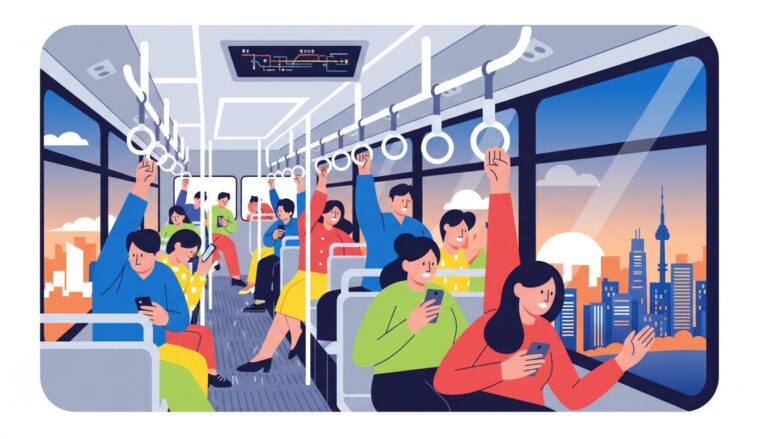
Have you ever ridden a city bus in Seoul? It’s basically an action movie. You are enjoying the view, the announcer says your stop is approaching, and suddenly—whoosh! Everyone around you stands up while the bus is still driving at 40km/h.
If you wait until the bus comes to a complete stop to stand up (like safety manuals suggest), you might find the doors closing right in front of your face. Panic sets in. You’re stuck!
Today, we are diving into the heart of Korea’s ‘Palli-Palli’ (Hurry-Hurry) culture. I will teach you how to survive the Korean bus exit strategy so you don’t end up two stops away from your destination. Let’s learn how to politely plow through a crowd and demand that door stays open!
(Note: This guide is based on real questions from students who missed their stop because they were too polite!)
Phase 2: Deep Dive (Core Expressions)
Here are the three survival phrases you need when the bus is packed like a can of sardines.
1. 잠시만요 (Jamsimanyo)
- Pronunciation: [Jam-si-man-yo] → Sounds like ‘Jam’ + ‘See’ + ‘Man’ + ‘Yo’ (Say it rhythmically: Jam-si-man-yo!)
- Meaning: Literal: “Just a moment.” Real Nuance: “Excuse me, I need to pass through, please make way!”
- Editor’s Insight: This is your magic wand. In a crowded space, saying this gently parts the “Red Sea” of passengers. It’s polite but firm.
- Situation Check: ✅ Universal (Use with friends, strangers, elders).
2. 내릴게요 (Naerilgeyo)
- Pronunciation: [Nae-ril-ge-yo] → ‘Nae’ like ‘Net’, ‘ril’ like ‘reel’, ‘ge’ like ‘get’.
- Meaning: Literal: “I will get off.” Real Nuance: “I am getting off right now, so please don’t block the door!”
- Editor’s Insight: Use this when you are near the door but someone is standing right in front of the card reader. It signals them to step aside or tap their card for you.
- Situation Check: ✅ Universal (Polite standard form).
3. 기사님! 문 열어 주세요! (Gisanim! Mun yeoreo juseyo!)
- Pronunciation: [Gi-sa-nim! Mun yeo-reo ju-se-yo!]
- Meaning: “Driver! Please open the door!”
- Editor’s Insight: This is the SOS signal. If the driver didn’t see you and closed the door, you must shout this immediately and loudly. Do not whisper. Your destination depends on it!
- Situation Check: ✅ Desperate situations.
Phase 3: Textbook vs. Real Life
How does a textbook student speak versus a Seoul local? Let’s compare.
| Feature | Textbook Korean 📚 | Real Life Korean (Daily Hangul Style) 🕶️ |
|---|---|---|
| Excuse me | 실례합니다 (Silryehamnida) | 잠시만요 (Jamsimanyo) or 지나갈게요 (Jinagalgeyo) |
| I’m getting off | 저는 여기서 내립니다 (Jeoneun yeogiseo naerimnida) | 저 내려요! (Jeo naeryeoyo!) |
| Driver! | 운전기사 아저씨 (Unjeongisa ajeossi) | 기사님 (Gisanim) (Professional & Respectful) |
💡 Bottom Note: Silryehamnida is not wrong, but it sounds very formal, like you are interrupting a business meeting. On a bus, Jamsimanyo is the king.
Phase 4: Cultural Context & Manners
The Art of “Bus Nunchi” (눈치)
In Korea, efficiency is a virtue. The reason people stand up before the bus stops is to minimize the time the bus has to wait at the station. It helps everyone get home faster.
1. The “Bag Shift” Signal
If the person sitting next to you starts shifting their bag or checking their phone frantically as the stop announcement plays, that is your signal. They want to get out. Shift your legs to let them pass.
2. The “Card Tap” Dance
In Korea, you tap your card when you enter AND when you exit. If you see people pre-tapping their cards while the bus is moving, you should get your card ready, too. Don’t be the person digging for a wallet at the door!
Phase 5: Roleplay Script
Setting: A crowded bus during rush hour (6 PM) in Gangnam.
Characters: Alex (Foreigner, B1 level), Passenger (Local Korean).
(The bus is approaching the stop. Alex is stuck in the middle.)
Alex: (Slightly panicking, trying to squeeze through)
잠시만요! 내릴게요.
[Jamsimanyo! Naerilgeyo.]
(Excuse me! I’m getting off.)
Passenger: (Hearing Alex, taps the person in front)
어, 여기 내리신대요.
[Eo, yeogi naerisindaeyo.]
(Oh, this person says they are getting off.)
Alex: (Reaching the door, bowing slightly)
감사합니다!
[Gamsahamnida!]
(Thank you!)
(The driver is about to close the door)
Alex: (Loudly)
잠시만요! 기사님, 문 열어 주세요!
[Jamsimanyo! Gisanim, mun yeoreo juseyo!]
(Wait! Driver, please open the door!)
Phase 6: 10-Second Shadowing
Let’s practice the rhythm. Read this naturally, stressing the Bold parts.
“Excuse me, I’m getting off! (Passing through)”
잠시만요 / 저 내릴게요! / 지나갈게요!
[Jam-si-man-yo / jeo nae-ril-ge-yo! / Ji-na-gal-ge-yo!]
- Tip: Don’t pause too long between words. Connect them like a flowing river: Jamsimanyo~Jenaerilgeyo.
Phase 7: FAQ & Troubleshooting
Q: Is it rude to shout “Gisanim” (Driver) loudy?
A: Not at all! It is better to shout than to miss your stop. Just make sure to add “-yo” (Please/Polite marker) at the end of your request. “Mun yeoreo!” is rude. “Mun yeoreo juseyo!” is polite desperation.
Q: The bus is moving fast. Isn’t it dangerous to stand up?
A: Yes, honestly, it can be. Safety Tip: Hold the vertical poles or handles firmly. Do not rely on your balance alone. Korean bus drivers are known for their… “dynamic” driving skills.
Phase 8: Wrap-up
📝 One-Liner Summary:
Don’t wait for the bus to stop; say “Jamsimanyo” and move to the door when the announcement plays!
🚀 Today’s Mission:
Next time you are on public transport, try to spot the exact moment Koreans start standing up. Is it 10 seconds before the stop? 5 seconds? Match their timing!
💬 Comment Below:
Have you ever gotten stuck on a bus and missed your stop? Tell me your story!
Phase 9: Quiz
1. Which phrase is best to use when pushing through a crowd to exit?
(a) 사랑해요 (Saranghaeyo)
(b) 잠시만요 (Jamsimanyo)
(c) 안녕하세요 (Annyeonghaseyo)
2. Who is ‘Gisanim’?
(a) The police officer
(b) The bus driver
(c) The passenger
3. True or False: You should wait until the bus completely stops before unbuckling or standing up in Korea (Cultural Reality).
(a) True (Safety first!)
(b) False (Palli-Palli culture!)
Click to see answers
1. (b) 잠시만요
2. (b) The bus driver
3. (b) False (Ideally True for safety, but culturally False!)
Frequently Asked Questions (FAQ)
Q: What does "잠시만요 (Jamsimanyo)" mean in Korean and how do you pronounce it?
A: In Korean, "잠시만요 (Jamsimanyo)" is pronounced [Jam-si-man-yo] and means: Literal: "Just a moment." Real Nuance: "Excuse me, I need to pass through, please make way!"
Q: What does "내릴게요 (Naerilgeyo)" mean in Korean and how do you pronounce it?
A: In Korean, "내릴게요 (Naerilgeyo)" is pronounced [Nae-ril-ge-yo] and means: Literal: "I will get off." Real Nuance: "I am getting off right now, so please don't block the door!"
Q: What does "기사님! 문 열어 주세요! (Gisanim! Mun yeoreo juseyo!)" mean in Korean and how do you pronounce it?
A: In Korean, "기사님! 문 열어 주세요! (Gisanim! Mun yeoreo juseyo!)" is pronounced [Gi-sa-nim! Mun yeo-reo ju-se-yo!] and means: "Driver! Please open the door!"







