

Phase 1: Greeting & Introduction
Hello! This is your Senior Editor at Daily Hangul.
Today, we are putting aside the K-Pop lyrics and café orders for a moment to talk about something crucial: Survival. Imagine you are dining at a BBQ restaurant in Seoul. Someone at the next table suddenly grabs their throat, turning pale. No sound comes out.
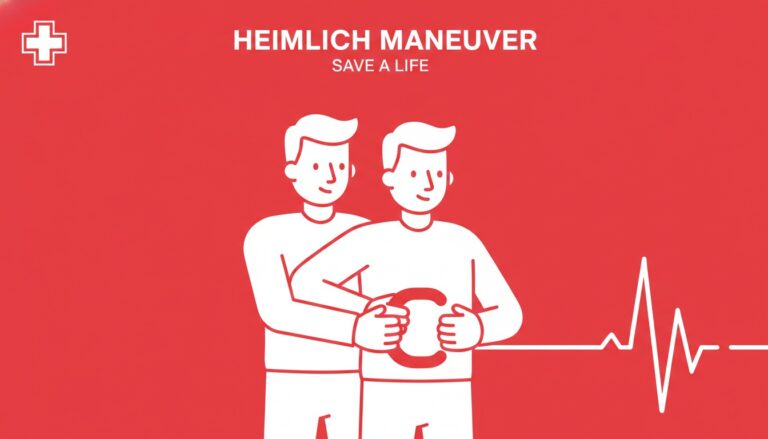
This is a Code Red. In this situation, knowing how to ask for water isn’t enough. You need to identify Airway Obstruction (기도 폐쇄) and communicate the Heimlich Maneuver (하임리히법) instantly.
For C1 learners, it is not just about shouting “Help!”; it is about controlling the chaos with precise, authoritative language. As your tutor, I hope you never have to use this lesson. But if you do, this guide will make you the hero of the hour.
Let’s dive into the serious side of Korean.
Phase 2: Deep Dive into Core Expressions
Here are the three heavy-hitting phrases you need to master. Since you are an advanced learner, we will focus on anatomical precision and directive speech.
1. 기도가 막힌 것 같아요 (It looks like the airway is blocked)
- Pronunciation: [Gi-do-ga ma-kin geot ga-ta-yo]
- Tip: ‘Gi-do’ sounds like ‘Guido’ without the ‘u’.
- Meaning:
- Literal: It seems like the airway is blocked.
- Nuance: This is a medical observation. Using the word 기도 (airway) instead of just 목 (throat) signals to listeners that this is a life-threatening medical emergency, not just a coughing fit.
- Editor’s Insight: In a panic, people freeze. Using specific terminology helps snap bystanders into reality.
- Situation: Universal. Use this to inform 119 (emergency services) or people around you.
2. 하임리히법 할 줄 아시는 분 계세요? (Is there anyone who knows the Heimlich maneuver?)
- Pronunciation: [Ha-im-ri-hi-beop hal jul a-si-neun bun gye-se-yo?]
- Meaning: Is there a person (honorific) here who knows how to do the Heimlich method?
- Editor’s Insight: Note the phonetics—하임리히 (Heimlich) is the loanword usage. We use 계세요? (honorific existence) to politely but urgently address the crowd.
- Situation: Shouting to a crowd in a restaurant or subway.
3. 명치와 배꼽 사이를 압박하세요! (Compress between the solar plexus and the navel!)
- Pronunciation: [Myeong-chi-wa bae-kkop sa-i-reul ap-bak-ha-se-yo]
- Meaning: Press the area between the solar plexus and the belly button.
- Editor’s Insight: This is the C1 identifier. Beginners say “stomach” (배). You say 명치 (solar plexus). This precision is vital for the maneuver to work without breaking ribs.
Phase 3: Textbook vs. Real Life
In an emergency, brevity is king. We drop the particles and get loud.
| Textbook (Standard) | Real Life (Survival Mode) | Why? |
|---|---|---|
| 도와주십시오. 숨을 못 쉽니다. | 사람 살려요! 숨을 안 쉬어요! | ‘사람 살려요’ (Save a person) triggers an immediate instinctual response. |
| 119에 신고해 주시겠습니까? | 거기 안경 쓴 분! 119 신고하세요! | The “Bystander Effect” is real. You must point at a specific person (Designated caller). |
| 하임리히법을 실시하겠습니다. | 제가 할게요! 비키세요! | You don’t announce the medical procedure; you declare action and clear the space. |
Note: Even at C1 level, don’t worry about being “polite” in a life-or-death scenario. Commanding endings like -하세요 or even -해! (if desperate) are acceptable.
Phase 4: Cultural Context & Manners
The “Golden Time” (골든타임)
Koreans often refer to the critical window for saving a life as 골든타임 (Golden Time). If you mention this word, people understand the urgency immediately.
The Good Samaritan & Touching
In Korea, touching a stranger is culturally sensitive. However, under the Good Samaritan Law (선한 사마리아인 법), you are protected when offering emergency aid.
Crucial Nunchi Tip: Before you wrap your arms around someone from behind, shout “응급 처치 하겠습니다!” (I am performing first aid!). This declares your intent to the witnesses and the victim, preventing any misunderstanding about physical contact.
Phase 5: Real-Life Roleplay
Setting: A busy Galbi restaurant. Your friend starts choking on a piece of meat.
Characters:
* You (Rescuer): Taking charge.
* Staff (Witness): Panicked waiter.
You: (Watching friend grab throat) 말 할 수 있어? 소리 내 봐!
(Can you speak? Make a sound!)
Friend: (Silent, shaking head, face turning red)
You: (Turning to staff loudly) 여기요! 기도가 막혔어요! 119 빨리 불러주세요!
(Over here! The airway is blocked! Call 119 quickly!)
Staff: (Frozen) 어… 어떡하죠?
(Uh… what do I do?)
You: (Positioning behind friend) 제가 하임리히법 합니다! 뒤로 물러나세요!
(I’m doing the Heimlich! Stand back!)
Phase 6: 10-Second Shadowing Drill
Let’s practice the most complex instruction. Focus on the pauses / to ensure clarity.
“환자의 / 명치와 배꼽 사이를 / 주먹으로 / 강하게 / 밀어 올리세요!”
(Push up / strongly / with your fist / between the patient’s / solar plexus and navel!)
- Intonation: Raise your pitch on 강하게 (strongly) to emphasize the force needed.
Phase 7: FAQ & Troubleshooting
Q: What if I don’t know the word ‘명치’ (Solar plexus)?
A: It’s okay! Use “가슴 뼈 아래” (Below the chest bone). It is longer but gets the point across. But as a C1 learner, memorizing 명치 is a power move.
Q: Should I use honorifics (존댓말) to the victim?
A: Generally, yes, to keep them calm. “괜찮으세요?” (Are you okay?) is better than “괜찮아?”. But if they are unconscious, stop talking and act.
Phase 8: Wrap-up
One-Liner Summary:
In an airway emergency, specify the symptom (기도 폐쇄), declare your action, and use specific anatomical terms (명치) to direct others.
Action Mission:
Find your 명치 (solar plexus) right now. Press it gently. Memorize this spot and the word. Hopefully, you only ever need to use this word when telling a doctor where your stomach hurts!
Question for you:
Have you ever had to call 119 or emergency services in a foreign country? Tell me your story in the comments!
Phase 9: Pop Quiz
- Which word refers to the “Solar Plexus”?
a) 배꼽 (Baekkop)
b) 명치 (Myeongchi)
c) 허벅지 (Heobeokji) -
What is the Korean term for “Airway”?
a) 기도 (Gido)
b) 식도 (Sikdo)
c) 가도 (Gado) -
How do you shout “Save me/Help!” most naturally in a life-threatening crisis?
a) 도와주세요 (Dowajuseyo)
b) 사람 살려요 (Saram Sallyeoyo)
c) 헬프 미 (Helpeu Mi)
(Answers: 1-b, 2-a, 3-b)
Frequently Asked Questions (FAQ)
Q: What does "기도가 막힌 것 같아요 (It looks like the airway is blocked)" mean in Korean and how do you pronounce it?
A: In Korean, "기도가 막힌 것 같아요 (It looks like the airway is blocked)" is pronounced [Gi-do-ga ma-kin geot ga-ta-yo] and means: a key conversational Korean expression covered in this lesson.
Q: What does "하임리히법 할 줄 아시는 분 계세요? (Is there anyone who knows the Heimlich maneuver?)" mean in Korean and how do you pronounce it?
A: In Korean, "하임리히법 할 줄 아시는 분 계세요? (Is there anyone who knows the Heimlich maneuver?)" is pronounced [Ha-im-ri-hi-beop hal jul a-si-neun bun gye-se-yo?] and means: Is there a person (honorific) here who knows how to do the Heimlich method?
Q: What does "명치와 배꼽 사이를 압박하세요! (Compress between the solar plexus and the navel!)" mean in Korean and how do you pronounce it?
A: In Korean, "명치와 배꼽 사이를 압박하세요! (Compress between the solar plexus and the navel!)" is pronounced [Myeong-chi-wa bae-kkop sa-i-reul ap-bak-ha-se-yo] and means: Press the area between the solar plexus and the belly button.






