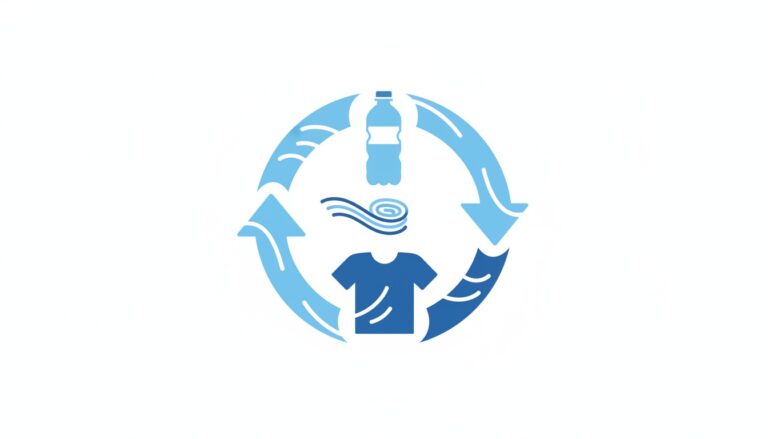
Save the Ocean, Speak Like a Pro: Advanced Korean for Marine Tech
Phase 1: Introduction
Hello! This is your Head Editor at Daily Hangul.
So, you’ve mastered ordering coffee and chatting about your weekend in Korean. But imagine this: You are at an international conference in Busan, or perhaps watching a documentary about the Pacific Trash Vortex with your Korean in-laws. The topic shifts to Marine Plastic Collection and Recycling Technology.
Suddenly, “바다에 쓰레기가 많아요” (There is a lot of trash in the sea) doesn’t quite cut it. You want to sound like an intellectual, an expert, or at least a deeply concerned global citizen.
Today’s lesson is strictly C2 Level. We are moving away from simple descriptions and diving into policy, technology, and systemic processes. This is the vocabulary that turns you from a “foreigner who speaks Korean well” into a “colleague we can trust with a project.”
Let’s dive deep. 🌊
Phase 2: Deep Dive (Key Expressions)
Here are the heavy hitters used in news reports, research papers, and ESG (Environmental, Social, and Governance) meetings.
1. 자원 순환 (Resource Circulation)
- Pronunciation: Ja-won Sun-hwan [Think of ‘Sun’ not like the sky, but like ‘Soon’ with a shorter vowel + ‘Hwan’ rhymes with ‘Juan’]
- Meaning: Recycling (Literal: Resource Circulation).
- Editor’s Insight: While 재활용 (recycling) is fine for household trash, 자원 순환 is the grown-up word. It implies a systemic approach—turning waste back into usable resources. It’s the core concept of a “Circular Economy.”
- Situation Check: Formal/Professional. Use this in presentations or debates.
2. 전처리 공정 (Pre-processing Stage)
- Pronunciation: Jeon-cheo-ri Gong-jeong
- Meaning: The preparation phase before recycling.
- Editor’s Insight: Cleaning salty ocean plastic is harder than cleaning a soda bottle. Before it can be recycled, it needs Jeon-cheo-ri (washing, sorting, crushing). If you use this word, Koreans will assume you have an engineering background. It shows you understand the complexity of the problem.
- Situation Check: Highly Technical.
3. 업사이클링 (Upcycling)
- Pronunciation: Eop-sa-i-keul-ling [Koreanized English]
- Meaning: Creative reuse.
- Editor’s Insight: Yes, it’s a loan word, but the usage is specific. In Korea, turning ocean nets into fashion items is a huge trend. Using this shows you are aware of current eco-trends. It’s not just fixing; it’s adding value.
- Situation Check: Trendy/General.
Phase 3: Textbook vs. Real Life (C2 Edition)
At this level, “Real Life” means professional news and industry speak.
| Textbook Korean (B1/B2) | Real Professional Korean (C2) |
|---|---|
| 바다 쓰레기를 줍습니다. (We pick up ocean trash.) |
해양 폐기물을 수거합니다. (We collect marine waste.) |
| 이걸로 옷을 만들어요. (We make clothes with this.) |
폐플라스틱을 고부가가치 섬유로 재생산합니다. (We reproduce waste plastic into high-value fibers.) |
| 바다가 깨끗해져요. (The sea becomes clean.) |
해양 생태계 복원에 기여합니다. (We contribute to the restoration of the marine ecosystem.) |
💡 Editor’s Note: Notice the shift from 쓰레기 (Trash) to 폐기물 (Waste/Debris). In a professional setting, 쓰레기 sounds too messy. 폐기물 sounds like something to be managed.
Phase 4: Cultural Context & Manners
The “Green” Pressure and Nunchi
Korea is extremely sensitive to waste management (you know how strict the recycling bins are!). In a corporate or academic setting, discussing ocean plastic isn’t just about the environment; it’s about Corporate Social Responsibility (CSR).
When discussing this topic:
* Don’t just blame: Avoid saying “People throw too much trash.”
* Focus on the system: Instead, critique the system or praise the technology. Koreans prefer solution-oriented discussions in professional settings rather than finger-pointing.
* Humility in expertise: Even if you are an expert, use phrases like “~라고 생각됩니다” (It is thought that…) rather than “이게 정답입니다” (This is the answer). It softens your assertion and invites collaboration.
Phase 5: Real-Life Scenario (Roleplay)
Setting: A strategy meeting at a Green Tech company. You are proposing a new project using ocean plastic.
- Characters:
- Alex (You): International Project Manager.
- Team Leader Choi: Senior Korean Manager.
Dialogue:
Choi: 이번 해양 정화 프로젝트의 핵심이 뭡니까?
(What is the core of this ocean cleanup project?)
Alex: 단순히 수거하는 것을 넘어, 자원 순환 모델을 구축하는 것입니다.
(Beyond simple collection, it is to build a resource circulation model.)
[Dan-sun-hi su-geo-ha-neun geo-seul neo-meo, ja-won sun-hwan mo-de-reul gu-chuk-ha-neun geo-sim-ni-da.]
Choi: 수거된 플라스틱은 염분 때문에 재활용이 어렵지 않나요?
(Isn’t collected plastic hard to recycle because of the salt content?)
Alex: 맞습니다. (Nods professionally) 그래서 고효율 전처리 공정을 도입해 염분을 99% 제거할 계획입니다.
(Correct. That represents why we plan to introduce a high-efficiency pre-processing stage to remove 99% of the salinity.)
[Gyeo-rae-seo go-hyo-yul jeon-cheo-ri gong-jeong-eul do-ip-hae yeom-bu-neul gu-sip-gu-peo-sen-teu je-geo-hal gye-hoek-im-ni-da.]
Choi: 오, 꽤 구체적이군요.
(Oh, that is quite specific.)
Phase 6: 10-Second Shadowing
Let’s practice a sentence that you can use to wrap up your presentation. Focus on the pause after the particle ‘은’ or ‘는’ for emphasis.
“우리의 목표는 / 해양 폐기물을 / 단순한 쓰레기가 아닌 / 새로운 자원으로 / 재탄생시키는 것입니다.”
(Our goal is / to cause marine waste / not to be simple trash / but to be reborn as new resources.)
Pronunciation Guide:
U-ri-ui mok-pyo-neun / hae-yang pye-gi-mu-reul / dan-sun-han sseu-re-gi-ga a-nin / sae-ro-un ja-wo-neu-ro / jae-tan-saeng-si-ki-neun geo-sim-ni-da.
Phase 7: FAQ & Troubleshooting
Q: Can I use words like ‘폐기물’ (Waste) with my friends at the beach?
A: Honestly? No. If you see a bottle on the beach with a friend, just say “쓰레기 줍자” (Let’s pick up trash). If you say “해양 폐기물을 수거하자,” your friend will think you are possessed by a government official. Save these words for the boardroom, news discussions, or writing reports.
Q: Is ‘업사이클링’ different from ‘리사이클링’ in Korean context?
A: Yes, distinctly. 리사이클링 usually implies grinding it down to raw material. 업사이클링 implies turning it into a bag, a shoe, or art. Marketing teams love the word 업사이클링.
Phase 8: Wrap-up
One-Liner Summary:
Stop saying “trash pick-up” and start saying “Resource Circulation” (자원 순환) to sound like a true industry expert.
Action Mission:
Next time you see a product made of recycled material (like shoes or a bag), point to it and tell a Korean friend: “이거 자원 순환의 좋은 예시네!” (This is a good example of resource circulation!). Watch their jaw drop.
Editor’s Question:
Does your country have a specific term for “Ocean Plastic”? Let me know in the comments!
Phase 9: Quiz
1. Which word implies turning waste into something of higher value?
a) 분리수거 (Separate collection)
b) 매립 (Landfill)
c) 업사이클링 (Upcycling)
2. What is the professional term for “Trash” in a marine context?
a) 찌꺼기 (Residue)
b) 폐기물 (Waste/Debris)
c) 먼지 (Dust)
3. Why is ‘Jeon-cheo-ri’ (Pre-processing) important for ocean plastic?
a) To change the color.
b) To remove salt (salinity) and debris.
c) To make it look pretty.
(Answers: 1. c, 2. b, 3. b)
Frequently Asked Questions (FAQ)
Q: What does "자원 순환 (Resource Circulation)" mean in Korean and how do you pronounce it?
A: In Korean, "자원 순환 (Resource Circulation)" is pronounced [Ja-won Sun-hwan [Think of 'Sun' not like the sky, but like 'Soon' with a shorter vowel + 'Hwan' rhymes with 'Juan'] and means: Recycling (Literal: Resource Circulation).
Q: What does "전처리 공정 (Pre-processing Stage)" mean in Korean and how do you pronounce it?
A: In Korean, "전처리 공정 (Pre-processing Stage)" is pronounced [Jeon-cheo-ri Gong-jeong] and means: The preparation phase before recycling.
Q: What does "업사이클링 (Upcycling)" mean in Korean and how do you pronounce it?
A: In Korean, "업사이클링 (Upcycling)" is pronounced [Eop-sa-i-keul-ling [Koreanized English] and means: Creative reuse.