

Phase 1: Introduction
Hello! This is your Daily Hangul Editor.
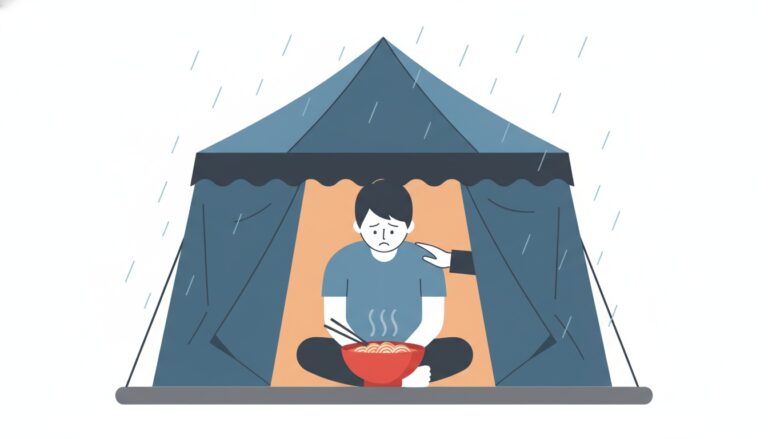
We’ve all been there. You’re going through a tough breakup, and your heart feels like it’s been shattered into a million pieces. In Korea, when you’re sad, friends will immediately try to drag you to a restaurant. Why? Because in Korea, feeding someone is the ultimate act of caring.
But what if you physically can’t eat? You’re staring at delicious Samgyeopsal (pork belly), but your stomach is in knots.
Today, we’re going to learn how to express that “breakup diet” feeling without hurting your well-meaning friend’s feelings. These are phrases you won’t find in a standard textbook, but you’ll hear in every K-Drama breakup scene. Let’s dive in!
Phase 2: Deep Dive (Core Expressions)
Here are the three most authentic ways to say you have zero appetite due to heartbreak.
1. 입맛이 없다 (I have no appetite)
- Pronunciation: [Im-mas-i eop-da]
- Sound Analogy: “Im” like Impossible + “mas” like Mass + “eop-da” like Up-da.
- Note: The ‘ㅂ’ in 입 (ip) changes to an ‘ㅁ’ sound because of the ‘ㅁ’ in 맛 (mat). It flows smoother!
- Meaning: Literally “There is no mouth-taste.” It means you have no desire to eat.
- Editor’s Insight: This is the standard, go-to phrase. It’s not overly dramatic, just a statement of fact. You can use this with anyone.
- Situation Check: ✅ Friends (Casual) / ✅ Colleagues (Polite: 입맛이 없어요).
2. 목구멍으로 안 넘어가요 (I can’t swallow anything)
- Pronunciation: [Mok-gu-meong-eu-ro an neo-meo-ga-yo]
- Meaning: “It doesn’t go over/through my throat.”
- Editor’s Insight: This is Level B1+ emotional nuance. It implies that you are so stressed or sad that your body is physically rejecting food. Use this when you want to emphasize your emotional state.
- Situation Check: ✅ Close Friends / ⚠️ Boss (Too emotional).
3. 모래 씹는 것 같아 (It tastes like chewing sand)
- Pronunciation: [Mo-rae ssim-neun geot ga-ta]
- Meaning: “It feels like I am chewing sand.”
- Editor’s Insight: A very poetic and dramatic way to say food has no flavor because you are depressed. If you say this, your Korean friend will likely sigh deeply and pour you a glass of Soju.
- Situation Check: ✅ Best Friends / ❌ Formal situations.
Phase 3: Textbook vs. Real Life
How does a robot talk vs. how a heartbroken Seoulite talks?
| Textbook Korean (Safe but stiff) | Real-Life Korean (Natural & Emotional) |
|---|---|
| 식욕이 없어요. (I have no appetite – Medical/Formal) | 입맛 뚝 떨어졌어. (My appetite dropped off completely.) |
| 음식을 먹고 싶지 않아요. (I do not want to eat food.) | 아무것도 안 들어가. (Nothing is going in [my stomach].) |
| 슬퍼서 못 먹겠어요. (I can’t eat because I am sad.) | 속이 뒤집어져서 못 먹겠어. (My insides are upside down/churning, so I can’t eat.) |
Editor’s Note: “속이 뒤집어지다” is a fantastic phrase. It can mean you are nauseous, but also that you are extremely angry or frustrated.
Phase 4: Cultural Context (The ‘Rice’ Culture)
Why do they keep feeding me?
In Korea, the phrase “Did you eat?” (밥 먹었어?) is basically synonymous with “How are you?”. When you go through a breakup, your friends’ mission is to restore your Gi (Energy/Qi) with food.
If you refuse food too strongly, they might get worried that you are giving up on life!
- Nunchi Tip: Even if you really can’t eat, don’t just say “No.” Sit at the table, poke at the food with your chopsticks, and say, “너 먹는 것만 봐도 배불러” (Just watching you eat makes me full). It shows you appreciate their effort.
Phase 5: Real-Life Roleplay
Setting: A pojangmacha (street food tent) at night. Min-ji is trying to cheer up Alex after a breakup.
Min-ji: 야, 이거 떡볶이 진짜 맛있어. 한 입만 먹어봐.
(Hey, this Tteokbokki is really good. Just take one bite.)
Alex: (Sighing and putting down chopsticks) 미안해, 민지야. 나 진짜 입맛이 없어.
(Sorry, Minji. I really have no appetite.)
Min-ji: 그래도 좀 먹어야 기운을 차리지!
(Still, you need to eat something to get your energy back!)
Alex: 알겠는데… 음식이 목구멍으로 안 넘어가.
(I know… but the food won’t go down my throat.)
Min-ji: 에휴, 알겠어. 그럼 술이라도 한 잔 할래?
(Sigh, okay. Then do you want a drink at least?)
Phase 6: 10-Second Shadowing
Practice this sentence to politely refuse food when you are sad. Focus on the pause to sound authentic.
“Thanks for worrying, but nothing is going down (my throat) today.”
걱정해 줘서 고마운데, / 오늘은 / 아무것도 안 넘어가네.
[Geok-jeong-hae jwo-seo go-ma-un-de, / o-neu-reun / a-mu-geot-do an neo-meo-ga-ne.]
Key Points:
* Pause after “Gomaunte” to show hesitation.
* Drop your pitch at the end of the sentence to sound somber.
Phase 7: FAQ & Troubleshooting
Q: Can I use “입맛이 없다” when I’m just physically sick (like a cold)?
A: YES! It works for both emotional sadness and physical illness.
Q: How do I say this to my boss if we are at a company lunch?
A: Do not say “목구멍으로 안 넘어가요” (Too dramatic). Instead, say: “속이 좀 안 좋아서요” (My stomach isn’t feeling very well). It’s a polite excuse that stops questions.
Phase 8: Wrap-up
Today’s Summary:
Breakups are hard, but explaining why you aren’t eating shouldn’t be. Use “입맛이 없다” for general situations and “안 넘어가요” when you want to share your pain.
Your Mission:
Next time you are stressed (even if it’s just from work) and lose your appetite, try saying to yourself: “아, 스트레스 받아서 입맛 없네.”
Tell me in the comments:
What is your “Comfort Food” (소울 푸드) that brings your appetite back after a hard day?
Phase 9: Quiz
- Which phrase is the most dramatic way to say you can’t eat?
A) 배 안 고파 (I’m not hungry)
B) 입맛이 없어 (I have no appetite)
C) 모래 씹는 것 같아 (It’s like chewing sand) -
How do you pronounce 입맛 (Appetite)?
A) [Ip-mat]
B) [Im-mat]
C) [Il-mat] -
If your boss asks why you aren’t eating, what is the safest response?
A) 헤어져서 죽고 싶어요. (We broke up and I want to die.)
B) 속이 좀 안 좋아서요. (My stomach isn’t feeling well.)
C) 밥이 맛없어요. (The rice tastes bad.)
(Answers: 1. C, 2. B, 3. B)
Frequently Asked Questions (FAQ)
Q: What does "입맛이 없다 (I have no appetite)" mean in Korean and how do you pronounce it?
A: In Korean, "입맛이 없다 (I have no appetite)" is pronounced [Im-mas-i eop-da] and means: a key conversational Korean expression covered in this lesson.
Q: What does "목구멍으로 안 넘어가요 (I can't swallow anything)" mean in Korean and how do you pronounce it?
A: In Korean, "목구멍으로 안 넘어가요 (I can't swallow anything)" is pronounced [Mok-gu-meong-eu-ro an neo-meo-ga-yo] and means: "It doesn't go over/through my throat."
Q: What does "모래 씹는 것 같아 (It tastes like chewing sand)" mean in Korean and how do you pronounce it?
A: In Korean, "모래 씹는 것 같아 (It tastes like chewing sand)" is pronounced [Mo-rae ssim-neun geot ga-ta] and means: "It feels like I am chewing sand."







