

Phase 1: Introduction
Hello! This is your Daily Hangul Editor.
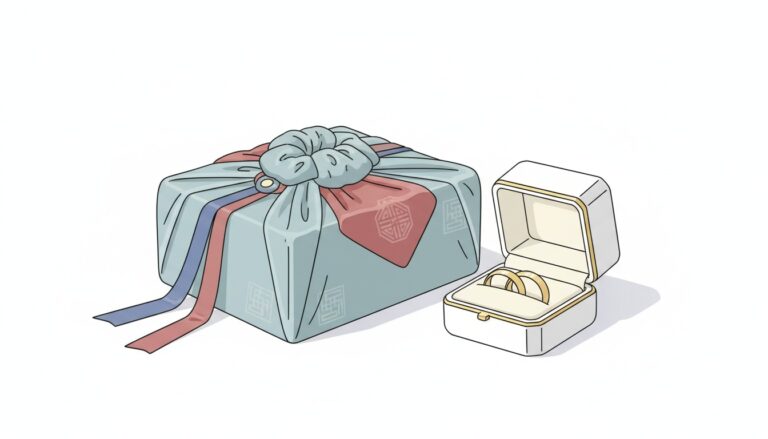
Today, we are diving into the deep end of the pool: Korean Wedding Culture. specifically the mysterious traditions of 함 (Ham), 예단 (Yedan), and 예물 (Yemul).
Imagine this: You are getting serious with your Korean partner. Everything is like a K-Drama until suddenly, the parents start talking about sending a “box” or exchanging “silk.” You might think, “I just want to get married! Why is there so much logistics?”
Don’t panic. A student of mine, ‘Mark’, once almost offended his future mother-in-law because he thought Yedan was just a simple birthday gift. He didn’t realize the weight of “sincerity” attached to it.
This guide is designed to save you from that awkward silence at the family dinner. We will decode these terms not just linguistically, but culturally, so you can navigate this tricky B2-level conversation like a true insider.
Phase 2: Deep Dive into Key Expressions
Here are the three heavy-hitters you need to know when wedding planning in Korea.
1. 함 (Ham)
- Pronunciation: [Ham] Sounds exactly like the meat ‘Ham’, but shorter and sharper.
- Meaning:
- Literal: A box or case.
- Real Nuance: A ceremonial box filled with gifts (marriage vows, blue/red silk, jewelry) that the groom sends to the bride’s family before the wedding.
- Editor’s Insight: Historically, friends of the groom would carry this box to the bride’s house shouting “함 사세요!” (Buy this box!) and make a chaotic, fun scene to get money. Nowadays? Due to noise complaints in apartment complexes, this is mostly done quietly by the groom alone. It’s a bit sad, but safer for the neighbors!
- Situation Check: Used when discussing pre-wedding rituals with family.
2. 예단 vs. 예물 (Yedan vs. Yemul)
- Pronunciation:
- Yedan: [Ye-dan]
- Yemul: [Ye-mul]
- Meaning:
- 예단 (Yedan): Gifts from the bride’s family to the groom’s family (often cash, bedding, or silverware) to show respect.
- 예물 (Yemul): Gifts the couple exchanges with each other (usually rings, watches, or bags).
- Editor’s Insight: This is the #1 cause of stress for Korean couples. If you mix these up, you might confuse who is giving what to whom. Just remember: Dan (단) sounds like ‘Donation’ (to the in-laws), and Mul (물) is like ‘Material’ (things for the couple).
3. 성의를 표하다 (Seong-ui-reul pyo-ha-da)
- Pronunciation: [Seong-ui-reul pyo-ha-da]
- Tip: ‘Ui’ (의) is tricky. Try saying ‘Ugh-ee’ quickly together.
- Meaning: To show one’s sincerity.
- Real Nuance: This is a very polite, high-context code word. Often, when elders say, “Just show a little sincerity,” they might be indirectly talking about the budget or the quality of the Yedan. It’s not just about “heart”; it’s about matching expectations.
- Situation Check: Formal. Used when parents discuss gifts or when you want to politely say you prepared a gift with care.
Phase 3: Textbook vs. Real Life
How does a textbook explain it versus what you’ll actually hear at a cafe in Gangnam?
| Textbook Korean | Real Life Korean (Trend) |
|---|---|
| 예단을 많이 준비했습니다. (I prepared a lot of Yedan.) | 우리는 예단/예물 생략하기로 했어. (We decided to skip/omit Yedan & Yemul.) |
| 전통 혼례를 올립니다. (We are holding a traditional wedding.) | 스몰 웨딩으로 간단하게 하려고요. (We’re keeping it simple with a Small Wedding.) |
| 함 들어오는 날입니다. (It is the day the Ham arrives.) | 그냥 오빠가 혼자 들고 왔어. (Oppa just brought it alone. Casual) |
Note: The trend among young Koreans (MZ Generation) is “허례허식” (Heo-rye-heo-sik – vanity and formalities) avoidance. Saying you will “skip” (생략하다) these expensive steps is actually very cool and rational these days!
Phase 4: Cultural Context & Manners
The Art of “Nunchi” (Eye-measure)
In Western weddings, you might have a registry. In Korea, discussing Yedan is a high-level mind game.
- The “No” that means “Yes”: If a mother-in-law says, “Oh, don’t prepare anything, just come as you are,” you need Nunchi. It usually doesn’t mean “bring nothing.” It means “don’t go overboard, but bring a small token of Seong-ui (sincerity).”
- Non-verbal Tip: When handing over any gift or envelope (Yedan bi – cash gift), always use two hands. It shows respect. Even if you are close, money requires two hands.
Phase 5: Real Scenario Roleplay
Setting: A cafe. Min-ji (Korean) and Jason (Foreigner) are discussing their wedding budget.
Jason: (Looking worried at a list)
민지야, 우리 예단이랑 예물 꼭 다 해야 해? 너무 비싸다.
(Min-ji, do we really have to do all this Yedan and Yemul stuff? It’s too expensive.)
Min-ji: (Sighing)
사실 나도 생략하고 싶어. 근데 부모님 체면도 있으시니까…
(Honestly, I want to skip it too. But my parents have their face/reputation to consider…)
Jason:
그럼 어머님께 성의를 표하는 정도로만 작은 선물을 드릴까?
(Then shall we just give a small gift just to show our sincerity to your mother?)
Min-ji: (Smiling)
오, 제이슨! 그 표현 어디서 배웠어? 딱 적당한 것 같아. 그렇게 말씀드려 보자.
(Oh, Jason! Where did you learn that expression? That sounds perfect. Let’s suggest that.)
Phase 6: 10-Second Shadowing
Practice this sentence to sound reasonable and polite during budget talks.
“The important thing isn’t the format, but our sincerity.”
중요한 건 / 형식이 아니라 / 저희의 성의죠.
[Jung-yo-han geon / hyeong-si-gi a-ni-ra / jeo-hui-ui seong-ui-jyo.]
- Pause Point: Slash (/) marks where you should pause slightly.
- Intonation: Raise your tone slightly on ‘아니라’ (not this) and lower it on ‘성의죠’ (sincerity) to sound firm yet polite.
Phase 7: FAQ & Troubleshooting
Q: Can I ask my partner directly how much money to prepare?
A: Yes! In fact, you must. Because you are a foreigner, you get a “Free Pass” on some cultural subtleties, but money is sensitive. Ask your partner to be the bridge. Use the phrase: “솔직하게 예산이 어느 정도면 좋을까?” (Honestly, what budget would be good?)
Q: Is ‘Ham’ still noisy?
A: 90% No. If you see people wearing a dried squid mask shouting in the street, it’s a very traditional performance or a rural area. In Seoul, it’s mostly a quiet family dinner event now.
Phase 8: Wrap-up
One-Liner Summary: Korean wedding gifts (Ham/Yedan/Yemul) are complex, but the modern trend is moving towards simplicity (생략) and genuine sincerity (성의).
Action Mission: Next time you watch a K-Drama where a couple is getting married, listen for the word “예단” and see if the characters look stressed. That’s your cue!
Question for you: How are weddings in your country? Do you exchange expensive gifts between families? Tell me in the comments!
Phase 9: Quiz
- What is the gift given from the bride’s family to the groom’s family called?
a) Ham (함)
b) Yedan (예단)
c) Kimchi (김치) -
If you want to say “Let’s skip the expensive gifts,” what verb do you use?
a) 생략하다 (Saeng-ryak-ha-da)
b) 구매하다 (Gu-mae-ha-da)
c) 포장하다 (Po-jang-ha-da) -
What does “성의를 표하다” mean?
a) To express anger.
b) To show sincerity (often via a gift).
c) To write a contract.
(Answers: 1. b, 2. a, 3. b)
Frequently Asked Questions (FAQ)
Q: What does "함 (Ham)" mean in Korean and how do you pronounce it?
A: In Korean, "함 (Ham)" is pronounced [Ham] and means: Literal: A box or case.
Q: What does "예단 vs. 예물 (Yedan vs. Yemul)" mean in Korean and how do you pronounce it?
A: In Korean, "예단 vs. 예물 (Yedan vs. Yemul)" is pronounced [Yedan: [Ye-dan] and means: a key conversational Korean expression covered in this lesson.
Q: What does "성의를 표하다 (Seong-ui-reul pyo-ha-da)" mean in Korean and how do you pronounce it?
A: In Korean, "성의를 표하다 (Seong-ui-reul pyo-ha-da)" is pronounced [Seong-ui-reul pyo-ha-da] and means: a key conversational Korean expression covered in this lesson.







