

Phase 1: Introduction
Greeting: 안녕하세요! Welcome back to Daily Hangul. I’m your editor and veteran tutor here to guide you through the high-stakes world of Korean communication.
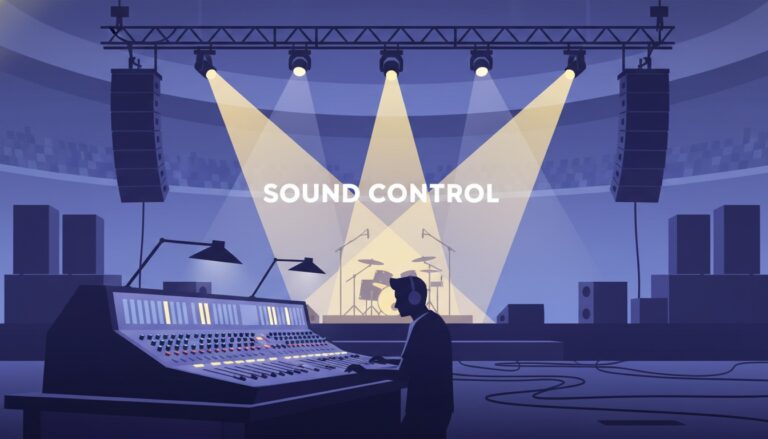
The Scenario: Imagine this. You are part of the directing team for an indie concert in Hongdae or maybe even a K-Pop showcase. The artist is on stage, looking frustrated. The sound in their in-ear monitor is terrible, and the feedback (howling) is piercing everyone’s ears. You need to talk to the Audio Director—a seasoned Korean professional who has been doing this for 20 years.
The ‘Why’: If you stammer out, “Sound is bad,” you look like an amateur. Worse, you might offend the director. But if you use the specific jargon and polite maneuvering I’m about to teach you, you won’t just solve the problem; you’ll gain the crew’s respect as a true “insider” (인싸).
Transparency: This guide is built from real panic moments my advanced students faced while working in the Korean entertainment industry. These are the phrases that saved their rehearsals.
Phase 2: Deep Dive into Core Expressions
Since you are at a C1 (Advanced) level, we are skipping basic grammar. We are focusing on industry-specific jargon and nuance.
1. 하울링이 뜨다 / 피드백이 돌다
- Pronunciation: [Ha-ul-ling-i Tteu-da] / [Pi-deu-baek-i Dol-da]
- Sound-alike: ‘Tteu’ rhymes with the ‘de’ in ‘deux’ (French) but harder / ‘Dol’ sounds like ‘Doll’.
- Meaning:
- Literal: Howling rises / Feedback turns.
- Real Nuance: “There is feedback screeching.” In the industry, we rarely say “소리가 이상해요.” We specifically say the frequency is “floating” (뜨다) or “circling” (돌다).
- Editor’s Insight: The verb 뜨다 is versatile. Usually means ‘to float’ or ‘to rise,’ but in tech, it means an error or a signal is appearing where it shouldn’t.
- Situation Check: Professional. Use this with engineers to pinpoint the issue.
2. 모니터(인이어) 밸런스 좀 잡아주시겠어요?
- Pronunciation: [Mo-ni-teo Bael-leon-seu Jom Ja-ba-ju-si-ge-sseo-yo]
- Meaning:
- Literal: Would you grab the monitor balance a little?
- Real Nuance: “Could you adjust/mix the monitor levels?”
- Editor’s Insight: The verb 잡다 (to grab/catch) is the magic word in production. You “grab” the sound, you “grab” the schedule, and you “grab” the concept. It implies controlling and organizing something chaotic.
- Situation Check: Polite request to a technical director.
3. 큐시트대로 리허설 갈게요
- Pronunciation: [Kyu-si-teu-dae-ro Ri-heo-seol Gal-ge-yo]
- Meaning:
- Literal: I will go the rehearsal according to the cue sheet.
- Real Nuance: “Let’s proceed with the rehearsal following the cue sheet.”
- Editor’s Insight: 갈게요 (I will go) functions like “Let’s do this” or “We are proceeding” in a fast-paced environment. It drives the action forward.
Phase 3: Textbook vs. Real Life (Production Crew Edition)
In the control booth, brevity is key. You don’t speak in full sentences; you speak in signals.
| Textbook Korean (Too Polite/Long) | Real Production Crew Korean (Pro Vibe) |
|---|---|
| 소리가 너무 커서 줄여주세요. (Please reduce the sound because it is too big.) | 게인(Gain) 좀 낮춰주세요. (Please lower the gain.) |
| 다음 순서로 넘어가겠습니다. (We will move on to the next sequence.) | 다음 씬(Scene) 갈게요. (Going to the next scene.) |
| 가수가 어디로 움직이는지 확인해요. (Check where the singer moves.) | 아티스트 동선 체크할게요. (Checking artist blocking/path.) |
| Bottom Note: Notice the use of English loanwords (Gain, Scene, Line). In the Korean entertainment industry, 80% of technical terms are Konglish. Pronounce them with a Korean accent (e.g., Scene = 씬) to sound natural. |
Phase 4: Cultural Context & Manners (Nunchi)
The “Tech Director” Hierarchy
Usually, the Audio Director (음향 감독님) is a senior expert with high pride in their equipment and ear.
- The Mistake: Telling them, “The sound is weird.” (It implies they did a bad job).
- The Nunchi Move: Frame it as the Artist’s preference or a technical glitch.
- Good: “Director, the artist says the vocals feel a bit ‘dry’ (드라이해요). Could we add some reverb?”
- Bad: “The sound isn’t echoing enough.”
Non-verbal Tip: When approaching the Front of House (FOH) console, do not touch anything. Point with an open hand, not a finger, when referring to a specific channel.
Phase 5: Roleplay Script (Sound Check Chaos)
Setting: Concert Hall Rehearsal. Feedback is screeching.
Characters:
* Alex (You): Stage Manager.
* Director Kim: Chief Sound Engineer (Gruff but skilled).
(Sound: Screeching noise comes from the speakers)
Alex: (Taking off headset quickly)
감독님, 지금 센터 스피커에서 하울링이 좀 뜨는 것 같습니다.
(Director, I think there is some howling coming from the center speaker.)
[Gam-dong-nim, ji-geum sen-teo seu-pi-keo-e-seo ha-ul-ling-i jom tteu-neun geot gat-seum-ni-da.]
Director Kim: (Frowning while looking at the console)
아, 보컬 마이크 게인이 너무 높나? 아티스트가 소리 작다고 해서 올렸는데.
(Ah, is the vocal mic gain too high? I raised it because the artist said it was too quiet.)
Alex: (Diplomatically)
네, 아티스트가 인이어 밸런스를 다시 잡아달라고 하네요. MR은 좀 줄이고 보컬만 올려주세요.
(Yes, the artist is asking to adjust the in-ear balance again. Please lower the MR and raise only the vocals.)
[Ne, a-ti-seu-teu-ga i-ni-eo bael-leon-seu-reul da-si ja-ba-dal-la-go ha-ne-yo. Em-ar-eun jom ju-ri-go bo-keol-man ol-lyeo-ju-se-yo.]
Director Kim: (Turning a knob)
알겠어요. 지금은 어때요?
(Got it. How is it now?)
Alex: (Checking with the artist via hand signal)
좋습니다! 이대로 큐시트 4번 트랙 리허설 갈게요!
(Good! We will proceed with the rehearsal for Cue Sheet Track 4 like this!)
[Jo-sseum-ni-da! I-dae-ro kyu-si-teu sa-beon teu-raek ri-heo-seol gal-ge-yo!]
Phase 6: 10-Second Shadowing Drill
Practice this sentence to sound like a busy, competent stage manager.
“시간 없으니까, 음향 팀은 마이크 체크 마무리해주시고 바로 런스루 가겠습니다.”
(Since we don’t have time, Sound Team please finish the mic check, and we will go straight to the run-through.)
Guide:
시간 없으니까 / (pause) / 음향 팀은 마이크 체크 마무리해주시고 / (short pause) / 바로 런스루 가겠습니다. (Falling intonation)
Phase 7: FAQ & Troubleshooting
Q: Can I use friendly/casual speech (Banmal) with the crew if I am the Main Director?
* Answer: No. Even if you are the head honcho, sound and lighting directors are often hired freelancers or external experts. Using polite language (존댓말) like ~해주시겠어요? or ~갈게요 creates a professional atmosphere. Only use Banmal if you have personally known them for years.
Q: What if I don’t know the Korean word for a piece of equipment?
* Answer: Use the English word. 99% of the time, the Korean term is just the English word phonetically adapted (e.g., Amp = 앰프, Console = 콘솔, Pin Mic = 핀 마이크).
Phase 8: Wrap-up
One-Liner Summary: clear communication using verbs like 뜨다 (for errors) and 잡다 (for adjusting) is key to controlling the stage.
Action Mission: Next time you watch a K-Pop
Frequently Asked Questions (FAQ)
Q: What does "하울링이 뜨다 / 피드백이 돌다" mean in Korean and how do you pronounce it?
A: In Korean, "하울링이 뜨다 / 피드백이 돌다" is pronounced [Ha-ul-ling-i Tteu-da] and means: a key conversational Korean expression covered in this lesson.
Q: What does "모니터(인이어) 밸런스 좀 잡아주시겠어요?" mean in Korean and how do you pronounce it?
A: In Korean, "모니터(인이어) 밸런스 좀 잡아주시겠어요?" is pronounced [Mo-ni-teo Bael-leon-seu Jom Ja-ba-ju-si-ge-sseo-yo] and means: Literal: Would you grab the monitor balance a little?
Q: What does "큐시트대로 리허설 갈게요" mean in Korean and how do you pronounce it?
A: In Korean, "큐시트대로 리허설 갈게요" is pronounced [Kyu-si-teu-dae-ro Ri-heo-seol Gal-ge-yo] and means: Literal: I will go the rehearsal according to the cue sheet.







