

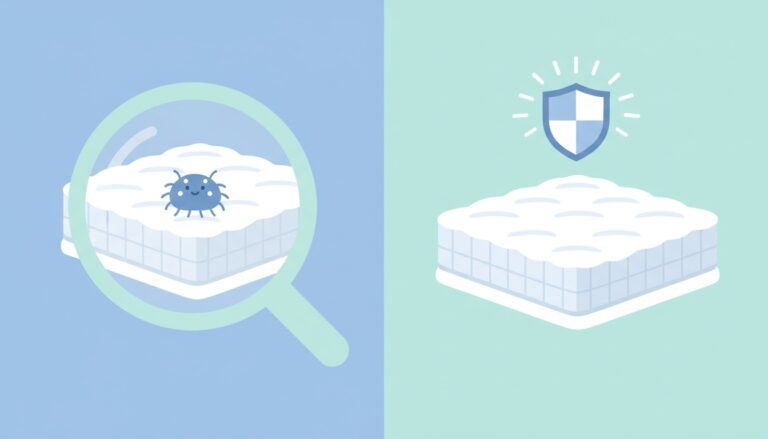
Phase 1: Introduction – The Itch You Can’t Scratch
Hello! This is your Senior Editor at Daily Hangul.
Let’s be honest. You’ve reached a level where you can order food, discuss politics, and maybe even argue with a taxi driver. But are you sleeping well?
Korea has four distinct seasons, and the humid summers (and the transition to autumn) bring an uninvited guest to your bedroom: house dust mites (집먼지진드기). As a C2 learner, saying “침대 청소하고 싶어요” (I want to clean the bed) is grammatically correct but socially insufficient. You need to know how to discuss sanitation, sterilization, and professional care services.
Today, we aren’t just cleaning; we are performing ‘Mattress Care’ (매트리스 케어). Mastering these terms will not only save your skin (literally) but also help you navigate the highly specialized Korean service industry like a local.
Phase 2: Deep Dive – C2 Vocabulary for Hygiene
Here are the three heavy-hitters you need when dealing with professional cleaners or visiting a high-end laundromat.
1. 살균 세탁 (Sal-gyun Se-tak)
- Pronunciation: [Sal-gyun Se-tak]
- Sal sounds like the ‘Sal’ in Salmon.
- Gyun sounds like ‘Gyun’ (hard ‘g’), meaning ‘germ’ or ‘bacteria’.
- Meaning: Sterilization Wash / Sanitizing Wash
- Editor’s Insight: Just saying ‘빨래 (laundry)’ implies simple water and soap. 살균 (Sterilization) implies high heat or UV light to kill bacteria. In Korea, where drying clothes indoors is common, emphasizing ‘살균’ is crucial for bedding to prevent odors.
- Situation Check: Essential when using a Coin Wash (코인 빨래방) or hiring a cleaning service.
2. 진드기 퇴치 (Jin-deu-gi Toe-chi)
- Pronunciation: [Jin-deu-gi Toe-chi]
- Toe sounds like ‘Twe’ in Twelve.
- Meaning: Dust Mite Extermination/Repellent
- Editor’s Insight: We don’t just ‘remove’ (제거) pests; we ‘drive them out’ or ‘combat’ them. 퇴치 is a strong word used for pests, ghosts, or bad habits. If you go to a pharmacy or supermarket, look for ‘진드기 퇴치제’ (mite repellent spray).
3. 건조기 돌리다 (Geon-jo-gi Dol-li-da)
- Pronunciation: [Geon-jo-gi Dol-li-da]
- Meaning: To run the dryer / To tumble dry
- Editor’s Insight: In the past, Koreans relied on Jayeon-geonjo (natural air drying). However, for thick winter blankets (이불) and mattresses, the dryer (건조기) is now considered ‘The National Rule’ (국룰 – Gungnul). Why? Because the heat kills the mites that washing might miss.
Phase 3: Textbook vs. Real Life
At the C2 level, you must distinguish between “functional” language and “cultural” language.
| Textbook Korean (Formal & Dry) | Real Street Korean (Natural & Nuanced) |
|---|---|
| 침대를 깨끗하게 청소해 주세요. (Please clean the bed cleanly.) |
매트리스 케어 한번 받아야 할 것 같아요. (I think I need to get ‘mattress care’ service once.) |
| 진드기 약이 있나요? (Do you have mite medicine?) |
진드기 기피제나 퇴치 스프레이 어디 있나요? (Where is the mite repellent or combat spray?) |
| 이불을 말려야 해요. (I need to dry the blanket.) |
이불 빨래는 건조기 돌리는 게 국룰이죠. (For blankets, using the dryer is the unwritten rule.) |
Note: Koreans love using the English loanword “Care” (케어) for professional maintenance services (skin care, mattress care, mental care).
Phase 4: Cultural Context – The “Ppallaebang” Revolution
1. The Coin Wash Culture (코인 빨래방):
Most one-room (studio) apartments in Korea have small washing machines (9kg-12kg). They cannot handle a heavy winter duvet (극세사 이불). Therefore, going to a 24-hour Coin Wash is a weekend ritual. It’s not just about cleaning; it’s a lifestyle. You bring a coffee, read a book, and wait for the “Sal-gyun” cycle.
2. The “Tick” Concept:
Koreans are very sensitive to seasonal changes. When shifting from summer bedding to autumn bedding, it is customary to do a massive “Daechongso” (Grand Cleaning). If you don’t mention doing this, people might jokingly judge your hygiene standards!
Phase 5: Real-Life Scenario
Setting: You are calling a professional home care service (e.g., Coway or Hanssem) to book a mattress cleaning.
Characters:
* Alex (Foreigner): Expert level Korean speaker.
* Manager (Service Provider): Polite customer service agent.
Manager: 행복을 드리는 홈케어입니다. 무엇을 도와드릴까요?
(Happy Home Care. How may I help you?)
Alex: 안녕하세요. 매트리스 건식 케어랑 진드기 제거를 좀 받고 싶어서요.
(Hello. I’d like to receive some dry mattress care and dust mite removal.)
Manager: 아, 네! 혹시 현재 사용하시는 매트리스 사이즈가 어떻게 되시나요?
(Ah, yes! What is the size of the mattress you are currently using?)
Alex: 퀸 사이즈예요. 알레르기 케어도 포함된 패키지가 있나요? 요즘 자고 일어나면 좀 간지러워서요.
(It’s a Queen size. Do you have a package that includes allergy care? I feel a bit itchy when I wake up these days.)
Manager: 네, 자외선 살균까지 포함된 ‘안심 케어’ 상품이 있습니다. 이번 주 토요일 방문 가능합니다.
(Yes, we have a ‘Relief Care’ product that includes UV sterilization. We can visit this Saturday.)
Phase 6: 10-Second Shadowing Drill
Practice this sentence to sound like a native complaining about the humidity.
“장마철이라 그런지 침구가 눅눅해서, / 오늘 맘 먹고 살균 세탁하러 빨래방 왔어.”
(Maybe because it’s the rainy season, the bedding feels damp, / so I made up my mind and came to the laundromat for a sterilization wash.)
- Intonation Guide:
- Pause after 눅눅해서 (damp, so…). Use a falling-rising tone to indicate a reason.
- Stress 맘 먹고 (made up my mind/determinedly) to show effort.
- End 왔어 with a confident, slightly falling tone.
Phase 7: FAQ & Troubleshooting
Q: Can I use the word ‘살충제’ (Insecticide) for bed mites?
A: I wouldn’t recommend it. 살충제 sounds very strong, like something you’d use for cockroaches (roaches). For bed mites, stick to 퇴치제 (repellent/combatant) or 기피제 (repellent). It sounds safer for something that touches your skin.
Q: Is it rude to ask a host if they cleaned the bedding?
A: Yes, asking directly “이불 빨았어요?” is rude. Instead, compliment the scent: “와, 침구에서 향기가 나네요. 섬유유연제 뭐 쓰셨어요?” (Wow, the bedding smells great. What fabric softener did you use?). This implies you noticed the cleanliness.
Phase 8: Wrap-up
- One-Liner Summary: Use ‘살균 세탁’ for hygiene, ‘퇴치’ for mites, and remember that ‘코인 빨래방’ is the best place for heavy duvets.
- Action Mission: Next time you visit a Korean mart (Emart/Lotte Mart), find the laundry section and locate a bottle that says ‘진드기’ or ‘살균’. Take a photo and translate the ingredients!
Phase 9: Pop Quiz
1. Which word is the most natural way to describe the “unwritten rule” that everyone follows (like using a dryer for blankets)?
a) 법률 (Law)
b) 국룰 (National Rule)
c) 규칙 (Regulation)
2. You want to request a cleaning service that uses UV light to kill bacteria. What keyword should you look for?
a) 살균 (Sterilization)
b) 표백 (Bleaching)
c) 헹굼 (Rinsing)
3. Which verb pair is correct for “driving out” dust mites?
a) 진드기 초대 (Invite)
b) 진드기 퇴치 (Exterminate/Combat)
c) 진드기 수리 (Repair)
Click for Answers
1. b) 국룰 (Gungnul)
2. a) 살균 (Sal-gyun)
3. b) 진드기 퇴치 (Jin-deu-gi Toe-chi)
Frequently Asked Questions (FAQ)
Q: What does "살균 세탁 (Sal-gyun Se-tak)" mean in Korean and how do you pronounce it?
A: In Korean, "살균 세탁 (Sal-gyun Se-tak)" is pronounced [Sal-gyun Se-tak] and means: a key conversational Korean expression covered in this lesson.
Q: What does "진드기 퇴치 (Jin-deu-gi Toe-chi)" mean in Korean and how do you pronounce it?
A: In Korean, "진드기 퇴치 (Jin-deu-gi Toe-chi)" is pronounced [Jin-deu-gi Toe-chi] and means: a key conversational Korean expression covered in this lesson.
Q: What does "건조기 돌리다 (Geon-jo-gi Dol-li-da)" mean in Korean and how do you pronounce it?
A: In Korean, "건조기 돌리다 (Geon-jo-gi Dol-li-da)" is pronounced [Geon-jo-gi Dol-li-da] and means: To run the dryer / To tumble dry






