

Introduction
안녕하세요! This is your Senior Editor at Daily Hangul.
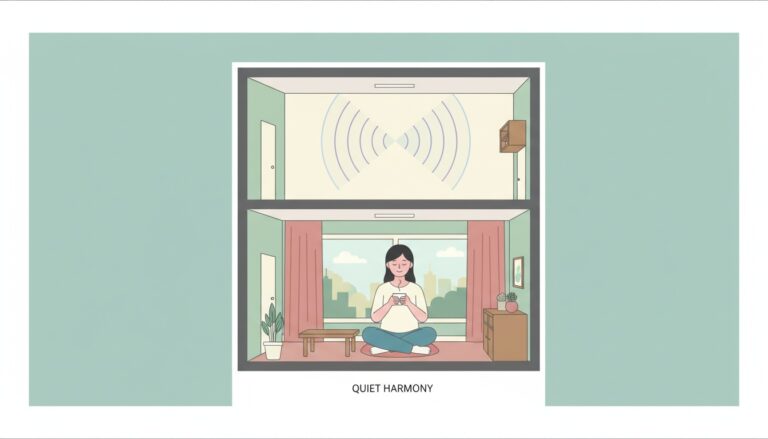
If you live in a Korean apartment (apateu) or villa (billa), you’ve probably encountered the dreaded 층간 소음 (Cheung-gan-so-eum)—inter-floor noise. Maybe it’s the thumping of footsteps at 2 AM, or perhaps a piano concerto at dawn.
As a C1 advanced learner, you can order food and discuss hobbies effortlessly. But how do you handle conflict? Complaining in a foreign language is terrifying. If you are too direct, you sound aggressive. If you are too soft, nothing changes.
Today, we are mastering the Art of the Diplomatic Complaint. We move beyond simple textbook grammar into the realm of social nuance and face-saving strategies. This is the difference between making an enemy and solving a problem.
Phase 2: Deep Dive (Core Expressions)
At the C1 level, your goal isn’t just to convey meaning, but to cushion the blow (Wan-gok-eo-beop / 완곡어법).
1. “실례지만, 댁의 생활 소음이 아래층까지 좀 많이 울리네요.”
- Pronunciation: [Sillyejiman, daeg-ui saenghwal so-eumi arae-cheung-kkaji jom mani ullineyo.]
- Meaning: “Excuse me, but the household noise from your home is resonating quite a bit down to the floor below.”
- Editor’s Insight: Notice we don’t say “You are loud” (시끄러워요). We say the noise is “resonating” (울리다). Also, referring to their home as ‘댁’ (Daek) is a formal and respectful way to address the neighbor’s household, establishing a polite distance.
- Situation Check: Use this when speaking over the intercom or if you meet face-to-face. It is formal and serious.
2. “건물 구조상 방음이 잘 안 되는 것 같아서요.”
- Pronunciation: [Geonmul gujosang bang-eumi jal an doeneun geot gataseoyo.]
- Meaning: “It seems like the soundproofing isn’t very good due to the building’s structure…”
- Editor’s Insight: This is the ultimate Blame Shift. You aren’t blaming the neighbor; you are blaming the building. This gives your neighbor an “out” to save face. It implies, “You aren’t a bad person, this building is just poorly built.”
- Situation Check: Essential to use before making a specific request to lower the tension.
3. “늦은 시간에는 조금만 더 신경 써 주시면 감사하겠습니다.”
- Pronunciation: [Neujeun shigane-neun jogeumman deo shin-gyeong sseo jushimyeon gamsahagetseumnida.]
- Meaning: “I would appreciate it if you could pay a little extra attention during late hours.”
- Editor’s Insight: Instead of saying “Don’t make noise” (떠들지 마세요), we ask them to “pay attention” (신경 쓰다). It appeals to their sense of consideration rather than commanding them.
Phase 3: Textbook vs. Real Life
Textbooks teach you to be factually correct. Real life requires you to be socially smart.
| Textbook (Correct but potentially rude) | Real Life (Polite, C1 Level “Insider” Vibe) |
|---|---|
| 너무 시끄러워요. 조용히 해 주세요. (It’s too loud. Please be quiet.) |
소리가 생각보다 크게 들려서, 잠을 자기가 좀 어렵네요. (The sound is louder than expected, so it’s a bit difficult to sleep.) |
| 뛰지 마세요. (Don’t run.) |
아이들이 참 활기차네요. 그런데 발망치 소리가 조금… (Your kids are very energetic. But the foot-stomping sound is a bit…) |
| 경찰에 신고할게요. (I’ll call the police.) |
계속 이러시면 관리실에 중재를 요청할 수밖에 없습니다. (If this continues, I have no choice but to ask the management office to mediate.) |
Editor’s Note: “발망치” (Bal-mang-chi) is a slang term combining ‘Foot’ + ‘Hammer’. It refers to heavy heel-walking. Use this word carefully; it shows you know Korean culture deeply, but it can sound accusatory!
Phase 4: Cultural Context & Manners
The “Golden Rule” of Korean Noise Disputes
In Korea, going directly to your neighbor’s door is often considered aggressive and can even be legally problematic (stalking laws). The culturally “correct” C1 level approach is:
- Call the Management Office (관리실/경비실) first and ask them to make a general announcement.
- If you must go, do not ring the bell repeatedly. Ring once.
- The “Bribe” Technique: If you want to ensure peace, bring a small drink (Vita500 or orange juice) and say, “I’m sorry to bother you, but…” It disarms their defensiveness immediately.
Phase 5: Roleplay Script
Setting: A hallway in an apartment complex. You (A) meet your upstairs neighbor (B) by the elevator.
(A puts on a slightly awkward, apologetic smile)
A: 안녕하세요, 502호 사는 사람인데요. 혹시 잠시 말씀 괜찮으세요?
(Hello, I live in unit 502. Do you have a moment to talk?)
B: 아, 네. 안녕하세요. 무슨 일이시죠?
(Ah, yes. Hello. What is it regarding?)
A: 다름이 아니라, 요즘 밤에 무언가 끄는 소리가 좀 크게 들려서요.
(It’s nothing other than… lately at night, the sound of something dragging is quite audible.)
B: 아, 정말요? 저희는 조용히 한다고 했는데…
(Oh, really? We thought we were being quiet…)
A: 네, 건물이 좀 울리는 편이라 작은 소리도 크게 들리나 봐요. 밤 10시 이후에는 조금만 주의 부탁드려도 될까요?
(Yes, the building tends to echo, so even small sounds seem loud. Could I ask you to be careful after 10 PM?)
B: 네, 몰랐네요. 신경 쓸게요. 죄송합니다.
(I didn’t know. I’ll pay attention. Sorry.)
Phase 6: 10-Second Shadowing
Practice this sentence to perfect your “gentle but firm” tone. Focus on the pauses.
“죄송하지만 / 밤에는 소리가 더 크게 울려서요 / 슬리퍼 착용을 / 좀 부탁드려도 될까요?”
(I’m sorry, but / since sound echoes more at night / could I ask you / to please wear slippers?)
Phase 7: FAQ & Troubleshooting
Q: Can I leave a Post-it note on their door?
A: Yes, but be careful. Written words can seem colder than spoken words. If you write a note, add a lot of softeners like “죄송합니다만” (Sorry, but…) and maybe draw a small smiley face ^^. Avoid writing in all red ink (a superstition thing, though less cared about now, it still looks aggressive).
Q: Can I use “당신” (Dang-shin) to say “You”?
A: ABSOLUTELY NOT. In a conflict, “당신” is a fighting word used to start an argument (e.g., “Who do you think you are?”). Use “선생님” (Teacher/Sir), “이웃님” (Neighbor), or refer to them as “702호분” (The person in 702).
Phase 8: Wrap-up
One-Liner Summary: Blame the building, not the person, and use “padding words” to soften your request.
Today’s Mission: Next time you hear a noise, simply practice saying out loud to yourself: “건물이 문제야, 건물이…” (It’s the building’s fault, the building…). It helps calm your own anger before you speak!
Tell me in the comments: Have you ever had a noise dispute in Korea? How did you handle it?
Phase 9: Quiz
1. Which word is best to replace “You are noisy” (시끄러워요)?
a) 닥치세요 (Shut up)
b) 조용히 좀 합시다 (Let’s be quiet)
c) 소리가 좀 울리네요 (The sound is resonating)
2. Who should you contact first in a Korean apartment noise dispute?
a) The Police (112)
b) The Management Office (관리실)
c) The Upstairs Neighbor directly
3. Why do we say “The building structure is weak”?
a) To get a refund on rent.
b) To save the neighbor’s face (Chemyon) and reduce tension.
c) Because Korean buildings are actually made of paper.
(Answers: 1-c, 2-b, 3-b)
Frequently Asked Questions (FAQ)
Q: What does ""실례지만, 댁의 생활 소음이 아래층까지 좀 많이 울리네요."" mean in Korean and how do you pronounce it?
A: In Korean, ""실례지만, 댁의 생활 소음이 아래층까지 좀 많이 울리네요."" is pronounced [Sillyejiman, daeg-ui saenghwal so-eumi arae-cheung-kkaji jom mani ullineyo.] and means: "Excuse me, but the household noise from your home is resonating quite a bit down to the floor below."
Q: What does ""건물 구조상 방음이 잘 안 되는 것 같아서요."" mean in Korean and how do you pronounce it?
A: In Korean, ""건물 구조상 방음이 잘 안 되는 것 같아서요."" is pronounced [Geonmul gujosang bang-eumi jal an doeneun geot gataseoyo.] and means: "It seems like the soundproofing isn't very good due to the building's structure..."
Q: What does ""늦은 시간에는 조금만 더 신경 써 주시면 감사하겠습니다."" mean in Korean and how do you pronounce it?
A: In Korean, ""늦은 시간에는 조금만 더 신경 써 주시면 감사하겠습니다."" is pronounced [Neujeun shigane-neun jogeumman deo shin-gyeong sseo jushimyeon gamsahagetseumnida.] and means: "I would appreciate it if you could pay a little extra attention during late hours."







