

Phase 1: Introduction
Greeting:
안녕하세요! This is your Senior Editor at Daily Hangul. 👋
Scenario Setup:
You’re cleaning your room in Seoul and find a perfectly good desk lamp that you just don’t need anymore. Throwing it away requires buying a disposal sticker (which is a hassle), but selling it for 1,000 won feels petty. You decide to do a “Free Sharing” (무료 나눔) on a second-hand app like Danggeun Market (Karrot).
The ‘Why’:
Here is the trap: If you just say “It’s free (공짜예요),” you might sound a bit childish or, surprisingly, rude. In Korea, even when giving things away, there is a specific etiquette to ensure you don’t look like you are just treating the other person as your trash collector. Mastering this will make you look like a generous, sophisticated local neighbor.
Transparency:
This guide is based on real mistakes my intermediate (B2) students made when trying to declutter their apartments in Korea. Let’s fix them together!
Phase 2: Deep Dive (Core Expressions)
1. 무료 나눔 (Muryo Nanum)
- Pronunciation: [Muryo Nanum] ‘Nanum’ sounds like ‘Na-noom’ where ‘noom’ rhymes with ‘room’.
- Meaning: Free Sharing / Donation
- Editor’s Insight:
Don’t say “공짜 (Gong-jja)”. “Gong-jja” sounds like “freebie” or something cheap. “나눔 (Nanum)” comes from the verb 나누다 (to share). It implies kindness and community spirit. It elevates the transaction from “taking my trash” to “sharing resources.” - Situation Check:
✅ Suitable for online posts, titles, and polite conversation.
2. 사용감 좀 있어요 (Sayong-gam jom isseoyo)
- Pronunciation: [Sayong-gam jom isseoyo] ‘Gam’ sounds like the ‘gum’ in chewing gum.
- Meaning: It has some signs of use / It’s not brand new.
- Editor’s Insight:
This is the Golden Rule of Korean second-hand trade. Even if it’s free, Koreans expect honesty. If you don’t mention this and they see a scratch, they might report you for bad manners. It protects you from complaints later. - Situation Check:
✅ Essential for descriptions. B2 learners must know this noun ‘사용감’ (feeling of use).
3. 비대면 문고리 거래 (Bidaemyeon Mungori Geolae)
- Pronunciation: [Bidaemyeon Moon-go-ri Guh-rae]
- Meaning: Non-face-to-face doorknob trade.
- Editor’s Insight:
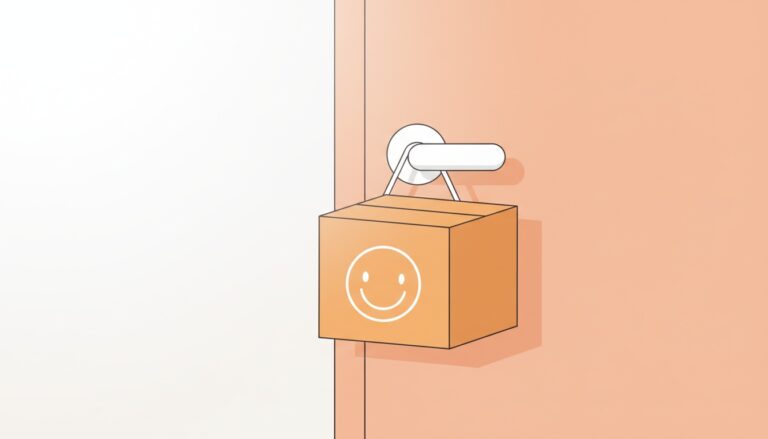
This is the trendiest phrase in Korea post-pandemic. It means “I’ll hang the item on my front doorknob, you just come and take it.” It saves time and awkward small talk. Perfect for introverts! - Situation Check:
✅ Very common in apartment complexes.
Phase 3: Textbook vs. Real Life
| Textbook Korean 📘 | Real Life “Insider” Korean 🚀 |
|---|---|
| 이거 무료로 드릴게요. (I will give this for free.) |
무나 해요 / 나눔합니다. (Doing a ‘Muna’ / Sharing.) Note: ‘무나’ is short for 무료 나눔. |
| 물건 상태가 안 좋아요. (The item condition is bad.) |
예민하신 분은 피해주세요. (Please skip if you are sensitive.) Polite way to say “It’s old, don’t complain.” |
| 어디서 만날까요? (Where shall we meet?) |
문고리 가능하신가요? (Is a doorknob trade possible?) |
💡 Bottom Note: At a B2 level, using “예민하신 분은 피해주세요” (Sensitive people, please avoid) is a high-level skill. It politely filters out picky takers.
Phase 4: Cultural Context & Manners
1. The “No-Show” Taboo (노쇼)
Even if it is free, making an appointment and not showing up is a huge sin in Korea. If you are the giver, it’s okay to prioritize people who can come right now (지금 바로 가능하신 분).
2. The “Trash” Boundary
Never do a 나눔 (Nanum) for something that is clearly broken or dirty. In Korea, we say “나눔을 가장한 쓰레기 투척” (Dumping trash disguised as sharing). If you wouldn’t give it to a friend, throw it away (buy the sticker!).
3. The Small Gesture (매너 온)
Sometimes, when people pick up a free item, they might leave a small carton of strawberry milk or a convenience store drink at your door as a “Thank You.” It’s not required, but if you receive one, you’ve successfully engaged in ‘정’ (Jeong).
Phase 5: Real-Life Roleplay
Setting: Chatting on the ‘Karrot’ (Danggeun) app regarding a toaster.
Characters:
🧑💻 You: Foreign resident (Giver)
👩🦰 Neighbor: Korean resident (Receiver)
(You posted a toaster for free sharing.)
👩🦰 Neighbor: 안녕하세요! 토스터기 무료 나눔 아직 가능한가요?
(Hello! Is the free sharing for the toaster still available?)
🧑💻 You: 네, 안녕하세요. 근데 사용감이 좀 있는데 괜찮으세요?
(Yes, hello. But it has some signs of use, is that okay?)
👩🦰 Neighbor: 네, 작동만 잘 되면 상관없어요. 언제 가지러 가면 될까요?
(Yes, as long as it works well, it doesn’t matter. When should I pick it up?)
🧑💻 You: 제가 지금 집에 없어서요. 비대면 문고리 거래 괜찮으실까요?
(I’m not home right now. Would a non-face-to-face doorknob trade be okay?)
👩🦰 Neighbor: 네! 편하실 때 두시면 가져갈게요. 감사합니다!
(Yes! Just leave it when it’s convenient and I’ll take it. Thank you!)
Phase 6: 10-Second Shadowing
Let’s practice the sentence that saves you from awkward meetings. Read this naturally!
“쇼핑백에 넣어서 / 문고리에 걸어둘게요.”
(I’ll put it in a shopping bag / and hang it on the doorknob.)
- Intonation Guide:
Show-ping-baek-eh nuh-uh-suh (rising pitch) ↗ / Moon-go-ri-eh guhl-uh-dool-gae-yo (falling pitch, confident) ↘
Phase 7: FAQ & Troubleshooting
Q: Can I ask the receiver to come to my specific location?
A: YES. Since you are giving it for free, you have the upper hand. It is standard etiquette for the receiver to come to your apartment complex or entrance.
Q: Is it rude to say “First come, first served”?
A: No! It’s very efficient. You can say “선착순으로 드릴게요” (Seonchak-sun-euro deuril-geyo). This prevents people from reserving it and then disappearing.
Phase 8: Wrap-up & Action Item
One-Liner Summary:
When giving things away, use the word ‘나눔’ instead of ‘공짜’, be honest about ‘사용감’, and use ‘문고리 거래’ for convenience.
Action Mission:
Open your Karrot (Danggeun) app or look at a local community board. Find one item marked as ‘나눔’ and see if they mentioned the condition (사용감). Spotting it in the wild helps you remember it!
Have you ever received something for free in Korea? Tell me in the comments! 👇
Phase 9: Quiz
1. Which word is the most polite and natural way to describe “Free Sharing” online?
a) 공짜 (Gong-jja)
b) 나눔 (Nanum)
c) 쓰레기 (Sseuregi)
2. What does “사용감이 있다” mean?
a) It is brand new.
b) It is broken.
c) It has signs of use.
3. How do you suggest leaving the item at your door without meeting?
a) 문고리 거래 (Doorknob trade)
b) 직거래 (Direct trade)
c) 택배 거래 (Parcel trade)
Click to see answers!
1. b) 나눔
2. c) It has signs of use.
3. a) 문고리 거래
Frequently Asked Questions (FAQ)
Q: What does "무료 나눔 (Muryo Nanum)" mean in Korean and how do you pronounce it?
A: In Korean, "무료 나눔 (Muryo Nanum)" is pronounced [Muryo Nanum] and means: Free Sharing / Donation
Q: What does "사용감 좀 있어요 (Sayong-gam jom isseoyo)" mean in Korean and how do you pronounce it?
A: In Korean, "사용감 좀 있어요 (Sayong-gam jom isseoyo)" is pronounced [Sayong-gam jom isseoyo] and means: It has some signs of use / It's not brand new.
Q: What does "비대면 문고리 거래 (Bidaemyeon Mungori Geolae)" mean in Korean and how do you pronounce it?
A: In Korean, "비대면 문고리 거래 (Bidaemyeon Mungori Geolae)" is pronounced [Bidaemyeon Moon-go-ri Guh-rae] and means: Non-face-to-face doorknob trade.







