

Phase 1: Introduction
안녕하세요! Daily Hangul’s Senior Editor here. 👋
If you have reached the C1 level, you are likely watching the 9 PM news (9시 뉴스) or reading editorials in Korean newspapers. You might have noticed that Korean political discourse is intense, dynamic, and—let’s be honest—sometimes chaotic.
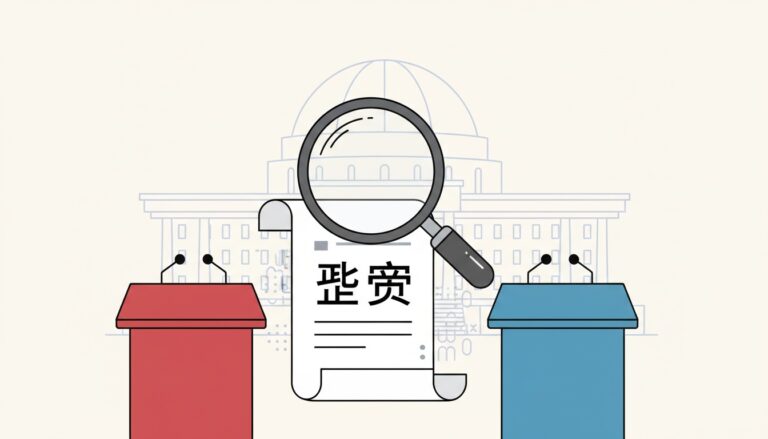
Today, we are diving into a topic that even Koreans find difficult to navigate calmly: Party Politics (정당 정치).
Have you ever watched a Korean news segment where politicians are shouting in the National Assembly, and you wanted to express a sophisticated opinion about it rather than just saying, “시끄러워요” (It’s noisy)?
To sound like a true intellect or a well-read local, you need vocabulary that goes beyond “Good vs. Bad.” You need to discuss structural issues, polarization, and the lack of cooperation. This guide is your ticket to the high-level debates.
Phase 2: Deep Dive 🧐
Here are three high-level expressions to critique the political landscape like a pro.
1. 당리당략 [Dang-ni-dang-nyak]
- Pronunciation:
[Dang-ni-dang-nyak](Sounds a bit like “Danny Dang Yuck”) - Meaning:
- Literal: Party profit, party strategy.
- Real Nuance: “Partisan interests over public welfare.” This is a critical idiom used when politicians care more about their party winning than helping the citizens.
- Editor’s Insight: This is a killer four-character idiom (Sajeoseong-eo). If you sigh and say this while watching the news, your Korean friends will look at you with respect. It implies a cynical but sharp understanding of political maneuvering.
- Situation Check: Perfect for intellectual conversations, news critiques, or debates.
2. 협치 [Hyeop-chi]
- Pronunciation:
[Hyeop-chi](Sounds like “Hyeop” as in ‘Help’ without ‘l’, + “Chi” as in ‘Cheese’ without ‘se’) - Meaning:
- Literal: Cooperative governance.
- Real Nuance: “Bipartisan cooperation.” It is the holy grail of Korean politics—often talked about, rarely seen.
- Editor’s Insight: You will hear this word mostly in the negative context: “협치가 실종되었다” (Cooperation has gone missing). It’s the dignified way to complain that parties are fighting instead of working together.
- Situation Check: Formal/Professional.
3. 포퓰리즘 / 선심성 공약 [Po-pyul-li-jeum / Seon-sim-seong Gong-yak]
- Pronunciation:
[Po-pyul-li-jeum]/[Seon-sim-seong Gong-yak] - Meaning:
- Literal: Populism / Benevolent pledges.
- Real Nuance: “Pork-barrel politics” or “Empty promises to buy votes.”
- Editor’s Insight: Seon-sim means doing a favor to look good. When politicians promise free cash or unrealistic benefits right before an election, cynical voters call it Seon-sim-seong gong-yak.
- Situation Check: Very common during election seasons (선거철).
Phase 3: Textbook vs. Real Life 📊
At the C1 level, you shouldn’t just sound correct; you should sound insightful.
| Textbook (Formal/Dry) | Real Life (Insightful/Critical) |
|---|---|
| 두 정당이 서로 싸우고 있습니다. (The two parties are fighting each other.) |
여야가 극한 대립으로 치닫고 있네요. (The ruling and opposition parties are rushing toward extreme confrontation.) |
| 국민을 위한 정치를 해야 합니다. (They must do politics for the people.) |
민생은 뒷전이고 밥그릇 싸움만 하네요. (Public livelihood is on the back burner, and they are only fighting over their ‘rice bowls’ [power/benefits].) |
| 선거 공약이 지켜지지 않았습니다. (The election pledges were not kept.) |
결국 다 표를 얻기 위한 공(空)약이었어요. (In the end, they were all ‘empty’ promises to get votes. Pun: Gong-yak means public pledge, but also empty promise.) |
Note: The phrase “밥그릇 싸움” (Rice bowl fight) is a very common metaphor for fighting over vested interests.
Phase 4: Cultural Context & Manners 🇰🇷
The Art of Discussing Politics (Without Ruining Dinner)
In Korea, politics is deeply polarized, often divided by generation (Generation gap: 세대 갈등) and region (Regionalism: 지역 감정).
- Read the Room (눈치 챙기기): Even if your Korean is C1, diving straight into a political debate with an older stranger is risky. Test the waters first.
- The “Both Sides are Bad” Strategy: If you want to participate but stay neutral, criticizing the lack of Hyeop-chi (cooperation) is the safest bet. Everyone agrees that politicians fight too much.
- Non-verbal: When listening to someone rant about politics, simple active listening sounds like “그렇군요…” (I see…) or “답답하시겠어요” (You must be frustrated) are better than arguing back.
Phase 5: Roleplay Script 🎬
Situation: Two colleagues, Min-su (Korean) and Alex (Expat), are watching a news report about a stalled bill in the National Assembly.
Characters:
* Min-su: Frustrated voter.
* Alex: Knowledgeable foreign resident.
Dialogue:
Min-su: (Sighing deeply while looking at the TV)
하… 뉴스 볼 때마다 속이 터지네요. 맨날 싸우기만 하고.
(Ha… Every time I watch the news, I feel like my insides are exploding. They do nothing but fight.)
[Ha... Nyuseu bol ttae-mada sog-i teo-ji-ne-yo. Maen-nal ssa-u-gi-man ha-go.]
Alex: (Nodding in agreement)
그러게요. 협치는커녕 서로 발목 잡기만 바쁜 것 같아요.
(I agree. Let alone cooperative governance, they seem busy just dragging each other down.)
[Geu-reo-ge-yo. Hyeop-chi-neun-keo-nyeong seo-ro bal-mok jap-gi-man ba-ppeun geot ga-ta-yo.]
Min-su: (Surprised by the vocabulary)
오, 알렉스 씨 ‘발목 잡다’는 표현도 알아요? 맞아요. 다 당리당략 때문이죠.
(Oh, Alex, you know the expression ‘dragging ankles’? You’re right. It’s all because of partisan interests.)
[Oh, Alex-ssi 'bal-mok jap-da'neun pyo-hyeon-do a-ra-yo? Ma-ja-yo. Da dang-ni-dang-nyak ttae-mun-i-jyo.]
Alex: (Shrugging)
결국 피해 보는 건 국민들이죠. 정책 대결은 없고 네거티브 공세만 있잖아요.
(In the end, the citizens are the ones who suffer. There is no policy competition, only negative offensives.)
[Gyeol-guk pi-hae bo-neun geon gung-min-deul-i-jyo. Jeong-chaek dae-gyeol-eun eop-go ne-geo-ti-beu gong-se-man it-ja-na-yo.]
Phase 6: 10-Second Shadowing 🗣️
Train your “news anchor” voice. Focus on a serious, slightly cynical tone.
“They should stop the partisan fighting and focus on public livelihood.”
Sentence:
이제 소모적인 당리당략을 멈추고, / 진정으로 민생을 챙겨야 할 때입니다.
Pronunciation Guide:
I-je so-mo-jeog-in dang-ni-dang-nyak-eul meom-chu-go, / (pause) / jin-jeong-eu-ro min-saeng-eul chaeng-gyeo-ya hal ttae-im-ni-da.
Key Points:
* Pause after ‘멈추고’ (stop and…).
* Stress 민생 (public livelihood) to emphasize the priority.
Phase 7: FAQ & Troubleshooting ⚠️
Q: Can I use the word ‘쇼’ (Show) to describe politics?
A: Yes! Koreans often say “정치 쇼” (Political show) to describe performative actions by politicians. It’s informal but very common in conversation. E.g., “저거 다 쇼야.” (That’s all a show.)
Q: Is it okay to ask “Which party do you support?” (어느 당 지지하세요?)
A: Warning! 🚫 Unless you are very close friends, avoid asking this directly. It’s considered private and sensitive. Instead, discuss specific policies or incidents rather than party affiliation.
Phase 8: Wrap-up 🎁
- One-Liner Summary: Use 당리당략 (partisan interests) and 협치 (cooperation) to sound like a sophisticated critic of the political gridlock.
- Action Mission: Open a Korean news portal (Naver/Daum News), find the ‘Politics’ (정치) section, and spot the word ‘대립’ (confrontation) or ‘공방’ (battle/argument) in the headlines.
- Engagement: What is the biggest political issue in your country right now? Can you describe it using today’s words? Tell me in the comments!
Phase 9: Quiz ✍️
1. Which word best describes “putting the party’s benefit before the country’s needs”?
A) 일거양득 (Killing two birds with one stone)
B) 당리당략 (Partisan interests/strategy)
C) 동문서답 (Irrelevant answer)
2. “협치가 실종되었다” implies what situation?
A) The politicians are working together perfectly.
B) The ruling and opposition parties are refusing to cooperate.
C) The election has been cancelled.
3. What does “선심성 공약” refer to?
A) A pledge made sincerely for the long-term future.
B) A populist pledge made just to gain votes (Pork-barrel).
C) A promise to reduce taxes for the rich.
(Answers: 1. B, 2. B, 3. B)
Frequently Asked Questions (FAQ)
Q: What does "당리당략 [Dang-ni-dang-nyak]" mean in Korean and how do you pronounce it?
A: In Korean, "당리당략 [Dang-ni-dang-nyak]" is pronounced [Dang-ni-dang-nyak] and means: Literal: Party profit, party strategy.
Q: What does "협치 [Hyeop-chi]" mean in Korean and how do you pronounce it?
A: In Korean, "협치 [Hyeop-chi]" is pronounced [Hyeop-chi] and means: Literal: Cooperative governance.
Q: What does "포퓰리즘 / 선심성 공약 [Po-pyul-li-jeum / Seon-sim-seong Gong-yak]" mean in Korean and how do you pronounce it?
A: In Korean, "포퓰리즘 / 선심성 공약 [Po-pyul-li-jeum / Seon-sim-seong Gong-yak]" is pronounced [Po-pyul-li-jeum] and means: Literal: Populism / Benevolent pledges.







