

Phase 1: Introduction
안녕하세요! 매일한글(Daily Hangul) 수석 에디터입니다.
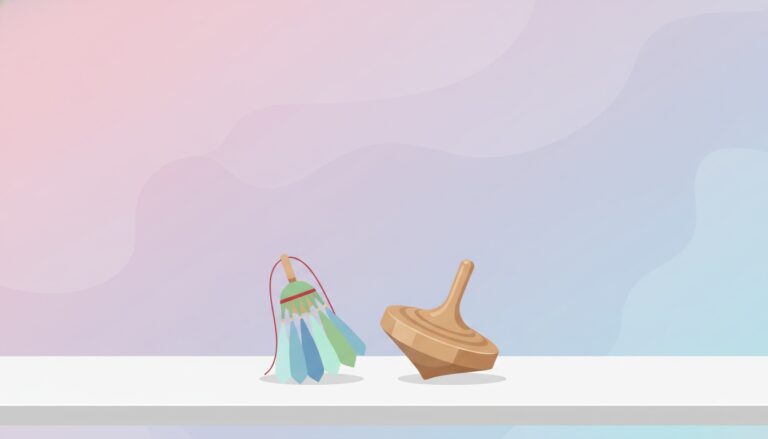
Imagine this: It’s Seollal (Lunar New Year). You are at a Korean friend’s house, surrounded by their extended family. Suddenly, someone brings out a Jegi (a Korean hackysack) or a Paengi (spinning top). Everyone’s eyes turn to you. 👀
At this C1 level, simply asking “How do I play?” is a bit plain, isn’t it? You want to express your burning competitive spirit, joke about your clumsiness using high-level slang, or comment on the subtle mechanics of the game.
Today, we are moving beyond the textbook rules. We are going to learn how to “read the room” during a match and use the expressions that will make the Korean grandfather in the corner nod in approval and say, “Oh, your Korean is alive!” (한국어 살아있네!)
This guide is based on real struggles my advanced students faced when they tried to join the “inner circle” of Korean festive play. Let’s dive in.
Phase 2: Deep Dive into Core Expressions
Here are the three heavy-hitters you need to sound like a local veteran player.
1. 승부욕이 발동하다 (Competitive spirit kicks in)
- Pronunciation: [Seung-bu-yok-i Bal-dong-ha-da]
- Sound analogy: Think of ‘Seung’ like ‘sung’ in ‘sunglasses’, and ‘yok’ like ‘yolk’ without the ‘l’.
- Meaning:
- Literal: The desire for victory activates.
- Real Nuance: You aren’t just playing for fun anymore. The beast within has awoken. You need to win.
- Editor’s Insight: This is a huge compliment if you say it about someone else (“와, 승부욕 장난 아니신데요?”). If you say it about yourself, it excuses your intensity.
- Situation Check: Used in both Casual and Formal settings. It’s a very common C1 collocations.
2. 헛발질하다 (To kick the air / Make a false move)
- Pronunciation: [Heot-bal-jil-ha-da]
- Sound analogy: ‘Heot’ sounds like a sharp exhale of disappointment ‘Hut!’.
- Meaning:
- Literal: To do a ‘useless’ (heot) foot (bal) action (jil).
- Real Nuance: Specifically in Jegi-chagi, it means missing the Jegi completely. Metaphorically, it means making a mistake or a wasted effort in life or business.
- Editor’s Insight: Use this to laugh at yourself. Self-deprecating humor is a shortcut to making friends in Korea.
- Situation Check: Mostly Casual. In a business meeting, use with caution unless you are admitting a strategic error.
3. 감을 잡다 vs. 감이 안 오다 (To get the knack vs. Can’t get the feel)
- Pronunciation: [Gam-eul Jap-da]
-
- Sound analogy: ‘Gam’ like ‘Gum’.
- Meaning:
- Literal: To catch the persimmon (No, just kidding! Here ‘Gam’ means feeling/sense).
- Real Nuance: Essential for Paengi-chigi (top spinning). You can’t explain the physics; you just need to “get the feeling” of winding the string.
- Editor’s Insight: When someone explains the rules repeatedly, just say, “아, 이제 감 잡았어요!” (Ah, I got the hang of it now!) to show confidence.
- Situation Check: All situations. Very natural.
Phase 3: Textbook vs. Real Life (C1 Edition)
Let’s upgrade your vocabulary from “Classroom” to “Hongdae Playground.”
| Textbook Korean (Standard) | Real Korean (Natural & Witty) | Context |
|---|---|---|
| 제가 운동 신경이 없어요. (I have no athletic reflexes.) |
저 완전 ‘개발’이라서요. (I totally have ‘dog feet’.) |
Jegi-chagi – Admitting clumsiness. |
| 정말 잘하시네요! (You are really good!) |
제기랑 한 몸이시네요! (You and the Jegi are one body!) |
High-level compliment. |
| 한 번만 더 기회를 주세요. (Please give me one more chance.) |
삼세판인 거 아시죠? (You know it’s best of three, right?) |
Cultural rule of ‘3 chances’. |
| 아쉽게 졌어요. (I lost regrettably.) |
간발의 차로 졌어요. (I lost by a hair’s breadth.) |
Emphasizing a close game. |
Note: ‘개발’ (Dog foot) is slang. Use it with friends or close acquaintances. Do not use it to describe your boss’s soccer skills unless you want to be fired!
Phase 4: Cultural Context & Manners
The Art of “봐주기” (Going Easy)
In Western games, playing your best is often a sign of respect. In Korea, especially during traditional games with elders or children, the concept of 봐주기 (letting someone off easy) is crucial Nunchi (social sense).
If you are playing Paengi-chigi against a grandfather who is struggling to bend down:
* Don’t: Crush him with your full C1 vocabulary and youthful strength.
* Do: Say “와, 어르신 폼이 예사롭지 않으신데요?” (Wow, sir, your form is extraordinary!) and maybe “accidentally” let your top stop slightly earlier.
Non-verbal Tip: When handing the Jegi to an elder, always use two hands, even in the heat of the game. It shows you haven’t lost your manners despite your Seung-bu-yok (competitive spirit).
Phase 5: Real-world Scenario (Roleplay)
Setting: A park by the Han River. Minji (Korean) and Alex (You, C1 Learner) are betting a convenience store snack on a game of Jegi-chagi.
Minji: (Smirking) 알렉스, 자신 있어? 진 사람이 편의점 쏘기다?
(Alex, are you confident? Loser pays for the convenience store run?)
Alex: (Stretching legs) 에이, 나 무시하지 마. 옛날에 소싯적에 축구 좀 했어.
(Hey, don’t look down on me. I used to play some soccer back in the day.)
Minji: 웃기시네. 헛발질이나 하지 마. 자, 시작!
(You’re funny. Just don’t kick the air. Okay, start!)
Alex: (Kicks only once and fails) 으악! 잠깐만! 이건 무효야. 바람이 너무 불었어.
(Argh! Wait! This is void. The wind blew too hard.)
Minji: (Laughing) 핑계는… 승부의 세계는 냉정한 거야.
(Excuses… The world of competition is cold-hearted.)
Alex: 한국에는 ‘삼세판’이라는 아름다운 문화가 있잖아. 다시 해!
(Korea has the beautiful culture of ‘best of three’. Let’s do it again!)
Phase 6: 10-Second Shadowing
Read this aloud to practice your intonation (rhythm) and indignation (acting). The / marks where you should pause slightly.
“아니, / 연습할 때는 잘 됐는데 / 실전에만 들어오면 / 왜 이렇게 감이 안 잡히지?”
(Look, / it went well during practice / but whenever I get into the real game / why can’t I get the hang of it?)
- Key Point: Raise your pitch on “아니” (Ah-ni) to show frustration. Drag the end of “잡히지” (Jap-hi-ji) to sound like you are talking to yourself.
Phase 7: FAQ & Troubleshooting
Q: Can I use “승부욕” to my boss?
A: Yes! It’s a positive trait in business too. “저는 업무에 있어서는 승부욕이 강합니다” (I have a strong competitive spirit when it comes to work) sounds very professional.
Q: Is asking for “Three rounds” (삼세판) rude?
A: Not at all. It’s almost a national rule. Even in serious bets, asking for Sam-se-pan is seen as cute or distinctively Korean. It lightens the mood.
Phase 8: Wrap-up & Action Item
Summary: Today we learned how to express competitive spirit (승부욕), excuse our clumsiness (헛발질, 감이 안 오다), and beg for a second chance using culture (삼세판).
🔥 Your Mission:
Next time you play any game (even a video game or board game) with a Korean friend, if you lose, do not just say “Again.” Say this instead:
“야, 한국 사람은 삼세판이지! 한 판 더 해!”
(Hey, for Koreans, it’s best of three! One more game!)
See how they react. I guarantee a laugh. Let me know in the comments if it worked!
Phase 9: Quick Quiz
1. Which phrase best fits when you completely miss the ball or make a foolish mistake?
A) 감을 잡았다 (Got the knack)
B) 헛발질했다 (Kicked the air)
C) 승부욕이 없다 (No competitive spirit)
2. How do you playfully say you are terrible at sports involving your feet?
A) 저는 손발이 커요. (I have big hands and feet.)
B) 저는 개발이에요. (I am a dog-foot.)
C) 저는 신발이 예뻐요. (I have pretty shoes.)
3. Your friend wants to quit after winning once. What cultural “rule” do you invoke?
A) 일편단심 (Single-hearted devotion)
B) 작심삼일 (Giving up after 3 days)
C) 삼세판 (Best of three)
(Answers: 1. B, 2. B, 3. C)
Frequently Asked Questions (FAQ)
Q: What does "승부욕이 발동하다 (Competitive spirit kicks in)" mean in Korean and how do you pronounce it?
A: In Korean, "승부욕이 발동하다 (Competitive spirit kicks in)" is pronounced [Seung-bu-yok-i Bal-dong-ha-da] and means: a key conversational Korean expression covered in this lesson.
Q: What does "헛발질하다 (To kick the air / Make a false move)" mean in Korean and how do you pronounce it?
A: In Korean, "헛발질하다 (To kick the air / Make a false move)" is pronounced [Heot-bal-jil-ha-da] and means: a key conversational Korean expression covered in this lesson.
Q: What does "감을 잡다 vs. 감이 안 오다 (To get the knack vs. Can't get the feel)" mean in Korean and how do you pronounce it?
A: In Korean, "감을 잡다 vs. 감이 안 오다 (To get the knack vs. Can't get the feel)" is pronounced [Gam-eul Jap-da] and means: a key conversational Korean expression covered in this lesson.







