

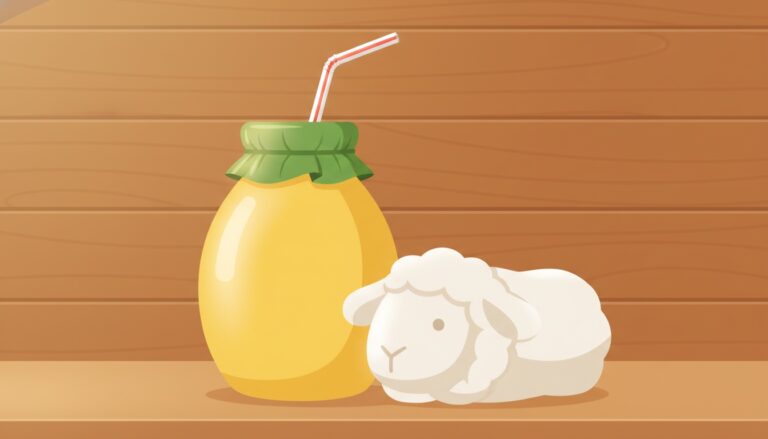
Phase 1: The Sweetest Reward After a Sweat Session 🍌
Hello! This is your Senior Editor at Daily Hangul.
Imagine this: You’ve just spent 20 minutes inside a 50°C clay sauna room. You are sweating buckets, your face is flushed, and you feel like a roasted sweet potato. You step out into the cool air of the common area. What is the first thing you need?
If you reach for water, you’re hydrating. But if you reach for Banana Milk (바나나 우유), you are understanding Korean soul.
In this unit, we are going to learn how to express that specific feeling of refreshment and reward. Understanding this cultural nuance is the difference between a tourist who just visits a sauna and an “Insider” who knows how to properly enjoy the Jjimjilbang (Korean spa) life.
This guide is based on real questions from our intermediate students who wondered, “Why is everyone drinking that yellow jar-shaped milk?”
Phase 2: Deep Dive into Key Expressions
Here are the three phrases that will make you sound like a local regular at the sauna.
1. 시원하다 (Siwonhada)
- Pronunciation:
[Si-won-ha-da]Tip: For ‘Si’, think of the sound ‘See’ but shorter. ‘Won’ sounds like the currency ‘Won’. - Meaning:
- Literal: To be cool (temperature).
- Real Nuance: “It feels refreshing / relieving.”
- Editor’s Insight: This is the most confusing word for beginners! You will hear older Koreans sitting in boiling hot water saying “Ah~ Siwonhada!” It doesn’t mean the water is cold; it means the heat is un-knotting their muscles and relieving stress. When you drink cold milk after the sauna, say this to express relief.
- Situation Check: Casual (Friends) & Formal (Elders/Boss) – Just add ‘yo’ at the end for polite situations.
2. 당 땡겨요 (Dang ttaeng-gyeo-yo)
- Pronunciation:
[Dang ttaeng-gyeo-yo]Tip: ‘Dang’ sounds like a bell ringing ‘Dong’ but with an ‘A’. ‘Ttaeng’ requires tensing your tongue hard. - Meaning:
- Literal: Sugar is pulling me.
- Real Nuance: “I’m craving something sweet.”
- Editor’s Insight: B1 Level unlock! Instead of saying standard “I want sugar” (설탕을 원해요 – very unnatural), use “땡기다” (to crave/pull). It’s a very common colloquialism used when you are hungry or want a drink.
- Situation Check: Casual to Semi-Formal. Avoid in very formal business meetings, but perfect for friends or close colleagues.
3. 국룰이죠 (Gung-nul-i-jyo)
- Pronunciation:
[Gung-nul-i-jyo]Tip: Pronounce ‘Gung’ like ‘Kung’ fu. ‘Nul’ sounds like ‘Rule’ with an N. - Meaning:
- Literal: It is the National Rule.
- Real Nuance: “It’s the unwritten rule / Everyone does this.”
- Editor’s Insight: This is a trendy word. Sauna + Banana Milk? That’s Gungnul. Fried Chicken + Beer? Gungnul. Use this to agree strongly that a combination is perfect.
- Situation Check: Casual & Semi-Formal (Internet slang origin, but widely used now).
Phase 3: Textbook vs. Real Life
Let’s upgrade your Korean from “Classroom Robot” to “Sauna Expert.”
| Textbook Korean (Awkwardly Polite) | Real Korean (Natural & Native) |
|---|---|
| 바나나 우유를 마시고 싶어요. (I want to drink banana milk.) |
바나나 우유 하나 때릴까? (Shall we ‘hit’ (grab) a banana milk? – Slangy) |
| 사우나 후에 먹는 것이 좋아요. (It is good to eat after sauna.) |
사우나 끝나고는 이게 국룰이지. (After sauna, this is the unwritten rule.) |
| 기분이 아주 상쾌해요. (I feel very refreshed.) |
와, 이제 좀 살 것 같다. (Wow, now I feel like I can live/survive.) |
Editor’s Note: “때리다” literally means “to hit,” but young Koreans use it to mean “to consume” or “to do” enthusiastically (e.g., lunch, coffee, sauna).
Phase 4: Cultural Context & Manners (Nunchi)
1. The Shape of the Bottle:
You will notice the banana milk usually comes in a chubby, jar-shaped plastic bottle (Binggrae brand). This design was inspired by traditional Korean moon jars.
2. The Straw Technique:
Don’t peel off the foil lid! The “Real” way to drink it is to take a thin straw and punch it through the foil top. It tastes better this way—I don’t know why, it’s just science (or feeling!).
3. The “Sheep Head” (Yang-meori):
While drinking your milk, you might see people wearing towels folded like sheep horns on their heads. If you want to take a selfie with your banana milk, doing the Yang-meori increases your “Korean local vibe” by 200%.
Phase 5: Real-Life Scenario (Roleplay)
Setting: Outside the hot charcoal room (Cham-sut-bang). You are sweating.
Characters: Min-ji (Korean friend), Alex (You/Student).
(Alex is fanning his face with his hand, looking exhausted)
Alex: 와, 땀 진짜 많이 났다. 너무 더워.
(Wa, ttam jinjja mani natda. Neomu deowo.)
Wow, I sweated so much. It’s too hot.
Min-ji: 그치? 우리 시원한 거 뭐 좀 마실까?
(Geuchi? Uri siwonhan geo mwo jom masilkka?)
Right? Shall we drink something cool?
Alex: 완전 좋아. 나 지금 당 땡겨.
(Wanjeon joa. Na jigeum dang ttaeng-gyeo.)
Totally. I’m craving sugar right now.
Min-ji: 그럼 매점으로 가자. 사우나 후엔 바나나 우유가 국룰인 거 알지?
(Geureom maejeomeuro gaja. Sauna huen banana uyuga gungnul-in geo alji?)
Then let’s go to the snack bar. You know Banana Milk after sauna is the national rule, right?
Alex: 당연하지! 빨대 꽂아서 마시면… 캬, 시원하다!
(Dangyeonhaji! Ppaldae kkojaseo masimyeon… Kya, siwonhada!)
Of course! If you stick a straw in and drink it… Kya, refreshing!
Phase 6: 10-Second Shadowing Drill
Read this out loud to practice your intonation. Pause where you see the /.
“사우나 끝나고 / 바나나 우유는 / 국룰이죠!”
(Sauna kkeutnago / banana uyuneun / gungnul-ijyo!)
“After the sauna / banana milk is / the unwritten rule!”
Key Point: Put a strong accent on “Gung” in Gungnul to emphasize certainty.
Phase 7: FAQ & Troubleshooting
- Q: Can I say “Siwonhada” to my boss?
- A: Yes! It is not slang. It’s a standard adjective. Just make sure to end with “-yo” (시원하네요 / 시원해요).
- Q: Why Banana flavor? Why not Strawberry?
- A: Back in the 1970s, bananas were a luxury fruit in Korea. The government wanted to encourage people to drink more milk, so they added banana flavor to make it taste “expensive” and tasty. It became a nostalgic comfort food for adults today.
- Q: Is “Dang ttaeng-gyeo” polite?
- A: It is grammatically polite (-yo ending), but the word choice is colloquial. Don’t use it in a formal presentation, but it’s perfect for casual chats with colleagues.
Phase 8: Wrap-up
- One-Liner Summary: In Korea, the heat of the sauna must be balanced with the sweet, cool relief of Banana Milk—it’s the Gungnul (National Rule)!
- Action Mission: Next time you visit a Korean convenience store (or H-Mart), find the jar-shaped Banana Milk. Poke a straw through the foil and say, “Ah, dang ttaeng-gyeo!” before your first sip.
- Tell me in the comments: What is your “National Rule” snack after working out or sweating in your country?
Phase 9: Quick Quiz
1. What does “Dang ttaeng-gyeo” mean?
a) I pulled a muscle.
b) I am craving sugar/sweets.
c) The bell is ringing.
2. When a Korean man sits in a hot bath and says “Siwonhada,” what does he mean?
a) The water is too cold.
b) He wants ice.
c) He feels relieved and refreshed by the heat.
3. Which word means “Unwritten Rule” or “Standard Practice”?
a) Gungnul (국룰)
b) Jjimjilbang (찜질방)
c) Yangmeori (양머리)
(Scroll down for answers)
Click to see answers
1. b
2. c
3. a
Frequently Asked Questions (FAQ)
Q: What does "시원하다 (Siwonhada)" mean in Korean and how do you pronounce it?
A: In Korean, "시원하다 (Siwonhada)" is pronounced [Si-won-ha-da] and means: Literal: To be cool (temperature).
Q: What does "당 땡겨요 (Dang ttaeng-gyeo-yo)" mean in Korean and how do you pronounce it?
A: In Korean, "당 땡겨요 (Dang ttaeng-gyeo-yo)" is pronounced [Dang ttaeng-gyeo-yo] and means: Literal: Sugar is pulling me.
Q: What does "국룰이죠 (Gung-nul-i-jyo)" mean in Korean and how do you pronounce it?
A: In Korean, "국룰이죠 (Gung-nul-i-jyo)" is pronounced [Gung-nul-i-jyo] and means: Literal: It is the National Rule.







