

Phase 1: Hook & Empathy (Introduction)
Hello! This is your Senior Editor from Daily Hangul.
Welcome to the big leagues. Since you are at a C2 level, we aren’t going to talk about how to buy a ticket for the subway. We are going to talk about market economics, policy shifts, and the subtle art of complaining about government regulations like a true Korean intellectual.
Imagine you are at a networking dinner or a coffee break with Korean colleagues. The topic of conversation shifts to the economy. Someone mentions, “The EV market is cooling down because subsidies were slashed.”
If you just nod and say, “네, 맞아요 (Yes, correct),” you are safe but boring. But if you can sigh deeply and say, “Well, it seems the market is taking a breather (숨 고르기) after hitting the ‘Chasm’,” you will instantly command respect.
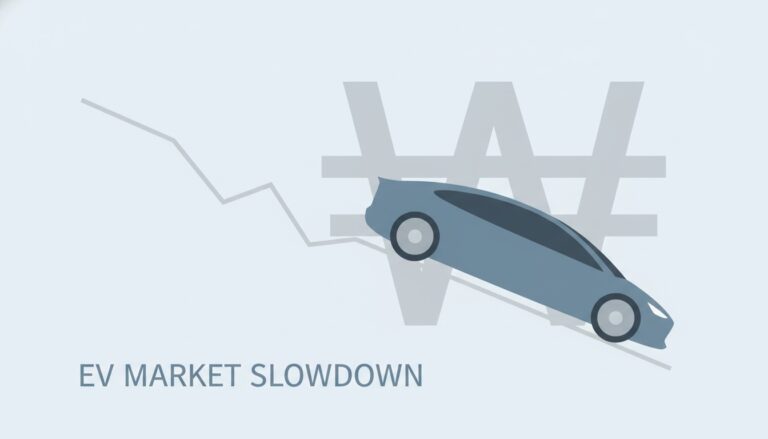
Today, we are diving into the sophisticated world of Environmental Regulations and the EV Slowdown. This is real business Korean.
Phase 2: Deep Dive into Core Expressions
Here are the three heavy-hitting expressions you need to sound like an industry insider.
1. 숨 고르기 (Sum go-reu-gi)
- Pronunciation: [Sum go-reu-gi] (Sounds like Sum + Go + Ruh + Key)
- Meaning:
- Literal: Catching one’s breath.
- Real Nuance: A temporary market correction / Taking a breather.
- Editor’s Insight: This is a beautiful metaphor. Instead of saying the market is “failing” or “crashing” (which sounds alarmist), experts use this to imply a temporary pause for stability before the next jump. It makes you sound analytical and optimistic.
- Situation Check: Perfect for formal meetings, news analysis, and serious discussions.
2. 관망세 (Gwan-mang-se)
- Pronunciation: [Gwan-mang-se] (Sounds like Gwan + Mang + Say)
- Meaning:
- Literal: Observation trend.
- Real Nuance: Wait-and-see mode / A wait-and-see attitude.
- Editor’s Insight: When subsidies drop, consumers don’t just “stop buying”; they “wait and watch.” This word perfectly captures that hesitation. It is the sophisticated way to say, “People are waiting for prices to drop.”
- Situation Check: Very Formal. Use this when analyzing consumer behavior.
3. 직격탄을 맞다 (Jik-gyeok-tan-eul mat-da)
- Pronunciation: [Jik-gyeok-tan-eul mat-da]
- Meaning:
- Literal: To be hit by a direct shell/bomb.
- Real Nuance: To take a direct hit / To be severely impacted.
- Editor’s Insight: This is dramatic but widely used in business news. When a policy changes and sales drop immediately, the industry “takes a direct hit.” It emphasizes the severity of the regulation’s impact.
- Situation Check: Business reporting, venting about policy impact.
Phase 3: Textbook vs. Real Life
Let’s upgrade your vocabulary from “Student” to “Expert.”
| Textbook / Basic Korean | Real Business Korean (C2 Level) |
|---|---|
| 보조금이 줄어서 차가 안 팔려요. (Cars aren’t selling because subsidies decreased.) | 보조금 축소로 판매량이 주춤하고 있어요. (Sales are faltering/stalling due to subsidy cuts.) |
| 사람들이 살지 말지 고민하고 있어요. (People are worrying whether to buy or not.) | 소비심리가 위축되어 관망세가 짙어지고 있죠. (Consumer sentiment has shrunk, deepening the wait-and-see trend.) |
| 전기차 인기가 떨어졌어요. (EV popularity dropped.) | 전기차 시장이 캐즘(Chasm) 구간에 진입했습니다. (The EV market has entered the Chasm phase.) |
Editor’s Note: Using loanwords like ‘캐즘’ (Chasm) is very common in high-level Korean business contexts to describe the gap between early adopters and the mass market.
Phase 4: Cultural Context & Manners
The “Nun-chi” of Economic Anxiety
In Korea, policy changes (like subsidy cuts) are discussed with a specific tone of shared burden.
- Don’t just blame the company: When discussing slowing sales, it is sophisticated to acknowledge the structural issues (charging infrastructure, subsidies) rather than just saying “The car is bad.”
- The “Ui-gi-gam” (Crisis Sentiment): Korean corporate culture often operates on a sense of crisis (위기감). Even a slight slowdown is often described as an emergency to motivate employees. Understanding this hyper-awareness of trends helps you interpret why the news sounds so dramatic.
Phase 5: Real-Life Scenario (Roleplay)
Setting: Two managers discussing the Q3 earnings report in a Gangnam office.
Characters:
* Min-su (Korean): Marketing Team Leader.
* You (Foreigner): Strategy Consultant.
Dialogue:
Min-su: 이번 분기 전기차 실적이 예상보다 저조하네요. 보조금 개편 영향이 큰 것 같습니다.
(EV performance this quarter is lower than expected. The subsidy reform seems to have had a big impact.)
You: 맞아요. (Setting down coffee) 보조금 축소로 시장이 직격탄을 맞은 격이죠. 당분간은 숨 고르기 국면이 이어질 것 같아요.
(That’s right. It’s as if the market took a direct hit from the subsidy cuts. I think the ‘breather’ phase will continue for a while.)
Min-su: 와, 정확한 분석이시네요. 그럼 마케팅 전략을 어떻게 수정해야 할까요?
(Wow, that’s an accurate analysis. Then how should we revise the marketing strategy?)
You: 가격 경쟁력보다는 프리미엄 이미지를 강조해서, 관망세에 있는 고객들을 설득해야죠.
(Rather than price competitiveness, we should emphasize the premium image to persuade customers who are in wait-and-see mode.)
(Acting Tip: Speak with a calm, analytical tone. Nod slowly to show you are seriously contemplating the market.)**
Phase 6: 10-Second Shadowing Drill
Read this sentence aloud to practice intonation and pausing. This is a sentence you could hear on the 9 PM News.
“전기차 시장이 / 일시적인 숨 고르기에 들어갔지만, / 장기적으로는 / 성장세를 회복할 것으로 보입니다.”
- Phonetics: [Jeongicha sijang-i / ilsijeogin sum goreugie deureogatjiman, / janggijeoguroneun / seongjangse-reul hoebokhal geoseuro boimnida.]
- Meaning: “Although the EV market has entered a temporary breather, it appears it will recover its growth trend in the long term.”
- Check: Pause clearly at the
/marks to sound professional.
Phase 7: FAQ & Troubleshooting
- Q: Can I use “숨 고르기” for my personal life?
- A: Yes! If you are taking a break from dating or studying, you can jokingly say “나 지금 숨 고르기 중이야” (I’m taking a breather). It sounds witty and sophisticated.
- Q: Is “관망세” too stiff for casual conversation?
- A: A little bit. With close friends, just say “좀 지켜보려고” (I’m going to watch a bit). Use “관망세” when talking about groups of people or market trends.
Phase 8: Wrap-up
- One-Liner Summary: Use 숨 고르기 for slowdowns, 관망세 for hesitated buying, and 직격탄 for big negative impacts.
- Action Mission: Next time you see a news article about the economy (even in your language), try to translate the headline into Korean using today’s words. “Is this a 숨 고르기 or a crash?”
Phase 9: Quiz
- Which expression implies a temporary pause for stability rather than a total failure?
- a) 부도 (Bankruptcy)
- b) 숨 고르기 (Taking a breather)
- c) 폭망 (Total ruin – Slang)
- What is the C2 level word for “Wait-and-see attitude”?
- a) 구경하기 (Watching)
- b) 기다리기 (Waiting)
- c) 관망세 (Observation trend)
- Fill in the blank: “Subsidy cuts caused the industry to take a _______.”
- a) 직격탄 (Direct hit)
- b) 물폭탄 (Water bomb)
- c) 눈치게임 (Nunchi game)
(Answers: 1-b, 2-c, 3-a)
Frequently Asked Questions (FAQ)
Q: What does "숨 고르기 (Sum go-reu-gi)" mean in Korean and how do you pronounce it?
A: In Korean, "숨 고르기 (Sum go-reu-gi)" is pronounced [Sum go-reu-gi] and means: Literal: Catching one's breath.
Q: What does "관망세 (Gwan-mang-se)" mean in Korean and how do you pronounce it?
A: In Korean, "관망세 (Gwan-mang-se)" is pronounced [Gwan-mang-se] and means: Literal: Observation trend.
Q: What does "직격탄을 맞다 (Jik-gyeok-tan-eul mat-da)" mean in Korean and how do you pronounce it?
A: In Korean, "직격탄을 맞다 (Jik-gyeok-tan-eul mat-da)" is pronounced [Jik-gyeok-tan-eul mat-da] and means: Literal: To be hit by a direct shell/bomb.







