

Phase 1: Introduction (Introduction)
안녕하세요! This is your Senior Editor at Daily Hangul.
Today, we are stepping away from survival phrases like “Where is the bathroom?” and diving into a topic that defines C2 Proficiency: Social Awareness and Policy. As an advanced learner living or working in Korea, you’ve likely noticed the recent social discourse regarding Universal Mobility.
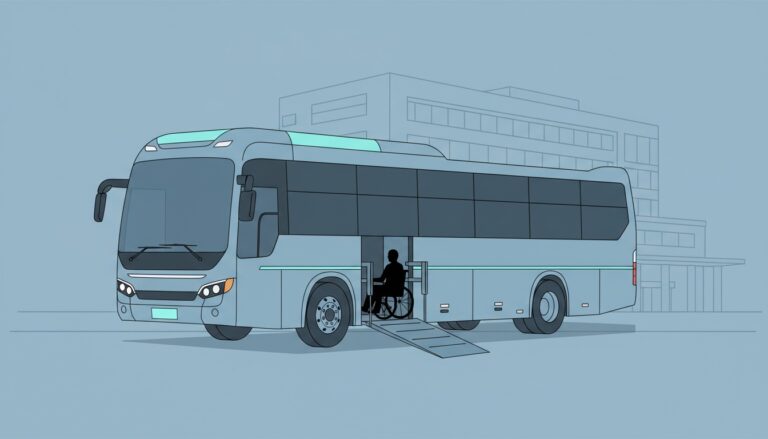
Specifically, the mandatory installation of wheelchair accessibility equipment on express buses (고속버스 휠체어 탑승 설비 의무화).
Why does this matter? Because true fluency isn’t just about ordering food; it’s about being able to discuss the news, understand public announcements at the terminal, and empathize with the changing landscape of Korean human rights. If you can discuss this topic, you are no longer just a foreigner; you are a participant in Korean society.
Let’s upgrade your vocabulary from “tourist” to “intellectual resident.”
Phase 2: Deep Dive (Core Expressions)
Here are the heavy-hitters you need to discuss this topic intelligently.
1. 이동권 (I-dong-gwon)
- Pronunciation: [I-dong-gwon] Sounds like ‘E-dong’ + ‘Gwon’ (like Taekwondo)
- Meaning: Right to mobility / Mobility rights
- Editor’s Insight: This is a crucial sociopolitical term. You won’t use this to call a taxi, but you will hear it on the news (9시 뉴스) or in debates about disability rights. It carries the weight of a fundamental human right.
- Situation Check: Formal debates, news discussions, serious conversations.
2. 의무화하다 (Ui-mu-hwa-ha-da)
- Pronunciation: [Ui-mu-hwa-ha-da]
- Meaning: To make mandatory / To institutionalize
- Editor’s Insight: The suffix -화 (hwa) means “-ization” (becoming). 의무 (duty) + 화 (becoming) = Making it a duty. You can use this for anything legal or policy-related (e.g., wearing masks was ui-mu-hwa).
- Situation Check: Professional/Legal contexts.
3. 현실적인 제약 (Hyeon-sil-jeog-in je-yak)
- Pronunciation: [Hyeon-sil-jeog-in je-yak]
- Meaning: Practical limitations / Realistic constraints
- Editor’s Insight: This is the “Magic Shield” phrase in Korean debates. When you agree with an ideal but want to point out why it’s hard to implement right now, use this. It shows deep nuance and understanding of the situation.
- Situation Check: Business meetings, policy discussions.
Phase 3: Textbook vs. Real Life
At the C2 level, you need to sound like a news anchor or a policy analyst, not a textbook.
| Textbook (Standard) | Real Life (C2 / News / Debate) |
|---|---|
| 휠체어 자리가 있어요? (Is there a wheelchair seat?) |
휠체어 탑승 설비가 갖춰져 있나요? (Is it equipped with wheelchair boarding facilities?) |
| 법이 바뀌었어요. (The law changed.) |
관련 법안이 개정되어 의무화되었어요. (The relevant bill was amended and became mandatory.) |
| 버스가 아직 준비 안 됐어요. (The bus isn’t ready yet.) |
시범 운행 기간이라 배차 간격이 길어요. (Since it’s a pilot run, the dispatch intervals are long.) |
Editor’s Note: Notice the use of Sino-Korean words (Hanja-based) like 개정 (amendment) and 배차 (dispatch). Using these elevates your register immediately.
Phase 4: Cultural Context (Nunchi & Society)
The Clash of “Ppalli-Ppalli” and Accessibility
Korea is famous for its “Ppalli-Ppalli” (Hurry, Hurry) culture. Express buses are expected to leave and arrive exactly on time.
However, loading a wheelchair onto an express bus takes time (often 10–20 minutes). This creates a unique tension.
* The Old Mindset: Some older generations might sigh or check their watches (visible impatience).
* The New Mindset: Younger generations and the educated public view patience here as a civic duty.
Pro Tip: If you witness a delay due to this, strictly avoid checking your watch or sighing. As a foreigner, showing patience here signals deep respect for Korean human rights issues. If you are discussing this with a Korean friend, saying “불편해도 감수해야 하는 부분이죠” (It’s a part we have to endure/accept even if it’s inconvenient) makes you sound incredibly mature and culturally attuned.
Phase 5: Real Scenario (Roleplay Script)
Setting: Two friends (Minji and Alex) discussing a news segment about the lack of available wheelchair buses during Chuseok holiday.
Minji (Korean): 이번 추석에도 장애인 단체 시위가 있었대. 고속버스 타기가 여전히 하늘의 별 따기라고 하더라고.
(I heard there were protests by disability advocacy groups this Chuseok too. They say taking an express bus is still as hard as picking stars from the sky.)
Alex (You): 법적으로는 의무화됐지만, 아직 현실적인 제약이 많은가 봐.
(Legally it has been made mandatory, but it seems there are still many practical limitations.)
Minji: 맞아. 리프트 설치된 버스가 아직 많지 않아서 예약하기도 힘들대.
(Right. There aren’t many buses equipped with lifts yet, so booking is difficult.)
Alex: 이동권은 누구에게나 보장되어야 하는 건데, 사회적 합의랑 인프라가 같이 가야 할 것 같아.
(Mobility rights should be guaranteed for everyone, but social consensus and infrastructure need to go hand in hand.)
(Acting Tip): When delivering the last line, nod slightly and use a serious, contemplative tone. Do not smile too brightly; this is a serious social issue.
Phase 6: 10-Second Shadowing Drill
Practice this sentence to sound like a logical, articulate speaker.
“제도적 도입도 중요하지만, / 무엇보다 시민들의 인식 개선이 / 선행되어야 합니다.”
- Romanization: Je-do-jeok do-ip-do jung-yo-ha-ji-man, / mu-eot-bo-da si-min-deul-ui in-sik gae-seon-i / seon-haeng-doe-eo-ya ham-ni-da.
- Meaning: Institutional implementation is important, but above all, improvement in citizens’ awareness must come first.
- Check Point: Pause at the
/marks. Stress ‘인식 개선’ (awareness improvement).
Phase 7: FAQ & Troubleshooting
Q: Can I use the word ‘장애자’ (Jang-ae-ja) for disabled person?
* A: ABSOLUTELY NOT. That is an outdated and offensive term. You must use 장애인 (Jang-ae-in). If you want to be even more formal in writing, 장애를 가진 분 (Person with a disability) is safe, but 장애인 is the standard neutral term used in policy and news.
Q: Is this topic too heavy for a first date?
* A: Yes. Save this for discussions with close friends, colleagues, or when the topic naturally arises in the news. It’s too serious for casual small talk.
Phase 8: Wrap-up
- One-Liner: Discussing ‘이동권’ (mobility rights) proves you understand Korean society, not just the language.
- Action Mission: Next time you see a wheelchair lift on a bus or subway, think to yourself: “이동권이 보장되고 있구나” (Mobility rights are being guaranteed).
- Let’s Chat: Have you noticed any differences in public transport accessibility between Korea and your home country? Tell me in the comments!
Phase 9: Quiz
1. Which word best fills the blank?
“정부는 고속버스 휠체어 탑승 설비를 법적으로 ______했습니다.”
(The government ______ wheelchair boarding equipment on express buses by law.)
A) 무시 (Ignore)
B) 의무화 (Mandate)
C) 거절 (Refuse)
2. What is the correct term for “Mobility Rights”?
A) 식사권 (Right to eat)
B) 이동권 (Right to move)
C) 입장권 (Admission ticket)
3. Which term refers to “Practical Limitations”?
A) 이상적인 상황 (Ideal situation)
B) 현실적인 제약 (Realistic constraints)
C) 무조건적인 찬성 (Unconditional approval)
Click for Answers
1. B) 의무화
2. B) 이동권
3. B) 현실적인 제약
Frequently Asked Questions (FAQ)
Q: What does "-화" mean in Korean and how do you pronounce it?
A: In Korean, "-화" is pronounced [hwa] and means: means "-ization" (becoming).
Q: What does "화" mean in Korean and how do you pronounce it?
A: In Korean, "화" is pronounced [becoming] and means: = Making it a duty. You can use this for anything legal or policy-related (e.g., wearing masks was
Q: What does "배차" mean in Korean and how do you pronounce it?
A: In Korean, "배차" is pronounced [dispatch] and means: . Using these elevates your register immediately.
Q: What does ""불편해도 감수해야 하는 부분이죠"" mean in Korean and how do you pronounce it?
A: In Korean, ""불편해도 감수해야 하는 부분이죠"" is pronounced [It's a part we have to endure/accept even if it's inconvenient] and means: makes you sound incredibly mature and culturally attuned.







