

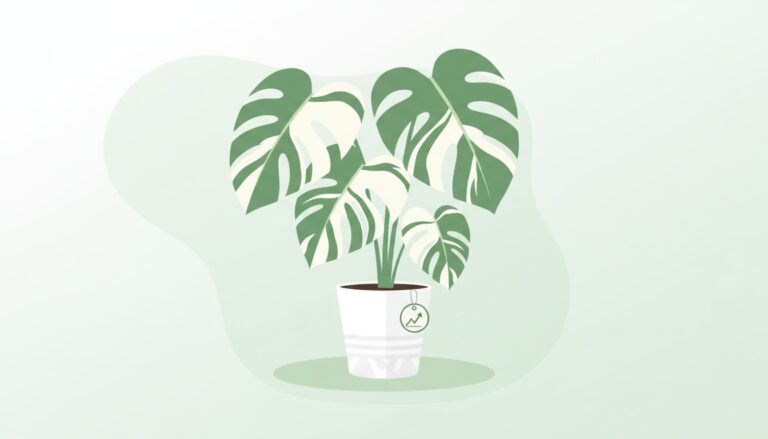
Introduction: Why is a single leaf worth 500,000 KRW?
Hello! This is your Senior Editor at Daily Hangul. 👋
Have you ever scrolled through a Korean second-hand market app like Karrot (Danggeun) and seen a photo of a single, slightly white leaf being sold for hundreds of dollars? You didn’t misread the price. Welcome to the world of 식테크 (Sik-tech).
Since the pandemic, Koreans have taken “plant parenting” to the next level—turning it into an investment strategy. As a C1 learner, simply knowing words like “flower” (꽃) or “tree” (나무) won’t cut it here. To discuss market values, variegation patterns, and propagation success rates, you need a highly specialized vocabulary.
Today, I will teach you the “insider” language used by serious Korean plant collectors. Knowing these terms won’t just improve your Korean; it might actually help you make money if you have a green thumb! 🌱💰
Phase 1: Deep Dive into Core Expressions
1. 식테크 (Sik-tech)
- Pronunciation: [Sik-te-keu] Think of ‘Sik’ as in ‘Sick’ but shorter, and ‘tech’ as in ‘technology’.
- Meaning: Plant Investment (Portmanteau of 식물/Plant + 재테크/Investment)
- Editor’s Insight: Koreans love adding “-tech” to everything involving money. You have App-tech (earning points via apps), Zai-tech (financial investment), and now Sik-tech. Using this word immediately frames you as someone who understands current Korean economic trends, not just a gardener.
- Situation Check: Perfect for casual conversations or news discussions. (Formal/Informal OK)
2. 무늬가 천재다 (The variegation is genius)
- Pronunciation: [Mu-nui-ga Cheon-jae-da]
- Meaning: The pattern/variegation on the leaf is incredibly beautiful/perfect.
- Editor’s Insight: Literally, it means “The pattern is a genius.” This is high-level community slang. In the world of rare plants (like Monstera Albo), the value is determined by the balance of white and green. If a leaf has a perfect half-moon pattern, people say, “Wow, look at this leaf, the pattern is a genius (무늬 천재).”
- Situation Check: Use this in online comments or when complimenting a friend’s rare plant. Very natural and trendy.
3. 순화 (Sun-hwa) / 순화되다 (Sun-hwa-dwae-da)
- Pronunciation: [Sun-hwa]
- Meaning: Acclimatization (specifically establishing roots in soil after water propagation or importing).
- Editor’s Insight: This is a crucial technical term. If you buy a plant that hasn’t finished “Sun-hwa,” it might die soon. A seller might say, “순화 중이에요” (It’s currently acclimating) to explain why they can’t ship it yet, or to lower the price because it’s high-risk.
- Situation Check: Essential for transactions. Slightly formal but used in trading contexts.
4. 눈 자리가 살아있다 (The axillary bud is alive)
- Pronunciation: [Nun-ja-ri-ga Sa-ra-it-da]
- Meaning: The growth point (eye/bud) is viable.
- Editor’s Insight: When buying a “cutting” (stem mostly), you aren’t buying the leaf; you are buying the ‘eye’ (눈) where the new sprout comes from. If the ‘eye’ is rotten or damaged, the plant is worthless. You must ask this to avoid being scammed.
- Situation Check: Serious negotiation phase.
Phase 2: Textbook vs. Real Life
How does a C1 learner sound different from a beginner?
| Textbook / General Korean | Real “Sik-tech” Investor Korean |
|---|---|
| 이 식물 비싸요? (Is this plant expensive?) |
이거 시세가 어떻게 돼요? (What is the current market price for this?) |
| 하얀색 부분이 많아요. (There is a lot of white parts.) |
고스트 지분이 높아요. (The ‘Ghost’ share/portion is high.) (Ghost = Pure white leaf that cannot survive) |
| 뿌리가 났어요? (Did roots grow?) |
뿌리 활착 잘 됐나요? (Is the root system well-established/anchored?) |
| 줄기를 잘라서 팔아요. (I cut the stem and sell it.) |
삽수 쳐서 분양해요. (I take cuttings and ‘adopt’ them out.) |
Note: ‘분양하다’ literally means to distribute or sell lots (like apartments or puppies), but in the plant world, we use it instead of ‘팔다’ (sell) to sound more affectionate and ethical.
Phase 3: Cultural Context & Manners 🇰🇷
1. The “Touching” Taboo
In a normal flower shop, you might touch a petal. In the realm of rare plants, never touch a leaf without asking. A single touch can cause browning on sensitive white parts (Variegation), drastically reducing its value by thousands of won. Keep your hands behind your back to show respect!
2. The “Cool” Transaction (쿨거래)
Even in high-stakes plant trading, the concept of 쿨거래 (Cool Transaction) applies. If you ask too many questions about obvious things (like “Is this alive?”) or try to haggle (네고) aggressively on a reasonably priced rare item, sellers might block you. C1 learners should be concise: check the roots (뿌리), check the eye (눈), and pay quickly.
Phase 4: Roleplay Scenario 🎬
Setting: Meeting a seller from Karrot Market (Danggeun) at a subway station to buy a Monstera Albo cutting.
Characters:
* Learner (You): Serious buyer looking for a good investment plant.
* Seller (Hyun-woo): Experienced plant collector.
Dialogue:
Seller: (Showing a clear plastic cup with moss) 여기요. 사진이랑 똑같죠?
(Here it is. It looks just like the photo, right?)
Learner: (Squinting at the cup) 와, 실물이 더 예쁘네요. 무늬가 완전 천재인데요?
(Wow, it’s prettier in person. The variegation is absolute genius!)
[Wa, sil-mul-i deo ye-ppeu-ne-yo. Mu-nui-ga wan-jeon cheon-jae-in-de-yo?]
Seller: 그렇죠? 근데 아직 순화 중이라 습도 조절 잘 해주셔야 해요.
(Right? But it’s still acclimating, so you need to manage the humidity well.)
Learner: 네, 온실에 넣으려고요. 혹시 뿌리 좀 자세히 봐도 될까요? 눈 자리는 살아있죠?
(Yes, I plan to put it in a greenhouse. By the way, can I check the roots closely? The axillary bud is alive, right?)
[Ne, on-sil-e neo-eu-ryeo-go-yo. Hok-si ppu-ri jom ja-se-hi bwa-do doel-kka-yo? Nun-ja-ri-neun sa-ra-it-jyo?]
Seller: 그럼요. 여기 보시면 뽈록 튀어나와 있어요.
(Of course. If you look here, it’s bulging out.)
Learner: 확인했어요. 바로 입금해 드릴게요!
(Confirmed. I’ll transfer the money right away!)
Phase 5: 10-Second Shadowing 🗣️
Practice this sentence to sound like a pro negotiator. Pay attention to the pause marked by /.
“무늬는 예쁜데 / 아직 순화가 안 돼서 / 가격 좀 조정될까요?”
(The variegation is pretty, / but since it’s not acclimated yet, / can the price be adjusted?)
- Audio Guide: [Mu-nui-neun ye-ppeun-de] (Rising tone) / [a-jik sun-hwa-ga an dwae-seo] (Short pause) / [ga-gyeok jom jo-jeong doel-kka-yo?] (Polite request tone)
Phase 6: FAQ & Troubleshooting ⚠️
Q: Can I use “무늬가 천재다” to my boss who likes gardening?
A: Maybe. If your boss is trendy and into rare plants, they will love it and think you are very witty. If your boss is very conservative and just grows basic orchids, they might be confused. In that case, stick to “무늬가 정말 아름답네요” (The pattern is truly beautiful).
Q: What is ‘식물 킬러’ (Plant Killer)?
A: It’s exactly what it sounds like—someone who kills every plant they touch. If you are a beginner, admit it: “저는 식물 킬러라서 순화된 개체가 필요해요.” (I’m a plant killer, so I need an acclimated specimen.)
Phase 7: Wrap-up & Action Mission
One-Liner Summary:
In Korean Sik-tech, value comes from the “genius” patterns (무늬) and the stability of “acclimatization” (순화).
Your Mission:
Go to Instagram and search for the hashtag #식집사 (Plant Butler – a trendy word for plant owners). Find a photo of a Monstera Albo and comment: “와, 무늬가 천재네요!” (Wow, the pattern is genius!). See if you get a like from the owner!
See you in the next lesson! 🌿
Phase 8: Quiz 📝
1. Which word combines “Plant” and “Investment”?
a) 식물학 (Sikmul-hak)
b) 식테크 (Sik-tech)
c) 잎테크 (Ip-tech)
2. Why might a buyer ask about “순화” (Sun-hwa)?
a) To ask if the plant is pure white.
b) To ask if the plant has finished blooming.
c) To ask if the plant has adapted to soil and grown roots.
3. How do you compliment a perfect variegation pattern using slang?
a) 무늬가 착해요 (The pattern is kind).
b) 무늬가 천재예요 (The pattern is a genius).
c) 무늬가 부자예요 (The pattern is rich).
Click for Answers
1. b) 식테크
2. c) To ask if the plant has adapted to soil and grown roots.
3. b) 무늬가 천재예요
Frequently Asked Questions (FAQ)
Q: What does "식테크 (Sik-tech)" mean in Korean and how do you pronounce it?
A: In Korean, "식테크 (Sik-tech)" is pronounced [Sik-te-keu] and means: Plant Investment (Portmanteau of 식물/Plant + 재테크/Investment)
Q: What does "무늬가 천재다 (The variegation is genius)" mean in Korean and how do you pronounce it?
A: In Korean, "무늬가 천재다 (The variegation is genius)" is pronounced [Mu-nui-ga Cheon-jae-da] and means: The pattern/variegation on the leaf is incredibly beautiful/perfect.
Q: What does "순화 (Sun-hwa) / 순화되다 (Sun-hwa-dwae-da)" mean in Korean and how do you pronounce it?
A: In Korean, "순화 (Sun-hwa) / 순화되다 (Sun-hwa-dwae-da)" is pronounced [Sun-hwa] and means: Acclimatization (specifically establishing roots in soil after water propagation or importing).
Q: What does "눈 자리가 살아있다 (The axillary bud is alive)" mean in Korean and how do you pronounce it?
A: In Korean, "눈 자리가 살아있다 (The axillary bud is alive)" is pronounced [Nun-ja-ri-ga Sa-ra-it-da] and means: The growth point (eye/bud) is viable.







