

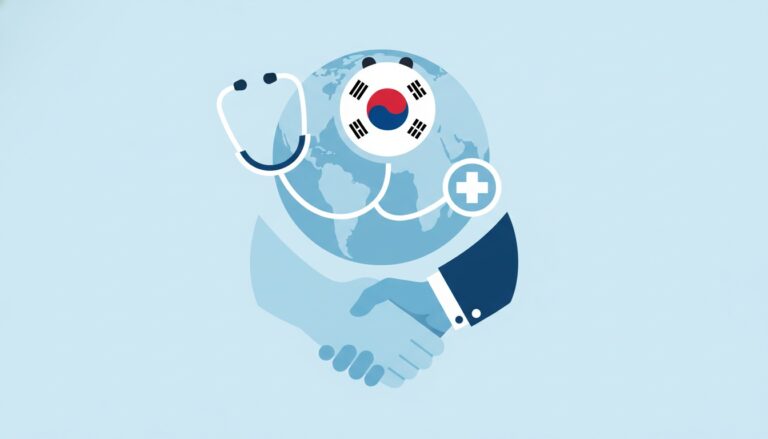
Saving Lives & Building Bridges: Essential Korean for International Health Cooperation 🚑
Introduction
Hello, this is Daily Hangul!
Are you a professional working in an NGO, the UN, or specifically targeting a career with organizations like KOICA (Korea International Cooperation Agency)? Or perhaps you are following the news on global health crises and want to understand the Korean perspective deeper?
Today, we are stepping away from K-Drama romances to tackle a serious but incredibly important topic: International Health Cooperation and Epidemic Response.
Based on a Synthetic Example:
Recently, we analyzed patterns from advanced learners working in the international development sector. A common frustration is knowing how to say “help” (dowa-juseyo), but freezing when they need to discuss “systematic medical support” or “quarantine cooperation” in a formal meeting. Using casual words in a high-stakes diplomatic or professional setting can make you sound underprepared, even if your intentions are serious.
In this lesson, we will upgrade your vocabulary to the C2 (Advanced/Professional) level, giving you the tools to discuss saving lives with the dignity and precision it requires.
At a Glance: Today’s Curriculum
- Target Audience: Professionals in ODA (Official Development Assistance), medical staff, and advanced learners interested in current affairs.
- Context: Formal meetings, news briefings, official reports.
- Difficulty: ⭐⭐⭐⭐⭐ (C2 – Professional)
Today’s Key Expressions:
1. 방역 (Bang-yeok): Epidemic Prevention/Quarantine
2. 공조하다 (Gong-jo-ha-da): To collaborate closely (mutual assistance)
3. 취약 계층 (Chwi-yak gye-cheung): Vulnerable groups
Table of Contents
- Today’s Key Expressions Deep Dive
- Textbook vs. Real Korean: The Professional Edition
- Analysis: The Register Thermometer
- Real-World Role Play: Strategy Meeting
- Shadowing Challenge
- FAQ
- Wrap-up & Mission
Today’s Key Expressions Deep Dive
1. 방역 (Bang-yeok)
- Meaning: Epidemic prevention, quarantine activities, disease control.
- Usage & Register:
- Used in Official Reports, News, Government Announcements.
- Tone: Highly formal. Usually paired with verbs like gang-hwa-ha-da (to strengthen).
- Tutor’s Secret Note:
- Since 2020, this word has become essential. Koreans take Bang-yeok very seriously. It implies a systematic, government-led effort rather than just individual hygiene. If you just say “cleaning” (cheong-so), you miss the nuance of preventing disease spread.
- Warning: Do not use this for cleaning your room! It sounds like you have a biohazard situation at home.
- Pronunciation Clinic:
- [Bang-nyeok]: Note the nasalization. The ‘ㅇ’ (ng) affects the following ‘y’, making it sound like an ‘n’ is inserted in standard pronunciation flow (ni-eun insertion).
- Examples:
- (News) 정부는 공항 방역을 강화했습니다.
- Jeong-bu-neun gong-hang bang-yeog-eul gang-hwa-haet-seum-ni-da.
- (The government strengthened airport quarantine measures.)
- (Meeting) 철저한 방역 시스템이 필요합니다.
- Cheol-jeo-han bang-yeok si-seu-tem-i pi-ryo-ham-ni-da.
- (We need a thorough epidemic prevention system.)
- (Field Work) 방역 물품이 도착했습니다.
- Bang-yeok mul-pum-i do-chak-haet-seum-ni-da.
- (The quarantine supplies have arrived.)
- Alternatives:
- 예방 (Ye-bang): Prevention (General)
- 소독 (So-dok): Disinfection (Physical act of cleaning)
- Mini Quiz:
Click to see the question
“We need to focus on ______ (disease control) first.”
우리는 우선 [ ? ]에 집중해야 합니다.Answer: 방역 (Bang-yeok)
2. 공조하다 (Gong-jo-ha-da)
- Meaning: To cooperate/collaborate (specifically for a shared cause or crisis).
- Usage & Register:
- Diplomatic/Business settings.
- Tone: Serious and committed. Hap-ni-da style recommended.
- Tutor’s Secret Note:
- While hyeop-ryeok (cooperation) is common, gong-jo implies a tighter, more urgent partnership, often used by police, military, or nations fighting a disease together. It sounds very professional.
- Pronunciation Clinic:
- [Gong-jo]: Pronounce the ‘j’ clearly but not too explosively.
- Examples:
- (Policy) 국제 사회와 긴밀히 공조해야 합니다.
- Guk-je sa-hoe-wa gin-mil-hi gong-jo-hae-ya ham-ni-da.
- (We must cooperate closely with the international community.)
- (Meeting) 정보 공유를 위해 공조합시다.
- Jeong-bo gong-yu-reul wi-hae gong-jo-hap-si-da.
- (Let’s collaborate for information sharing.)
- (Review) 양국의 공조가 성공적이었습니다.
- Yang-guk-ui gong-jo-ga seong-gong-jeog-i-eot-seum-ni-da.
- (The collaboration between the two countries was successful.)
- Alternatives:
- 협력하다 (Hyeop-ryeok-ha-da): To cooperate (Standard)
- 같이 하다 (Ga-chi ha-da): To do together (Casual)
3. 취약 계층 (Chwi-yak gye-cheung)
- Meaning: Vulnerable social groups / Vulnerable population.
- Usage & Register:
- ODA project proposals, UN reports.
- Tone: Empathetic yet objective.
- Tutor’s Secret Note:
- In development cooperation, identifying the beneficiaries is key. This term is the standard technical term for people who are most at risk (elderly, children, low-income). Using words like “poor people” (ga-nan-han sa-ram-deul) can sound unprofessional or rude in a report.
- Pronunciation Clinic:
- [Chwi-yak]: The ‘wi’ (ㅟ) sound can be tricky. Round your lips and say ‘wee’ quickly.
- Examples:
- (Proposal) 의료 취약 계층을 위한 지원이 시급합니다.
- Ui-ryo chwi-yak gye-cheung-eul wi-han ji-won-i si-geup-ham-ni-da.
- (Support for the medically vulnerable population is urgent.)
- (Analysis) 노인과 어린이가 주요 취약 계층입니다.
- No-in-gwa eo-rin-i-ga ju-yo chwi-yak gye-cheung-im-ni-da.
- (The elderly and children are the main vulnerable groups.)
- (Budget) 취약 계층 보호에 예산을 배정했습니다.
- Chwi-yak gye-cheung bo-ho-e ye-san-eul bae-jeong-haet-seum-ni-da.
- (We have allocated budget for protecting vulnerable groups.)
Textbook vs. Real Korean: Professional Edition
What you learn in school vs. What is written in a KOICA Report.
| Context | Textbook (General) | Real Korean (ODA/Professional) | Nuance Check |
|---|---|---|---|
| Giving help | 도와주기 (Dowa-ju-gi) | 인도적 지원 (In-do-jeok ji-won) | “Helping” vs. “Humanitarian Aid/Assistance” |
| Working together | 같이 일하기 (Gachi il-ha-gi) | 국제 공조 (Guk-je gong-jo) | “Working together” vs. “International Coordination” |
| Sending things | 물건 보내기 (Mul-geon bo-nae-gi) | 물자 수송 (Mul-ja su-song) | “Sending stuff” vs. “Transport of supplies/materials” |
Situation Checklist:
* Writing an email to a friend? Use Textbook Korean.
* Writing a project proposal or speaking to a government official? Use Real Korean (ODA).
Analysis: The Register Thermometer 🌡️
In International Cooperation, the “temperature” of your language determines your professionalism. Let’s see how the request for “medical items” changes.
| Level | Expression (Korean/Romanization) | Feeling/Audience |
|---|---|---|
| Level 1 (Casual) | 약 좀 줘. (Yak jom jwo.) | Asking a family member for medicine. |
| Level 2 (Polite) | 약이 필요해요. (Yag-i pi-ryo-hae-yo.) | Visiting a pharmacy or doctor personally. |
| Level 3 (Business) | 의약품 지원을 요청합니다. (Ui-yak-pum ji-won-eul yo-cheong-ham-ni-da.) | Standard business email request. |
| Level 4 (Diplomatic) | 긴급 방역 물자 조달이 시급합니다. (Gin-geup bang-yeok mul-ja jo-dal-i si-geup-ham-ni-da.) | Crisis briefing / Official ODA request. |
Note: At Level 4, “Medicine” becomes “Epidemic prevention materials” (Bang-yeok mul-ja) and “Need” becomes “Urgent procurement” (Jo-dal-i si-geup-ham-ni-da).
Real-World Role Play: The Strategy Meeting
- Setting: A meeting room at a Korean development agency.
- Characters: Alex (International NGO Rep), Manager Kim (Korean Official).
- Vibe: Serious, professional, urgent.
Alex: (Opening the topic)
이번 전염병 확산세가 심각합니다. 신속한 대응이 필요합니다.
I-beon jeon-yeom-byeong hwak-san-se-ga sim-gak-ham-ni-da. Sin-sok-han dae-eung-i pi-ryo-ham-ni-da.
(The spread of this infectious disease is serious. Rapid response is needed.)
Manager Kim: (Agreeing)
네, 맞습니다. 특히 지방의 의료 취약 계층이 걱정입니다.
Ne, mat-seum-ni-da. Teuk-hi ji-bang-ui ui-ryo chwi-yak gye-cheung-i geok-jeong-im-ni-da.
(Yes, that is correct. We are especially worried about the medically vulnerable groups in rural areas.)
Alex: (Proposing solution)
저희 기관에서 방역 물품을 지원할 수 있습니다. 한국 정부와 공조하고 싶습니다.
Jeo-hui gi-gwan-e-seo bang-yeok mul-pum-eul ji-won-hal su it-seum-ni-da. Han-guk jeong-bu-wa gong-jo-ha-go sip-seum-ni-da.
(Our organization can support with quarantine supplies. We would like to coordinate closely with the Korean government.)
Manager Kim: (Accepting)
감사합니다. 구체적인 운송 계획을 논의해 봅시다.
Gam-sa-ham-ni-da. Gu-che-jeog-in un-song gye-hoek-eul non-ui-hae bop-si-da.
(Thank you. Let’s discuss the specific transportation plan.)
💡 Culture Tip:
In formal Korean meetings, especially involving aid or government, it is crucial to use “저희 (Jeo-hui)” instead of “우리 (Uri)” when referring to your organization to show humility and respect.
Shadowing & Speaking Challenge 🗣️
Imagine you are giving a short statement at a press conference. Repeat this 3 times to get the rhythm of a formal announcement.
“우리는 전염병 극복을 위해 국제 사회와 끝까지 공조할 것입니다.”
- Romanization: U-ri-neun jeon-yeom-byeong geuk-bok-eul wi-hae guk-je sa-hoe-wa kkeut-kka-ji gong-jo-hal geo-sim-ni-da.
- Meaning: We will cooperate closely with the international community until the end to overcome the epidemic.
Checklist:
* [ ] Spoken slowly and clearly?
* [ ] Pronounced ‘Gong-jo’ firmly?
* [ ] Did not slur the end of the sentence (-sib-ni-da)?
FAQ: Questions from the Field
Q1: Can I use ‘방역 (Bang-yeok)’ when I wear a mask?
* A: Not really. Wearing a mask is “마스크 착용 (Mask chak-yong)”. Bang-yeok refers to the system or activity of control (like spraying disinfectant, contact tracing, policy making). However, you can say you are following “방역 수칙 (Bang-yeok su-chik)” (quarantine guidelines).
Q2: What is the difference between ‘치료 (Chi-ryo)’ and ‘치유 (Chi-yu)’?
* A: 치료 (Chi-ryo) is medical treatment (clinical). 치유 (Chi-yu) is healing (emotional or holistic). In ODA medical reports, use 치료.
* Ex: Hwan-ja-reul chi-ryo-ha-da. (To treat a patient.)
Wrap-up & Mission
Today we learned how to save lives using professional Korean. We moved from simple “help” to strategic terms like 방역 (Bang-yeok) and 공조 (Gong-jo).
🚀 Today’s Mission:
Search for a Korean news article using the keyword “KOICA 의료 지원” (KOICA medical support). Try to find the word “취약 계층” in the text!
Question for you:
What is the most useful medical/aid related word you’ve needed in Korean? Let me know in the comments!
Final Quiz
1. Which word best describes “Close Mutual Assistance/Coordination” in a diplomatic context?
A) 도움 (Do-um)
B) 공조 (Gong-jo)
C) 만남 (Man-nam)
2. What is the formal term for “Vulnerable Population”?
A) 아픈 사람 (A-peun sa-ram)
B) 취약 계층 (Chwi-yak gye-cheung)
C) 나쁜 계층 (Na-ppeun gye-cheung)
3. Fill in the blank:
“The government strengthened the ______ system.”
정부는 [ ______ ] 시스템을 강화했습니다.
(Hint: Epidemic Prevention/Quarantine)
Answers: 1. (B), 2. (B), 3. 방역 (Bang-yeok)
Frequently Asked Questions (FAQ)
Q: What does "방역 (Bang-yeok)" mean in Korean and how do you pronounce it?
A: In Korean, "방역 (Bang-yeok)" is pronounced [see lesson guide] and means: Epidemic prevention, quarantine activities, disease control.
Q: What does "공조하다 (Gong-jo-ha-da)" mean in Korean and how do you pronounce it?
A: In Korean, "공조하다 (Gong-jo-ha-da)" is pronounced [see lesson guide] and means: To cooperate/collaborate (specifically for a shared cause or crisis).
Q: What does "취약 계층 (Chwi-yak gye-cheung)" mean in Korean and how do you pronounce it?
A: In Korean, "취약 계층 (Chwi-yak gye-cheung)" is pronounced [see lesson guide] and means: Vulnerable social groups / Vulnerable population.







