

Introduction
Hello, this is Daily Hangul!
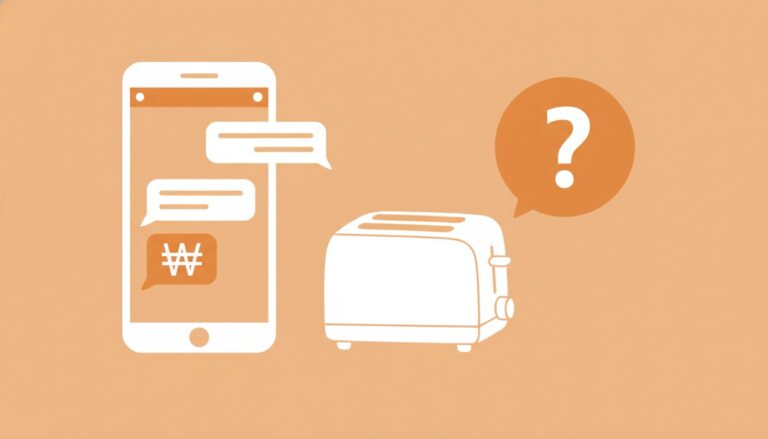
Have you ever tried buying something on a Korean second-hand platform like Danggeun Market (Karrot) or Junggonara? It’s a great way to save money and find unique items while living in Korea. However, many foreign residents face a common challenge: the language barrier during the critical “item check” phase.
Synthetic Case (Based on common learner patterns):
A learner named “Alex” recently bought a used air fryer through an app. He knew how to say “Hello” and “Thank you,” but he didn’t know how to ask if it actually worked. He just smiled, paid, and took it home—only to find out it wouldn’t turn on. If only he knew one simple sentence, he could have saved 30,000 won!
Textbooks often teach formal shopping phrases like “How much is this?” (이거 얼마예요?), but they rarely teach the gritty, practical questions needed to inspect a used item’s condition. Today, we will learn the essential phrases to ensure you get what you pay for.
Summary at a Glance
- Today’s Key Phrases:
- 작동 잘 돼요? (Does it work well?)
- 하자 있어요? (Are there any defects?)
- 사용 기간이 얼마나 돼요? (How long have you used it?)
- Safe Zone: Use these with sellers on chat apps or during face-to-face meetings (Danggeun).
- Level: A1-A2 (Beginner). These are life-saving survival phrases that are simple but high-impact.
Table of Contents
- Today’s Key Phrases Deep Dive
- Textbook vs. Real Korean
- Analysis: The Politeness Thermometer
- Real-Life Scenario: Role Play
- Shadowing Challenge
- FAQ
- Wrap-up & Quiz
Today’s Key Phrases Deep Dive
1. 작동 잘 돼요? (Does it work well?)
- Meaning: Does it work well? / Is it functioning properly?
- 작동 (Jakdong) = Operation/Function
- 잘 (Jal) = Well
- 돼요? (Dwaeyo?) = Does it become/work?
- Usage & Register:
- To whom: Sellers on apps or in person.
- Style:
해요-che(Polite). This is perfect for strangers.
- Tutor’s Secret Note:
- Koreans use this specifically for electronics or machinery (hair dryers, microwaves, fans). Don’t use this for clothes or furniture!
- Warning: If you ask this after you buy it, it’s too late. Ask in the chat first.
- Pronunciation Clinic:
- [jak-ttong jal dwae-yo]
- Note the tensification:
동sounds like똥(ttong) because of theㄱbatchim before it.
- Examples:
- 이 드라이기 작동 잘 돼요? (I deuraigi jakdong jal dwaeyo?) – Does this hair dryer work well?
- 버튼은 다 작동 잘 돼요? (Beoteuneun da jakdong jal dwaeyo?) – Do all the buttons work well?
- 소리 안 나고 작동 잘 돼요? (Sori an nago jakdong jal dwaeyo?) – Does it work well without making noise?
- Alternatives:
- Polite: 작동에 문제 없나요? (Is there no problem with the operation?)
- Casual: 고장 안 났죠? (It’s not broken, right?)
- Mini Quiz:
- Q: Fill in the blank: “이거 [_____] 잘 돼요?” (Does this function well?)
-
Click for Answer
작동 (Jakdong)
2. 하자 있어요? (Are there any defects?)
- Meaning: Are there any defects/flaws?
- 하자 (Haja) = Defect, flaw, damage
- Usage & Register:
- To whom: Any seller.
- Style:
해요-che(Polite).
- Tutor’s Secret Note:
- ‘하자’ covers scratches, stains, tears, or broken parts. It is a very common term in trade.
- If you ask this, the seller is legally/morally obligated to tell you the truth. If they say “No” and you find one later, you have grounds for a refund.
- Pronunciation Clinic:
- [ha-ja i-sseo-yo]
- Link the
ㅆin있to어->이써요.
- Examples:
- 사진에 안 보이는 하자 있어요? (Sajine an boineun haja isseoyo?) – Are there any defects not visible in the photo?
- 혹시 큰 하자 있어요? (Hoksi keun haja isseoyo?) – Are there any major defects by chance?
- 생활 기스는 괜찮은데, 다른 하자 있어요? (Saenghwal giseuneun gwaenchaneunde, dareun haja isseoyo?) – Light scratches from use are okay, but are there other defects?
- Alternatives:
- Specific: 흠집 있나요? (Are there scratches?)
- Broad: 상태 어때요? (How is the condition?)
- Mini Quiz:
- Q: Which word means “defect”? A. 작동 B. 하자
-
Click for Answer
B. 하자 (Haja)
3. 네고 가능해요? (Is the price negotiable?)
- Meaning: Can you give a discount? / Is negotiation possible?
- 네고 (Nego) = Short for Negotiation (Konglish)
- 가능해요? (Ganeunghaeyo?) = Is it possible?
- Usage & Register:
- To whom: Sellers.
- Style:
해요-che(Polite but direct).
- Tutor’s Secret Note:
- “Nego” is standard slang in Korean second-hand markets. It’s not rude if asked politely.
- Warning: Don’t ask this at the meetup spot. Negotiate price in the chat before meeting. Changing the price in person is considered bad manners (Be-maen-neo).
- Pronunciation Clinic:
- [ne-go ga-neung-hae-yo]
- Ensure the ‘H’ in
해is heard softly.
- Examples:
- 쿨거래 하면 네고 가능해요? (Kulgeorae hamyeon nego ganeunghaeyo?) – If I buy it quickly/coolly, can you discount?
- 학생이라서 그런데 조금 네고 가능해요? (Haksaengiraseo geureonde jogeum nego ganeunghaeyo?) – I’m a student, so is a small discount possible?
- 죄송하지만 네고는 어려워요. (Joesonghajiman negoneun eoryeowoyo.) – (Seller’s reply) Sorry, negotiation is difficult.
- Alternatives:
- More polite: 가격 조정 될까요? (Is price adjustment possible?)
- Direct: 좀 깎아주세요. (Please cut the price a bit.)
- Mini Quiz:
- Q: Fill in the blank: “____ 가능해요?” (Is negotiation possible?)
-
Click for Answer
네고 (Nego)
Textbook vs. Real Korean
How do actual Koreans speak on apps compared to textbooks?
| Context | Book Korean (Textbook) | Real Korean (Street/App) | Note |
|---|---|---|---|
| Checking Condition | 이 물건의 상태는 어떻습니까? (How is the condition of this item?) | 상태 괜찮아요? (Is the condition okay?) | ‘상태’ is key keyword. |
| Asking Price | 가격을 깎아 주실 수 있습니까? (Could you please cut the price?) | 네고 돼요? / 에눌 돼요? (Nego okay? / Enul okay?) | ‘에눌’ is short for enuri (discount). |
| Meeting Up | 어디에서 만날까요? (Where shall we meet?) | 어디 편하세요? (Where is comfortable for you?) | Focus on convenience. |
When to use what?
* Textbook: Rarely used in chat apps. It sounds too stiff.
* Real Korean: Use these short phrases. Speed is key in second-hand deals!
Analysis: The Politeness Thermometer (Asking for a Discount)
In Korea, money talk requires the right “temperature” of politeness. If you are too direct, the seller might block you.
| Level | Phrase (Korean / Romanization) | Vibe | Recommendation |
|---|---|---|---|
| 1 (Cold) | 비싸요. 깎아줘요. (Bissayo. Kkakkajwoyo.) | Rude/Aggressive. “It’s expensive. Cut the price.” | ❌ Avoid |
| 2 (Cool) | 네고 돼요? (Nego dwaeyo?) | Direct/Casual. Acceptable among young people. | ⚠️ Use carefully |
| 3 (Warm) | 혹시 네고 가능할까요? (Hoksi nego ganeunghalkkayo?) | Polite standard. “By chance, is negotiation possible?” | ✅ Recommended |
| 4 (Hot) | 가격 조정 부탁드려도 될까요? (Gagyeok jojeong butakdeuryeodo doelkkayo?) | Very respectful. Good for expensive items (cars, laptops). | ✅ Good for Biz |
Tutor’s Tip: Adding “혹시” (Hoksi – by chance) makes any sentence 50% softer and more polite!
Real-Life Scenario: Role Play
Situation: You (Alex) are meeting a Seller (Minji) at a subway station exit to buy a used toaster.
Alex: 안녕하세요! 당근 맞으시죠? (Annyeonghaseyo! Danggeun majeushijyo?)
Hello! You are from Danggeun, right?Minji: 네, 안녕하세요. 여기 토스터기요. (Ne, annyeonghaseyo. Yeogi toseuteogiyo.)
Yes, hello. Here is the toaster.Alex: 감사합니다. 혹시 지금 작동 확인해 봐도 될까요? (Gamsahamnida. Hoksi jigeum jakdong hwaginhae bwado doelkkayo?)
Thank you. By chance, can I check if it works now?Minji: 아, 여기 코드가 없어서… 집에서 나오기 전에 확인했어요. 작동 잘 돼요. (A, yeogi kodeuga eopseoseo… jibeseo naogi jeone hwaginhaesseoyo. Jakdong jal dwaeyo.)
Ah, there is no outlet here… I checked before leaving home. It works well.Alex: 아, 그래요? 혹시 찍힘이나 다른 하자는 없나요? (A, geuraeyo? Hoksi jjikhimina dareun hajaneun eomnayo?)
Ah, really? By chance, are there dents or other defects?Minji: 네, 생활 기스 말고는 깨끗해요. (Ne, saenghwal giseu malgoneun kkaekkeuthaeyo.)
Yes, other than light scratches from use, it is clean.Alex: 네, 알겠습니다. 계좌이체 해드릴게요! (Ne, algetseumnida. Gyejwa-iche haedeurilgeyo!)
Okay, understood. I will do a bank transfer!
Culture Tip:
* Checking Electronics: It’s hard to check electronics on the street. Ask for a video (동영상 – dongyeongsang) of it working before the meeting!
* Bank Transfer: Most Koreans prefer instant bank transfer (계좌이체) on the spot over cash.
Shadowing & Speaking Challenge
Listen to the audio (imagine the tutor’s voice) and repeat this script 3 times. Focus on the intonation of the question.
Script:
“실례지만, 작동 잘 돼요? 하자는 없나요?”
(Sil-lye-ji-man, jak-ttong jal dwae-yo? Ha-ja-neun eom-na-yo?)
Checklist:
* [ ] 1st Attempt (Slowly, focusing on ‘jak-ttong’ pronunciation)
* [ ] 2nd Attempt (Normal speed)
* [ ] 3rd Attempt (Fast, like a real buyer)
Pronunciation Point: Remember, 작동 is pronounced [Jak-ttong], not [Jak-dong]!
Frequently Asked Questions (FAQ)
Q1: Can I ask for a refund (hwanbul) if it breaks the next day?
* In private second-hand deals, refunds are difficult unless the seller hid a major defect. This is why asking “작동 잘 돼요?” and “하자 있어요?” in the chat log is crucial for evidence.
Q2: What is ‘Cool-georae’ (쿨거래)?
* It means a “Cool Deal.” It implies you will buy it quickly without asking too many questions or negotiating much. Sellers love this.
* Ex: 쿨거래 할게요. (I will do a cool deal/buy it immediately.)
Q3: Can I use these phrases for buying clothes?
* For clothes, instead of “작동” (function), use “오염” (stains) or “상태” (condition).
* Ex: 오염이나 얼룩 있어요? (Are there any pollution/stains?)
Wrap-up & Action Item
Today’s Summary:
When buying used items, always ask about function (작동) and defects (하자) politely using “혹시” to soften your tone.
Today’s Mission:
1. Open a Korean second-hand app (like Danggeun) just to browse.
2. Look at item descriptions and try to find the words “작동” or “하자” in the text.
3. (Bonus) Practice saying “작동 잘 돼요?” out loud to your microwave!
Question for you:
Have you ever bought something used in Korea? What was the hardest thing to say? Let me know in the comments!
Final Quiz
1. Which phrase is best for asking if a machine works?
A) 맛있어요? (Is it delicious?)
B) 작동 잘 돼요? (Does it work well?)
C) 입어봐도 돼요? (Can I try it on?)
2. What does “네고” (Nego) mean?
A) Negotiation/Discount
B) Negative
C) Next time
3. Fill in the blank: “____ 있어요?” (Are there any defects?)
(Hint: H_ _ _)
⬇️ Scroll down for Answers
- B
- A
- 하자 (Haja)
Frequently Asked Questions (FAQ)
Q: What does "작동 잘 돼요? (Does it work well?)" mean in Korean and how do you pronounce it?
A: In Korean, "작동 잘 돼요? (Does it work well?)" is pronounced [see lesson guide] and means: Does it work well? / Is it functioning properly?
Q: What does "하자 있어요? (Are there any defects?)" mean in Korean and how do you pronounce it?
A: In Korean, "하자 있어요? (Are there any defects?)" is pronounced [see lesson guide] and means: Are there any defects/flaws?
Q: What does "네고 가능해요? (Is the price negotiable?)" mean in Korean and how do you pronounce it?
A: In Korean, "네고 가능해요? (Is the price negotiable?)" is pronounced [see lesson guide] and means: Can you give a discount? / Is negotiation possible?







