

Resolving Personality Conflicts: When MBTI Types Clash in Korea
Introduction
Hello, this is Daily Hangul!
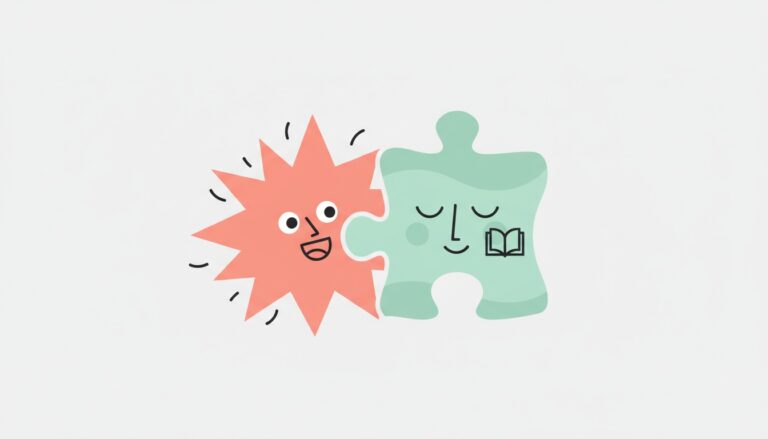
Have you noticed how obsessed Koreans are with MBTI lately? It’s almost become a standard self-introduction! But what happens when an extreme E (Extrovert) meets an extreme I (Introvert)? Misunderstandings happen.
Since no specific user story was submitted today, I will share a “Synthetic Case” based on patterns I see often among my intermediate students.
The Situation: “Sarah (ENFP), an exchange student, loves spontaneous parties. Her Korean roommate, Ji-eun (ISTJ), needs planned alone time. Sarah feels rejected when Ji-eun says no, and Ji-eun feels overwhelmed. The room becomes awkward.”
In Korean culture, how you handle this “awkwardness” determines if the friendship survives. You can’t just say “You are wrong.” You need the right nunchi (emotional intelligence) and specific vocabulary to express hurt feelings without being aggressive. Let’s learn how to bridge that gap today.
Summary at a Glance
- Today’s Key Phrases: 3 essential expressions to discuss differences.
- Safe Zone: Close friends, roommates, and romantic partners.
- Level: B2 (Intermediate). While the grammar is simple, using emotional words like seounhada requires understanding Korean cultural nuance.
Table of Contents
- Today’s Deep Dive: Core Expressions
- Textbook vs. Real Korean
- Tutor’s Secret: The Nuance of “Seounhada”
- Real-Life Role Play: The “E” vs. “I” Conflict
- Shadowing Challenge
- FAQ & Wrap-up
Today’s Core Expressions: Deep Dive
1. 성향이 안 맞다 (Seonghyang-i an matda)
- Meaning: Personalities don’t match / We are not compatible.
- Usage: Used when explaining why friction happens. It’s neutral, not necessarily blaming.
- Tutor’s Secret Note: Koreans often blame “seonghyang” (tendency/nature) rather than the person. It’s a softer way to say, “It’s not your fault, we just function differently.”
- Pronunciation Clinic: Watch out for [mat-da]. The ‘ㅈ’ in ‘맞’ sounds like a ‘t’ (ㄷ) before the ‘d’.
Examples:
1. [General] 우리는 성향이 좀 안 맞는 것 같아요.
(Urineun seonghyang-i jom an manneun geot gatayo.)
I think our personalities don’t match very well.
2. [Friends] 성향이 달라도 우리는 좋은 친구예요.
(Seonghyang-i dallado urineun joeun chinguyeyo.)
Even if our tendencies are different, we are good friends.
3. [Conflict] 그냥 서로 성향이 안 맞는 거야.
(Geunyang seoro seonghyang-i an manneun geoya.)
It’s just that our personalities don’t fit together.
- Alternative (Softer): 서로 좀 다르다 (We are a bit different)
- Alternative (Stronger): 성격 차이가 심하다 (The personality gap is severe)
Mini Quiz: Fill in the blank (Click to see answer)
Q: “Don’t be sad. It’s just that your __________ don’t match.”
A: “속상해하지 마. 그냥 성향이 안 맞는 거야.”
2. 서운하다 (Seounhada)
- Meaning: To feel hurt / disappointed / sad (because expectations weren’t met).
- Usage: This is the most important word in Korean relationships. It is used to express feelings to friends or partners.
- Tutor’s Secret Note: English doesn’t have a perfect translation. It’s not “angry” (hwana), and it’s not just “sad” (seulpeo). It means “I care about you, but your action made me feel neglected.”
- Warning: Do not use this with your boss unless you are extremely close. It can sound childish in a formal business setting.
- Pronunciation Clinic: Pronounce it smoothly as [seo-un-ha-da]. Don’t chop the syllables too hard.
Examples:
1. [Friends] 네가 내 연락을 씹어서 서운했어.
(Nega nae yeollageul ssibeoseo seounhaesseo.)
I was hurt because you ignored my message.
2. [Couple] 기념일을 까먹어서 진짜 서운해.
(Ginyeomireul kkameogeoseo jinjja seounhae.)
I’m really hurt/disappointed that you forgot our anniversary.
3. [Polite] 솔직히 조금 서운한 점이 있어요.
(Soljikhi jogeum seounhan jeomi isseoyo.)
Honestly, there is something I feel a bit hurt about.
- Alternative (Casual): 삐치다 (To sulk/pout – slightly childish)
3. 맞춰 가다 (Matchwo gada)
- Meaning: To adjust to each other / To compromise over time.
- Usage: The solution phrase. It implies an ongoing process, not a one-time fix.
- Tutor’s Secret Note: Adding “-a gada” (to go) implies “gradually” doing it into the future. It shows commitment.
Examples:
1. [Resolution] 서로 조금씩 맞춰 가자.
(Seoro jogeumssik matchwo gaja.)
Let’s adjust to each other little by little.
2. [Advice] 모든 커플은 서로 맞춰 가는 과정이 필요해.
(Modeun keopeureun seoro matchwo ganeun gwajeong-i piryohae.)
Every couple needs a process of adjusting to each other.
3. [Work] 팀원들과 호흡을 맞춰 가고 있습니다.
(Timwondeulgwa hoheubeul matchwo gago isseumnida.)
I am getting in sync (adjusting) with the team members.
Textbook vs. Real Korean
| Context | Textbook Korean (Formal/Written) | Real Korean (Spoken/Natural) |
|---|---|---|
| Solving a fight | 갈등을 해결하다 (Galdeung-eul haegyeolhada) | 화해하다 / 풀다 (Hwahaehada / Pulda) |
| I’m stressed | 스트레스를 받다 (Stress-reul batda) | 기 빨리다 (Gi ppallida – lit. Energy is drained) |
| Situation | Solving a formal dispute. | Making up with a friend. |
Note: If you are an introvert (I) and an extrovert (E) is exhausting you, don’t say “You give me stress.” Say “나 기 빨려 (Na gi ppallyeo – My energy is drained).” It’s a very common slang-turned-standard phrase among younger generations!
Unique Analysis: The “Mind Reader” Translator
What Koreans say vs. What they actually mean when fighting.
| The Phrase | Direct Translation | The Real Nuance (Speed Translation) |
|---|---|---|
| “그럴 수 있지.” | “That can happen.” | “I don’t agree, but I’ll tolerate it to stop this conversation.” |
| “내가 좀 예민했나 봐.” | “I guess I was a bit sensitive.” | “I am apologizing for my tone, but I still think you were wrong.” |
| “나중에 밥 한번 먹자.” | “Let’s eat later.” | If said after a fight: “We are cool now, but let’s take a break from each other.” |
Real-Life Role Play: The MBTI Conflict
Situation: A cafe in Hongdae. Sarah (Extrovert) is upset that Minji (Introvert) wants to go home early.
Sarah: 왜 벌써 가? 우리 더 놀자! 나 아직 에너지 넘쳐.
(Wae beolsseo ga? Uri deo nolja! Na ajik eneoji neomchyeo.)
Why are you leaving already? Let’s play more! I still have so much energy.
Minji: 미안해, 사라야. 나는 사람이 많으면 기 빨려.
(Mianhae, Sarah-ya. Naneun sarami maneumyeon gi ppallyeo.)
Sorry, Sarah. I get drained (energy sucked out) when there are too many people.
Sarah: 헐, 나랑 노는 게 재미없어서 그래? 좀 서운하다.
(Heol, narang noneun ge jaemieopseoseo geurae? Jom seounhada.)
Whoa, is it because hanging out with me isn’t fun? I’m a bit hurt.
Minji: 아니야! 그냥 우리 성향이 다른 거야. 나는 충전할 시간이 필요해. 이해해 줘.
(Aniya! Geunyang uri seonghyang-i dareun geoya. Naneun chungjeonhal sigani piryohae. Ihaehae jwo.)
No! It’s just that our personalities are different. I need time to recharge. Please understand.
Sarah: 알겠어. 그럼 오늘은 들어가고, 다음엔 서로 맞춰 가자.
(Algesseo. Geureom oneureun deureogago, daeumen seoro matchwo gaja.)
Okay. Then go home today, and let’s adjust to each other next time.
Cultural Tip: In Korea, saying “I need to recharge” (충전이 필요해) is a perfectly polite excuse for Introverts to leave a social gathering.
Shadowing & Speaking Challenge
Mission: Listen to this script and repeat it 3 times. Focus on the intonation of “Seounhada.”
Script:
“우리는 성격이 정말 달라요. 가끔은 그것 때문에 서운하지만, 서로 맞춰 가려고 노력해요.”
(Urineun seonggyeogi jeongmal dallayo. Gakkeumeun geugeot ttaemune seounhajiman, seoro matchwo garyeogo noryeokhaeyo.)
Meaning: We have very different personalities. Sometimes I feel hurt because of that, but we try to adjust to each other.
- [ ] Attempt 1 (Slowly)
- [ ] Attempt 2 (Natural Speed)
- [ ] Attempt 3 (With Emotion!)
FAQ (Frequently Asked Questions)
Q1: Is it rude to ask someone’s MBTI?
A: Not at all! In 2024 Korea, it’s one of the most common ice-breakers. You can ask: “MBTI가 어떻게 되세요?” (What is your MBTI?). It often replaces asking for blood types.
Q2: Can I use “서운하다” (hurt/disappointed) with a customer service agent?
A: Generally, no. It implies a personal relationship. If a service is bad, use “불만스럽다” (dissatisfied) or explain the problem directly. Using “서운해요” to a waiter sounds very strange!
Wrap-up & Action Item
Today we learned how to handle personality clashes without fighting. Remember, being “different” (다르다) is not being “wrong” (틀리다).
Today’s Mission:
If you have a Korean friend, ask them their MBTI type today! If you already know it, send them a message: “우리는 성향이 달라서 더 재미있는 것 같아.” (I think we are more fun because our personalities are different.)
Question for you: Are you an E (Extrovert) or an I (Introvert)? Tell me in the comments!
Final Quiz
Click to take the quiz!
1. Which word best describes the feeling of “I’m sad/disappointed because you didn’t do what I expected”?
a) 행복하다 (Haengbokhada)
b) 서운하다 (Seounhada)
c) 피곤하다 (Pigonhada)
2. How do you say “My energy is drained” in real spoken Korean?
a) 기 빨려 (Gi ppallyeo)
b) 기 넘쳐 (Gi neomchyeo)
c) 기 좋아 (Gi joa)
3. Fill in the blank: “Let’s _______ to each other.”
“서로 ( ) 가자.”
(Hint: matchwo)
Answers: 1. (b), 2. (a), 3. 맞춰 (matchwo)
Frequently Asked Questions (FAQ)
Q: What does "성향이 안 맞다 (Seonghyang-i an matda)" mean in Korean and how do you pronounce it?
A: In Korean, "성향이 안 맞다 (Seonghyang-i an matda)" is pronounced [Clinic: Watch out for [mat-da] and means: Personalities don't match / We are not compatible.
Q: What does "서운하다 (Seounhada)" mean in Korean and how do you pronounce it?
A: In Korean, "서운하다 (Seounhada)" is pronounced [Clinic: Pronounce it smoothly as [seo-un-ha-da] and means: To feel hurt / disappointed / sad (because expectations weren't met).
Q: What does "맞춰 가다 (Matchwo gada)" mean in Korean and how do you pronounce it?
A: In Korean, "맞춰 가다 (Matchwo gada)" is pronounced [see lesson guide] and means: To adjust to each other / To compromise over time.







