

Understanding Korean News: Why Do People Talk About Regions During Elections?
Introduction
Hello, this is Daily Hangul!
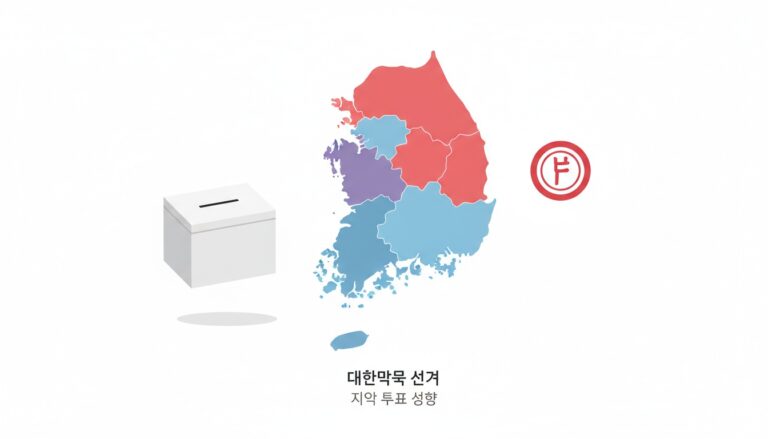
Have you ever watched the news during a Korean election season? You might have noticed the map of South Korea turning into distinct blocks of colors—usually red and blue—divided clearly by geography. For many advanced learners, this is where the “language barrier” turns into a “cultural barrier.”
Synthetic Case Study (Based on common learner questions):
Let’s imagine a learner named “Mark.” He is at a C1 level and can discuss daily life easily. However, while drinking with his Korean colleagues, the topic shifted to the upcoming elections. Someone mentioned “이번에도 몰표가 나오겠지? (Ibeonedo molpyoga naogetji?)” and everyone sighed. Mark knew the word pyo (vote), but had no idea what molpyo meant or why it was a bad thing. He just nodded awkwardly to pretend he understood.
Textbooks teach you “president” (대통령) or “vote” (투표), but they rarely explain the emotional and historical weight of Regionalism (지역 감정). Today, we will dive into the core vocabulary needed to understand Korean political news and debates without getting a headache.
Summary at a Glance
- Today’s Expressions: 지역 감정 (Regional sentiment), 몰표 (Bloc voting), 텃밭 (Stronghold/Political base).
- Safety Level: Caution. These are useful for understanding news or listening to others. Avoid using them to express strong opinions unless you are very close to the listener.
- Difficulty: High (C2). These terms appear frequently in news, editorials, and debates.
Table of Contents
- Deep Dive: 3 Core Political Expressions
- Textbook vs. Real Korean: How to sound like a native analyst
- Unique Analysis: The “Metaphor” Dictionary of Korean Politics
- Role Play: A taxi ride during election season
- Shadowing Challenge: News Anchor Mode
- FAQ: Can I ask Koreans who they voted for?
Today’s Core Expressions Deep Dive
1. 지역 감정 (Jiyeok gamjeong)
- Meaning: Regionalism / Regional animosity / Regional sentiment
- Context: Used when discussing the political divide, especially between the Jeolla (Honam) and Gyeongsang (Yeongnam) provinces.
- Tutor’s Secret Note: This isn’t just “pride” in one’s hometown. In a political context, it refers to the historical conflict and voting patterns based on region. It’s often cited as a problem to be “overcome” (해소해야 할 문제).
- Pronunciation Clinic: [지역 감정] -> [지역 깜정] (Jiyeok kkamjeong). Note the tensing of ‘ㄱ’ to ‘ㄲ’.
- Examples:
- News: 선거철마다 지역 감정이 심해져요.
- (Seon-geo-cheol-ma-da ji-yeok gam-jeong-i sim-hae-jyeo-yo.)
- Regional animosity gets worse every election season.
- Debate: 이제는 지역 감정을 없애야 합니다.
- (I-je-neun ji-yeok gam-jeong-eul eop-sae-ya ham-ni-da.)
- Now we must get rid of regionalism.
- Casual: 아직도 지역 감정 때문에 싸우는 사람들이 있어?
- (A-jik-do ji-yeok gam-jeong ttae-mu-ne ssa-u-neun sa-ram-deu-ri i-sseo?)
- Are there still people fighting because of regional sentiment?
- News: 선거철마다 지역 감정이 심해져요.
2. 몰표 (Molpyo)
- Meaning: Bloc voting / Sweeping votes (Literally: “Mol” from driven/gathered + “Pyo” vote)
- Context: Used when a specific region or group gives 80-90% of their votes to one candidate/party.
- Tutor’s Secret Note: It implies a lack of diversity in political choice. If you hear this word, the speaker is likely analyzing why a candidate won or lost easily in a specific area.
- Pronunciation Clinic: [몰표] -> [몰표] (Mol-pyo). Pronounce the ‘pyo’ clearly with a puff of air.
- Examples:
- Analysis: 특정 후보가 호남에서 몰표를 받았습니다.
- (Teuk-jeong hu-bo-ga Ho-nam-e-seo mol-pyo-reul ba-dat-seum-ni-da.)
- A specific candidate received bloc votes in the Honam region.
- Complaint: 몰표를 주는 현상은 민주주의에 좋지 않아요.
- ( Mol-pyo-reul ju-neun hyeon-sang-eun min-ju-ju-ui-e jo-chi a-na-yo.)
- The phenomenon of bloc voting is not good for democracy.
- News: 이번 선거에서도 몰표가 나올까요?
- (I-beon seon-geo-e-seo-do mol-pyo-ga na-ol-kka-yo?)
- Will there be bloc voting in this election too?
- Analysis: 특정 후보가 호남에서 몰표를 받았습니다.
3. 텃밭 (Teotbat)
- Meaning: Political Stronghold / Base (Literally: Vegetable garden)
- Context: A region where a specific party is almost guaranteed to win. They have “cultivated” this area for a long time.
- Tutor’s Secret Note: You will hear this constantly on TV. “The conservative party’s teotbat” or “The liberal party’s teotbat.”
- Pronunciation Clinic: [텃밭] -> [턷빧] (Teot-ppat). Both ‘t’ sounds stop, and the ‘b’ becomes a tense ‘pp’.
- Examples:
- News: 부산은 전통적으로 보수 정당의 텃밭입니다.
- (Bu-san-eun jeon-tong-jeok-eu-ro bo-su jeong-dang-ui teot-bat-im-ni-da.)
- Busan is traditionally a stronghold for the conservative party.
- Conversation: 이번에는 텃밭에서도 민심이 흔들리고 있어요.
- (I-beon-e-neun teot-bat-e-seo-do min-sim-i heun-deul-li-go i-sseo-yo.)
- Even in the stronghold, public sentiment is wavering this time.
- Casual: 거기는 완전 그 당 텃밭이잖아.
- (Geo-gi-neun wan-jeon geu dang teot-bat-i-ja-na.)
- That place is totally that party’s stronghold.
- News: 부산은 전통적으로 보수 정당의 텃밭입니다.
Mini Quiz (Click to Reveal)
Q. Fill in the blank:
“Why did Candidate Kim win 90% of the votes there?”
“Because that region is his party’s ( ________ ).”
A. 텃밭 (Teotbat)
Textbook vs. Real Korean
| Context | Textbook (Formal/Written) | Real Korean (News/Debate Metaphors) |
|---|---|---|
| Winning heavily | 압도적으로 이기다 (To win overwhelmingly) | 싹쓸이하다 (To sweep/clean up completely) |
| Political Base | 지지 기반 (Support base) | 텃밭 (Vegetable garden) |
| Changing sides | 지지 정당을 바꾸다 (Change support party) | 배신하다 (To betray – emotional nuance) |
When to use what?
* Reports/Essays: Use the Textbook words.
* Watching TV/Talking with friends: You will hear the “Real Korean” metaphors much more.
Unique Analysis: The “Garden” Metaphor in Politics
Korean politics often uses agriculture or nature metaphors. Understanding these will double your listening comprehension.
| Metaphor | Literal Meaning | Political Meaning |
|---|---|---|
| 텃밭 (Teotbat) | Vegetable Garden | A safe region where votes are guaranteed (Stronghold). |
| 철새 (Cheolsae) | Migratory Bird | A politician who frequently switches parties for personal gain. |
| 바람 (Baram) | Wind | A sudden trend or popularity of a specific candidate (e.g., “Changes in the wind”). |
| 북풍 (Bukpung) | North Wind | Political events involving North Korea that influence the election. |
Real Life Scenario: Role Play
Situation: You are taking a taxi in Seoul during the election period. The taxi driver starts talking about politics (a very common situation!). You want to be polite but neutral.
Characters:
* Driver: Older Korean man, interested in politics.
* Passenger (You): Foreigner, listening carefully.
Driver: 에휴, 이번 선거도 지역 감정 때문에 시끄럽네요. 손님 나라는 어때요?
(Ehyu, i-beon seon-geo-do ji-yeok gam-jeong ttae-mu-ne si-kkeu-reom-ne-yo. Son-nim na-ra-neun eo-ttae-yo?)
Sigh, this election is noisy because of regionalism again. How is it in your country?
Passenger: 네, 뉴스 보니까 텃밭이라는 말이 많이 나오더라고요. 저희 나라도 비슷해요.
(Ne, nyu-seu bo-ni-kka teot-bat-i-ra-neun ma-ri ma-ni na-o-deo-ra-go-yo. Jeo-hui na-ra-do bi-seu-tae-yo.)
Yes, I saw on the news that the word “stronghold” comes up a lot. My country is similar.
Driver: 맞아요. 무조건 몰표 주는 건 좀 아니지 않나요?
(Ma-ja-yo. Mu-jo-geon mol-pyo ju-neun geon jom a-ni-ji an-na-yo?)
Right. Isn’t it wrong to just blindly give bloc votes?
Passenger: 그러게요. 정책을 보고 뽑아야 하는데 말이죠.
(Geu-reo-ge-yo. Jeong-chaek-eul bo-go ppo-ba-ya ha-neun-de ma-ri-jyo.)
True. We should vote based on policies.
💡 Culture Tip: Taxi drivers often talk about politics. It is safest to agree generally (“그러게요” – I know, right) rather than arguing or stating a specific party preference.
Shadowing Challenge
Listen to this mock news report and repeat it 3 times. Focus on the intonation of a serious news anchor.
“이번 선거에서도 영남과 호남의 지역 감정은 여전했습니다. 각 당의 텃밭에서 몰표가 쏟아졌습니다.”
[Romanization]
“I-beon seon-geo-e-seo-do Yeong-nam-gwa Ho-nam-ui ji-yeok gam-jeong-eun yeo-jeon-haet-seum-ni-da. Gak dang-ui teot-bat-e-seo mol-pyo-ga sso-da-jyeot-seum-ni-da.”
[Meaning]
“Regional sentiment in Yeongnam and Honam remained the same in this election. Bloc votes poured out from each party’s strongholds.”
Checklist:
* [ ] Pronounce ‘지역 감정’ as [지역 깜정].
* [ ] Pronounce ‘텃밭’ as [턷빧].
* [ ] Maintain a calm, objective tone.
FAQ (Frequently Asked Questions)
Q1: Is it rude to ask a Korean “Who did you vote for?”
A: Yes, generally. Unlike in some Western cultures where political debate is open, in Korea, asking “누구 찍었어요?” (Who did you pick?) can be sensitive, especially with colleagues or older people. It’s better to discuss the situation (news), not personal choices.
Q2: What are Yeongnam and Honam?
A: These are historical names for regions. Roughly speaking:
* Yeongnam (영남): Gyeongsang-do provinces (Busan, Daegu, Ulsan, etc.) – Often associated with conservative parties.
* Honam (호남): Jeolla-do provinces (Gwangju, Jeonju, etc.) – Often associated with liberal/democratic parties.
Knowing these two names is essential for understanding 지역 감정 (regionalism).
Wrap-up & Action Item
Today’s Summary:
Korean politics has a unique vocabulary based on history. Remember 지역 감정 (Regionalism), 몰표 (Bloc voting), and 텃밭 (Stronghold) to understand the news.
Today’s Mission:
Go to YouTube and search for “한국 선거 개표 방송” (Korean election counting broadcast). Try to find a map where the country is divided by color and see if you can hear the word “텃밭” or “우세” (advantage).
Question for you:
Does your country also have regions that always vote for the same party? How do you call that in your language? Let me know in the comments!
Final Quiz
- Which word refers to a region where a political party has very strong, guaranteed support?
a) 화단 (Flowerbed)
b) 텃밭 (Vegetable garden/Stronghold)
c) 들판 (Field) -
How do you pronounce ‘지역 감정’?
a) [지여 감정]
b) [지역 감정]
c) [지역 깜정] -
Fill in the blank: “Giving all votes to one candidate is called ______.”
(Hint: M______)
Answers: 1. (b), 2. (c), 3. 몰표 (Molpyo)
Frequently Asked Questions (FAQ)
Q: What does "지역 감정 (Jiyeok gamjeong)" mean in Korean and how do you pronounce it?
A: In Korean, "지역 감정 (Jiyeok gamjeong)" is pronounced [Clinic: [지역 감정] and means: Regionalism / Regional animosity / Regional sentiment
Q: What does "몰표 (Molpyo)" mean in Korean and how do you pronounce it?
A: In Korean, "몰표 (Molpyo)" is pronounced [Clinic: [몰표] and means: Bloc voting / Sweeping votes (Literally: "Mol" from driven/gathered + "Pyo" vote)
Q: What does "텃밭 (Teotbat)" mean in Korean and how do you pronounce it?
A: In Korean, "텃밭 (Teotbat)" is pronounced [Clinic: [텃밭] and means: Political Stronghold / Base (Literally: Vegetable garden)







