

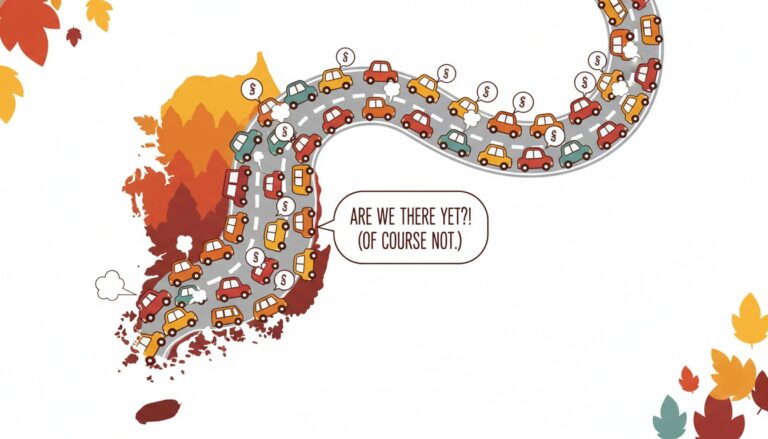
Surviving the Korean “Traffic War”: Essential Chuseok Phrases
Introduction
Hello, this is Daily Hangul!
Have you ever looked at a map of Seoul during Chuseok (Korean Thanksgiving) and wondered why the usually busy streets are empty, while the highways out of the city look like red parking lots?
Here is a synthetic example based on many learners’ experiences:
“Sarah,” a generic English teacher in Seoul, tried to book a KTX train to Busan two weeks before Chuseok, only to find everything grayed out (Sold Out). She decided to take a bus instead, but a 4-hour trip turned into 9 hours. She wanted to text her Korean friend about this frustration but only knew the word “busy.”
In Korea, Chuseok isn’t just about food; it’s about the “Traffic War” (귀성길 전쟁). To survive this season, you need more than just textbook grammar. You need the words to express frustration, urgency, and relief.
At a Glance: Today’s Summary
- Key Expressions: Phrases for traffic jams, sold-out tickets, and expressing empathy for hardships.
- When to use: During major holidays (Chuseok, Seollal) or Friday evenings.
- Level: B1 (Intermediate). These phrases help you connect emotionally with Koreans who are exhausted from traveling.
Table of Contents
- Today’s Deep Dive: 3 Key Expressions
- Textbook vs. Real Korean
- Cultural Analysis: The “Gosaeng” Empathy
- Real-Life Role Play: Back at the Office
- Shadowing Challenge
- FAQ
- Final Quiz
Today’s Deep Dive (3 Core Expressions)
1. 차가 막혀요 (The Traffic is Blocked)
- Pronunciation: [Chaga mak-hyeo-yo]
- Meaning: The traffic is jammed / The car is blocked.
- Usage: Suitable for friends, colleagues, and taxi drivers. (Standard Polite)
Tutor’s Secret Note:
Koreans often emphasize this by elongating the sound: “Aaaaah, chaga neomu makhyeoyo” (Ah, it’s blocked TOO much). Using just the calm statement might not convey your frustration enough!
Pronunciation Clinic:
* Linking: When saying 막혀요, the ㄱ (k) and ㅎ (h) combine to make a strong ㅋ (k) sound. Say it like [마켜요 (ma-kyeo-yo)].
Examples:
* (Travel) 고속도로에서 차가 너무 막혀요. (Gosokdoro-eseo chaga neomu makhyeoyo.)
* Traffic is blocked too much on the highway.
* (Business) 차가 막혀서 조금 늦을 것 같아요. (Chaga makhyeoseo jogeum neujeul geot gatayo.)
* I think I’ll be a little late because traffic is blocked.
* (Casual) 명절이라 차가 진짜 막히네. (Myeongjeorira chaga jinjja makhine.)
* Traffic is really blocked since it’s a holiday.
Alternatives:
* Formal: 교통이 혼잡합니다. (Gyotong-i honjap-hamnida.)
* Slang/Casual: 길바닥이 주차장이야. (Gilbadagi juchajang-iya. – The road is a parking lot.)
Mini Quiz (Click to see)
Q. Complete the sentence: “Sorry I’m late. ____________.”
A. 차가 막혀서요 (Because traffic is blocked).
2. 매진됐어요 (It’s Sold Out)
- Pronunciation: [Mae-jin-dwaet-seo-yo]
- Meaning: (Tickets/Seats) are sold out.
- Usage: When booking trains (KTX), buses, or movie tickets.
Tutor’s Secret Note:
In Chuseok season, seeing the word 매진 (Sold Out) is a national trauma. If you say “Pyo-ga maejin-dwaesseoyo” with a sad face, every Korean will instantly sympathize with you.
Examples:
* (Travel) 부산행 기차표가 다 매진됐어요. (Busanhaeng gichapyoga da maejindwaesseoyo.)
* All train tickets to Busan are sold out.
* (Daily) 추석 때는 표 구하기가 하늘의 별 따기예요. (Chuseok ttaeneun pyo guhagiga haneului byeol ttagiyeyo.)
* Getting a ticket during Chuseok is like plucking a star from the sky (idiom).
* (Inquiry) 혹시 취소 표 있어요? 매진인가요? (Hoksi chwiso pyo isseoyo? Maejin-ingayo?)
* Do you happen to have any canceled tickets? Is it sold out?
3. 고생 많으셨어요 (You Suffered/Worked Hard)
- Pronunciation: [Go-saeng ma-neu-syeot-seo-yo]
- Meaning: You went through a lot of trouble / Thank you for your hard effort.
- Usage: The Magic Phrase. Use this when someone returns from a long trip, finishes a big project, or cooked for the holidays.
Tutor’s Secret Note:
This is untranslatable in Western culture. It acknowledges the other person’s physical and mental hardship. Saying this to a coworker who drove 8 hours for Chuseok builds instant rapport.
Examples:
* (Greeting) 운전하느라 고생 많으셨어요. (Unjeonhaneura gosaeng maneusyeosseoyo.)
* You went through a lot of trouble driving.
* (Family) 음식 준비하느라 고생했어. (Eumsik junbihaneura gosaenghaesseo.)
* You worked hard preparing the food.
* (Business) 연휴 동안 고생 많으셨습니다. (Yeonhyu dongan gosaeng maneusyeotseumnida.)
* You worked hard/suffered during the holiday break.
Textbook vs. Real Korean
| Context | Textbook Korean (Formal) | Real Korean (Native Vibe) |
|---|---|---|
| Traffic Jam | 교통이 복잡해요. (Traffic is complicated.) |
차가 꼼짝도 안 해요. (The car won’t budge at all.) |
| Long Drive | 운전을 오래 했어요. (I drove for a long time.) |
운전하다가 토할 뻔했어요. (I almost threw up from driving so long.) |
Checklist: When to use what?
* News/Announcement: Use Textbook Korean.
* Complaining to friends: Use Real Korean.
Tutor’s Analysis: The “Empathy” Thermometer
How should you react when a Korean friend says, “I drove 7 hours yesterday”? Your reaction determines the distance between you.
| Level | Expression | Vibe | Translation |
|---|---|---|---|
| Lv. 1 (Cold) | 아, 진짜요? (A, jinjja-yo?) | Generic | Oh, really? |
| Lv. 3 (Warm) | 피곤하겠어요. (Pigonhagesseoyo.) | Sympathetic | You must be tired. |
| Lv. 5 (Best) | 아이고, 고생 많으셨어요! (Aigo, gosaeng maneusyeosseoyo!) | Korean Soul | Oh my, you truly suffered/worked hard! |
Tip: Add “Aigo” (Oh my) at the beginning to sound 200% more native.
Real-Life Scenario: Role Play
Setting: Monday morning at a Gangnam office, right after Chuseok break.
Characters: Minji (Korean Coworker), Alex (Foreign Employee).
Minji: 알렉스 씨, 추석 잘 보냈어요?
(Alex-ssi, Chuseok jal bonaesseoyo?)
Alex, did you have a good Chuseok?
Alex: 네! 근데 부산 다녀오느라 고생 좀 했어요.
(Ne! Geunde Busan danyeooneura gosaeng jom haesseoyo.)
Yes! But I suffered a bit coming back from Busan.
Minji: 아, 기차표 매진돼서 버스 탔다고 했죠?
(A, gichapyo maejindwaeseo beoseu tatdago haetjyo?)
Ah, you said you took the bus because train tickets were sold out, right?
Alex: 맞아요. 고속도로에서 차가 너무 막혀서 7시간 걸렸어요.
(Majayo. Gosokdoroeseo chaga neomu makhyeoseo 7-sigan geollyeosseoyo.)
Right. It took 7 hours because traffic was blocked on the highway.
Minji: 아이고… 진짜 고생 많으셨네요. 오늘 일찍 들어가세요.
(Aigo… jinjja gosaeng maneusyeotneyo. Oneul iljjik deureogaseyo.)
Oh my… you really went through a lot. Please go home early today.
Culture Tip:
In Korea, sharing stories of “how long the drive took” is a common post-holiday icebreaker. It’s a bonding moment over shared suffering!
Shadowing Challenge (Speaking Practice)
Script (Repeat 3 times):
“차가 너무 막혀서 꼼짝도 못 했어요.”
(Traffic was so blocked, I couldn’t move at all.)
Phonetics: [Cha-ga neo-mu ma-kyeo-seo / kkom-jjak-do mot hae-sseo-yo]
- [ ] Attempt 1 (Slow)
- [ ] Attempt 2 (Normal Speed)
- [ ] Attempt 3 (Frustrated Tone – Like a native!)
FAQ: Frequently Asked Questions
Q1. What is the difference between Gwiseong (귀성) and Gwigyeong (귀경)?
* Gwiseong (귀성): Going down to your hometown (leaving the city).
* Gwigyeong (귀경): Coming back up to Seoul/City.
* Example: “귀경길 정체” means traffic jam on the way back to Seoul.
Q2. Can I say “Gosaeng-haesseo” (You suffered) to my boss?
* Careful! “Gosaeng-haesseo” (Informal) is rude to superiors. To a boss, use “Gosaeng maneusyeosseumnida” (Formal) or simply “Sugo-hasyeosseumnida” (Thank you for your effort), though “Sugo” is also debated. The safest for a very high boss is just greeting them politely or saying “Pyeonhage danyeoosyeosseoyo?” (Did you have a comfortable trip?).
Conclusion & Action Item
Summary: Today we learned how to complain about traffic (차가 막혀요), explain ticket situations (매진됐어요), and show empathy (고생 많으셨어요).
Today’s Mission:
Next time you see a red line on Google Maps or Naver Map, point at it and say out loud: “와, 차 진짜 막히네!” (Wow, traffic is really blocked!).
Tell me in the comments:
What is the longest time you have ever spent in a car? Tell me using the phrase “___ hours 걸렸어요” (It took ___ hours)!
Final Quiz
- Which word describes a “Sold Out” ticket?
A) 할인 (Harin)
B) 매진 (Maejin)
C) 예약 (Yeyak) -
How do you politley tell a coworker “You went through a lot of trouble”?
A) 고생 많으셨어요 (Gosaeng maneusyeosseoyo)
B) 너 참 불쌍하다 (Neo cham bulssanghada)
C) 운전 잘 하세요 (Unjeon jal haseyo) -
Fill in the blank:
“Traffic is blocked” = 차가 _______.
Click for Answers
1. B (매진)
2. A (고생 많으셨어요)
3. 막혀요 (Makhyeoyo)
Frequently Asked Questions (FAQ)
Q: What does "차가 막혀요 (The Traffic is Blocked)" mean in Korean and how do you pronounce it?
A: In Korean, "차가 막혀요 (The Traffic is Blocked)" is pronounced [Chaga mak-hyeo-yo] and means: The traffic is jammed / The car is blocked.
Q: What does "매진됐어요 (It's Sold Out)" mean in Korean and how do you pronounce it?
A: In Korean, "매진됐어요 (It's Sold Out)" is pronounced [Mae-jin-dwaet-seo-yo] and means: (Tickets/Seats) are sold out.
Q: What does "고생 많으셨어요 (You Suffered/Worked Hard)" mean in Korean and how do you pronounce it?
A: In Korean, "고생 많으셨어요 (You Suffered/Worked Hard)" is pronounced [Go-saeng ma-neu-syeot-seo-yo] and means: You went through a lot of trouble / Thank you for your hard effort.







