

Korean Funerals: Do I Really Have to Stay Up All Night? (밤샘 문화)
Introduction
Hello, this is Daily Hangul!
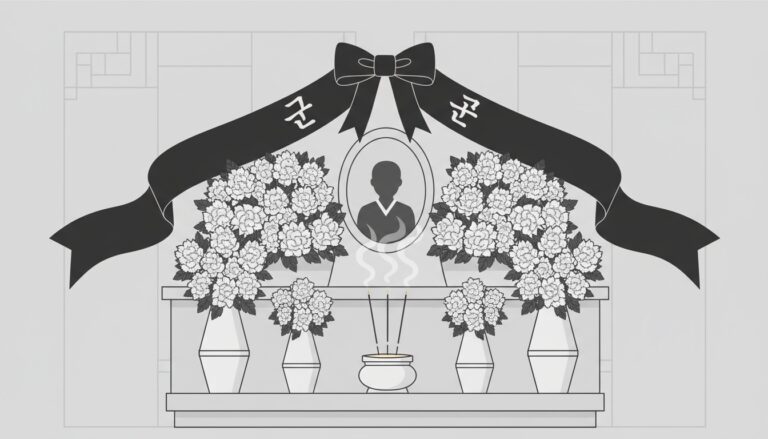
If you have lived in Korea for a while, you might eventually be invited to a funeral. This can be one of the most culturally shocking experiences for foreigners. Unlike many Western cultures where a service lasts a few hours, Korean funerals typically last for three days (3일장, Sam-il-jang).
Synthetic Case Study (Based on common learner questions):
Many of our students ask, “My Korean coworker’s father passed away. Do I need to bring a sleeping bag? Do I have to sleep there?”
This confusion comes from the phrase “밤을 새우다 (Bam-eul sae-u-da – staying up all night).” In the past, people stayed awake all night to guard the deceased and comfort the family. But in modern Korea, things have changed. Today, we will decode the “Bam Sae-u-gi (Staying up all night)” culture so you can visit a funeral home without panic.
At a Glance: Summary
- Today’s Expressions: 밤을 새우다 (To stay up all night), 자리를 지키다 (To keep one’s place/stay), 먼저 일어나겠습니다 (I will leave first).
- Safe Usage: These phrases are crucial for understanding funeral timing and leaving politely.
- Level: B1 (Intermediate) – Essential for understanding deep Korean culture and manners.
Table of Contents
- Deep Dive: Key Expressions
- Textbook vs. Real Korean
- Analysis: The “Stay Duration” Thermometer
- Real Life Role Play
- Shadowing Challenge
- FAQ
Deep Dive: Key Expressions
1. 밤을 새우다 (Bam-eul sae-u-da)
- Meaning: To stay up all night (without sleeping).
- Usage & Register: Used in any context (studying, working, partying), but at a funeral, it implies staying with the chief mourner (Sangju) until morning.
- Tutor’s Secret Note:
- Grammar tip: 밤이 새다 (Bami saeda) means “the night passes” (intransitive). 밤을 새우다 (Bameul saeuda) means “I make the night pass/I stay up” (transitive).
- Warning: Don’t tell the grieving family “밤 새우세요!” (Please stay up all night!). Instead, say “피곤하실 텐데 좀 쉬세요” (You must be tired, please rest a bit).
- Pronunciation Clinic:
- 새우다 [Sae-u-da]: Make sure to pronounce the three syllables distinctively. Do not slur it into “Saeda.”
- Examples:
- 어제 장례식장에서 밤을 새웠어요.
- (Eoje jangnyesikjang-eseo bam-eul sae-wos-seo-yo.)
- I stayed up all night at the funeral home yesterday.
- 밤 새우지 말고 좀 주무세요.
- (Bam sae-u-ji mal-go jom ju-mu-se-yo.)
- Don’t stay up all night; please get some sleep.
- 시험 공부하느라 밤을 꼬박 새웠어.
- (Siheom gongbu-haneura bam-eul kkobak sae-wos-seo.)
- I stayed up the entire night studying for the exam.
- 어제 장례식장에서 밤을 새웠어요.
2. 자리를 지키다 (Jari-reul jikida)
- Meaning: Literally “to guard the seat/place.” Contextually, “to stay present” or “to keep company.”
- Usage & Register: A very respectful way to describe staying at a funeral to support the family.
- Tutor’s Secret Note: The “seat” here isn’t just a chair; it represents your presence and loyalty. Close friends often say, “I will guard the place” to imply they won’t leave early.
- Pronunciation Clinic:
- 지키다 [Ji-ki-da]: The ‘k’ sound is aspirated. It sounds sharp.
- Examples:
- 제가 끝까지 자리를 지킬게요.
- (Jega kkeut-kkaji jari-reul jikil-ge-yo.)
- I will stay (guard the place) until the end.
- 친구로서 자리를 지켜주고 싶어요.
- (Chingu-roseo jari-reul jikyeo-ju-go sipeo-yo.)
- As a friend, I want to stay and keep them company.
- 바쁘시면 자리 안 지키셔도 돼요.
- (Bappeusimyeon jari an jiki-syeodo dwaeyo.)
- If you are busy, you don’t have to stay.
- 제가 끝까지 자리를 지킬게요.
3. 먼저 일어나겠습니다 (Meonjeo ireonagess-seumnida)
- Meaning: I will get up (leave) first.
- Usage & Register: Formal (Ha-sip-sio-che). This is the standard etiquette when leaving a funeral (or a formal gathering) while others are still staying.
- Tutor’s Secret Note: At a funeral, we never say “안녕히 계세요 (Goodbye / Stay well).” Why? Because the situation is not “well” or happy. We just say we are “getting up” and bowing out.
- Pronunciation Clinic:
- 겠 [Get]: Strong ‘ss’ sound at the end.
- Examples:
- 이만 먼저 일어나겠습니다.
- (Iman meonjeo ireonagess-seumnida.)
- I will be leaving now.
- 내일 출근 때문에 먼저 일어나야 할 것 같아요.
- (Naeil chulgeun ttaemune meonjeo ireonaya hal geot gatayo.)
- I think I have to leave first because of work tomorrow.
- 먼저 일어날게. (To a friend)
- (Meonjeo ireonal-ge.)
- I’m taking off first.
- 이만 먼저 일어나겠습니다.
Alternative Expressions
- More Formal: 실례하겠습니다 (Sillye-hagess-seumnida) – Excuse me (I am leaving).
- More Casual: 나 가볼게 (Na ga-bol-ge) – I’m going to head out (Only to close friends).
Mini Quiz (Click to see answer)
Fill in the blank: To tell someone you will leave the funeral first, you say “_______ 일어나겠습니다.”
Answer: 먼저 (Meonjeo)
Textbook vs. Real Korean
| Context | Textbook / Standard | Real Korean (Survival) | Meaning |
|---|---|---|---|
| Saying Goodbye | 안녕히 계세요. (Annyeonghi gyeseyo) | (Silent Bow) or 먼저 일어나겠습니다. | Goodbye vs. I’ll leave first. |
| Staying Time | 밤을 새우다 (Bam-eul sae-u-da) | 밥만 먹고 가다 (Bap-man meok-go gada) | Staying all night vs. Just eating and leaving. |
Tutor’s Checklist:
* Do I say Goodbye? No. Just bow silently to the chief mourner and leave.
* Do I smile? No. Keep a solemn face.
Analysis: The “Stay Duration” Thermometer
How long should you actually stay at a Korean funeral? It depends on your relationship (Nunchi game!).
| Relationship Level | Suggested Time | Action |
|---|---|---|
| Level 5: Immediate Family | 3 Days | Stay at the funeral home 24/7. Sleep in the family room. |
| Level 4: Best Friend | 1 Night | Stay up usually on the 2nd night to drink soju with the friend (Sangju). |
| Level 3: Close Coworker | 2-3 Hours | Bow, eat a meal (Yukgaejang), chat for a bit, then leave. |
| Level 2: Business Partner | 30 Mins | Bow, hand over envelope (Bu-jo-geum), drink a cup of coffee/tea, leave. |
| Level 1: Acquaintance | 10 Mins | Bow, hand over envelope, leave immediately. |
Real Life Role Play
Scenario: Mark (Foreigner) visits the funeral of his coworker Min-su’s father. He is unsure when to leave.
Mark: (Whispering) 민수 씨, 정말 유감이에요.
(Min-su ssi, jeongmal yugam-ieyo.)
Min-su, I am truly sorry for your loss.
Min-su: 와줘서 고마워요, 마크 씨.
(Wajwoseo gomawoyo, Mark ssi.)
Thank you for coming, Mark.
Mark: 저… 제가 오늘 밤을 새워야 하나요?
(Jeo… Jega oneul bam-eul sae-woya hanayo?)
Um… Do I have to stay up all night today?
Min-su: (Slight smile) 아니에요. 식사하시고 가셔도 돼요.
(Anieyo. Siksahasigo gasyeodo dwaeyo.)
No, no. You can leave after having a meal.
Mark: 아, 다행이네요. 그럼 밥 먹고 먼저 일어나겠습니다.
(Ah, dahaeng-ineyo. Geureom bap meok-go meonjeo ireonagess-seumnida.)
Ah, that’s a relief. Then I will leave first after eating.
Cultural Tip:
If you are just a coworker, the family prefers you to leave after eating so they can rest or greet other guests. Don’t feel guilty about leaving!
Shadowing Challenge
Listen and repeat this 3 times. This is the magic phrase to leave a funeral politely.
“바쁘실 텐데 저는 이만 먼저 일어나겠습니다.”
(Bappeusil tende jeoneun iman meonjeo ireonagess-seumnida.)
“You must be busy, so I will get up (leave) first now.”
- [ ] 1st Try (Slow)
- [ ] 2nd Try (Normal Speed)
- [ ] 3rd Try (Solemn Tone)
FAQ (Frequently Asked Questions)
Q1: What should I wear?
A: Black suit is standard. If not, dark colors (navy, dark gray) are acceptable. Avoid bright colors, shorts, or slippers.
* Example: “검은색 정장이 없는데 어떡하죠?” (I don’t have a black suit, what should I do? – Dark casual clothes are okay.)
Q2: How much money (Condolence Money) should I prepare?
A: It depends on the relationship, but usually 30,000 KRW, 50,000 KRW, or 100,000 KRW. Odd numbers (3, 5) are considered lucky, and 10 is considered a full number. 50,000 KRW is the most common for coworkers.
Wrap-up & Mission
Today we learned that “Bam Sae-u-gi” is for close family and friends, and it is perfectly polite for you to say “Meonjeo ireonagess-seumnida” and leave.
Today’s Mission:
Next time you watch a K-Drama with a funeral scene (like My Mister or Reply series), look for the moment someone tries to leave. Do they say “Annyeonghi gyeseyo”? Or do they just bow? Observe their body language!
Comment Question:
Does your country have a culture of staying overnight at a funeral? Tell me in the comments!
Final Quiz
- Which phrase is incorrect to say when leaving a funeral?
A) 먼저 일어나겠습니다. (I’ll leave first.)
B) 안녕히 계세요. (Goodbye/Stay well.)
C) (Silent Bow) -
What does “자리를 지키다 (Jari-reul jikida)” imply at a funeral?
A) Guarding a reserved chair.
B) Staying with the family to show support.
C) Sleeping in the car. -
Fill in the blank: To stay up all night is “밤을 _____.”
Answers:
1. B (We do not wish “wellness” or say bright goodbyes at a funeral.)
2. B
3. 새우다 (sae-u-da)
Frequently Asked Questions (FAQ)
Q: What does "밤을 새우다 (Bam-eul sae-u-da)" mean in Korean and how do you pronounce it?
A: In Korean, "밤을 새우다 (Bam-eul sae-u-da)" is pronounced [see lesson guide] and means: To stay up all night (without sleeping).
Q: What does "자리를 지키다 (Jari-reul jikida)" mean in Korean and how do you pronounce it?
A: In Korean, "자리를 지키다 (Jari-reul jikida)" is pronounced [Clinic:] and means: Literally "to guard the seat/place." Contextually, "to stay present" or "to keep company."
Q: What does "먼저 일어나겠습니다 (Meonjeo ireonagess-seumnida)" mean in Korean and how do you pronounce it?
A: In Korean, "먼저 일어나겠습니다 (Meonjeo ireonagess-seumnida)" is pronounced [Clinic:] and means: I will get up (leave) first.







