

Hello, this is Daily Hangul!
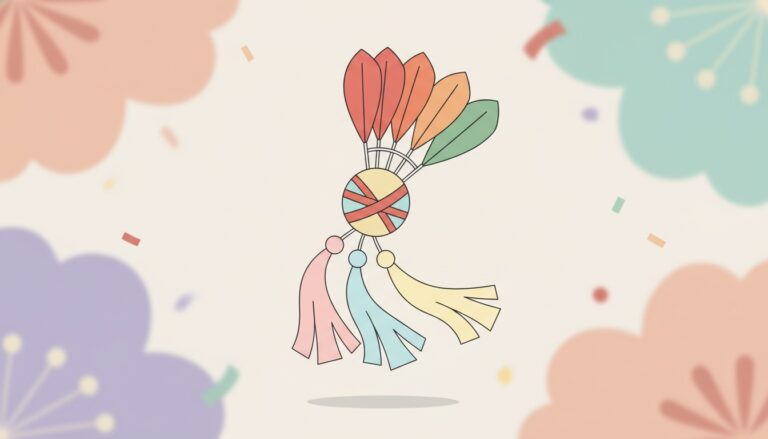
Have you ever seen people in Korean variety shows standing in a circle, frantically kicking a small object with tassels, while everyone else screams and counts? That is Jegichagi (제기차기), a traditional Korean game similar to Hacky Sack.
Today’s lesson is based on a Synthetic Case (combined from multiple learners). Many of our students visit Korean Folk Villages or attend Seollal (Lunar New Year) events and want to participate in these games. However, they often freeze up not because they can’t kick, but because they don’t know how to count naturally or how to react when someone misses.
Textbooks teach you numbers, but they don’t teach you the rhythm of the game. Let’s learn the real sounds of a Korean holiday!
Summary at a Glance
- Today’s Expressions: Counting native numbers, Reacting to failure, Cheering.
- Safe Zone: Casual gatherings, festivals, cultural events.
- Level: A2 (Elementary) – The grammar is simple, but the speed and native numbering require practice.
Table of Contents
- Deep Dive: Essential Jegichagi Expressions
- Textbook vs. Real Korean
- Analysis: The “Reaction” Thermometer
- Real-Life Role Play: At the Folk Village
- Shadowing Challenge
- FAQ
- Final Quiz
Deep Dive: Essential Expressions
1. 하나, 둘, 셋… (Hana, Dul, Set…)
- Meaning: One, Two, Three… (Counting)
- Usage: Used by the player or the spectators to count the kicks.
- Tutor’s Secret Note: In games involving physical items or age, we almost always use Native Korean Numbers, not Sino-Korean (Il, I, Sam). If you count “Il, I, Sam” while kicking, it sounds very awkward, like you are doing a math problem!
- Pronunciation Clinic: Koreans often shorten these when counting fast. “Hana” sounds like “Ha-na,” but “Net” (4) often sounds sharp like “Det” due to nasalization if preceded by a sound, or just a short “Net”.
- Examples:
- (Counting kicks) 하나, 둘, 셋, 넷! (Hana, dul, set, net!) – One, two, three, four!
- 열 개 도전! (Yeol gae dojeon!) – Challenge for ten (kicks)!
- 다섯 개 했어요. (Daseot gae haesseoyo.) – I did five.
Mini Quiz: Which number system is used for Jegichagi?
Answer: Native Korean Numbers (Hana, Dul…)
2. 아깝다! (Akkapda!)
- Meaning: So close! / What a pity! / That was close!
- Usage: Exclaimed immediately when the player drops the Jegi (shuttlecock) or misses a kick.
- Tutor’s Secret Note: Literally, it means “wasteful.” But in games, it captures the feeling of “Oh no, you almost had a high score!” It shows you are engaged and rooting for them.
- Warning: Don’t say this if someone falls and gets hurt. Only use it for the score or the game.
- Pronunciation Clinic: The double consonant ㄲ (kk) needs strong tension in your throat. It’s not “A-kap-da,” it’s “A-KKAP-da.”
- Examples:
- 아, 아깝다! (Ah, akkapda!) – Ah, so close!
- 진짜 아까워요. (Jinjja akkawoyo.) – That’s really a pity (polite).
- 거의 다 했는데 아깝다. (Geoui da haenneunde akkapda.) – You were almost there, what a pity.
3. 잘한다! (Jarhanda!)
- Meaning: Good job! / You’re doing great! / Go go!
- Usage: Cheering while someone is successfully kicking without dropping it.
- Tutor’s Secret Note: Even though it’s technically casual form, we often yell this even to strangers in a game setting because it’s an exclamation of excitement.
- Examples:
- 오, 잘한다! (O, jarhanda!) – Oh, you’re good!
- 우와, 진짜 잘하시네요. (Uwa, jinjja jalhasineyo.) – Wow, you are really good (polite).
- 계속해! 잘한다! (Gyesokhae! Jarhanda!) – Keep going! You’re doing great!
Textbook vs. Real Korean
| Context | Textbook Korean (Book) | Real Korean (Street/Variety Show) |
|---|---|---|
| Starting | 시작합시다. (Sijakhapsida.) | 자, 간다! (Ja, ganda!) – Okay, here goes! |
| Counting | 일 회, 이 회… (Il hoe, i hoe…) | 하나! 둘! (Hana! Dul!) |
| Missing | 실패했습니다. (Silpaehaetseumnida.) | 아이고! / 까비! (Aigo! / Kkabi!) – Oh no! / Short for Akkapda (Slang) |
Situation Checklist:
* Formal Event: Use “준비 되셨나요?” (Are you ready?)
* With Friends: Use “까비!” (So close! – Slang)
Analysis: The Cheering Thermometer
How excited should you sound? Let’s look at the nuance of reactions.
| Temperature | Expression (Korean/Romanized) | Nuance & Atmosphere |
|---|---|---|
| 100°C (Hot) | 대박! 선수야? (Daebak! Seonsuya?) | “Jackpot! Are you a pro athlete?” (Huge compliment) |
| 70°C (Warm) | 오~ 잘한다! (O~ Jarhanda!) | Genuine encouragement. Standard cheering. |
| 30°C (Cool) | 괜찮아요. (Gwaenchanhayo.) | “It’s okay.” Used when someone fails immediately. Comforting. |
| -10°C (Cold) | 발이 안 보여요. (Bari an boyeoyo.) | “I can’t see your feet (you are too fast).” – Can be a joke or high praise. |
Real-Life Role Play
Scenario: A foreign tourist (Alex) is trying Jegichagi at a cultural booth in Seoul. A Korean staff member (Minji) helps him.
Minji: 한번 해보세요! 쉬워요. (Hanbeon haeboseyo! Swiwoyo.)
Try it once! It’s easy.
Alex: 네, 도전해 볼게요. (Ne, dojeonhae bolgeyo.)
Okay, I’ll try the challenge.
(Alex kicks: Kick… Kick… Drop!)
Minji: 하나, 둘… 아, 아깝다! (Hana, dul… Ah, akkapda!)
One, two… Ah, so close!
Alex: 어렵네요. 다시 해도 돼요? (Eoryeomneyo. Dasi haedo dwaeyo?)
It’s difficult. Can I do it again?
Minji: 물론이죠! 자, 파이팅! (Mullonijyo! Ja, paiting!)
Of course! Okay, fighting (good luck)!
(Alex kicks: Kick, Kick, Kick, Kick!)
Minji: 셋, 넷! 오, 잘한다! (Set, net! O, jarhanda!)
Three, four! Oh, you’re doing great!
Shadowing & Speaking Challenge
Script: (Imagine you missed the kick after 3 tries)
“하나, 둘, 셋… 으악! 아깝다! 한 번 더 할게요.”
(Hana, dul, set… Eu-ak! Akkapda! Han beon deo halgeyo.)
Checklist:
* [ ] Did you use native numbers (Hana, Dul…)?
* [ ] Did you stress the KKAP in Akkapda?
* [ ] Did you sound disappointed but having fun on “Eu-ak”?
FAQ (Frequently Asked Questions)
Q1: Can I use “Il, I, Sam” (Sino-Korean) to count kicks?
* A: It is very unnatural. For counting physical objects one by one in games, we always use Native Korean numbers (Hana, Dul, Set).
Q2: What if I don’t know how to play?
* A: You can say: “어떻게 하는 거예요?” (Eotteoke haneun geoyeyo? – How do you do this?).
Q3: Is there a slang word for “Akkapda”?
* A: Yes! Young people often say “까비” (Kkabi). It comes from A-kkap-i. Example: “아, 까비!” (Ah, so close!).
Conclusion & Action Item
Today we learned how to count and cheer during Jegichagi. Remember, the energy (gi) is more important than the grammar!
Today’s Mission:
Search for “제기차기” on YouTube or Instagram. Listen to people counting. Do they say “Il, I, Sam” or “Hana, Dul, Set”? Try to catch the word “아깝다”!
Tell me in the comments:
Have you ever played a traditional game in Korea? How many kicks can you do? (I can only do 3… 😅)
Final Quiz
- Which counting system is used for Jegichagi?
a) Il, I, Sam
b) Hana, Dul, Set
c) First, Second, Third -
What do you say when someone almost succeeds but fails?
a) 잘한다! (Jarhanda!)
b) 아깝다! (Akkapda!)
c) 안녕하세요! (Annyeonghaseyo!) -
Fill in the blank: “One more time!” = ______ 더!
(Answer: 한 번 / Han beon)
Click to see answers
1. b
2. b
3. 한 번 (Han beon)
Frequently Asked Questions (FAQ)
Q: What does "하나, 둘, 셋... (Hana, Dul, Set...)" mean in Korean and how do you pronounce it?
A: In Korean, "하나, 둘, 셋... (Hana, Dul, Set...)" is pronounced [Clinic: Koreans often shorten these when counting fast. "Hana" sounds like "Ha-na," but "Net" (4] and means: One, Two, Three... (Counting)
Q: What does "아깝다! (Akkapda!)" mean in Korean and how do you pronounce it?
A: In Korean, "아깝다! (Akkapda!)" is pronounced [Clinic: The double consonant ㄲ (kk] and means: So close! / What a pity! / That was close!
Q: What does "잘한다! (Jarhanda!)" mean in Korean and how do you pronounce it?
A: In Korean, "잘한다! (Jarhanda!)" is pronounced [see lesson guide] and means: Good job! / You're doing great! / Go go!







