

Introduction
Hello, this is Daily Hangul! 🧖♂️
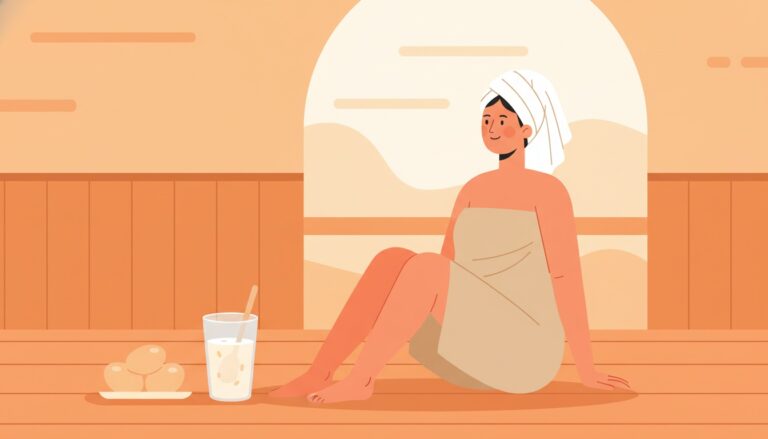
Imagine you finally enter a Korean Jjimjilbang (Sauna) after a long flight to Seoul. You cautiously step into a hot tub that looks boiling. Next to you, an older Korean gentleman sighs deeply, “Ah~ Siwonhada!” (Ah, it’s cool!). You assume the water isn’t hot, so you jump in—only to realize it’s burning hot! 🔥
Note on the episode: This is a synthesized case based on common patterns experienced by many foreign learners. The confusion between “hot temperature” and the expression “cool/refreshing” is a classic rite of passage in Korea.
Textbooks teach you temperature words, but they don’t teach you the feeling of relief. Today, we will learn how to express relief and relax like a local in a Korean sauna.
At a Glance
- Today’s Expressions: Siwonhada (It’s refreshing), Piroga pullida (Fatigue is relieved), Ttam ppaeda (To sweat it out).
- Safe Zone: Casual conversations, Jjimjilbang, talking to oneself.
- Level: A2 (Beginner-Intermediate). Useful because standard “I am happy” phrases don’t capture the physical sensation of a spa.
Table of Contents
- Today’s Key Expressions Deep Dive
- Textbook vs. Real Korean
- Analysis: The “Siwonhada” Paradox
- Real-Life Role Play: Ordering Snacks
- Shadowing Challenge
- FAQ
- Final Quiz
Today’s Key Expressions Deep Dive
1. 시원하다 (Siwonhada)
- Meaning: It’s refreshing / It feels relieving / It’s cool (weather/temp)
- Usage & Register:
- To whom: Mostly to oneself (exclamation) or friends.
- Tone: Siwonhaeyo (Polite) / Siwonhada (To oneself).
- Tutor’s Secret Note:
- Literally, this means “cool” (like a breeze). But in a hot bath or massage, it means “my stiff muscles are relaxing.” It describes the result (relief), not the temperature.
- Warning: If you touch a friend’s cold drink and say “Ah, siwonhada,” it means cold. Context is king!
- Pronunciation Clinic:
- Linking: [Si-wo-na-da] (The ‘h’ sound often weakens).
- Examples:
- (Massage) 어깨가 시원해요. / Eokkaega siwonhaeyo. (My shoulders feel relieved/refreshing.)
- (Hot Soup) 국물이 시원하다! / Gungmuri siwonhada! (The broth is refreshing! [even if hot])
- (Weather) 바람이 시원해요. / Barami siwonhaeyo. (The wind is cool.)
- Alternatives:
- 개운하다 (Gaeunhada) – Feeling light and fresh (after a bath).
- 좋다 (Jota) – Just “It’s good.”
- Mini Quiz:
-
After a hot bath, you say: “Ah, truly ______!”
Answer: 시원하다 (Siwonhada)
-
2. 피로가 풀리다 (Piroga pullida)
- Meaning: Fatigue is relieved / My tiredness is gone.
- Usage & Register:
- To whom: Anyone.
- Tone: Piroga pullyeoyo (Polite).
- Tutor’s Secret Note:
- Note the passive verb pullida (to be untied/released). Koreans visualize fatigue as a “knot” that needs to be untied.
- Pronunciation Clinic:
- Double ‘l’: Make sure to pronounce the ‘ll’ clearly in pu-ll-i-da.
- Examples:
- (Sauna) 찜질방에서 피로가 풀려요. / Jjimjilbang-eseo piroga pullyeoyo. (My fatigue is relieved at the sauna.)
- (After sleep) 푹 자서 피로가 풀렸어요. / Puk jaseo piroga pullyeosseoyo. (I slept well, so my tiredness is gone.)
- (Observation) 여행 피로가 안 풀려요. / Yeohaeng piroga an pullyeoyo. (My travel fatigue isn’t going away.)
- Alternatives:
- 피곤이 사라지다 (Pigoni sarajida) – Tiredness disappears.
- Mini Quiz:
-
Complete the sentence: “Today, finally ______ (fatigue is released).”
Answer: 피로가 풀려요 (Piroga pullyeoyo)
-
3. 땀을 빼다 (Ttameul ppaeda)
- Meaning: To sweat it out (deliberately).
- Usage & Register:
- Used when engaging in sauna activities or intense exercise.
- Tutor’s Secret Note:
- Ttameul heullida means sweating naturally (maybe because it’s hot). Ttameul ppaeda implies intention—you represent doing it for health or detox.
- Pronunciation Clinic:
- Tense sound: ‘Tt’ in Ttam is a strong, tense sound.
- Examples:
- (Suggestion) 우리 땀 좀 뺄까요? / Uri ttam jom ppaelkkayo? (Shall we sweat it out a bit?)
- (Action) 어제 사우나에서 땀을 뺐어요. / Eoje sauna-eseo ttameul ppaesseoyo. (I sweated it out in the sauna yesterday.)
- (Metaphor) 이 일 하느라 땀 뺐어요. / I il haneura ttam ppaesseoyo. (I had a hard time/sweated doing this work.)
- Alternatives:
- 지지다 (Jijida) – Literally “to sear.” Used by older generations for sitting on a hot floor.
- Mini Quiz:
-
“Let’s go inside the hot room and ______.”
Answer: 땀을 빼다 (Ttameul ppaeda)
-
Textbook vs. Real Korean
| Situation | Textbook Korean (Book) | Real Korean (Street/Sauna) | Why? |
|---|---|---|---|
| Feeling Tired | 저는 피곤해요. (Jeoneun pigonhaeyo.) |
온몸이 쑤셔요. (Onmomi ssusyeoyo.) |
Pigonhaeyo is general. Ssusyeoyo (aches/throbs) specifically describes physical fatigue needing a sauna. |
| Hot Temperature | 물이 뜨거워요. (Muri tteugeowoyo.) |
어으~ 시원하다! (Eoeu~ Siwonhada!) |
Tteugeowoyo is a factual warning. Siwonhada is the emotional relief you feel despite the heat. |
Quick Check:
* Use Textbook when describing facts to a doctor.
* Use Real Korean when enjoying the bath with friends.
Unique Analysis: The Temperature Thermometer 🌡️
How to interpret Korean reaction words based on water temperature:
- 100°C (Boiling): Tteugeowoyo! (It’s hot! – Warning)
- 40°C (Hot Bath): Siwonhada~ (Refreshing/Relieving – Paradoxical satisfaction)
- 37°C (Warm): Ttateuthaeyo (It’s warm/cozy)
- 10°C (Cold Bath): Siwonhaeyo (It’s cool/refreshing – Literal meaning)
- 0°C (Ice): Chagawoyo! (It’s cold! – Physical sensation)
Ohae (Misunderstanding) Scenario:
* Situation: You hear a Korean say “Siwonhada” in a hot tub.
* Mistake: You jump in thinking it’s lukewarm.
* Reality: You get burned.
* Fix: Check the steam first! If there is steam + “Siwonhada”, it means “muscle relief,” not “cold water.”
Real-Life Role Play: At the Snack Bar (Majeom)
Setting: Inside the Jjimjilbang common area. You want the classic combo: Smoked Eggs (Maekbanseok Gyeran) and Rice Punch (Sikhye).
You: 저기요, 식혜 하나랑 계란 주세요.
(Jeogiyo, sikhye hanarang gyeran juseyo.)
Meaning: Excuse me, one Sikhye and eggs, please.
Staff: 계란은 몇 개 드릴까요?
(Gyeraneun myeot gae deurilkkayo?)
Meaning: How many eggs would you like?
You: 세 개 주세요. 아, 식혜는 살얼음 동동 띄워 주세요!
(Se gae juseyo. Ah, sikhyeneun sareoreum dongdong ttuiwo juseyo!)
Meaning: Three, please. Ah, please make the Sikhye with floating ice bits! (Advanced tip!)
Staff: (Laughs) 네, 알겠습니다. 키 대 주세요.
(Ne, algesseumnida. Ki dae juseyo.)
Meaning: Okay. Please touch your key (wristband).
Cultural Tip:
* In Jjimjilbangs, you don’t use cash. You pay with your locker key wristband and settle the bill at the exit.
* Yangmeori (Sheep Head): It’s not mandatory, but making a sheep head towel is a fun way to feel like a local!
Shadowing & Speaking Challenge 🗣️
Repeat this sentence 3 times to sound natural.
“땀을 쭉 빼니까 피로가 싹 풀리네요.”
(Ttameul jjuk ppaenikka piroga ssak pullineyo.)
- Meaning: Since I sweated it out thoroughly, my fatigue is completely gone.
- Checklist:
- [ ] Did you emphasize jjuk (thoroughly) and ssak (completely)?
- [ ] Did you pronounce the double ‘ss’ in ssak strongly?
- [ ] Did you smile with relief at the end?
FAQ (Frequently Asked Questions)
Q1: Do I really have to be completely naked in the bath area?
A: Yes. In the gender-segregated bath areas, swimwear is not allowed. It’s strictly “birthday suit” only. Don’t worry, nobody is looking at you!
Q2: Can I say “Siwonhada” to my boss?
A: Technically yes, but use polite endings. “Siwonhasi-jyo?” (Is it refreshing?) is better. Avoid shouting “Ah! Siwonhada!” too loudly next to your boss; keep it quiet and refined.
Conclusion & Action Item
Today, we learned that in Korea, hot water can be “cool” (Siwonhada) if it relaxes your muscles.
Today’s Mission:
Next time you take a hot shower or drink hot tea, close your eyes and say: “Ah~ Siwonhada!” Feel the relief, not just the heat.
Question for you:
Have you ever been confused by a Korean expression that meant the opposite of what you learned? Tell me in the comments!
Final Quiz
- Which phrase is best used when you feel your muscles relaxing in a hot tub?
a) Chagawoyo (It’s cold)
b) Siwonhada (It’s refreshing/relieving)
c) Apayo (It hurts) -
What does “Ttameul ppaeda” literally mean?
a) To drink water
b) To remove sweat (Sweat it out)
c) To sleep deeply -
Fill in the blank: “I want to eat ______ and eggs at the sauna.”
a) Kimchi
b) Sikhye
c) Soju
(Scroll down for answers)
Answers: 1. (b), 2. (b), 3. (b)
Frequently Asked Questions (FAQ)
Q: What does "시원하다 (Siwonhada)" mean in Korean and how do you pronounce it?
A: In Korean, "시원하다 (Siwonhada)" is pronounced [see lesson guide] and means: It's refreshing / It feels relieving / It's cool (weather/temp)
Q: What does "피로가 풀리다 (Piroga pullida)" mean in Korean and how do you pronounce it?
A: In Korean, "피로가 풀리다 (Piroga pullida)" is pronounced [see lesson guide] and means: Fatigue is relieved / My tiredness is gone.
Q: What does "땀을 빼다 (Ttameul ppaeda)" mean in Korean and how do you pronounce it?
A: In Korean, "땀을 빼다 (Ttameul ppaeda)" is pronounced [see lesson guide] and means: To sweat it out (deliberately).







