

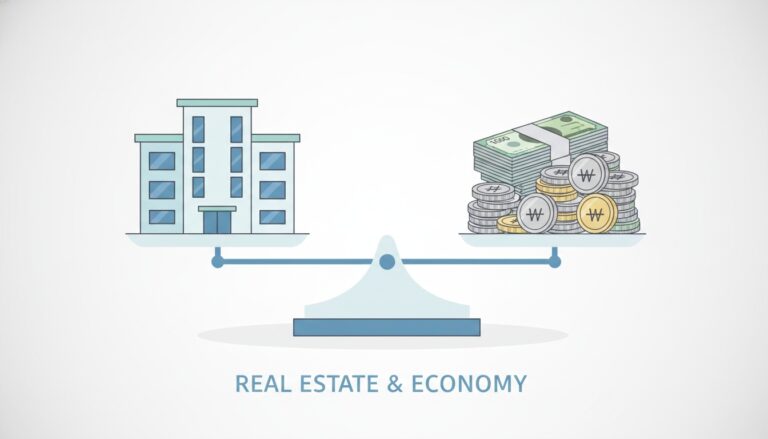
Cracking Korean News: “LTV Relaxation” & “Household Debt”
Introduction
Hello, this is Daily Hangul!
Are you an expat living in Korea, dreaming of buying your own apartment (APT) in Seoul? Or perhaps you are an advanced learner trying to decipher the 9 PM news?
Recently, terms like LTV and household debt have been flooding the Korean media. To the untrained eye, these look like scary economic jargon. But understanding them is crucial if you want to understand the current Korean economy or buy a house.
Today’s Episode (Synthetic Case)
Note: This is a synthetic case based on common questions from expats living in Korea.
Mark, a software engineer living in Mapo-gu for 3 years, recently saw a news headline: “LTV 완화, 가계 부채 경고등.” He got excited seeing “Wan-hwa” (Relaxation), thinking housing prices were dropping. He went to a real estate agent, only to realize it meant loan limits were increasing, not prices decreasing. In fact, it meant more people might go into debt!
Why isn’t a textbook enough? Textbooks teach you “집을 사요 (I buy a house).” Reality requires you to understand “대출 규제가 풀렸어요 (Loan regulations have been lifted).”
Summary at a Glance
- Today’s Expressions: 주택 담보 대출 (Mortgage), 완화하다 (To relax/ease), 가계 부채 (Household debt)
- Safe to Use: Business meetings, real estate consultations, discussing news.
- Level: C2 (Advanced). These are high-frequency terms in Korean current affairs. Knowing them elevates your Korean from “survival” to “intellectual.”
Table of Contents
- Today’s Core Expressions Deep Dive
- Textbook vs. Real Korean
- Unique Analysis: The “Young-kkeul” Phenomenon
- Real-Life Scenario: At the Real Estate Agency
- Shadowing Challenge
- FAQ
Today’s Core Expressions Deep Dive
1. 주택 담보 대출 (Jutaek dambo daechul)
- Meaning: Mortgage (loan) / literally “Housing collateral loan”
- Usage & Register:
- Who: Bank tellers, Real estate agents (Budongsan), News anchors.
- Tone: Highly formal (합니다체) or polite (해요체).
- Tutor’s Secret Note:
- Native Koreans often shorten this to 주담대 (Ju-dam-dae). If you use the full word, you sound formal. If you use “Ju-dam-dae,” you sound like a local who follows the economy.
- Warning: Do not confuse this with 사채 (Sachae – private/loan shark loan). Keep it legal!
- Pronunciation Clinic:
- [주택 땀보 대출]: The ‘ㄷ’ in 담(dam) often sounds tense like ‘땀(ttam)’ due to the preceding ‘k’ sound in Taek.
- Examples:
- News: 정부가 주택 담보 대출 금리를 올렸습니다. (Jeongbu-ga jutaek dambo daechul geumli-reul ol-lyeot-seumnida.)
- The government raised mortgage interest rates.
- Bank: 주담대 신청하려고 왔는데요. (Judamdae sincheong-haryeogo wan-neundeyo.)
- I came to apply for a mortgage loan.
- Casual: 요즘 대출 이자가 너무 비싸. (Yojeum daechul ija-ga neomu bissa.)
- Loan interest is too expensive these days.
- News: 정부가 주택 담보 대출 금리를 올렸습니다. (Jeongbu-ga jutaek dambo daechul geumli-reul ol-lyeot-seumnida.)
2. 완화하다 (Wanhwahada)
- Meaning: To relax / To ease / To alleviate (regulations, symptoms, tension)
- Usage & Register:
- Who: Journalists, Doctors, Policy makers.
- Tone: Mostly used in written language or formal speech.
- Tutor’s Secret Note:
- In real estate context, it usually pairs with 규제 (Gyu-je – Regulation). “LTV 완화” means the government is letting you borrow more money.
- Pronunciation Clinic:
- [와놔하다]: The ‘h’ (ㅎ) sound is weak. It often flows as [wa-nwa-ha-da].
- Examples:
- Policy: LTV 규제가 완화될 예정입니다. (LTV gyuje-ga wanhwa-doel yejeong-imnida.)
- LTV regulations are scheduled to be eased.
- Medical: 통증을 완화하는 약이에요. (Tongjeung-eul wanhwa-haneun yak-ieyo.)
- This is medicine to alleviate pain.
- Social: 긴장을 완화시킵시다. (Ginjang-eul wanhwa-sikipsida.)
- Let’s ease the tension.
- Policy: LTV 규제가 완화될 예정입니다. (LTV gyuje-ga wanhwa-doel yejeong-imnida.)
3. 가계 부채 (Gagye buchae)
- Meaning: Household debt
- Usage & Register:
- Who: Economists, News reports.
- Tone: Very formal/Academic.
- Tutor’s Secret Note:
- This is a “heavy” word. In casual conversation, friends would just say “빚 (Bit – Debt)” or “대출금 (Daechul-geum – Loan money).” Using “Gagye buchae” at a dinner party might make the mood too serious.
- Pronunciation Clinic:
- [가계 부채]: Pronounce clearly. Do not slur ‘chae’.
- Examples:
- News: 한국의 가계 부채가 역대 최고입니다. (Hanguk-ui gagye buchae-ga yeokdae choego-imnida.)
- Korea’s household debt is at an all-time high.
- Debate: 가계 부채 문제를 해결해야 합니다. (Gagye buchae munje-reul haegyeol-haeya hamnida.)
- We must solve the household debt problem.
- Casual (Alternative): 나 빚이 너무 많아. (Na bij-i neomu mana.)
- I have too much debt.
- News: 한국의 가계 부채가 역대 최고입니다. (Hanguk-ui gagye buchae-ga yeokdae choego-imnida.)
Alternatives (Polite vs. Casual)
- More Formal: 융자 (Yungja) – Older term for bank loan.
- More Casual: 빚 (Bit) – Debt (general term).
Mini Quiz
Fill in the blank:
“정부가 부동산 규제를 OOO해서 집 사기가 쉬워졌어.”
(The government OOO the real estate regulations, so it became easier to buy a house.)
👉 Click to see the answer
완화 (Wanhwa) – Relax/Ease
Textbook vs. Real Korean
| Situation | Book Korean (Textbook) | Real Korean (Street/Slang) |
|---|---|---|
| Getting a loan | 대출을 받다 (Daechul-eul batda) | 대출 땡기다 (Daechul ttaeng-gida) (Nuance: Pulling money from everywhere) |
| Buying a house with max loan | 대출을 많이 받아서 집을 샀어요. | 영끌해서 샀어. (Young-kkeul-haeseo sasseo.) |
| Regulations | 규제가 엄격합니다. (Regulations are strict.) | 대출이 막혔어. (Daechul-i mak-hyeosseo.) (Nuance: The loan [path] is blocked.) |
Tip: Use “Book Korean” with your boss or bank teller. Use “Real Korean” with close friends complaining about housing prices.
Unique Analysis: The “Young-kkeul” (영끌) Culture
When LTV is relaxed (완화), you will hear the word 영끌 (Young-kkeul) everywhere.
- Origin: 영혼까지 끌어모으다 (Gathering up to one’s soul).
- Meaning: Scraping every penny, getting every possible loan, and borrowing from parents to buy a house/stock.
- Why it matters: It reflects the desperation of the younger generation in Korea regarding real estate. If you say “Did you do Young-kkeul?” (너 영끌했어?), it implies empathy for their financial struggle.
Real-Life Scenario Role Play
Situation: At a Real Estate Agency (부동산) in Gangnam. An expat is asking about buying an apartment.
Characters:
* Agent (A): Experienced realtor (50s).
* Expat (B): Potential buyer (30s).
Dialogue:
B: 사장님, 요즘 뉴스에서 LTV가 완화됐다고 하던데요.
(Sajang-nim, yojeum nyuseu-eseo LTV-ga wanhwa-dwaetdago hadeondeyo.)
Boss, I heard on the news that LTV has been relaxed recently.
A: 맞아요. 무주택자면 주담대가 70%까지 나올 거예요.
(Majayo. Mujutaekja-myeon judamdae-ga 70 peo-senteu-kkaji naol geoyeyo.)
That’s right. If you don’t own a home, the mortgage will probably cover up to 70%.
B: 아, 그럼 가계 부채 걱정은 좀 되지만, 지금이 기회일까요?
(Ah, geureom gagye buchae geokjeong-eun jom doejiman, jigeum-i gihoe-ilkkayo?)
Ah, then I’m worried about household debt, but is now the opportunity?
A: 네, 하지만 금리가 높아서 이자 계산을 잘 하셔야 해요.
(Ne, hajiman geumli-ga nopaseo ija gyesan-eul jal hasyeoya haeyo.)
Yes, but interest rates are high, so you must calculate the interest carefully.
Culture Tip:
* Calling the agent 사장님 (Sajang-nim) is essential. It shows respect.
* 무주택자 (Mujutaekja) means “person who owns no house.” Benefits often target this group.
Shadowing & Speaking Challenge
Script: (Try to sound like a news anchor!)
“정부가 가계 부채 문제를 해결하기 위해, 주택 담보 대출 규제를 일부 완화하기로 했습니다.”
Romanization:
Jeongbu-ga gagye buchae munje-reul haegyeol-hagi wihae, jutaek dambo daechul gyuje-reul ilbu wanhwa-hagiro haetseumnida.
Meaning:
“The government has decided to partially relax mortgage regulations to solve the household debt problem.”
Checklist:
* [ ] Spoke aloud 3 times?
* [ ] Did you pause after ‘wihae’ (위해)?
* [ ] Did you pronounce ‘wanhwa’ (완화) smoothly?
FAQ (Frequently Asked Questions)
Q1: Can foreigners get “Jutaek dambo daechul” (Mortgage)?
* A: Yes! If you have an ARC (Alien Registration Card) and proof of income, you are generally eligible, subject to LTV/DTI limits just like Koreans. However, specific banks may have different internal rules.
Q2: What is DSR? I see it with LTV often.
* A: DSR (Debt Service Ratio) checks your income vs. debt repayment. Even if LTV is high (relaxed), if your income is low (strict DSR), you cannot borrow much money.
* Example: DSR이 적용돼서 대출이 안 나와요. (My loan was rejected because DSR was applied.)
Wrap-up & Action Item
Summary:
Today we learned that LTV 완화 means you can borrow more, but high 가계 부채 (debt) is a risk.
Today’s Mission:
Go to a Korean news portal (Naver News) and search for “부동산” (Real Estate). Try to find the word 완화 or 규제 in the headlines!
Comment Question:
Is buying a house difficult in your country right now? How are the interest rates? Tell me in the comments!
Final Quiz
- What does 주담대 (Ju-dam-dae) stand for?
a) Major Dam Damage
b) Housing Collateral Loan (Mortgage)
c) Stock Market Crash -
If regulations are “완화” (Wanhwa), they are being…?
a) Strengthened
b) Deleted
c) Relaxed/Eased -
Fill in the blank: Scraping every penny to buy a house is called “OO”.
(Hint: Young-????)
⬇️ Scroll down for answers
- b) Housing Collateral Loan
- c) Relaxed/Eased
- 영끌 (Young-kkeul)
Frequently Asked Questions (FAQ)
Q: What does "주택 담보 대출 (Jutaek dambo daechul)" mean in Korean and how do you pronounce it?
A: In Korean, "주택 담보 대출 (Jutaek dambo daechul)" is pronounced [see lesson guide] and means: Mortgage (loan) / literally "Housing collateral loan"
Q: What does "완화하다 (Wanhwahada)" mean in Korean and how do you pronounce it?
A: In Korean, "완화하다 (Wanhwahada)" is pronounced [see lesson guide] and means: To relax / To ease / To alleviate (regulations, symptoms, tension)
Q: What does "가계 부채 (Gagye buchae)" mean in Korean and how do you pronounce it?
A: In Korean, "가계 부채 (Gagye buchae)" is pronounced [see lesson guide] and means: Household debt







