

Introduction
Hello, this is Daily Hangul!
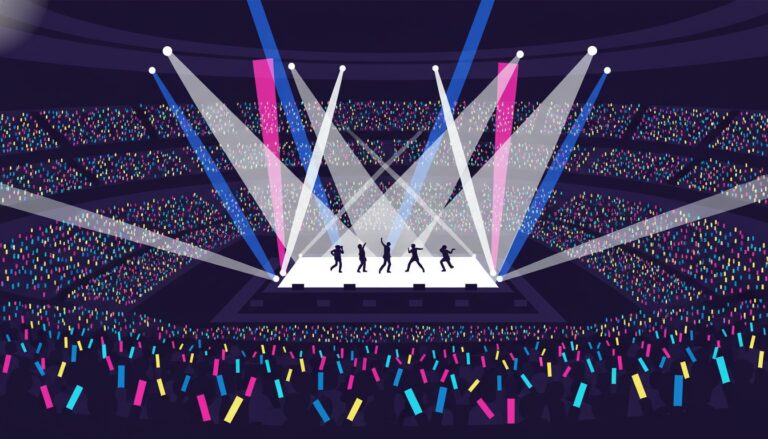
Imagine this: The lights go down at the KSPO Dome in Seoul. Thousands of light sticks (Eungwonbong) turn on at once. Your heart is pounding because your favorite K-Pop group is about to step on stage. But then, the member shouts something, and everyone screams—except you, because you didn’t catch what they said. Or worse, the crowd pushes, and you don’t know how to say “Stop pushing!”
Synthetic Case: Based on stories from many of our subscribers who visited Korea for concerts, a common regret is feeling “left out” during the talk segments (Ment) or feeling helpless in a crowded standing pit. Textbook Korean teaches you how to book a hotel, but it rarely teaches you how to survive the energy of a K-Pop concert.
Today, we will learn the real language of the mosh pit and the stadium. Get ready to enjoy the concert 200%!
Summary at a Glance
- Today’s Expressions: Sori jilleo (Make some noise), Milji maseyo (Don’t push), Aengkol (Encore).
- Safe Zone: Use these at concerts, festivals, or fan meetings. Some are for listening, some are for safety.
- Level (A1-A2): Essential for survival and interaction. You don’t need complex grammar to scream along!
Table of Contents
- Today’s Core Expressions Deep Dive
- Textbook vs. Real Korean
- Unique Analysis: The ‘Hype’ Thermometer
- Real-Life Scenario Role Play
- Shadowing Challenge
- FAQ
- Wrap-up & Quiz
Today’s Core Expressions Deep Dive
1. 소리 질러 (Sori jilleo)
- Meaning: Make some noise / Scream / Shout
- Literal: Scream a sound.
- Usage & Register:
- Who uses it: The Idol (Artist) to the Fans.
- Tone: Highly energetic command (Casual).
- Tutor’s Secret Note:
- You will hear this constantly. When an idol yells “Sori jilleo!“, do not think. Just scream “Waaaaa!” at the top of your lungs. If you stay silent, the energy drops, and the artist might jokingly scold the crowd.
- Warning: Do not shout this at the artist. It’s their line to hype you up.
- Pronunciation Clinic:
- [Sori]: The ‘r’ is a soft flap (like the ‘dd’ in ‘ladder’), not a hard English ‘R’.
- [Jilleo]: Focus on the double consonant ‘ll’. Hold the ‘L’ sound slightly longer.
- Examples:
- Listening (Concert): 2층, 소리 질러! (Icheung, sori jilleo!)
- Translation: 2nd floor, make some noise!
- Listening (Festival): 다 같이 소리 질러! (Da gachi sori jilleo!)
- Translation: Everybody, make some noise!
- Listening (Opening): 준비 됐으면 소리 질러! (Junbi dwaesseumyeon sori jilleo!)
- Translation: If you’re ready, scream!
- Listening (Concert): 2층, 소리 질러! (Icheung, sori jilleo!)
- Alternatives:
- 놀 준비 됐어? (Nol junbi dwaesseo?) – Are you ready to play/party?
- 가자! (Gaja!) – Let’s go!
- Mini Quiz:
- The idol points to the left section and says “Left side, ______ ______!”
Click to see answer
소리 질러 (Sori jilleo)
- The idol points to the left section and says “Left side, ______ ______!”
2. 밀지 마세요 (Milji maseyo)
- Meaning: Please don’t push.
- Literal: Push-not-do-please.
- Usage & Register:
- Who uses it: You (to other fans in the standing pit).
- Tone: Firm polite (Haeyo-che). You want to be understood clearly but firmly.
- Tutor’s Secret Note:
- Standing areas (the pit) in Korea can be intense. “War of nerves” happens here. If someone is crushing you, say this clearly while making eye contact. It’s better than getting hurt.
- Real Vibe: In extreme chaos, Koreans might drop the “yo” and just shout “밀지 마!” (Milji ma! – Don’t push!), but stick to “Milji maseyo” to be safe and polite first.
- Pronunciation Clinic:
- [Milji]: Don’t swallow the ‘l’ sound.
- [Maseyo]: Stress the ‘Ma’.
- Examples:
- Standing Pit: 뒤에서 밀지 마세요! (Dwieseo milji maseyo!)
- Translation: Don’t push from the back!
- Crowded Exit: 너무 좁아요, 밀지 마세요. (Neomu jobayo, milji maseyo.)
- Translation: It’s too tight, please don’t push.
- Safety: 위험하니까 밀지 마세요. (Wiheomhanikka milji maseyo.)
- Translation: It’s dangerous, so please don’t push.
- Standing Pit: 뒤에서 밀지 마세요! (Dwieseo milji maseyo!)
- Alternatives:
- 숨 막혀요 (Sum makhyeoyo) – I can’t breathe / It’s suffocating.
- 조심해 주세요 (Josimhae juseyo) – Please be careful.
- Mini Quiz:
- Someone is leaning too hard on your back. You say: “______ ______!”
Click to see answer
밀지 마세요 (Milji maseyo)
- Someone is leaning too hard on your back. You say: “______ ______!”
3. 앵콜 (Aengkol)
- Meaning: Encore
- Usage & Register:
- Who uses it: The Audience (Fans).
- Tone: Chanting.
- Tutor’s Secret Note:
- Unlike some Western concerts where you just cheer, Korean fans often chant this rhythmically: “Aeng-kol! (clap clap) Aeng-kol! (clap clap)”.
- Insider Tip: Sometimes, instead of chanting “Encore,” specific fandoms sing a fan song. Check Twitter (X) before the concert to know the specific “Encore Event.”
- Pronunciation Clinic:
- [Aeng]: It’s not “En”. It’s closer to the ‘a’ in “apple” + ‘ng’.
- [Kol]: Not “core”. It ends with a distinct ‘L’ sound.
- Examples:
- End of Show: (Chanting) 앵콜! 앵콜! (Aengkol! Aengkol!)
- Translation: Encore! Encore!
- Post-Concert Talk: 앵콜 무대 너무 좋았어요. (Aengkol mudae neomu joasseoyo.)
- Translation: The encore stage was so good.
- Hoping: 앵콜 해주겠지? (Aengkol haejunetji?)
- Translation: They will do an encore, right?
- End of Show: (Chanting) 앵콜! 앵콜! (Aengkol! Aengkol!)
- Alternatives:
- 사랑해 (Saranghae) – I love you (Often chanted instead).
- 돌아와 (Dorawa) – Come back (Rarely chanted, but implied).
- Mini Quiz:
- The lights go out, but the show isn’t over. Everyone shouts: “______!”
Click to see answer
앵콜 (Aengkol)
- The lights go out, but the show isn’t over. Everyone shouts: “______!”
Textbook vs. Real Korean
Context: Reacting to the performance.
| Type | Expression | Romanization | Meaning | Why use it? |
|---|---|---|---|---|
| Book Korean | 공연이 정말 훌륭했습니다. | Gongyeoni jeongmal hullyunghaetseumnida. | The performance was truly excellent. | Too formal. Sounds like a news report. |
| Book Korean | 가수가 노래를 잘합니다. | Gasuga noraereul jalhamnida. | The singer sings well. | Very dry. No emotion. |
| Real Korean | 찢었다! | Jjijeotda! | Tore it up! / Slayed! | Use when the performance was insane. |
| Real Korean | 라이브 대박이다. | Raibeu daebagida. | The live vocals are awesome. | Common praise for good singing. |
Checklist:
* Writing a formal review? -> Use Book Korean.
* Tweeting right after the show? -> Use Real Korean.
Unique Analysis: The ‘Cheering’ Thermometer
How do you cheer without being rude or awkward? Let’s look at the intensity levels.
| Level | Expression | Romanization | Nuance & Situation |
|---|---|---|---|
| 1 (Low) | 박수 (Clapping) | Baksu | Polite. Ballads or emotional speeches. |
| 2 (Medium) | 환호 (Cheering) | Hwanho | “Woooo!” Standard response to intros. |
| 3 (High) | 떼창 (Sing-along) | Ttechang | Singing the entire chorus loudly together. Unique Korean Culture! |
| 4 (Max) | 응원법 (Fanchant) | Eungwonbeop | Specific names/lyrics shouted at precise timings. Required for true fans. |
Tip: If you don’t know the Eungwonbeop, Level 2 (just screaming) is safer than Level 3 (singing random parts), which might annoy fans filming fancams!
Real-Life Scenario Role Play
Situation: Entering the KSPO Dome standing area. A fan (You) is trying to find the entrance line and deal with crowding.
Characters:
* Fan (You): Excited but confused foreigner.
* Staff: Busy concert staff.
Dialogue:
Fan: (Holding ticket) 저기요, 스탠딩 입장은 어디예요?
(Jeogiyo, seutaending ipjangeun eodiyeyo?)
[Excuse me, where is the entrance for the standing area?]
Staff: 저쪽 줄에 서세요. 번호 순서대로 들어갑니다.
(Jeojjok jure seoseyo. Beonho sunseodaero deureogamnida.)
[Please stand in that line. We enter in numerical order.]
(Later, inside the pit, people start pushing)
Fan: 아, 잠시만요! 밀지 마세요!
(A, jamsimanyo! Milji maseyo!)
[Ah, wait a moment! Please don’t push!]
Person Behind: 죄송해요, 뒤에서 계속 밀어서요.
(Joesonghaeyo, dwieseo gyesok mireoseoyo.)
[Sorry, they keep pushing from the back.]
Fan: 다치겠어요. 조금만 뒤로 가주세요.
(Dachigesseoyo. Jogeumman dwiro gajuseyo.)
[We might get hurt. Please move back a little.]
Culture Tip: In Korea, standing tickets usually have “Queue Numbers” (입장 번호). You don’t camp out for days; you line up according to your number 1-2 hours before entry. Respect the number!
Shadowing / Speaking Challenge
Let’s practice the essential phrase for safety. Say this 3 times with a firm tone.
Script:
“위험해요. 밀지 마세요!”
(Wiheomhaeyo. Milji maseyo!)
(It’s dangerous. Please don’t push!)
- [ ] Attempt 1 (Slowly, focusing on ‘Milji’)
- [ ] Attempt 2 (Normal speed)
- [ ] Attempt 3 (Urgent tone, like you are in a crowd)
Pronunciation Point: Don’t make Wiheomhaeyo too soft. Drop the pitch at the end to sound serious.
FAQ (Frequently Asked Questions)
Q1: Can I shout “Saranghae” (I love you) to the idol during the talk time?
A: Yes, but timing is key! If it’s a quiet moment for a sad story, don’t do it. If there’s a silence between jokes, shouting “사랑해요!” (Saranghaeyo – polite) or “사랑해!” (Saranghae – casual/intimate fan mode) is acceptable.
Q2: What does “Mak-con” (막콘) mean?
A: It stands for 마지막 콘서트 (Majimak Konseoteu – Last Concert). Korean tours usually have multiple days. The last day (Mak-con) is famous for having the best energy and special events.
Q3: I hear people shouting “Gaji-ma” at the end. What is that?
A: It means “Don’t go!” (가지마). Fans shout this when the idol says the concert is ending.
Conclusion & Action Item
Today we learned how to survive the energy of a K-Pop concert with Sori jilleo (Scream!), Milji maseyo (Don’t push!), and Aengkol (Encore).
Today’s Mission:
Go to YouTube and search for your favorite group’s “Live Concert Ment” or “Ending Ment.” Listen for when they say “Sori jilleo!” and practice screaming back at your screen!
Comment Question:
Which K-Pop group do you dream of seeing in Korea? Tell me in the comments!
Final Quiz
1. What does the artist say to make the crowd scream?
A) 집에 가 (Jibe ga)
B) 소리 질러 (Sori jilleo)
C) 조용히 해 (Joyonghi hae)
2. You are being crushed in the standing pit. What do you say?
A) 사랑해요 (Saranghaeyo)
B) 앵콜 (Aengkol)
C) 밀지 마세요 (Milji maseyo)
3. Fill in the blank: The concert was amazing! They totally ______ the stage! (Real Korean slang)
( ______otda! )
Click to reveal answers
1. B) 소리 질러 (Sori jilleo)
2. C) 밀지 마세요 (Milji maseyo)
3. 찢었다 (Jjijeotda)
Frequently Asked Questions (FAQ)
Q: What does "소리 질러 (Sori jilleo)" mean in Korean and how do you pronounce it?
A: In Korean, "소리 질러 (Sori jilleo)" is pronounced [see lesson guide] and means: Make some noise / Scream / Shout
Q: What does "밀지 마세요 (Milji maseyo)" mean in Korean and how do you pronounce it?
A: In Korean, "밀지 마세요 (Milji maseyo)" is pronounced [see lesson guide] and means: Please don't push.
Q: What does "앵콜 (Aengkol)" mean in Korean and how do you pronounce it?
A: In Korean, "앵콜 (Aengkol)" is pronounced [see lesson guide] and means: Encore







