

Why Is My Korean Partner Mad? Surviving the “Contact War” (연락 전쟁)
Introduction
Hello, this is Daily Hangul!
Are you dating a Korean, or do you plan to? If so, you might be shocked by how fast and frequent text messages fly back and forth. In many Western cultures, texting once or twice a day is normal. In Korea? That might be considered a breakup signal.
Today’s episode is based on a Synthesized Case combining stories from many of our students (let’s call the representative learner “Alex”).
The Case: Alex (USA) thought everything was fine with his Korean girlfriend. But last night, she got upset: “Why did you read my message and not reply for 3 hours? Do you even like me?” Alex was working. He didn’t know that in Korea, contact = affection.
Let’s learn how to survive this “Contact War” with the right expressions.
Summary at a Glance
- Topic: Addressing texting frequency and “ghosting” misunderstandings.
- Safe Zone: Casual relationships to serious dating (Intimate level).
- Level: B2 (Intermediate) – Nuance is key here!
Today’s Expressions:
1. 연락이 뜸하다 (Contact is becoming infrequent)
2. 읽씹 / 안읽씹 (Read & Ignore / Unread & Ignore)
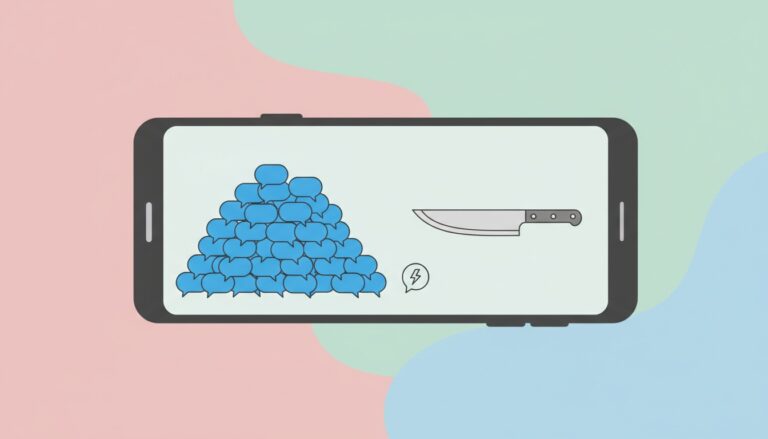
3. 칼답 (Knife Reply / Instant Reply)
Table of Contents
- Deep Dive: Key Expressions
- Textbook vs. Real Korean
- Analysis: The Temperature of Reply Speed
- Role Play: The “Why Didn’t You Reply?” Fight
- Shadowing Challenge
- FAQ & Wrap-up
Today’s Core Expressions Deep Dive
1. 연락이 뜸하다 (Yeollagi tteumhada)
- Meaning: Contact is infrequent / You don’t call or text often.
- Usage: Used when complaining that the partner has changed or is losing interest.
- Tutor’s Secret Note: “뜸하다” (tteumhada) comes from the word used when taking a pause. If your partner says this, it’s a yellow card. They feel neglected.
- Pronunciation Clinic: 연락 is pronounced [열락/yeollak] due to nasal assimilation.
Examples:
* 요즘 왜 이렇게 연락이 뜸해? (Yojeum wae ireoke yeollagi tteumhae?)
* Why is your contact so infrequent these days?
* 바빠서 연락이 좀 뜸했어. 미안해. (Bappaseo yeollagi jom tteumhaesseo. Mianhae.)
* I was busy so I couldn’t reach out much. I’m sorry.
* 우리 사이가 좀 뜸해진 것 같아. (Uri saiga jom tteumhaejin geot gata.)
* I feel like we’ve drifted apart a bit.
Mini Quiz (Click to see answer)
Fill in the blank: “Sorry I couldn’t text. I was _____.”
정답: 바빴어 (Bappasseo – I was busy)
2. 읽씹 (Ik-ssip)
- Meaning: Read and Ignore (Literally: Read + Chew).
- Usage: Very common slang. Used among friends and couples.
- Tutor’s Secret Note: This is the biggest sin in Korean dating. The ‘1’ (unread marker on KakaoTalk) disappearing without a reply can cause a fight. “안읽씹” (An-ik-ssip) means not reading it at all (ghosting), which is also bad.
- Pronunciation Clinic: 읽씹 becomes [익찝/Ik-jjip] due to tensification.
Examples:
* 내 카톡 읽씹하지 마! (Nae katok ik-ssiphaji ma!)
* Don’t leave my KakaoTalk on read!
* 너 어제 왜 읽씹했어? (Neo eoje wae ik-ssiphaesseo?)
* Why did you read and ignore me yesterday?
* 읽씹한 게 아니라, 회의 중이었어. (Ik-ssiphan ge anira, hoeui jung-ieosseo.)
* I didn’t ignore you; I was in a meeting.
3. 칼답 (Kal-dap)
- Meaning: Instant Reply (Literally: Knife Answer).
- Usage: A compliment or a description of someone’s texting style.
- Tutor’s Secret Note: “Knife” (Kal) implies speed and sharpness. In the early stages of dating (Same), Kal-dap is expected to show interest.
Examples:
* 그 사람은 항상 칼답을 해줘. (Geu sarameun hangsang kal-dabeul haejwo.)
* He/She always replies instantly.
* 칼답 고마워! (Kal-dap gomawo!)
* Thanks for the quick reply!
* 게임하느라 칼답 못 했어. (Geimhaneura kal-dap mot haesseo.)
* I couldn’t reply instantly because I was gaming.
Textbook vs. Real Korean
What do you say when you haven’t heard from them all day?
| Context | Textbook Korean (Book Korean) | Real Korean (Reality) |
|---|---|---|
| Checking in | 연락 기다리고 있습니다. (Yeollak gidarigo itseumnida) I am waiting for your contact. |
살아있어? 😠 (Saraisseo?) Are you alive? (Used jokingly or passive-aggressively) |
| Asking reason | 왜 전화를 안 받았어요? (Wae jeonhwareul an badasseoyo?) Why did you not answer the phone? |
뭐 하느라 연락이 안 돼? (Mwo haneura yeollagi an dwae?) What are you doing that you can’t be reached? |
Tip: “살아있어?” (Are you alive?) is a very common way to nudge someone who hasn’t texted in hours. Use it with close partners only!
Analysis: The Temperature of Reply Speed
In Korea, the speed of your reply often indicates your “Affection Level.”
| Speed | Korean Perception | Meaning |
|---|---|---|
| 0~5 Mins | 칼답 (Kal-dap) | “I am totally into you.” / “I’m glued to my phone.” |
| 10~30 Mins | Normal | Comfortable relationship. |
| 1~2 Hours | Suspicious | “Are you mad?” or “Are you incredibly busy?” |
| 3+ Hours | Danger Zone | 잠수 (Jamsu) – Diving/Ghosting. Prepare for an explanation. |
| Next Day | Game Over | Usually implies a breakup or severe fight. |
Real Scenario Role Play
Situation: Friday night. Minji (Korean) is upset because Tom (Foreigner) didn’t reply to her message from 6 PM until 10 PM.
Minji: 아까 보낸 카톡 봤으면서 왜 답장이 없어? 읽씹한 거야?
(Akka bonaen katok bwasseumyeonseo wae dapjangi eopseo? Ik-ssiphan geoya?)
You saw the Katok I sent earlier, why no reply? Did you read and ignore me?
Tom: 아, 미안해. 읽씹하려던 건 아니었어. 진짜 바빴어.
(A, mianhae. Ik-ssipharyeodeon geon anieosseo. Jinjja bappasseo.)
Ah, sorry. I didn’t intend to ignore it. I was really busy.
Minji: 아무리 바빠도 이모티콘 하나는 보낼 수 있잖아. 연락이 너무 뜸해.
(Amuri bappado imotikon hananeun bonael su itjana. Yeollagi neomu tteumhae.)
No matter how busy, you can send one emoji. Your contact is too infrequent.
Tom: 알았어. 앞으론 최대한 칼답 하도록 노력할게. 화 풀어, 응?
(Arasseo. Apeuron choedaehan kal-dap hadorok noryeokalge. Hwa pureo, eung?)
Okay. I’ll try to reply instantly as much as possible from now on. Don’t be mad, okay?
💡 Culture Tip: In Korea, “I was busy” is often not accepted as a valid excuse for 4+ hours of silence. A simple emoji or “Busy rn” (바쁨) is better than silence.
Shadowing Challenge
Let’s practice a sentence that can save your relationship. Repeat this 3 times.
“Even if I’m busy, I will make sure to contact you.”
아무리 바빠도 틈틈이 연락할게.
(Amuri bappado teumteumi yeollakalge.)
- [ ] Attempt 1 (Slowly)
- [ ] Attempt 2 (Natural Speed)
- [ ] Attempt 3 (With sincerity!)
Pronunciation Point: 틈틈이 is pronounced [틈트미/Teum-teu-mi].
FAQ: Daily Hangul Answers
Q1: Can I use “읽씹” (Ik-ssip) with my boss?
* Absolutely NOT. It is a slang term. With a boss, just say “답장이 늦어서 죄송합니다” (Dapjangi neujeoseo joesonghamnida – Sorry for the late reply).
Q2: Does “밀당” (Mil-dang) mean playing hard to get?
* Yes. It stands for 밀고 당기기 (Push and Pull). Delaying replies on purpose is a form of Mil-dang.
Q3: Is it rude to call without texting first?
* In modern Korean dating, yes, sometimes. But for lovers, spontaneous calls are usually welcome unless they are at work.
Wrap-up & Mission
Today we learned that in Korea, Contact Frequency = Love. Don’t be afraid of the “Contact War,” just arm yourself with the right words!
🚀 Today’s Mission:
Check your last message to your Korean friend or partner. Was it a “Kal-dap” or an “Ik-ssip”? Send them a message right now saying: “밥 먹었어?” (Did you eat?).
Have you ever fought about texting speed? Tell us in the comments!
Final Quiz
- Which word means “Read and Ignore”?
A) 칼답 (Kal-dap)
B) 읽씹 (Ik-ssip)
C) 꿀잠 (Kkul-jam) -
If someone replies instantly, they are doing…?
A) 칼답 (Kal-dap)
B) 노답 (No-dap)
C) 밀당 (Mil-dang) -
(Fill in the blank) “Contact is infrequent” = 연락이 _____.
Answers: 1. (B), 2. (A), 3. 뜸하다 (tteumhada)
Frequently Asked Questions (FAQ)
Q: What does "연락이 뜸하다 (Yeollagi tteumhada)" mean in Korean and how do you pronounce it?
A: In Korean, "연락이 뜸하다 (Yeollagi tteumhada)" is pronounced [Clinic: 연락 is pronounced [열락/yeollak] and means: Contact is infrequent / You don't call or text often.
Q: What does "읽씹 (Ik-ssip)" mean in Korean and how do you pronounce it?
A: In Korean, "읽씹 (Ik-ssip)" is pronounced [Clinic: 읽씹 becomes [익찝/Ik-jjip] and means: Read and Ignore (Literally: Read + Chew).
Q: What does "칼답 (Kal-dap)" mean in Korean and how do you pronounce it?
A: In Korean, "칼답 (Kal-dap)" is pronounced [see lesson guide] and means: Instant Reply (Literally: Knife Answer).







