

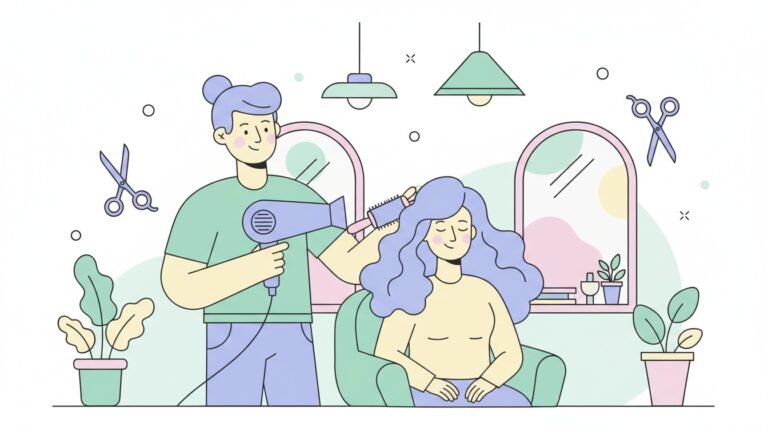
The Best Compliment in Korea: “I Envy Your Thick Hair!”
Introduction
Hello, this is Daily Hangul!
Today, we are diving into the world of K-Beauty and compliments. In many Western cultures, commenting on someone’s physical traits can sometimes feel intrusive. However, in Korea, there is one specific compliment that is universally welcomed and often considered the “ultimate goal” of beauty.
[Synthetic Case]
This is a compiled scenario based on recurring patterns from various learners.
Many foreign students visiting Korean hair salons or talking with Korean friends are often surprised when they hear phrases like, “Wow, you have so much hair!” (머리숱이 진짜 많네요). At first, they wonder, “Is my hair messy? Is it too big?”
But in Korea, having “thick hair volume” (머리숱) is a symbol of youth and health. Today, we will learn how to accept this compliment and how to use it to praise others naturally. It’s not just about vocabulary; it’s about understanding the Korean standard of beauty.
At a Glance
- Today’s Expressions: 머리숱이 많다 (To have thick hair), 부럽다 (I’m envious), 관리 비결 (Secret to maintenance).
- When to use: Hair salons, talking with friends about beauty, complimenting appearance.
- Level: B1 (Intermediate). This moves beyond basic greetings into specific descriptive terms used in daily Korean life.
Table of Contents
- Today’s Key Expressions Deep Dive
- Textbook vs. Real Korean
- Nuance Thermometer: How to Compliment
- Real-Life Role Play: At a Hair Salon in Hongdae
- Shadowing Challenge
- FAQ & Wrap-up
Today’s Key Expressions Deep Dive
1. 머리숱이 많다 (Meorisuchi manda)
- Meaning: To have thick hair / To have a lot of hair volume.
- Usage & Register:
- To anyone: Safe to use with friends or at a salon.
- Polite: 머리숱이 많으시네요 (Meorisuchi maneusineyo).
- Casual: 너 머리숱 진짜 많다 (Neo meorisut jinjja manta).
- Tutor’s Secret Note:
- Koreans obsess over hair loss (talmo). Saying someone has a lot of hair is effectively saying, “You look young and healthy.”
- Warning: Never say “머리숱이 적다” (You have thin hair) directly to someone’s face. It can be hurtful.
- Pronunciation Clinic:
- Linking (Liaison): The bottom consonant
ㅌin숱moves to이. - Palatalization:
ㅌ+이sounds like치[chi]. - So,
머리숱이sounds like [Meorisuchi], not [Meorisuti].
- Linking (Liaison): The bottom consonant
- Examples:
- 머리숱이 많아서 스타일링하기 좋아요. (Meorisuchi manaseo seutailing-hagi joayo.) – It’s good for styling because you have thick hair.
- 저도 머리숱이 많았으면 좋겠어요. (Jeodo meorisuchi manasseumyeon jokesseoyo.) – I wish I had thick hair too.
- 아기 머리숱이 정말 많네요! (Agi meorisuchi jeongmal manneyo!) – The baby has so much hair!
- Alternatives:
- More Casual/Slang: 머리숱 부자 (Meorisut buja) – Lit. “Hair volume rich person.”
- More Formal/Poetic: 머리카락이 풍성하다 (Meorikaragi pungseonghada) – Hair is voluminous/full.
Mini Quiz (Click to see answer)
Fill in the blank: “Wow, you have so much hair!”
“와, ____이 정말 많으시네요!”
Answer: 머리숱 (Meorisut)
2. 부럽다 (Bureopda)
- Meaning: I envy you / I’m jealous (in a positive way).
- Usage & Register:
- Commonly used as a reaction when hearing good news or seeing something nice.
- Polite: 부러워요 (Bureowoyo).
- Casual: 부럽다 (Bureopda) – often said to oneself even in front of others.
- Tutor’s Secret Note:
- Unlike the English “jealous,” which can imply possessiveness or negativity,
부럽다is usually a pure compliment acknowledging the other person’s good fortune or traits.
- Unlike the English “jealous,” which can imply possessiveness or negativity,
- Pronunciation Clinic:
- p-ending: The
ㅂat the bottom of럽is unreleased. It stops your breath. [Bu-reop-da].
- p-ending: The
- Examples:
- 네 피부가 너무 부러워. (Ne pibuga neomu bureowo.) – I envy your skin so much.
- 부러우면 지는 거예요. (Bureoumyeon jineun geoyeyo.) – If you are envious, you lose. (Common joke).
- 머리숱이 많아서 부러워요. (Meorisuchi manaseo bureowoyo.) – I envy you because you have thick hair.
- Alternatives:
- Stronger Envy: 샘나다 (Saemnada) – To be jelly/slightly petty (cute context).
- Formal Praise: 존경합니다 (Jongyeonghamnida) – I respect you (for achievements, not usually looks).
Mini Quiz (Click to see answer)
Fill in the blank: “I am envious of your new car.”
“새 차 산 거 정말 ____.”
Answer: 부러워요 (Bureowoyo)
Textbook vs. Real Korean
| Context | Textbook Korean (Book) | Real Korean (Street/Drama) |
|---|---|---|
| Describing Hair | 머리카락이 건강합니다. (Meorikaragi geonganghamnida) “Your hair strands are healthy.” |
머리숱이 빽빽해요 / 숱 부자예요. (Meorisuchi ppaekppaekhaeyo / Sut bujayeyo) “Your hair is dense / You are a volume-rich person.” |
| Asking for Tips | 어떻게 관리합니까? (Eotteoke gwanlihamnikka?) “How do you manage it?” |
비결이 뭐예요? (Bigyeoli mwoyeyo?) “What’s the secret?” |
Checklist: When to use what?
* Hospital/Clinic: Use Textbook/Formal terms.
* Hair Salon/Cafe: Use Real Korean terms.
Unique Analysis: The Nuance Thermometer
How do different endings change the “distance” when complimenting someone’s appearance?
- Level 1 (Hot/Close): “머리숱 진짜 많다!” (Meorisut jinjja manta!)
- Tone: Exclamation to oneself or close friend. Very authentic reaction.
- Level 2 (Warm/Polite): “머리숱이 많으셔서 부러워요.” (Meorisuchi maneusyeoseo bureowoyo.)
- Tone: Soft, polite compliment. Perfect for colleagues or acquaintances.
- Level 3 (Cool/Professional): “모발 숱이 많으신 편입니다.” (Mobal suchi maneusin pyeonimnida.)
- Tone: Hairdresser or doctor analyzing your condition. Objective fact.
Real-Life Scenario: Role Play
Background: A hair salon in Hongdae. A foreign customer (Sarah) is getting a haircut from a stylist (Minji).
Sarah: 머리를 좀 다듬고 싶어요.
(Meorireul jom dadeumgo sipeoyo.)
I want to trim my hair a little.
Minji: 네, 앉으세요. 와, 근데 고객님 머리숱이 정말 많으시네요!
(Ne, anjeuseyo. Wa, geunde gogaengnim meorisuchi jeongmal maneusineyo!)
Okay, have a seat. Wow, by the way, you have really thick hair (lots of volume)!
Sarah: 아, 정말요? 한국에서는 그게 좋은 거죠?
(A, jeongmalyo? Hangugeseoneun geuge joeun geojyo?)
Oh, really? That’s a good thing in Korea, right?
Minji: 네, 그럼요! 한국 사람들은 다 부러워해요.
(Ne, geureomyo! Hanguk saramdeureun da bureowohaeyo.)
Yes, of course! All Koreans are envious of that.
Sarah: 감사합니다. 무거워서 좀 쳐내고 싶어요.
(Gamsahamnida. Mugeowoseo jom chyeonaego sipeoyo.)
Thank you. It’s heavy, so I want to thin it out a bit.
Cultural Tip: If your hair is too thick, you can ask to “thin it out” by saying “숱 좀 쳐 주세요” (Sut jom chyeo juseyo). This is a crucial phrase for hair salons!
Shadowing & Speaking Challenge
Script: Imagine you are complimenting a friend’s hair.
“너 머리숱 진짜 많다! 관리 비결이 뭐야? 나도 너처럼 되고 싶어.”
(Neo meorisut jinjja manta! Gwanli bigyeoli mwoya? Nado neocheoreom doego sipeo.)
“You have so much hair volume! What’s your maintenance secret? I want to be like you too.”
Practice Checklist:
– [ ] Read aloud slowly (focus on 숱 + 진짜 stop sound).
– [ ] Read at normal speed (focus on emotion in 진짜).
– [ ] Say it without looking at the text.
Pronunciation Point: In 관리 (Management), the ㄴ + ㄹ combination changes pronunciation to [Gwalli] (LL sound). Don’t say [Gwan-li], say [Gwal-li].
FAQ (Frequently Asked Questions)
Q1: Can I say “Your hair is fat” (머리가 뚱뚱해요) for thick hair?
* Answer: No! Never use “fat” (뚱뚱하다) for body parts other than the body itself. It sounds very strange and potentially rude. Always use “숱이 많다” (Suchi manta).
Q2: Is it okay to touch someone’s hair while saying this?
* Answer: In Korea, touching someone’s head/hair is reserved for very close relationships or elders to children. Even if you are complimenting them, ask for permission or just use words.
Wrap-up & Action Item
Today we learned that having “much hair count” (머리숱이 많다) is a supreme compliment in Korea!
Today’s Mission:
Next time you watch a K-Drama or a Korean YouTuber, listen for the word “숱” (Sut). It appears very often in beauty content. If you hear it, leave a comment below on which video you found it in!
Your Turn:
Do you prefer having thick hair or thin hair? How do people compliment hair in your country? Let me know in the comments!
Final Quiz
- Which word means “hair volume/density”?
a) 머리 (Meori)
b) 숱 (Sut)
c) 피부 (Pibu) -
How do you pronounce ‘머리숱이’ (Hair volume is…)?
a) [Meorisuti]
b) [Meorisuchi]
c) [Meorisussi] -
Fill in the blank: “To thin out hair” at a salon is “__ 좀 쳐 주세요.”
a) 숱 (Sut)
b) 손 (Son)
c) 발 (Bal)
See Answers
1. b) 숱 (Sut)
2. b) [Meorisuchi] (Due to palatalization)
3. a) 숱 (Sut)
Frequently Asked Questions (FAQ)
Q: What does "머리숱이 많다 (Meorisuchi manda)" mean in Korean and how do you pronounce it?
A: In Korean, "머리숱이 많다 (Meorisuchi manda)" is pronounced [see lesson guide] and means: To have thick hair / To have a lot of hair volume.
Q: What does "부럽다 (Bureopda)" mean in Korean and how do you pronounce it?
A: In Korean, "부럽다 (Bureopda)" is pronounced [see lesson guide] and means: I envy you / I'm jealous (in a positive way).







