

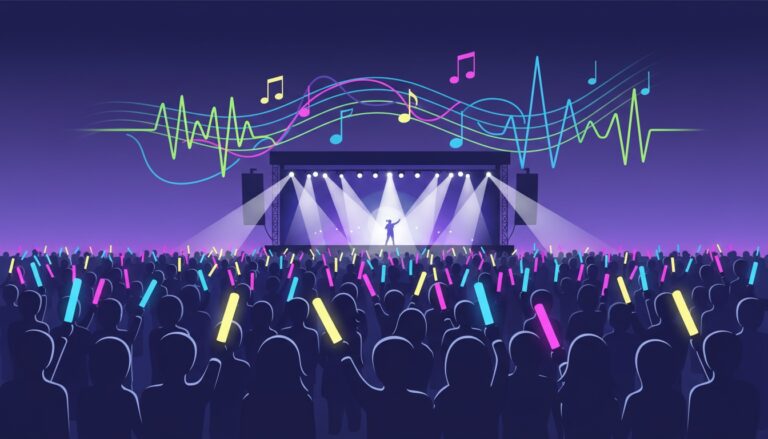
Hello, Daily Hangul! Are You Ready to Scream?
“The lights go down, the lightsticks turn on, and suddenly, thousands of people scream in perfect unison. Wait, what are they saying?”
This is a common moment of panic for many international K-Pop fans attending their first concert in Korea. To help you blend in perfectly with the local fandom, we are diving into the K-Pop Concert Edition today.
Today’s Story (Synthetic Case)
Note: This story is a synthesized example based on recurring patterns from various learners’ experiences.
Alex, a K-Pop fan from Canada, finally attended his favorite group’s concert in Seoul. He memorized all the lyrics, but when the song started, he realized nobody was singing the whole song. Instead, everyone was shouting specific names and phrases at specific times. Because he tried to sing everything, he ran out of breath and couldn’t hear the artist’s voice. He realized that in Korea, timing is everything.
Textbooks teach you how to sing, but they don’t teach you how to cheer. Today, let’s learn the language of the ‘stadium energy.’
At a Glance: Today’s Cheering Kit
- 떼창 (Ttechang): Singing along together (The soul of Korean concerts)
- 응원법 (Eungwonbeop): Fanchant (The rules of the crowd)
- 소리 질러 (Sori jilleo): Make some noise! (The signal to scream)
- 최애 (Choe-ae): Bias / Favorite member (The reason we are here)
Safety Level: Essential for concerts, fan meetings, and music shows. Informal and high-energy!
Level B1 (Intermediate): You need to understand timing and casual imperative forms used in crowds.
Table of Contents
- Today’s Core Expressions: Deep Dive
- Textbook vs. Real Korean: The Energy Difference
- Fandom Culture Analysis: The “Giveaway” Culture
- Real-Life Role Play: At the Concert Venue
- Shadowing Challenge
- FAQ & Wrap-up
Today’s Core Expressions: Deep Dive
1. 떼창 (Ttechang / Group Singing)
- Meaning: Singing along in unison (literally “group song”).
- Usage: Used among fans or in news articles describing the concert atmosphere.
- Tutor’s Secret Note: In Western concerts, you might sing along to everything. In Korea, Ttechang usually happens during the chorus or specific highlighted parts. If you sing loudly during a quiet ballad, you might get glared at!
- Pronunciation Clinic: The double consonant ‘ㄸ’ (tt) is tense. Tense up your tongue and don’t let air escape. It’s not “Te-chang,” it’s Tte-chang.
Examples:
* Fans: 한국 팬들의 떼창은 대단해요.
* (Han-guk paen-deul-ui tte-chang-eun dae-dan-hae-yo.)
* Korean fans’ group singing is amazing.
* News: 떼창이 경기장을 가득 채웠어요.
* (Tte-chang-i gyeong-gi-jang-eul ga-deuk chae-wos-seo-yo.)
* The sing-along filled the stadium.
* Concert: 우리 다 같이 떼창해요!
* (U-ri da ga-chi tte-chang-hae-yo!)
* Let’s all sing along together!
Mini Quiz:
Click to see the answer
Q. What do you call it when the crowd sings the chorus together perfectly?
A. 떼창 (Ttechang)
2. 응원법 (Eungwonbeop / Fanchant)
- Meaning: Cheering method / Fanchant.
- Usage: Essential knowledge before going to the venue.
- Tutor’s Secret Note: This is a “promise” between the artist and fans. It often includes the members’ real names in age order. If you don’t know the Eungwonbeop, you might feel left out during the upbeat songs.
- Pronunciation Clinic: Be careful with ‘법’ (beop). The final ‘p’ sound is unreleased. It’s not “beop-uh”, just snap your lips shut at the end.
Examples:
* Friend: 이번 신곡 응원법 외웠어?
* (I-beon sin-gok eung-won-beop oe-wos-seo?)
* Did you memorize the fanchant for this new song?
* Online: 응원법 영상이 유튜브에 올라왔어요.
* (Eung-won-beop yeong-sang-i yu-tyu-beu-e ol-la-was-seo-yo.)
* The fanchant video has been uploaded to YouTube.
* Concert: 응원법 타이밍이 너무 어려워요.
* (Eung-won-beop ta-i-ming-i neo-mu eo-ryeo-wo-yo.)
* The fanchant timing is too difficult.
3. 소리 질러 (Sori jilleo / Make some noise)
- Meaning: Scream! / Shout! (Literally: Scream a sound).
- Usage: The artist shouts this to hype up the crowd. You shouldn’t shout this to the artist; you should respond to it.
- Tutor’s Secret Note: When the artist says this, do not say “Ne!” (Yes). Just scream “Waaaaah!” That is the correct answer.
Examples:
* Artist: 2층, 소리 질러!
* (I-cheung, so-ri jil-leo!)
* Second floor, make some noise!
* Artist: 준비 됐으면 소리 질러!
* (Jun-bi dwaes-seu-myeon so-ri jil-leo!)
* If you’re ready, make some noise!
* Fan: 목이 터지라고 소리 질렀어요.
* (Mok-i teo-ji-ra-go so-ri jil-leos-seo-yo.)
* I screamed until my throat felt like it would burst.
Textbook vs. Real Korean
| Context | Textbook Korean (Book Korean) | Real Korean (Fandom Slang) |
|---|---|---|
| Singing Together | 같이 노래 불러요. (Ga-chi no-rae bul-leo-yo.) “Let’s sing songs together.” |
떼창 가즈아! (Tte-chang ga-jeu-a!) “Let’s go for the sing-along!” |
| Favorite Member | 가장 좋아하는 가수예요. (Ga-jang jo-ha-ha-neun ga-su-ye-yo.) “He is my favorite singer.” |
제 최애예요. (Je choe-ae-ye-yo.) “He is my bias.” |
Checklist:
* Use Textbook Korean when talking to a news reporter or your Korean teacher.
* Use Real Korean on Twitter (X), at the concert venue, or with fellow fans.
Fandom Culture Analysis: The “Na-num” (Sharing) Culture
In Korea, concerts are not just about the show; they are about the Na-num (나눔) culture outside the venue.
Term: 나눔 (Na-num)
Meaning: Giving away free fan-made goods (stickers, photocards, slogans).
If you see a long line that isn’t for official merchandise, it’s likely a Na-num line. Fans create these items with their own money to celebrate the event.
- Phrase to know: “이거 나눔 줄이인가요?” (Is this the line for the giveaway?)
- [I-geo na-num ju-ri-in-ga-yo?]
Real-Life Role Play: At the KSPO Dome
Situation: Standing in a long line outside the concert hall. It’s crowded.
Characters: You (Foreign Fan), Korean Fan (Stranger).
Korean Fan: (Holding a bag of snacks) 혹시 최애가 누구세요?
(Hok-si choe-ae-ga nu-gu-se-yo?)
(By any chance, who is your bias?)
You: 아, 저는 지민이요! 응원법 연습하느라 밤샜어요.
(A, jeo-neun Ji-min-i-yo! Eung-won-beop yeon-seup-ha-neu-ra bam-saes-seo-yo.)
(Ah, I like Jimin! I stayed up all night practicing the fanchant.)
Korean Fan: 정말요? 저도예요! 이거 받으세요. 제가 만든 스티커예요.
(Jeong-mal-yo? Jeo-do-ye-yo! I-geo ba-deu-se-yo. Je-ga man-deun seu-ti-keo-ye-yo.)
(Really? Me too! Please take this. It’s a sticker I made.)
You: 우와, 감사해요! 오늘 떼창 기대되네요.
(U-wa, gam-sa-hae-yo! O-neul tte-chang gi-dae-doe-ne-yo.)
(Wow, thank you! I’m looking forward to the sing-along today.)
Korean Fan: 맞아요. 우리 목 쉬도록 소리 질러봐요!
(Ma-ja-yo. U-ri mok swi-do-rok so-ri jil-leo-bwa-yo!)
(Right. Let’s scream until we lose our voices!)
Culture Tip: When asking “Who is your bias?” (Choe-ae), it’s a polite way to start a conversation among fans. Even if you don’t speak fluent Korean, showing your bias’s name/photo breaks the ice immediately.
Shadowing Challenge
Imagine the artist just pointed the microphone at the audience. It’s your turn!
Script:
“오늘 분위기 미쳤다! 다 같이 소리 질러!”
(O-neul bun-wi-gi mi-chyeot-da! Da ga-chi so-ri jil-leo!)
Translation: The vibe today is crazy! Everyone make some noise!
Practice Checklist:
– [ ] Say it slowly: O-neul… bun-wi-gi… mi-chyeot-da.
– [ ] Say it with emotion: Imagine the loud music.
– [ ] Point: When saying ‘질러’ (jilleo), put stress on the ‘jil’.
FAQ (Frequently Asked Questions)
Q1: Can I film the concert with my phone?
It depends. In Korea, many concerts strictly forbid recording (especially before the encore). Security guards (called “Gyeong-ho-won”) catch people quickly.
* Useful phrase: “촬영 가능한가요?” (Chwa-ryeong ga-neung-han-ga-yo? / Is filming allowed?)
Q2: What is ‘Mak-con’ (막콘)?
It is short for 마지막 콘서트 (Ma-ji-mak Con-cert). Fans usually prefer the ‘Mak-con’ because the artist often talks more, cries, or does special encores.
Wrap-up & Action Item
Today we learned how to survive and enjoy a K-Pop concert like a local fan. The key is not just watching, but participating through Ttechang and Eungwonbeop.
Today’s Mission:
Go to YouTube and search for your favorite song + “응원법” (Cheer guide). Listen to where the fans scream and try to follow the rhythm just once!
Tell me in the comments:
Which K-Pop group’s concert do you dream of attending in Korea?
Final Quiz
1. Which word refers to fans singing along together?
A) Solo (솔로)
B) Ttechang (떼창)
C) Ballad (발라드)
2. When the artist shouts “Sori jilleo!”, what should you do?
A) Stay silent and polite.
B) Shout “Ne!” quietly.
C) Scream and cheer loudly.
3. Fill in the blank:
To prepare for the concert, I memorized the _______ (Fanchant).
Answer: ( )
Answers: 1. B, 2. C, 3. 응원법 (Eungwonbeop)
Frequently Asked Questions (FAQ)
Q: What does "떼창 (Ttechang / Group Singing)" mean in Korean and how do you pronounce it?
A: In Korean, "떼창 (Ttechang / Group Singing)" is pronounced [Clinic: The double consonant 'ㄸ' (tt] and means: Singing along in unison (literally "group song").
Q: What does "응원법 (Eungwonbeop / Fanchant)" mean in Korean and how do you pronounce it?
A: In Korean, "응원법 (Eungwonbeop / Fanchant)" is pronounced [Clinic: Be careful with '법' (beop] and means: Cheering method / Fanchant.
Q: What does "소리 질러 (Sori jilleo / Make some noise)" mean in Korean and how do you pronounce it?
A: In Korean, "소리 질러 (Sori jilleo / Make some noise)" is pronounced [see lesson guide] and means: Scream! / Shout! (Literally: Scream a sound).







