

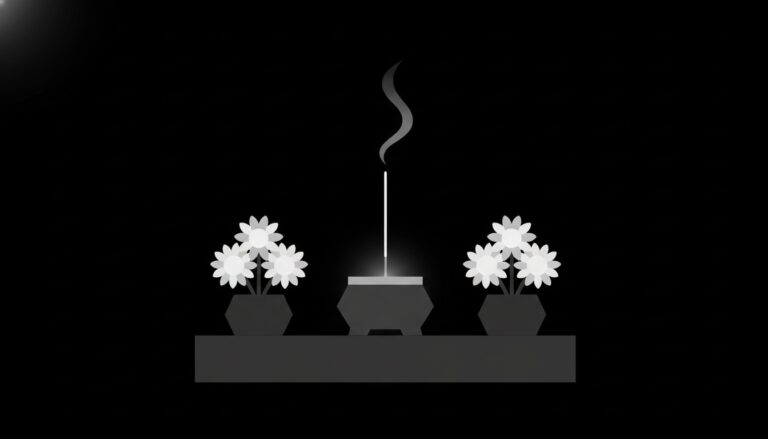
Invited to a Korean Funeral? The Ultimate Guide to Burning Incense Without Panic
Introduction
Hello, this is Daily Hangul!
Receiving news of a passing is always heavy, but for a foreigner in Korea, the anxiety is doubled. “What do I wear?” “Do I bow?” “What is that stick they are burning?”
Let’s look at a synthetic case based on common learner experiences:
“Alex,” an expat working in Seoul, attended a coworker’s funeral. When it was his turn to pay respects, he lit the incense stick and, out of habit (like blowing out a birthday candle), blew on it with his mouth to extinguish the flame. The room went silent. He didn’t know that in Korean culture, blowing with your mouth is considered disrespectful to the spirits.
Korean funerals (장례식, Jangryesik) proceed quickly—usually over three days—and have very specific rules. Unlike textbooks that focus on grammar, today we will focus on the vital actions and silence that speak louder than words.
At a Glance: Today’s Cheat Sheet
- Core Action: Burning Incense (분향, Bunhyang) vs. Offering Flowers (헌화, Heonhwa)
- Key Phrase: “Samga goineui myeongbogeul bimnida” (May the deceased rest in peace)
- Safety Level: Essential for any adult attending a funeral.
- Difficulty: B1 (Intermediate). While the words are hard, the physical etiquette is the real challenge here.
Table of Contents
- Deep Dive: Essential Condolence Expressions
- Etiquette Analysis: The “No-Blow” Rule & Bowing
- Textbook vs. Real Korean
- Role Play: At the Memorial Altar
- Shadowing Challenge
- FAQ
- Final Quiz
Today’s Core Expressions Deep Dive
1. 삼가 고인의 명복을 빕니다 (Samga goineui myeongbogeul bimnida)
- Meaning: “I respectfully pray for the repose of the deceased.”
- Usage & Register:
- To whom: The Chief Mourner (Sangju) or written on the envelope.
- Style: Extremely formal (Hasipsio-che). This is a fixed phrase.
- Tutor’s Secret Note:
- You will see this written everywhere. However, when saying it verbally, many Koreans actually mumble the end or stay silent because it is too sorrowful to speak clearly.
- Warning: Do not say this with a bright or loud voice. A sombre, low whisper is appropriate.
- Pronunciation Clinic:
- Myeong-bok often sounds like [Myeong-bok] but be careful not to bounce the ‘k’ sound too much. Keep it unreleased.
- Examples:
- (Written) 삼가 고인의 명복을 빕니다. (Samga goineui myeongbogeul bimnida.) – Rest in peace.
- (Verbal) 얼마나 상심이 크십니까? (Eolmana sangsimi keusimnikka?) – How great is your grief? (Used to comfort the family).
2. 좋은 곳으로 가셨을 거예요 (Joeun goseuro gasyeosseul geoyeyo)
- Meaning: “They must have gone to a better place.”
- Usage & Register:
- To whom: A friend or close colleague who is grieving.
- Style: Polite (Haeyo-che), but soft.
- Tutor’s Secret Note:
- This is slightly less stiff than the first phrase. It offers comfort rather than just formality.
- Examples:
- 너무 슬퍼하지 마세요. (Neomu seulpeohaji maseyo.) – Please don’t be too sad.
- 좋은 곳으로 가셨을 거예요. (Joeun goseuro gasyeosseul geoyeyo.) – They are in a better place now.
3. 뭐라 위로의 말씀을 드려야 할지 모르겠습니다 (Mwora wiroeui malsseumeul deuryeoya halji moreugetseumnida)
- Meaning: “I don’t know what words of comfort to offer.”
- Usage & Register:
- To whom: Anyone (Safe for business).
- Style: Very Formal.
- Tutor’s Secret Note:
- This is the most honest and safe expression when you are truly speechless. It shows humility.
Mini Quiz: Click to see the answer
Q. Fill in the blank: 삼가 ___ 명복을 빕니다.
A. 고인의 (Goineui – of the deceased)
Textbook vs. Real Korean
| Context | Textbook Korean (Book) | Real Korean (Reality) |
|---|---|---|
| Meeting the family | “삼가 고인의 명복을 빕니다.” (Full sentence) | (Silence + Eye Contact + Slight Bow) |
| Leaving | “안녕히 계십시오.” (Goodbye) | (Just bow and leave quietly without saying goodbye) |
Why? In reality, “Goodbye” (Annyeonghi gyesipsio) implies “Stay well,” which feels awkward in a house of mourning. Also, silence is considered a form of deep respect. You don’t have to speak.
Special Analysis: The “Incense” Ritual Guide
Many foreigners panic here. Let’s break down the “Burning Incense” (분향, Bunhyang) ritual into a step-by-step list.
The Step-by-Step Action Plan
- Approach: Walk to the altar and stand before the picture of the deceased.
- Kneel or Stand: Usually, you kneel (unless you have bad knees or it’s a standing-style room).
- Pick Up: Pick up one incense stick (three if you are the head of a group, but usually one) with your right hand. Support your right wrist with your left hand (Sign of respect).
- Light It: Light the stick using the candle provided.
- Extinguish (CRITICAL):
- Do NOT blow with your mouth.
- Shake the stick gently sideways or wave your hand to put out the flame.
- Place: Put the stick into the burner (incense holder). One stick usually goes in upright or lying down depending on the holder type (follow what others did).
- The Bow (재배, Jaebae):
- Stand up and bow to the deceased’s photo.
- Count: Two full bows (prostrations) + One half bow (neck bow).
- Note: If you are Christian or uncomfortable bowing, you may place a white chrysanthemum (Heonhwa) instead and pray silently for a moment.
- The Family: Turn to the family (Sangju) and bow once (one full bow or deep standing bow).
Real-Life Scenario: Role Play
Setting: A funeral home at a university hospital.
Characters:
* Guest (You): A colleague of the deceased.
* Sangju: The son of the deceased (Chief Mourner).
(Guest enters, signs the guestbook, and hands over the envelope. approaches the altar.)
Guest: ( performs the incense ritual: Lights -> Shakes -> Places -> Bows twice to photo )
(Guest turns to face the Sangju.)
Guest & Sangju: (Bow to each other simultaneously – one deep bow.)
Guest: (Softly) 상심이 크시겠습니다. (Sangsimi keusigetseumnida.)
(Translation: Your grief must be great.)
Sangju: 와주셔서 감사합니다. (Wajusyeoseo gamsahamnida.)
(Translation: Thank you for coming.)
Guest: (Nods silently and moves away to the dining area.)
Culture Tip: Do not shake hands with the Sangju unless they offer first. Bowing is the standard.
Shadowing Challenge
Repeat this 3 times to get the rhythm right. Focus on the low, calm tone.
“Samga goineui myeongbogeul bimnida.”
- [ ] Slow: Sam-ga… go-in-eui… myeong-bok-eul… bim-ni-da.
- [ ] Normal: Samga goineui myeongbogeul bimnida.
- [ ] Real Speed (Mumbled): Samga… myeongbogeul bimnida.
Pronunciation Point: The ui (의) in goineui is often pronounced as ‘e’ (에) in spoken Korean, making it sound like Go-in-e. This is standard and acceptable!
FAQ: Your Burning Questions
Q1: What should I wear?
A: Black suit is best. Dark navy or dark grey is acceptable. Avoid bright colors, flashy jewelry, or heavy makeup. Wear socks (black socks are essential as you remove shoes).
Q2: Can I just offer a flower instead of incense?
A: Yes! This is called 헌화 (Heonhwa). Pick up a white chrysanthemum, place it on the altar with the flower facing the deceased (stem towards you), and observe a moment of silence. No prostration bow is needed; a standing bow is fine.
Q3: Is there a money gift?
A: Yes, it is called 조의금 (Joeuigeum). Usually 30,000, 50,000, or 100,000 KRW (odd numbers are lucky, but 10, 20 are accepted as round numbers). Put it in a white envelope.
Wrap-up & Action Item
Today we learned how to navigate the most solemn moment in Korean culture.
One Sentence Summary: Don’t blow the incense with your mouth, bow twice to the deceased, and keep silence as a form of respect.
Today’s Mission:
Next time you watch a Korean drama (like My Mister or Move to Heaven), watch a funeral scene closely. Observe if they do the “Shake” to put out the incense!
Discussion: Have you ever attended a funeral in another country? How was it different? Tell us in the comments!
Final Quiz
- How many times do you bow to the deceased (the photo)?
a) 1 time
b) 2 times
c) 3 times
d) 0 times -
How should you extinguish the incense flame?
a) Blow it with your mouth
b) Pinch it with fingers
c) Shake it gently or wave a hand
d) Pour water on it -
Fill in the blank: The money given at a funeral is called ___.
( Hint: J_ _ _ _ g _ _ m )
Answers:
1. b (2 times + a half bow)
2. c
3. 조의금 (Joeuigeum)
Frequently Asked Questions (FAQ)
Q: What does "삼가 고인의 명복을 빕니다 (Samga goineui myeongbogeul bimnida)" mean in Korean and how do you pronounce it?
A: In Korean, "삼가 고인의 명복을 빕니다 (Samga goineui myeongbogeul bimnida)" is pronounced [see lesson guide] and means: "I respectfully pray for the repose of the deceased."
Q: What does "좋은 곳으로 가셨을 거예요 (Joeun goseuro gasyeosseul geoyeyo)" mean in Korean and how do you pronounce it?
A: In Korean, "좋은 곳으로 가셨을 거예요 (Joeun goseuro gasyeosseul geoyeyo)" is pronounced [see lesson guide] and means: "They must have gone to a better place."
Q: What does "뭐라 위로의 말씀을 드려야 할지 모르겠습니다 (Mwora wiroeui malsseumeul deuryeoya halji moreugetseumnida)" mean in Korean and how do you pronounce it?
A: In Korean, "뭐라 위로의 말씀을 드려야 할지 모르겠습니다 (Mwora wiroeui malsseumeul deuryeoya halji moreugetseumnida)" is pronounced [see lesson guide] and means: "I don't know what words of comfort to offer."







