

How to Order Sake and Enjoy Izakayas in Korea
Introduction
Hello, this is Daily Hangul!
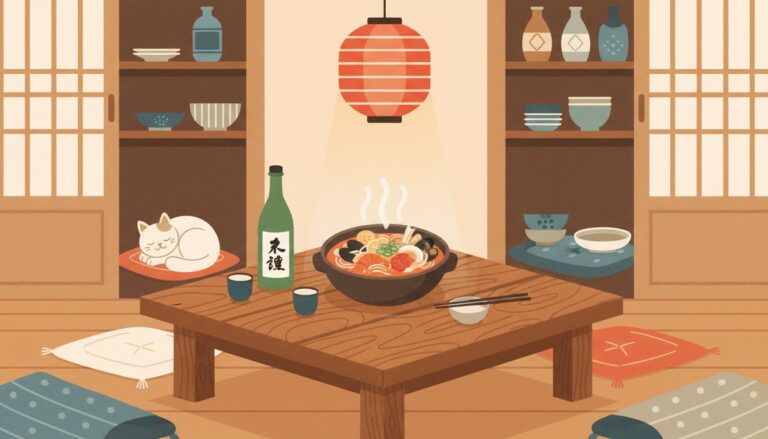
While Soju and Makgeolli are the stars of traditional Korean drinking culture, did you know that Japanese-style pubs, known as Izakaya (이자카야), are incredibly popular in Korea? Walk through trendy neighborhoods like Hongdae or Gangnam, and you will see red lanterns everywhere.
Many of my students feel comfortable ordering Soju at a BBQ place but freeze up when they enter an Izakaya because the menu and ordering style feel slightly different. A common pattern I see is students staring at the Sake menu and just pointing, unsure how to ask about the temperature or the flavor profile in Korean.
Today, based on a composite case study of several intermediate learners, we will solve the problem of “Silent Pointing.” We will learn how to navigate a Korean Izakaya, order Sake (Sake/Nihonshu) using natural Korean expressions, and ask for it to be served hot or cold. Let’s master the specific vocabulary that makes you sound like a local gourmand!
At a Glance
- Today’s Expressions: Asking for recommendations, requesting temperature (Hot/Cold), checking alcohol strength.
- Safe Zone: Korean Izakayas, upscale bars, dining with colleagues or friends.
- Level (C1): While the grammar is simple, knowing specific drinking terms (
도수,데우다) shows cultural fluency.
Table of Contents
- Today’s Key Expressions Deep Dive
- Textbook vs. Real Korean
- Unique Analysis: The Temperature of Words
- Real Scenario Role Play
- Shadowing Challenge
- FAQ
- Wrap-up & Mission
Today’s Key Expressions Deep Dive
1. 사케 추천해 주실 수 있나요? (Sake chucheonhae jusil su innayo?)
- Meaning: Could you recommend a Sake for us?
- Usage & Register:
- To whom: The server or manager (staff).
- Tone:
해요체(Haeyo-che / Polite polite) is standard.
- Tutor’s Secret Note: In Korea, “Sake” usually refers to Japanese rice wine. Since the list can be overwhelming, asking for a recommendation (
추천) is very common and polite. It signals you trust their expertise. - Pronunciation Clinic:
- Listen for: [사케 추천해 주실 수 인나요]
- The
ㅆin있나요often sounds like a softnsound (nasalization) when spoken fast:innayo.
- Examples:
- (Izakaya) 가성비 좋은 사케 추천해 주실 수 있나요?
Gaseongbi joeun sake chucheonhae jusil su innayo?
(Could you recommend a Sake with good value for money?) - (Business) 부장님이 좋아하실 만한 사케 추천해 주실 수 있나요?
Bujangnimi joahasil manhan sake chucheonhae jusil su innayo?
(Could you recommend a Sake that the manager might like?) - (Date) 달달한 사케 추천해 주실 수 있나요?
Daldalhan sake chucheonhae jusil su innayo?
(Could you recommend a sweet Sake?)
- (Izakaya) 가성비 좋은 사케 추천해 주실 수 있나요?
- Alternatives:
- More Casual: 여기 뭐가 제일 잘 나가요? (Yeogi mwoga jeil jal nagayo? – What sells best here?)
- More Formal: 하우스 사케 있습니까? (Hauseu sake isseumnikka? – Do you have a house Sake?)
Mini Quiz (Click to see answer)
Fill in the blank: “This looks difficult. Please ______ a menu.”
이거 어려워요. 메뉴 좀 ______해 주세요.
Answer: 추천 (chucheon – recommend)
2. 따뜻하게 데워 주세요. (Ttatteuthage dewo juseyo.)
- Meaning: Please warm it up (serve it hot).
- Usage & Register:
- To whom: Staff.
- Tone: Polite request.
- Tutor’s Secret Note: Korean alcohol like Soju is almost always served ice cold. However, in Izakayas, asking for Sake to be “warmed up” is a specific request. If you don’t say this, it might come cold or at room temperature by default.
- Pronunciation Clinic:
데워(Dewo) requires a cleanwsound. Don’t say “De-o”.
- Examples:
- (Ordering) 이거 따뜻하게 데워 주세요.
Ige tatteuthage dewo juseyo.
(Please warm this up.) - (checking) 따뜻하게 먹는 게 더 맛있나요?
Ttatteuthage meongneun ge deo masinnayo?
(Is it tastier to eat/drink it warm?) - (Preference) 저는 차갑게 마시는 걸 좋아해요.
Jeoneun chagapge masineun geol joahaeyo.
(I prefer drinking it cold.)
- (Ordering) 이거 따뜻하게 데워 주세요.
- Alternatives:
- Opposite: 차갑게 칠링해 주세요. (Chagapge chillinghae juseyo. – Please chill it cold.)
- Casual: 따뜻한 걸로 주세요. (Ttatteuthan geollo juseyo. – Give me the warm version.)
3. 도수가 어떻게 돼요? (Dosuga eotteoke dwaeyo?)
- Meaning: What is the alcohol percentage (ABV)?
- Usage & Register:
- To whom: Staff or friends.
- Tone: Inquiry.
- Tutor’s Secret Note:
도수(Dosu) is the specific term for alcohol degree. Koreans often ask this to gauge how drunk they might get or to match the drink with the food. Asking “Is it strong?” (세요?) is vague; asking도수is precise. - Pronunciation Clinic:
어떻게is pronounced [어떠케] (eotteoke) due to theㅎ+ㄱaspiration rule.
- Examples:
- (Choosing) 이 술은 도수가 어떻게 돼요?
I sureun dosuga eotteoke dwaeyo?
(What’s the ABV of this alcohol?) - (Comparison) 소주보다 도수가 높나요?
Sojuboda dosuga nomnayo?
(Is the ABV higher than Soju?) - (Low alcohol) 도수 낮은 걸로 마시고 싶어요.
Dosu najeun geollo masigo sipeoyo.
(I want to drink something with low alcohol.)
- (Choosing) 이 술은 도수가 어떻게 돼요?
Textbook vs. Real Korean
Context: You want to order snacks to go with your alcohol.
| Type | Expression (Korean/Romanized) | Nuance |
|---|---|---|
| Book Korean | 안주는 무엇이 있습니까? (Anjuneun mueosi isseumnikka?) |
Very formal, sounds like a textbook interview. Rare in a noisy pub. |
| Real Korean | 여기 안주 뭐가 맛있어요? (Yeogi anju mwoga masisseoyo?) |
“What snacks are tasty here?” Natural and friendly. |
| Real Korean | 국물 요리 하나 주세요. (Gungmul yori hana juseyo.) |
“Please give us one soup dish.” Very common in Izakayas (e.g., Nagasaki Jjamppong). |
Quick Tip: In Korean drinking culture, food paired with alcohol is always called 안주 (Anju), not just “food” or “snacks.” Using this word immediately raises your level.
Unique Analysis: The Temperature of Words
In a Korean Izakaya, the “temperature” you ask for changes the vibe.
| Korean Expression | Temperature | Context / Vibe |
|---|---|---|
| 히야시 (Hiyashi) | Ice Cold | Originally Japanese, but widely used in older Korean slang to mean “super cold.” Use carefully; mostly older generations or very casual settings use it. |
| 차갑게 (Chagapge) | Cold | Standard, polite. Safe for everyone. |
| 상온 (Sang-on) | Room Temp | For premium Sake where you want to taste the aroma fully. Sounds sophisticated. |
| 따뜻하게 (Ttatteuthage) | Warm | Cozy, winter vibes. Often called “Atsukan” style, but saying “Ttatteuthage” is perfect Korean. |
Real Scenario Role Play
Situation: Friday night at a busy Izakaya in Yeonnam-dong. You are with a Korean friend.
Staff: 어서 오세요! 두 분이세요? (Welcome! Two people?)
You: 네, 두 명이에요. 혹시 조용한 자리 있나요? (Yes, two. Do you happen to have a quiet seat?)
Staff: 안쪽으로 안내해 드릴게요. (I’ll guide you inside.)
(Sitting down)
You: 저기요, 사케 추천해 주실 수 있나요? 너무 비싸지 않은 걸로요. (Excuse me, could you recommend a Sake? Something not too expensive.)
Staff: 그럼 ‘간바레 오토상’ 어떠세요? 무난하게 많이 드세요. (How about ‘Ganbare Otosan’? It’s a safe choice many people drink.)
You: 좋아요. 그거 하나랑, 나가사키 짬뽕 주세요. 아, 술은 따뜻하게 데워 주세요. (Great. One of that, and Nagasaki Jjamppong please. Ah, please warm up the alcohol.)
Staff: 네, 알겠습니다. (Okay, understood.)
Culture Tip: In Korean Izakayas, ordering a soup dish (Tang/Jjamppong) is almost essential because Koreans love having hot broth (국물) while drinking alcohol.
Shadowing Challenge
Listen and repeat 3 times. Focus on the intonation of the request.
“여기요, 이 사케는 따뜻하게 데워 주실 수 있나요?”
(Yeogiyo, i sakeneun ttatteuthage dewo jusil su innayo?)
(Excuse me, can you warm up this Sake?)
- [ ] Attempt 1 (Slow)
- [ ] Attempt 2 (Normal)
- [ ] Attempt 3 (Fast & Natural)
Pronunciation Point: Connect 주실 수 smoothly as [jusil-su]. Don’t pause between the words.
FAQ
Q1: Can I order Soju at an Izakaya?
A: Yes! 99% of Izakayas in Korea sell Soju. In fact, many locals go to Izakayas for the atmosphere but still drink Soju because Sake can be expensive. You can say: “여기 소주 한 병 주세요.” (Please give us a bottle of Soju.)
Q2: Is it rude to pour my own drink?
A: In Korean culture, it is polite to pour for others and let them pour for you (자작 금지 – No self-pouring). This rule applies in Izakayas too. If you are with Koreans, wait for them to fill your glass!
Wrap-up & Mission
Summary: Today we learned how to ask for recommendations (추천), specify temperature (따뜻하게/차갑게), and check alcohol strength (도수) in a Korean Izakaya.
Today’s Mission: Next time you go to any bar or restaurant in Korea, try asking about the “best menu” using the recommendation phrase:
* “여기서 제일 맛있는 거 추천해 주세요!” (Please recommend the tastiest thing here!)
Tell me in the comments: Do you prefer your Sake hot (따뜻하게) or cold (차갑게)? Or do you prefer Soju?
Final Quiz
Click to reveal the questions!
1. Which word means “snacks served with alcohol” in Korean?
A) Banchan (반찬)
B) Anju (안주)
C) Bap (밥)
2. How do you politely ask for the alcohol to be warmed up?
A) 따뜻하게 데워 주세요.
B) 차갑게 식혀 주세요.
C) 빨리 주세요.
3. Fill in the blank: “What is the alcohol percentage?”
_______가 어떻게 돼요? (Hint: d_ _ u)
Answers: 1. B, 2. A, 3. 도수 (Dosu)
Frequently Asked Questions (FAQ)
Q: What does "사케 추천해 주실 수 있나요? (Sake chucheonhae jusil su innayo?)" mean in Korean and how do you pronounce it?
A: In Korean, "사케 추천해 주실 수 있나요? (Sake chucheonhae jusil su innayo?)" is pronounced [see lesson guide] and means: Could you recommend a Sake for us?
Q: What does "따뜻하게 데워 주세요. (Ttatteuthage dewo juseyo.)" mean in Korean and how do you pronounce it?
A: In Korean, "따뜻하게 데워 주세요. (Ttatteuthage dewo juseyo.)" is pronounced [see lesson guide] and means: Please warm it up (serve it hot).
Q: What does "도수가 어떻게 돼요? (Dosuga eotteoke dwaeyo?)" mean in Korean and how do you pronounce it?
A: In Korean, "도수가 어떻게 돼요? (Dosuga eotteoke dwaeyo?)" is pronounced [see lesson guide] and means: What is the alcohol percentage (ABV)?






