

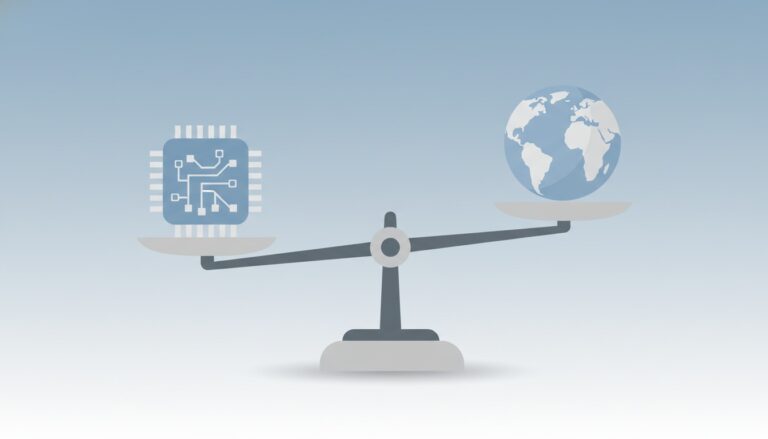
Understanding Korean News: The ‘Semiconductor War’ & Diplomatic Nuances
Introduction
Hello, this is Daily Hangul!
If you work in the tech industry or follow international business news, you’ve likely seen headlines about the “Semiconductor War” (반도체 전쟁) and the “Chip 4 Alliance.” For Korea, home to giants like Samsung and SK Hynix, this isn’t just news—it’s a critical survival issue.
Why This Matters (Synthetic Case Study)
Based on feedback from advanced learners working in Yeouido (Korea’s Wall Street) and Pangyo (Korea’s Silicon Valley), a common pattern of confusion arises during strategy meetings. When a Korean manager says, “입장이 좀 난감하네요 (Our position is a bit awkward),” foreign colleagues often interpret this as a minor inconvenience. However, in a high-stakes business context involving diplomatic pressure, this often implies, “We are in a crisis and cannot easily choose a side.”
Today, we will move beyond basic business Korean and dive into the language of diplomacy, strategy, and negotiation—essential for understanding the current ‘Chip War’ situation.
At a Glance
- Today’s Topic: Advanced Business & Political Vocabulary (The Chip War)
- Safe Zone: Formal meetings, discussing news, intellectual conversations.
- Level: C2 (Advanced). This helps you sound like an industry insider who understands the subtext of Korean news.
Table of Contents
- Today’s Deep Dive Expressions
- Textbook vs. Real Korean
- Analyst’s Corner: The Scale of “Concern”
- Real Life Scenario: Lunch in Yeouido
- Shadowing Challenge
- FAQ
Today’s Core Expressions: Deep Dive
1. 줄타기 (Jultagi)
- Meaning: Tightrope walking / (Figuratively) Balancing act
- Usage & Register: Used in news and analysis to describe a precarious situation where one must please two opposing sides (e.g., the US and China).
- Tutor’s Note: This comes from traditional Korean tightrope performance. In business, it implies a high-risk situation where a single mistake could lead to a fall.
- Pronunciation:
[Jul-ta-gi](Pronounce ‘gi’ softly)
Example A (News):
한국은 미국과 중국 사이에서 외교적 줄타기를 하고 있어요.
Hangugeun Migukgwa Jungguk saieseo oegyojok jultagireul hago isseoyo.
(Korea is performing a diplomatic balancing act between the US and China.)Example B (Business):
이번 협상은 가격과 품질 사이에서 줄타기하는 기분입니다.
Ibeon hyeopsang-eun gagyeokgwa pumjil saieseo jultagihaneun gibunimbida.
(This negotiation feels like a tightrope walk between price and quality.)Example C (Casual):
부장님과 팀장님 사이에서 줄타기하느라 힘들어.
Bujangnimgwa timjangnim saieseo jultagihaneura himdeureo.
(It’s hard playing the balancing act between the General Manager and the Team Leader.)
- Alternatives: 균형 외교 (Balanced diplomacy – Formal), 눈치 싸움 (Battle of wits – Casual)
Mini Quiz (Click to see answer)
Q. Which word fits best? “Trying to please both sides is a dangerous ______.”
A. 줄타기 (Jultagi)
2. 셈법 (Sembeop)
- Meaning: Method of calculation / (Figuratively) Calculus, Strategy, Complex calculation of interests
- Usage & Register: Highly common in political/economic news headlines. It refers to the complex mental math of “what do we gain vs. what do we lose?”
- Tutor’s Note: If someone asks about your company’s “셈법,” they aren’t asking for a calculator. They are asking for your strategic stance regarding profit and loss.
- Pronunciation:
[Sem-ppeop](Note the tensing of ‘beop’ to ‘ppeop’)
Example A (News):
칩4 동맹에 대한 한국의 셈법이 복잡해지고 있습니다.
Chip-po dongmaeng-e daehan Hangugui sembeop-i bokjap-haejigo isseumnida.
(Korea’s calculus/strategy regarding the Chip 4 Alliance is becoming complex.)Example B (Meeting):
경쟁사의 셈법을 먼저 파악해야 합니다.
Gyeongjaengsaui sembeop-eul meonjeo pa-ak-haeya hamnida.
(We must first figure out the competitor’s calculation/strategy.)
- Alternatives: 계산 (Calculation – Literal), 전략 (Strategy – General)
3. 압박 (Apbak)
- Meaning: Pressure
- Usage & Register: Used when an external force (government, competitor, boss) is forcing you to make a decision.
- Tutor’s Note: Often paired with verbs like 넣다 (to put in) or 받다 (to receive).
- Pronunciation:
[Ap-ppak](Strong tension on ‘bak’ -> ‘ppak’)
Example A (Context: US Govt):
미국은 동맹국들에게 대중국 제재 참여를 압박하고 있습니다.
Migugeun dongmaengkuk-deurege daejungguk jejae chamyeoreul apbakhago isseumnida.
(The US is pressuring its allies to participate in sanctions against China.)Example B (Work):
마감 기한에 대한 압박이 심해요.
Magam gihan-e daehan apbak-i simhaeyo.
(The pressure regarding the deadline is severe.)
Textbook vs. Real Korean
| Context | Book Korean (Standard) | Real Korean (News/Business Nuance) | Usage Note |
|---|---|---|---|
| Diplomatic Friction | 외교적 갈등 (Oegyojok galdeung) | 불협화음 (Bulhyeop-hwaeum) | Literally “dissonance.” Used when allies disagree. |
| Benefit | 이익 (I-ik) | 실익 (Sil-ik) | “Actual/Practical benefit” (Net profit after losses). |
| Dilemma | 딜레마 (Dilemma) | 진퇴양난 (Jintoe-yangnan) | A 4-character idiom meaning “Can’t go forward or back.” |
Tutor’s Tip: In high-level business discussions, using words like 실익 (Sil-ik) instead of just 이익 shows you are thinking about the net result after considering the political costs.
Analyst’s Corner: The “Concern” Thermometer
In diplomatic or corporate statements regarding the Semiconductor War, the level of “worry” indicates the severity of the threat. Here is how to read the temperature:
| Level | Expression | Nuance | Translation |
|---|---|---|---|
| 1 (Mild) | 예의주시하고 있다 (Ye-ui-jusi-hago itda) |
“We are watching carefully.” | Keeping a close watch |
| 2 (Medium) | 우려를 표하다 (Uryeoreul pyohada) |
“We are worried.” | Expressing concern |
| 3 (Strong) | 난색을 표하다 (Nansaeg-eul pyohada) |
“We are showing an awkward face.” (Polite refusal/Discomfort) | Expressing reluctance/disapproval |
| 4 (Warning) | 유감이다 (Yugam-ida) |
“It is regrettable.” (Diplomatic code for “We are angry.”) | Deeply regrettable |
Real Life Scenario: Role Play
Situation: Lunch at a restaurant in Yeouido. Michael (Foreign Manager) and Min-su (Korean Colleague) are discussing the news about semiconductor restrictions.
Michael: 오늘 뉴스 봤어요? 반도체 수출 규제가 더 심해진대요.
(Oneul nyuseu bwasseoyo? Bandoche suchul gyujega deo simhaejindaeyo.)
Did you see the news today? They say semiconductor export regulations are getting stricter.
Min-su: 네, 봤습니다. 우리 기업들 입장이 정말 난처하겠어요.
(Ne, bwasseumnida. Uri gieopdeul ipjang-i jeongmal nancheohagesseoyo.)
Yes, I saw it. Our companies must be in a really awkward/difficult position.
Michael: 미국과 중국 사이에서 줄타기를 잘해야 할 텐데요.
(Migukgwa Jungguk saieseo jultagireul jalhaeya hal tendeyo.)
They will need to perform the balancing act well between the US and China.
Min-su: 맞아요. 당분간은 실익을 따지면서 신중하게 움직이겠죠.
(Majayo. Dangbunganeun sil-ik-eul ttajimyeonseo sinjunghage umjigigetjyo.)
That’s right. For the time being, they will move cautiously while weighing the practical benefits.
Michael: 쉽지 않겠네요. 해법이 있을까요?
(Swipji angenneyo. Haebbeop-i isseulkkayo?)
It won’t be easy. Is there a solution?
Cultural Tip: In Korea, discussing sensitive politics (like US-China relations) is acceptable in business settings if focused on economic impact rather than personal political ideology.
Shadowing Challenge (Speaking Practice)
Imagine you are a news anchor reporting on the Semiconductor War. Try this script 3 times!
Script:
“미국의 압박과 중국의 반발 사이에서, 한국 반도체 산업의 셈법이 복잡해지고 있습니다.”
(Migugui apbakkwa Junggugui banbal saieseo, Hanguk bandoche saneobui sembeobi bokjaphaejigo isseumnida.)
Translation: “Between US pressure and China’s pushback, the strategic calculus of the Korean semiconductor industry is becoming complex.”
- [ ] Attempt 1 (Slowly, focusing on pronunciation)
- [ ] Attempt 2 (Normal speed)
- [ ] Attempt 3 (News Anchor tone – Serious and clear)
Pronunciation Check: Be careful with 압박 (Ap-ppak) and 셈법 (Sem-ppeop). The double consonant sound creates a sense of tension/seriousness.
FAQ
Q1: Can I use the word “전쟁” (War) in a business meeting?
Yes, expressions like 반도체 전쟁 (Semiconductor War), 무역 전쟁 (Trade War), and 인재 전쟁 (Talent War) are standard industry terms. It does not imply actual physical combat.
Q2: What is the difference between 반도체 and 칩?
반도체 (Bandoche) is the formal Korean word for semiconductor. 칩 (Chip) is used in compound words like “칩4 동맹” (Chip 4 Alliance) or informal contexts. In formal reports, stick to 반도체.
Wrap-up & Mission
Today’s Summary: We learned that 줄타기 (balancing act) and 셈법 (calculus) are key words to describe Korea’s strategic dilemma in the global market.
Your Mission:
Search for “삼성전자 반도체” (Samsung Electronics Semiconductor) on Google News Korea. Try to find the word 우려 (concern) or 위기 (crisis) in the headlines.
Comment below:
Have you ever had to do a “jultagi” (balancing act) at your workplace? Tell us your story!
Final Quiz
- What is the Korean word for “National Interest” often used in diplomacy?
A) 국익 (Gugik)
B) 수익 (Suik)
C) 사익 (Saik) -
Which word best describes a situation where you are stuck and awkward?
A) 행복하다 (Haengbokhada)
B) 난감하다 (Nangamhada)
C) 시원하다 (Siwonhada) -
Fill in the blank: “Diplomacy is often compared to walking on a rope, called ______.”
Answer: [ ]
Answers: 1. (A), 2. (B), 3. 줄타기 (Jultagi)
Frequently Asked Questions (FAQ)
Q: What does "줄타기 (Jultagi)" mean in Korean and how do you pronounce it?
A: In Korean, "줄타기 (Jultagi)" is pronounced [Jul-ta-gi] and means: Tightrope walking / (Figuratively) Balancing act
Q: What does "셈법 (Sembeop)" mean in Korean and how do you pronounce it?
A: In Korean, "셈법 (Sembeop)" is pronounced [Sem-ppeop] and means: Method of calculation / (Figuratively) Calculus, Strategy, Complex calculation of interests
Q: What does "압박 (Apbak)" mean in Korean and how do you pronounce it?
A: In Korean, "압박 (Apbak)" is pronounced [Ap-ppak] and means: Pressure






