

Introduction
Annyeonghaseyo! 👋 It’s your favorite Korean tutor, Daily Hangul!
Have you ever gone shopping in Seoul, picked up a beautiful souvenir, and wondered, “Is this real gold or just shiny plastic?” 🤔 Or maybe you saw a scene in a K-drama where the protagonist gives a handmade gift and says, “I made this with my own hands!”
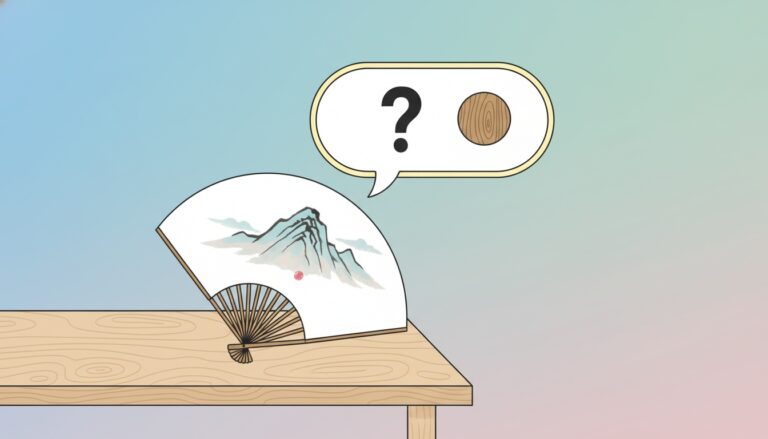
Today, we are going to learn how to describe what things are made of. This is super useful when you are shopping for clothes, furniture, or souvenirs in Korea. Let’s master these expressions so you can shop smart and impress your friends! Let’s go! 🚀
Core Expressions
Here are the top 3 expressions you need to describe materials!
1. …로 만들었어요 (… made of …)
- Korean: [재료]로 만들었어요.
- Pronunciation: [ [Jaeryo]-ro mandeureosseoyo ]
- English Meaning: It’s made of [material].
- Details: This is the standard way to say what something is created from. The particle ~(으)로 ((eu)ro) indicates the tool, method, or material used.
- If the word ends with a vowel: Use 로 (ro).
- If the word ends with a consonant (batchim): Use 으로 (euro).
2. 나무 (Wood) / 플라스틱 (Plastic)
- Korean: 나무 / 플라스틱
- Pronunciation: [ Namu ] / [ Peullaseutik ]
- English Meaning: Wood / Plastic
- Details: “Namu” means tree or wood. You will hear this a lot when looking at traditional Korean furniture! “Peullaseutik” is easy because it sounds just like English!
- Example:
- 나무로 만들었어요. (Namuro mandeureosseoyo) = It’s made of wood.
3. 이거 뭐로 만들었어요? (Question)
- Korean: 이거 뭐로 만들었어요?
- Pronunciation: [ Igeo mworo mandeureosseoyo? ]
- English Meaning: What is this made of?
- Details: This is the magic phrase for shopping! 🛍️ Point at an item and ask this.
- 💡 Pronunciation Tip: In spoken Korean, 무엇 (mueot – what) is often shortened to 뭐 (mwo). Also, when saying 만들었어요, the ‘ㄹ’ (l) sound carries over, making it sound smooth like [mandeu-reosseoyo].
Real-life Conversation
Imagine you are at a souvenir shop in Insadong (a famous traditional street in Seoul). You are looking at a beautiful desk accessory.
🛒 At the Souvenir Shop
You (A): 와, 이 필통 예뻐요! 이거 뭐로 만들었어요?
(Wa, i piltong yeppeoyo! Igeo mworo mandeureosseoyo?)
[Wow, this pencil case is pretty! What is this made of?]
Shop Owner (B): 아, 그거요? 종이로 만들었어요.
(A, geugeoyo? Jongiro mandeureosseoyo.)
[Ah, that one? It’s made of paper.]
You (A): 정말요? 종이요? 튼튼해요?
(Jeongmaryo? Jongiyo? Teunteunhaeyo?)
[Really? Paper? Is it strong?]
Shop Owner (B): 네, 한지예요. 아주 튼튼해요!
(Ne, Hanijiyeyo. Aju teunteunhaeyo!)
[Yes, it’s Hanji (traditional paper). It’s very strong!]
Culture Tip: The Magic of Hanji (한지) 📜
Did you notice the shop owner mentioned Hanji?
In Korea, there is a traditional paper called Hanji, made from the bark of mulberry trees. It is known for being incredibly durable! There is a saying: “Silk lasts for five hundred years, but Hanji lasts for a thousand.”
Koreans use Hanji not just for writing, but to make lamps, boxes, and even clothes! So if someone tells you, “It’s made of paper” (종이로 만들었어요), don’t be shocked—it might be high-quality Hanji! 😲
Conclusion & Quiz
Great job today! Now you can ask what things are made of and understand the answer. Next time you see a cool item in a K-drama, try to guess the material in Korean!
📝 Mini Quiz
- How do you say “It is made of wood” in Korean?
- Hint: Wood = Namu
- Answer: _______________
- Which particle is correct for “Made of plastic”? (Plastic ends in a consonant!)
- A) 로 (ro)
- B) 으로 (euro)
✅ Answers
1. 나무로 만들었어요 (Namuro mandeureosseoyo)
2. B (플라스틱으로 – because ‘tick’ ends with a consonant!)
Frequently Asked Questions (FAQ)
Q: What does "...로 만들었어요 (... made of ...)" mean in Korean and how do you pronounce it?
A: In Korean, "...로 만들었어요 (... made of ...)" is pronounced [Jaeryo] and means: It's made of [material].
Q: What does "나무 (Wood) / 플라스틱 (Plastic)" mean in Korean and how do you pronounce it?
A: In Korean, "나무 (Wood) / 플라스틱 (Plastic)" is pronounced [Namu] and means: Wood / Plastic
Q: What does "이거 뭐로 만들었어요? (Question)" mean in Korean and how do you pronounce it?
A: In Korean, "이거 뭐로 만들었어요? (Question)" is pronounced [Igeo mworo mandeureosseoyo?] and means: What is this made of?







