

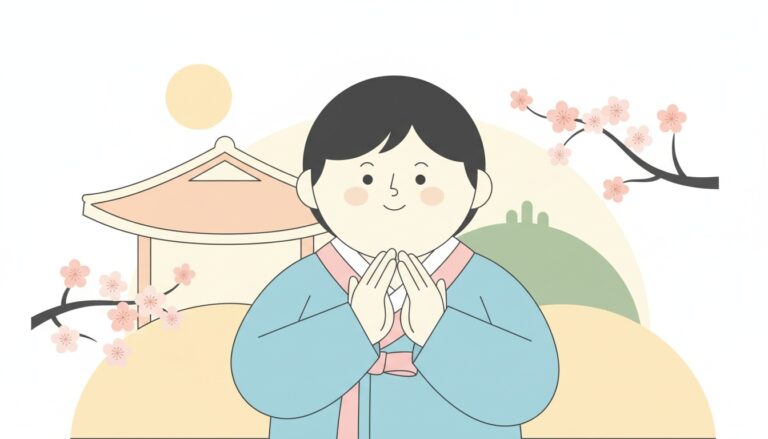
🙅♀️ How to Say ‘No’ Like a K-Drama Star!
👋 Hello! It’s Daily Hangul!
Hello, K-culture lovers! It’s your friendly tutor Daily Hangul here to upgrade your Korean skills! 🚀
Have you ever been in a situation where a Korean friend invited you to dinner or a party, but you were just too tired or busy? 😅 In K-Dramas, you often see characters politely declining offers without hurting anyone’s feelings.
Today, we are going to learn how to decline invitations shortly and simply. Saying “No” is actually an art in Korea! If you master these expressions, you will sound polite, natural, and super cool. Let’s get started! 🔥
📚 Key Expressions: Short & Simple Refusals
Here are 3 magic phrases to save you from awkward situations!
1. 괜찮아요 (Gwaenchannayo)
- English Meaning: I’m okay / No, thanks.
- Detail: This is the MVP of Korean phrases! While it means “I’m fine,” it is most commonly used to politely refuse an offer. It’s much softer than saying “No” (Aniyo).
- 💡 Pronunciation Tip: Don’t pronounce the ‘h’ (ㅎ) sound strongly! It sounds more like [Gwaen-chan-ah-yo]. The ‘nh’ blends together to make a soft ‘n’ sound.
2. 좀 바빠요 (Jom bappayo)
- English Meaning: I’m a bit busy.
- Detail: Koreans love to be indirect. Instead of just saying “I’m busy,” adding 좀 (jom), which means “a little/a bit,” softens the blow. It makes you sound regretful that you can’t go.
- 💡 Pronunciation Tip: Pronounce ‘Pp’ (ㅃ) with tension in your lips! It’s a tense sound, not an explosive ‘P’ like in ‘Party’.
3. 다음에요 (Daeumeyo)
- English Meaning: Next time.
- Detail: This is the ultimate “soft let-down.” If you want to end the conversation quickly but politely, just say this. It implies, “Not today, but maybe later.”
- 💡 Pronunciation Tip: Link the sounds together! It flows like [Dae-u-me-yo].
🗣️ Real Conversation: At the Office
Let’s see how these words work in real life! Min-su is asking Ana to grab a drink.
Min-su: 아나 씨, 오늘 저녁에 맥주 한잔 어때요?
(Ana ssi, oneul jeonyeoge maekju hanjan eottaeyo?)
[Ana, how about a beer this evening?]
Ana: 미안해요. 오늘 좀 바빠요.
(Mianhaeyo. Oneul jom bappayo.)
[Sorry. I’m a bit busy today.]
Min-su: 아, 그럼 커피는요?
(Ah, geureom keopineunyo?)
[Ah, then how about coffee?]
Ana: 괜찮아요. 다음에요!
(Gwaenchannayo. Daeumeyo!)
[I’m okay (No thanks). Next time!]
🎭 Cultural Tip & Drama Vibes
“Please don’t say ‘Aniyo’ (No)!” 😲
In Western cultures, being direct is often appreciated. However, in Korea, directly saying “아니요 (Aniyo)” to an invitation can feel very cold or even rude!
If you watch K-Dramas, you’ll notice characters rarely say “No” directly when asked out. They use excuses like “I’m busy” or vague promises like “Next time.” This is part of Nunchi (눈치) culture—preserving the harmony and the other person’s feelings.
So, remember: 괜찮아요 (It’s okay) is your best shield! 🛡️
📝 Wrap-up & Quiz
Today we learned how to be a polite refuser! Don’t feel guilty about saying no—just say it the Korean way! 😉
Let’s check your understanding!
- Fill in the blank: To soften your refusal, instead of just saying “I’m busy” (바빠요), you should say “_______ 바빠요.”
- True or False: Saying “Aniyo” (No) is the most polite way to decline a dinner invitation in Korea.
⬇️ Scroll down for answers!
.
.
.
.
Answers:
1. 좀 (Jom) – Meaning: a little/a bit
2. False – It is better to say “Gwaenchannayo” or give a reason like being busy!
See you in the next lesson! Annyeong! 👋
Frequently Asked Questions (FAQ)
Q: What does "괜찮아요 (Gwaenchannayo)" mean in Korean and how do you pronounce it?
A: In Korean, "괜찮아요 (Gwaenchannayo)" is pronounced [Tip: Don't pronounce the 'h' (ㅎ] and means: I'm okay / No, thanks.
Q: What does "좀 바빠요 (Jom bappayo)" mean in Korean and how do you pronounce it?
A: In Korean, "좀 바빠요 (Jom bappayo)" is pronounced [Tip: Pronounce 'Pp' (ㅃ] and means: I'm a bit busy.
Q: What does "다음에요 (Daeumeyo)" mean in Korean and how do you pronounce it?
A: In Korean, "다음에요 (Daeumeyo)" is pronounced [Tip: Link the sounds together! It flows like [Dae-u-me-yo] and means: Next time.







