

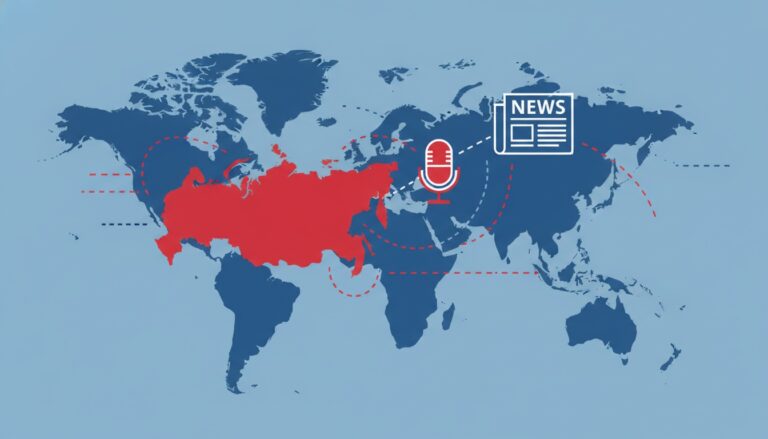
🌍 Talk Like a Diplomat: Russia, Putin & The New Cold War!
1. Introduction
Hello, everyone! It’s your favorite Korean tutor, Daily Hangul! 👋✨
Do you watch Korean news or political dramas like Designated Survivor: 60 Days (60일, 지정생존자)? Sometimes, to understand the story, you need words that sound a bit more serious and smart! 🤓
Today, we are going to look at a heavy but important topic: The Cold War and Modern Russia. Specifically, we’ll learn how to talk about “Putin’s Era” and how Russia’s foreign policy has changed. Don’t worry, we will make these difficult concepts super easy! Let’s upgrade your Korean to an intellectual level! 🚀
2. Key Expressions (핵심 표현)
Here are 3 key expressions to help you discuss world politics!
1️⃣ 냉전 (Naeng-jeon)
- English: Cold War
- Meaning: This word combines 냉 (cold) and 전 (war/battle). Even though the Cold War ended, we often hear about a “New Cold War” (신냉전, Sin-naeng-jeon) in the news regarding Russia and the West.
- 💡 Pronunciation Tip: The ‘eo’ in jeon sounds like the ‘u’ in ‘run’. Make sure to pronounce the final ‘n’ clearly!
2️⃣ 외교 정책 (Oe-gyo jeong-chaek)
- English: Foreign Policy
- Meaning: 외교 means ‘diplomacy’ and 정책 means ‘policy’. When talking about Putin, news anchors often say his foreign policy has become very strong and aggressive.
- 💡 Pronunciation Tip: 외 (Oe) sounds like ‘We’ in ‘Wet’. 책 (Chaek) has a strong ‘Ch’ sound.
3️⃣ 강대국 (Gang-dae-guk)
- English: Superpower / Powerful Nation
- Meaning: This refers to a country with great power and influence. Putin’s goal has often been described as making Russia a 강대국 again.
- 💡 Pronunciation Tip: When saying 국 (guk), stop the air at the back of your throat abruptly (unreleased ‘k’ sound).
3. Real Conversation (실전 대화)
Let’s see how two friends discuss the news at a cafe. ☕️
Min-su: 어제 뉴스 봤어? 러시아 이야기가 나오더라.
(Eoje nyuseu bwasseo? Reosi-a iyagi-ga na-odeora.)
Did you watch the news yesterday? They were talking about Russia.
Sarah: 응, 봤어. 요즘 외교 정책이 많이 바뀐 것 같아.
(Eung, bwasseo. Yojeum oegyo jeongchaek-i mani bakkwin geot gata.)
Yeah, I saw it. It seems their foreign policy has changed a lot lately.
Min-su: 맞아. 다시 강대국이 되고 싶은가 봐.
(Maja. Dasi gangdaeguk-i doego sipeun-ga bwa.)
That’s right. I guess they want to be a superpower again.
Sarah: 냉전 시대처럼 무서워지지 않았으면 좋겠다.
(Naengjeon sidae-cheoreom museowo-jiji anasseumyeon joketa.)
I hope it doesn’t become scary like the Cold War era.
4. Culture Tip & Drama Context 🎬
📺 Drama Context:
In political thrillers like IRIS (아이리스) or Vagabond (배가본드), you will often hear words like 외교 (Diplomacy) and 갈등 (Conflict). Knowing these words makes the plot much more intense!
🇰🇷 Culture Note:
Koreans are very interested in global news because the political situation of powerful countries (like the US, China, and Russia) affects the Korean Peninsula. If you use the word 강대국 (Superpower) correctly when discussing news with Korean friends, they will be surprised and say, “Wow, your Korean is so high-level! (한국어 진짜 잘하시네요!)” 👍
5. Wrap-up & Quiz 📝
Today we learned how to talk about Russia’s shift in power and the Cold War era! These words are perfect for watching the news or reading articles.
Let’s practice! (Fill in the blanks)
- The era of tension between the US and USSR was called the ______.
(미국과 소련 사이의 긴장 시대를 ______(이)라고 해요.) -
Every country has a plan for dealing with other countries. This is called ______.
(모든 나라는 다른 나라를 대하는 계획이 있어요. 이것을 ______(이)라고 해요.)
⬇️ Answers (정답)
1. 냉전 (Naeng-jeon)
2. 외교 정책 (Oe-gyo jeong-chaek)
See you next time! 안녕! 👋
Frequently Asked Questions (FAQ)
Q: What does "외" mean in Korean and how do you pronounce it?
A: In Korean, "외" is pronounced [Oe] and means: sounds like 'We' in 'Wet'.
Q: What does "책" mean in Korean and how do you pronounce it?
A: In Korean, "책" is pronounced [Chaek] and means: has a strong 'Ch' sound.
Q: What does "국" mean in Korean and how do you pronounce it?
A: In Korean, "국" is pronounced [guk] and means: , stop the air at the back of your throat abruptly (unreleased 'k' sound).
Q: What does "갈등" mean in Korean and how do you pronounce it?
A: In Korean, "갈등" is pronounced [Conflict] and means: . Knowing these words makes the plot much more intense!






