

안녕하세요! Hello! It’s your Korean tutor, [Daily Hangul]! 🍎
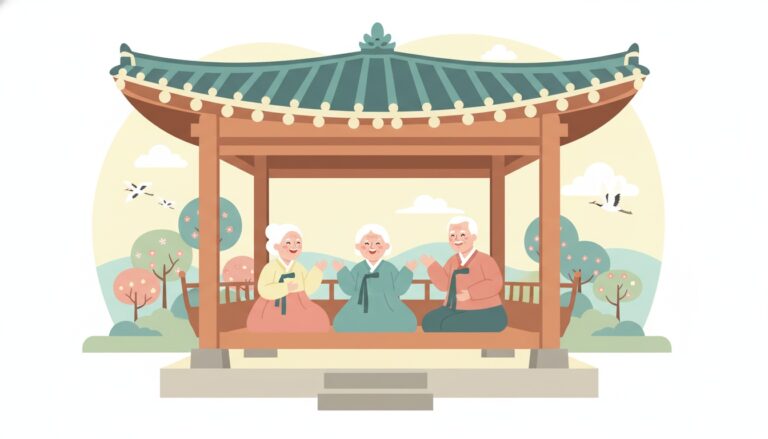
Did you know that having good friends can help you live longer? 😲 Science says social connections are key to longevity! In Korea, we believe that being together creates a special energy.
Today, we will learn heartwarming expressions about friendship and living a long, happy life. Just like the squad in the K-drama ‘Hospital Playlist (슬기로운 의사생활)’, staying connected is the secret to happiness! Let’s dive in! 🚀
🔑 Key Expressions: 3 Essential Phrases
1. 건강하게 오래 사세요
- Pronunciation: [Geonganghage orae saseyo]
- English: Please live long and healthily.
- Explanation: This is a very polite and common blessing used for elders. You will hear this often on birthdays or New Year’s Day. It shows your respect and wish for their longevity.
- 💡 Pronunciation Tip: In ‘같이 (gachi)’ or similar words, sound changes happen, but here, pronounce clearly. ‘오래 (orae)’ means ‘long time’. Make sure to round your lips for the ‘o’!
2. 함께라서 행복해요
- Pronunciation: [Hamkkeraseo haengbokhaeyo]
- English: I am happy because we are together.
- Explanation: ‘함께 (Hamkke)’ means ‘together’. This phrase emphasizes that your happiness comes from the connection with others. It’s a sweet thing to say to friends or family.
- 💡 Pronunciation Tip: The double consonant ‘ㄲ (kk)’ in ‘함께’ requires a strong, tense sound. Don’t let air escape from your mouth; tense your throat!
3. 정이 들었어요
- Pronunciation: [Jeong-i deureosseoyo]
- English: I’ve grown fond of you / We’ve built a bond.
- Explanation: ‘Jeong (정)’ is a unique Korean concept. It’s more than just love or friendship; it’s a deep connection and attachment built over time. Saying this means you feel a deep, invisible link with someone.
- 💡 Pronunciation Tip: When ‘정’ is followed by ‘이’, the ‘ng’ sound carries over. It sounds like [Jeong-ni] or smoothly [Jeong-i].
🗣️ Real-life Conversation (실전 대화)
Situation: Min-su and Anna are talking about Min-su’s energetic grandmother at a cafe.
Min-su: 우리 할머니는 90살이에요. 정말 건강하세요.
(My grandmother is 90 years old. She is really healthy.)
Anna: 우와, 정말요? 비결이 뭐예요?
(Wow, really? What is the secret?)
Min-su: 친구들을 매일 만나요. 함께라서 행복해요라고 항상 말씀하세요.
(She meets friends every day. She always says, “I’m happy because we are together.”)
Anna: 맞아요. 좋은 사람과 있으면 건강하게 오래 살아요.
(That’s right. If you are with good people, you live long and healthily.)
Min-su: 우리도 정이 많이 들었어요. 평생 친구 해요!
(We have built a lot of ‘Jeong’ too. Let’s be friends for life!)
🎭 Culture Tip & K-Drama Vibes
Have you heard of ‘Jeong (정)’? ❤️
In Korea, longevity isn’t just about eating healthy food (like Kimchi!); it’s about community. Just like the neighbors in the drama ‘Reply 1988 (응답하라 1988)’, Koreans love sharing food and time together. This deep emotional bond is called ‘Jeong’.
Also, elderly people in Korea often gather at ‘Senior Citizen Centers (경로당)’ or parks to chat. This strong social network is the real Korean secret to anti-aging! 👵👴
📝 Wrap-up & Quiz
Today we learned that being together helps us live longer! Don’t forget to tell your friends, “함께라서 행복해요” (I’m happy because we are together).
Pop Quiz! (Choose the correct answer)
- How do you say “Please live long” to an elder?
(A) 빨리 가세요 (Ppalli gaseyo)
(B) 건강하게 오래 사세요 (Geonganghage orae saseyo) -
What is the Korean word for “Together”?
(A) 함께 (Hamkke)
(B) 혼자 (Honja) -
What is the special Korean concept for deep connection/bond?
(A) Han (한)
(B) Jeong (정)
Check your answers below! 👇
See you next time! 안녕! 👋
Answers: 1. (B), 2. (A), 3. (B)
Frequently Asked Questions (FAQ)
Q: What does "건강하게 오래 사세요" mean in Korean and how do you pronounce it?
A: In Korean, "건강하게 오래 사세요" is pronounced [Geonganghage orae saseyo] and means: a key conversational Korean expression covered in this lesson.
Q: What does "함께라서 행복해요" mean in Korean and how do you pronounce it?
A: In Korean, "함께라서 행복해요" is pronounced [Hamkkeraseo haengbokhaeyo] and means: a key conversational Korean expression covered in this lesson.
Q: What does "정이 들었어요" mean in Korean and how do you pronounce it?
A: In Korean, "정이 들었어요" is pronounced [Jeong-i deureosseoyo] and means: a key conversational Korean expression covered in this lesson.







