

Hello! This is Maeil Hangeul, here to upgrade your Korean skills!
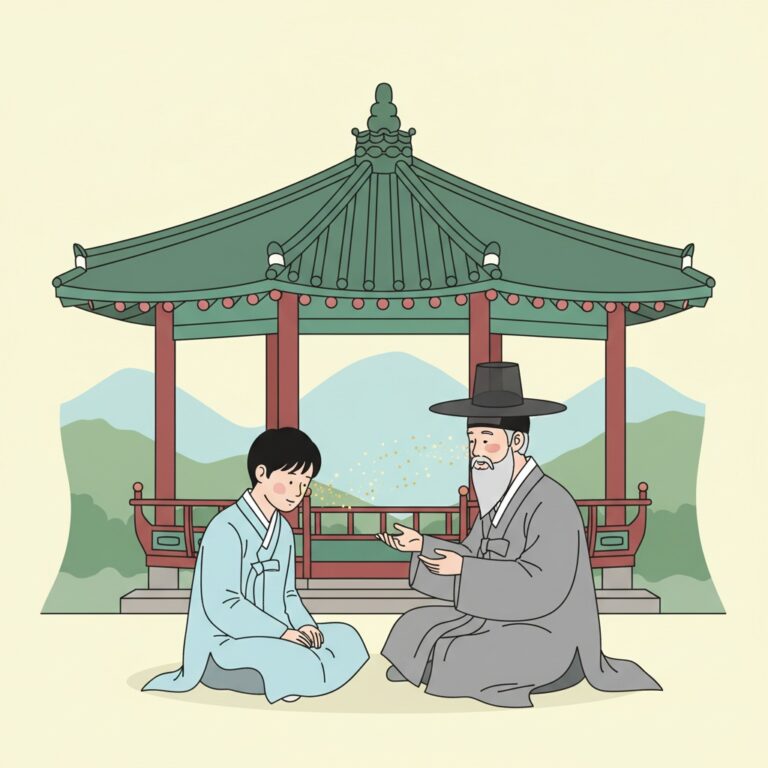
Have you ever been so inspired by someone’s advice that you wanted to share it with everyone? Whether it’s a quote from your favorite celebrity, a tip from your boss, or some wise words from your grandmother, knowing how to quote people is a super useful skill.
Lately in Korea, there’s a huge trend on social media where people share life advice from their mentors using hashtags like #인생조언 (life advice) and #명언 (famous saying). Today, we’ll learn how to do just that! You’ll be able to share all the great advice you hear and sound more natural while doing it. Let’s get started!
Core Expressions You Need to Know
Here are three key patterns for quoting advice and statements in Korean.
1. -(ㄴ/는)다고 했어요 (Said that…)
- Korean Expression: 제니가 예쁘다고 했어요. / 친구가 밥을 먹는다고 했어요.
- Pronunciation [Romanization]: Jeniga yeppeudago haesseoyo. / Chinguga babeul meongneundago haesseoyo.
- English Meaning: (Someone) said that…
- Detailed Explanation: This is the most common way to quote a statement. You use it to report what someone else has said.
- For adjectives (like 예쁘다, pretty) or 이다/아니다 (to be/not to be), you attach -다고 했어요.
- For verbs (like 먹다, to eat), you attach -는다고 했어요 if it’s a present tense action. (For past tense, you’d use -았/었다고 했어요).
- 💡 Pronunciation Tip:
The pronunciation of 했어요 is [haesseoyo]. Notice how the final ‘ㅅ’ (s) sound from ‘했’ links to the ‘어’ vowel that follows it. You don’t pause between the two syllables. It flows together smoothly: [해써요].
2. -(으)라고 했어요 (Told me to…)
- Korean Expression: 매일 운동하라고 했어요.
- Pronunciation [Romanization]: Maeil undongharago haesseoyo.
- English Meaning: (Someone) told me to…
- Detailed Explanation: This is your go-to pattern for quoting advice, a command, or a strong suggestion. It’s the equivalent of saying “They told me to do X.”
- If the verb stem ends in a vowel (like 하다 -> 하), you add -라고 했어요. (하 + 라고 했어요 -> 하라고 했어요)
- If the verb stem ends in a consonant (like 읽다 -> 읽), you add -으라고 했어요. (읽 + 으라고 했어요 -> 읽으라고 했어요)
- 💡 Pronunciation Tip:
The pronunciation of ‘운동하라고’ is [undongharago]. The ‘ㅎ’ (h) sound is very soft, almost silent, when it’s between two voiced sounds. Don’t pronounce it like a strong “H” in “hello.” Think of it as a gentle breath connecting ‘동’ and ‘아’.
3. -에 따르면 (According to…)
- Korean Expression: 뉴스에 따르면…
- Pronunciation [Romanization]: Nyuseu-e ttareumyeon…
- English Meaning: According to…
- Detailed Explanation: This is a slightly more formal but very useful phrase. You attach it to a noun (a person, a book, the news, a study) to state your source. It’s perfect for when you’re sharing information from an article or an expert.
- 💡 Pronunciation Tip:
The key here is the ‘ㄸ’ (tt) sound in 따르면 [ttareumyeon]. This is a “tensed” consonant. To make this sound, you create tension in your throat and release the ‘t’ sound with no puff of air. It’s stronger and harder than ‘ㄷ’ (d) and has no aspiration like ‘ㅌ’ (t). Practice saying it with force: TTA!
Example Dialogue
Let’s see how these expressions are used in a real conversation. Imagine two friends talking about the popular K-drama, “Queen of Tears.”
- A: 요즘 뭐 봐? 요즘 “눈물의 여왕” 진짜 재밌더라.
(Y즘 mwo bwa? Yojeum “Nunmul-ui Yeowang” jinjja jaemitdeora.)
What are you watching these days? “Queen of Tears” is so good. -
B: 아, 나도! 드라마에서 주인공 할아버지가 “가족이 가장 중요하다고 했어.” 그 대사 너무 좋았어.
(A, nado! Deurama-eseo ju-in-gong harabeojiga “gajogi gajang jung-yohadago haesseo.” Geu daesa neomu joasseo.)
Oh, me too! In the drama, the main character’s grandfather said that family is the most important thing. I loved that line. -
A: 맞아! 우리 엄마도 항상 나한테 서로 잘 챙겨주라고 했어.
(Maja! Uri eommado hangsang nahante seoro jal chaeng-gyeojurago haesseo.)
*That’s right! My mom also always told me that we should take good care of each other.
Culture Tip & Trend Deep Dive
In Korea, there’s a strong culture of respecting the wisdom of elders and seniors (선배, seonbae). Quoting their advice is a way of showing that you listen, learn, and value their guidance.
This is why the #인생조언 (insaeng jo-eon, life advice) trend is so popular. Young Koreans love to share quotes from successful CEOs, beloved artists, or even their own parents on Instagram. It’s a way to motivate themselves and others. For example, you might see a post with a beautiful picture and a caption like: “방탄소년단 RM이 팬들에게 항상 자신을 사랑하라고 했어요.” (BTS’s RM told his fans to always love themselves.)
When you use these quoting expressions, you’re not just practicing grammar; you’re participating in a modern Korean cultural practice of sharing wisdom and inspiration!
Let’s Practice!
Ready to try it yourself? Let’s check your understanding.
1. Fill in the blank:
My Korean teacher said, “This book is interesting.”
→ 한국어 선생님께서 이 책이 ___________.
(Answer: 재미있다고 했어요)
2. Make a sentence:
Your role model gave you this advice: “Don’t give up.” (포기하지 마세요.)
How would you tell your friend what your role model said?
(Hint: Use the -(으)라고 했어요 pattern. Remember that “don’t do” is -지 말다.)
(Answer: 제 롤모델이 포기하지 말라고 했어요.)
Great job today! Learning how to quote others is a big step toward sounding more fluent.
What’s the best advice you’ve ever received? Try to write it in the comments below using the phrases we learned today! We’d love to read your #인생조언
Frequently Asked Questions (FAQ)
Q: What does "따르면" mean in Korean and how do you pronounce it?
A: In Korean, "따르면" is pronounced [ttareumyeon] and means: . This is a "tensed" consonant. To make this sound, you create tension in your throat and release the 't' sound with no puff of air. It's stronger and harder than 'ㄷ' (d) and has no aspiration like 'ㅌ' (t). Practice saying it with force:







